
Types of Butterflies in Texas
Texas has around 450 recorded butterfly species, more than any other US state, because it stretches from the piney woods of the east through prairie and Hill Country to the Chihuahuan Desert and the subtropical Lower Rio Grande Valley, where three border counties alone hold some 300 species. The state butterfly is the Monarch, adopted in 1995, and Texas is the funnel through which almost the entire eastern Monarch population passes every October on its way to Mexico. Swallowtails, sulphurs, hairstreaks and an enormous skipper fauna fill out a list that includes dozens of tropical butterflies found nowhere else in the country.

On this page
Butterflies of Texas at a glance
No other state comes close to Texas for butterflies. Around 450 species have been recorded, roughly two-thirds of everything found north of Mexico, and the reason is geography: the state runs from humid East Texas pine forest through the Blackland Prairie, the limestone Hill Country and the Panhandle plains to the Chihuahuan Desert of Big Bend, and finally to the subtropical thorn scrub of the Lower Rio Grande Valley, where Cameron, Hidalgo and Starr counties together support about 300 species. Many of those are Mexican and Central American butterflies that cross the river and breed for a season or two.
Every North American family is here. The brush-footed butterflies supply the emperors, crescents, patches, longwings and the milkweed butterflies, the hairstreaks and blues include a bewildering set of tropical scrub-hairstreaks along the border, and the whites and sulphurs, twenty swallowtails and three metalmarks round out the true butterflies. The skippers alone account for roughly 200 Texas species, including the giant-skippers whose caterpillars bore into yucca and agave.
Signature Texas butterflies
The Monarch has been the state butterfly since 1995, and Texas matters more to it than any other state: the spring generation that leaves Mexico lays its eggs on Texas milkweed in March and April, and in October almost the whole eastern population streams south through a corridor running from Wichita Falls to Eagle Pass. Its relatives the Queen and the Soldier are year-round southern residents, browner and without the Monarch's heavy black veins.
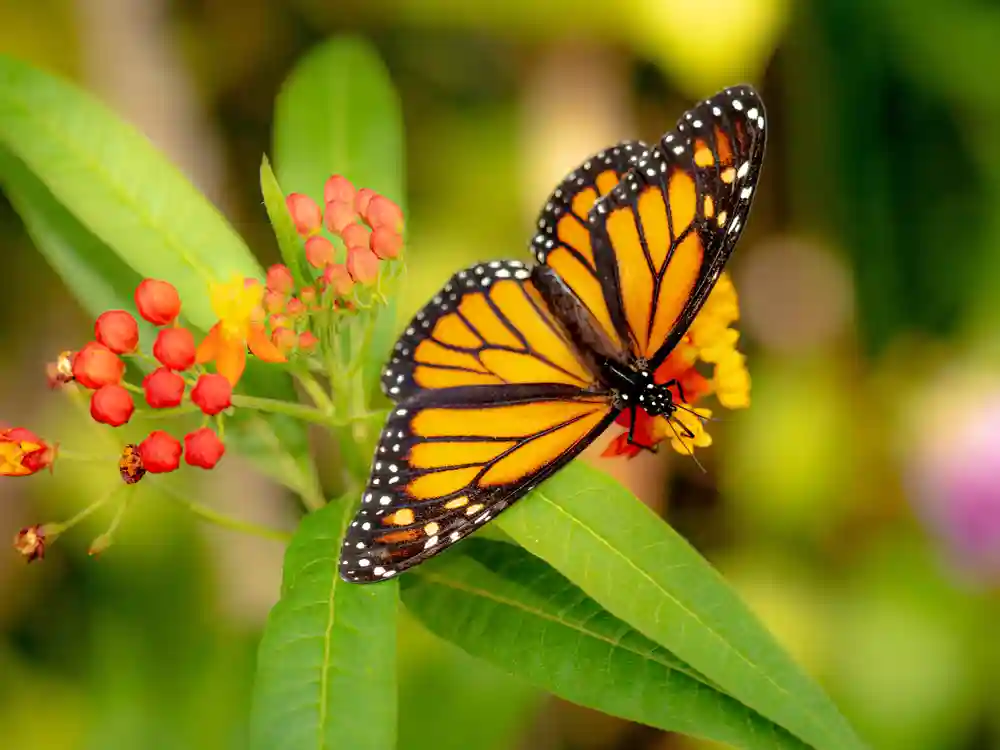
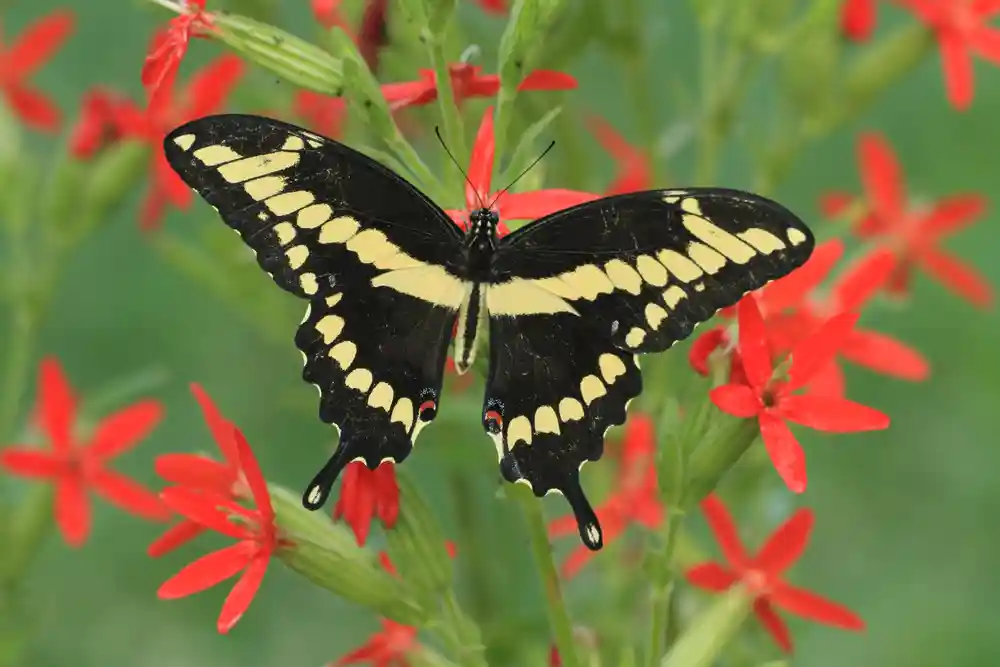
The Giant Swallowtail is the largest butterfly in the state, breeding on citrus, wafer ash and prickly ash, while the Pipevine Swallowtail, Black Swallowtail, Eastern Tiger Swallowtail and, in the west, the Two-tailed Swallowtail are the other big garden species. The pipevine feeder is toxic, and its dark blue colouring is copied by the Black Swallowtail female, the Red-spotted Purple and the dark form of the female tiger.
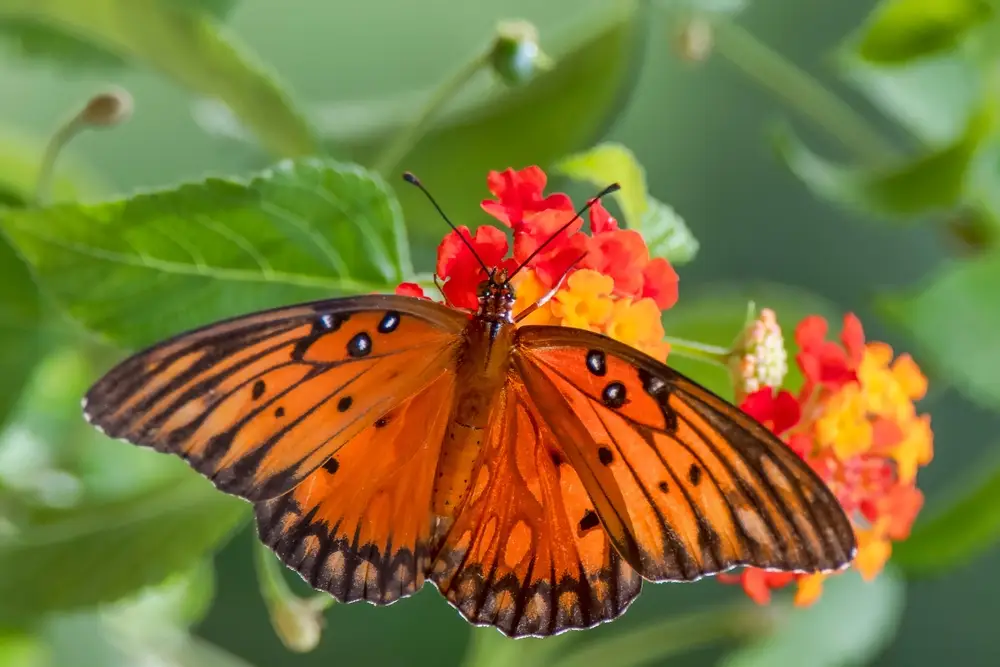
Hackberry trees support a whole guild: the Hackberry Emperor, the Tawny Emperor, Empress Leilia, the Question Mark and the American Snout, which in wet autumns explodes into mass flights of millions that can darken the sky over San Antonio and the Hill Country. In the south the Gulf Fritillary and Zebra Heliconian breed on passion vines, the White Peacock and Common Buckeye patrol ditches and lawns, and the Malachite, a big green-and-brown tropical butterfly, is a prized Rio Grande Valley find.
The Texas butterfly calendar
Butterflies fly in every month somewhere in Texas. Along the Gulf coast and in the Valley, sulphurs, Gulf Fritillaries and Queens are active on warm winter days, and the Mourning Cloak and Question Mark emerge from hibernation in central Texas by late February. March brings the returning Monarchs and the first swallowtails, and April to June is the peak in the Hill Country and East Texas, when the fritillaries, azures, hairstreaks and the spring broods of the whites are all out together.
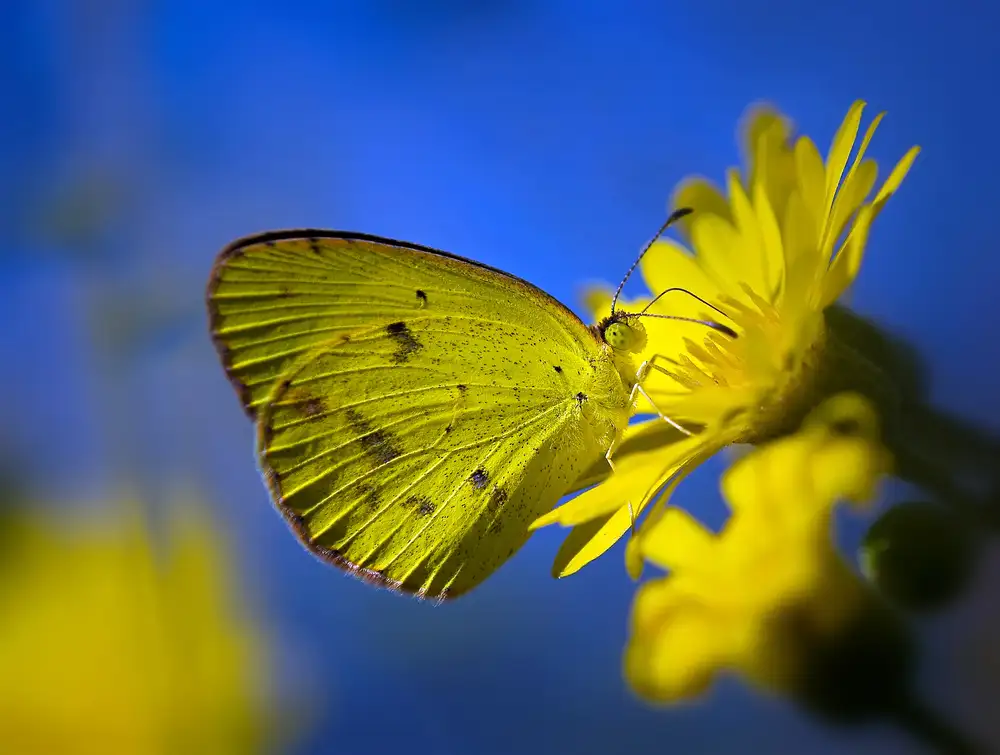
Summer heat slows things down in the interior but not in the south, where breeding continues without a break. The real climax comes in autumn: from late September into November the Lower Rio Grande Valley fills with tropical strays, the American Snout and Little Yellow emerge in enormous numbers after the summer rains, and southbound Monarchs, Painted Ladies and Long-tailed Skippers pass through. That is why the Texas Butterfly Festival in Mission is held in late October or early November, and why a single Valley garden can log more than 100 species in a good week. Our butterfly migration guide follows the Monarchs on from Texas to their Mexican mountains.
Where to see butterflies in Texas
The Lower Rio Grande Valley is the best butterfly-watching region in the United States, and its parks are set up for it.
- National Butterfly Center, Mission — 100 acres of native plantings on the river; more than 200 species recorded, with the best days in October and November.
- Bentsen-Rio Grande Valley, Estero Llano Grande and Resaca de la Palma State Parks — the World Birding Center sites double as butterfly reserves, with feeding stations for Malachites, emperors and daggerwings.
- Santa Ana National Wildlife Refuge, Alamo — subtropical forest for the Blue Metalmark, Red-bordered Pixie and the tropical hairstreaks.
- Big Bend National Park — desert and Chisos Mountain species, including the Chisos banded-skipper and the giant-skippers.
- Hill Country rivers and the Lost Maples area — spring swallowtails, snouts and emperors; the Monarch corridor in October.
Texas shares its northern fauna with Oklahoma and its wet eastern woodland species with Louisiana, while almost every Valley speciality is described on our page for the butterflies of Mexico.

Host plants and butterfly gardening in Texas
Texas gardeners can attract dozens of species by planting native caterpillar host plants that cope with heat and drought.
- Antelope-horns, green milkweed and other native milkweeds — the Monarch, Queen and Soldier; tropical milkweed should be cut back in autumn so it does not hold Monarchs through the winter.
- Passion vines — Gulf Fritillary, Zebra Heliconian and Variegated Fritillary.
- Hackberry and sugarberry — the emperors, Question Mark, Mourning Cloak and American Snout.
- Citrus, wafer ash and prickly ash — the Giant Swallowtail; dill, fennel and parsley for the Black Swallowtail; pipevine for the Pipevine Swallowtail.
- Frogfruit and Texas ruellia — Phaon Crescent, Common Buckeye and White Peacock.
- Cassia and partridge pea — Cloudless and Orange-barred Sulphurs, Sleepy Orange and Little Yellow.
For nectar, the Valley standard is crucita (blue mistflower), lantana, Turk's cap and Texas kidneywood; in central and north Texas, Gregg's mistflower, zinnias, frostweed and native asters carry the Monarchs through October.
Rare and threatened butterflies in Texas
Texas currently has no butterfly on the federal endangered species list, but its most famous one is on the way there: the Monarch has declined by more than 80 per cent since the 1990s and was proposed for listing as threatened in December 2024, and Texas milkweed and nectar corridors are central to its recovery. Several Texas specialities are vulnerable because their entire US range is a few counties of thorn forest that has been cleared for farms and housing since the 1920s, among them the Blue Metalmark, the Manfreda giant-skipper and the Mexican Cycadian.
The Lower Rio Grande Valley National Wildlife Refuge, pieced together as a wildlife corridor along the river, and the growing network of butterfly parks around Mission are the main hope for these species. Elsewhere the concerns are familiar: loss of native prairie to the Ottoe and Arogos Skippers, drought and grazing in the desert west, and pesticide use across the cotton and citrus belts.
Butterflies found in Texas
402 species listed for Texas, grouped by family. Linked names have a full profile on this site with pictures of every life stage.
Brush-Footed (Nymphalidae)
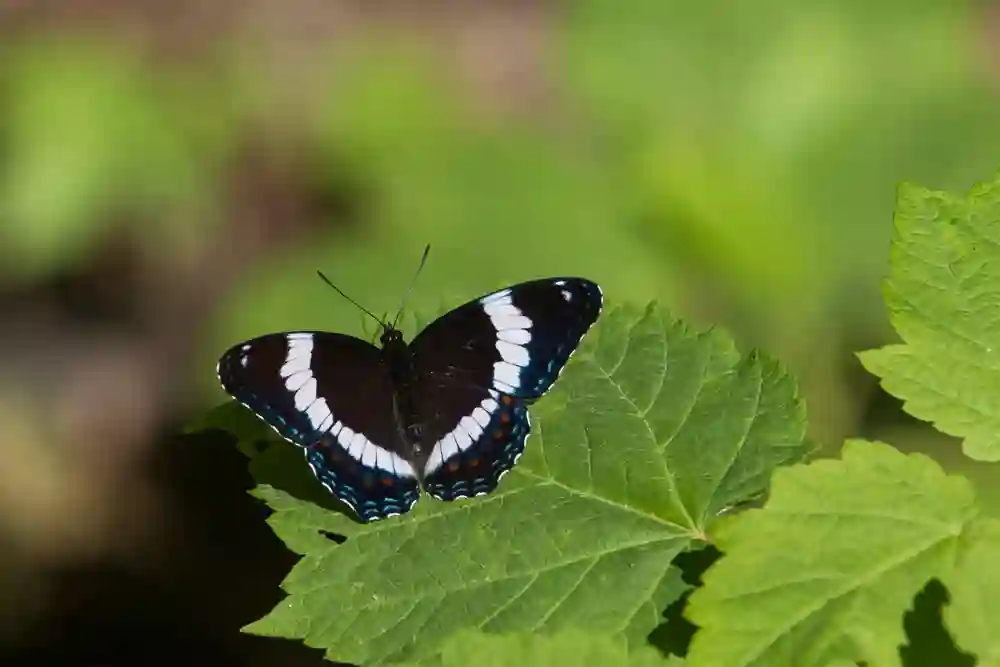 Limenitis arthemisRed Spotted Purple (Limenitis arthemis)The red-spotted purple is a large, tailless North American brush-footed butterfly whose upperside shines iridescent blue-black, a pattern copied from
 Limenitis archippusViceroy (Limenitis archippus)The viceroy (Limenitis archippus) is an orange-and-black North American butterfly that looks like a small monarch but carries one extra black line cur
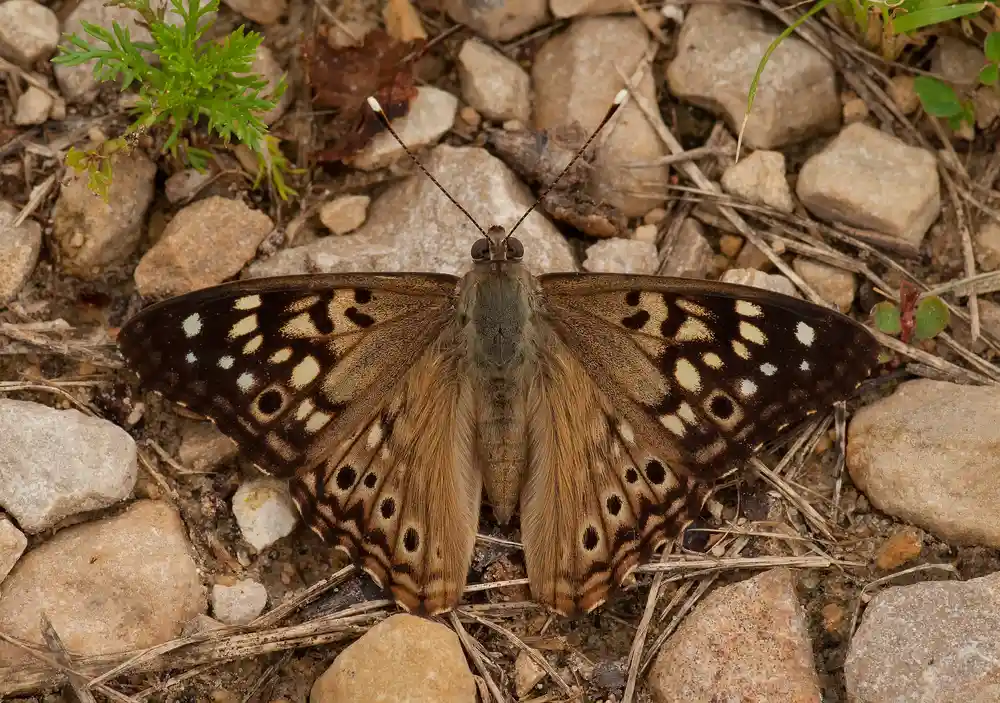 Asterocampa celtisHackberry Emperor (Asterocampa celtis)The hackberry emperor is a medium-sized tan and brown butterfly of eastern and central North America that never strays far from a hackberry tree, and
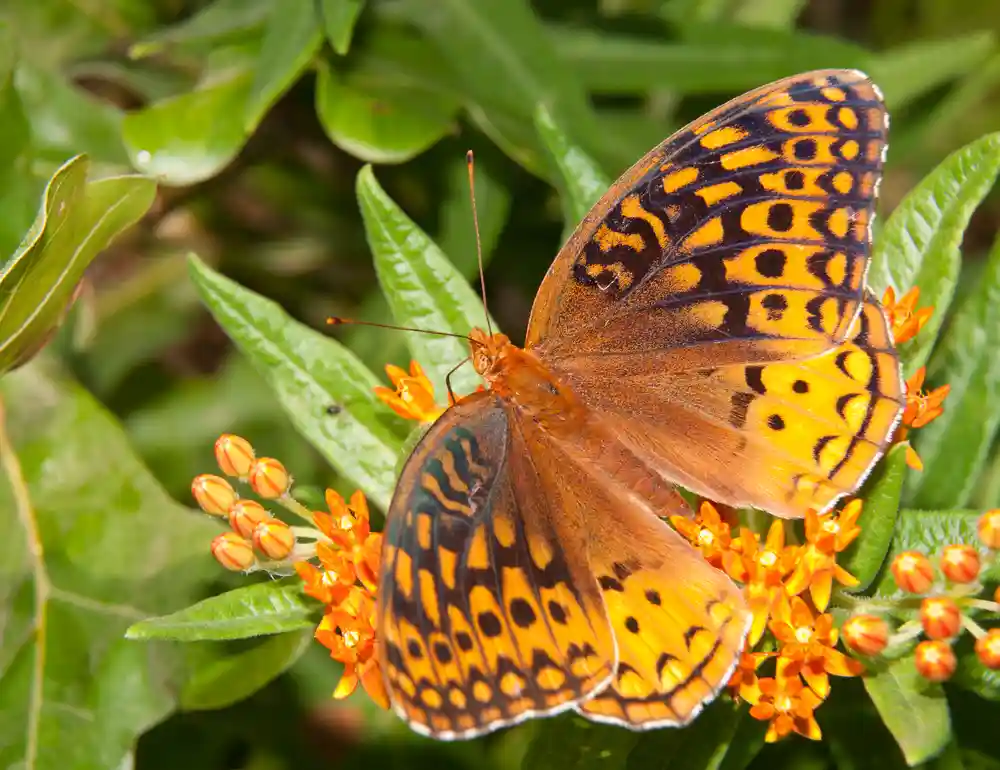 Speyeria cybeleGreat Spangled Fritillary (Speyeria cybele)A big orange butterfly of summer meadows, the great spangled fritillary is named for the sheet of silver spangles on the underside of its hindwings.Agraulis vanillaeGulf Fritillary (Agraulis vanillae)The Gulf fritillary is a long-winged orange butterfly of the southern United States, Mexico, the Caribbean and tropical America, and its defining mark
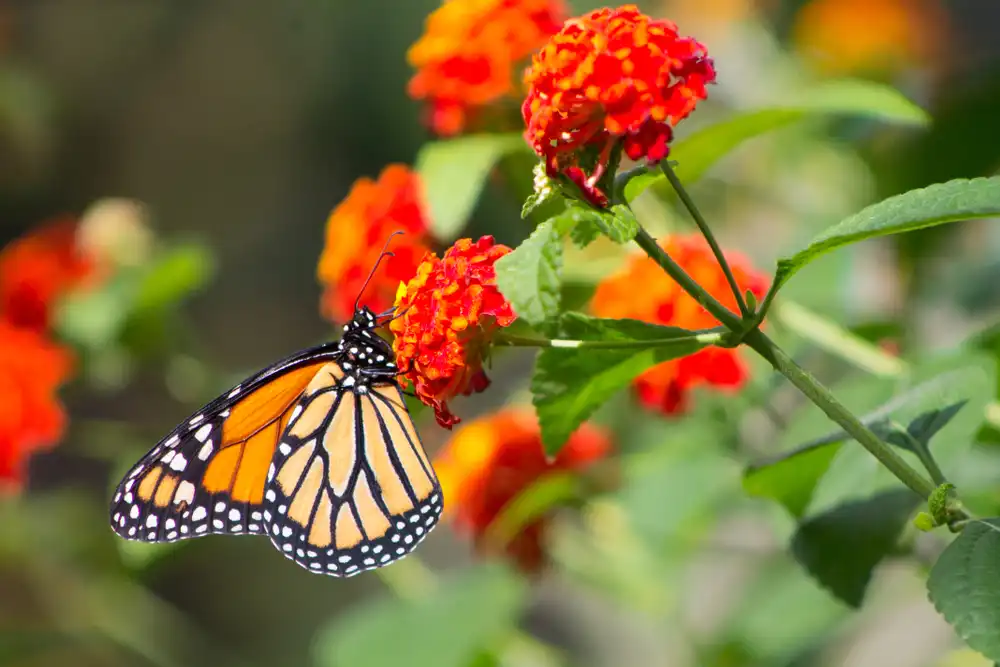
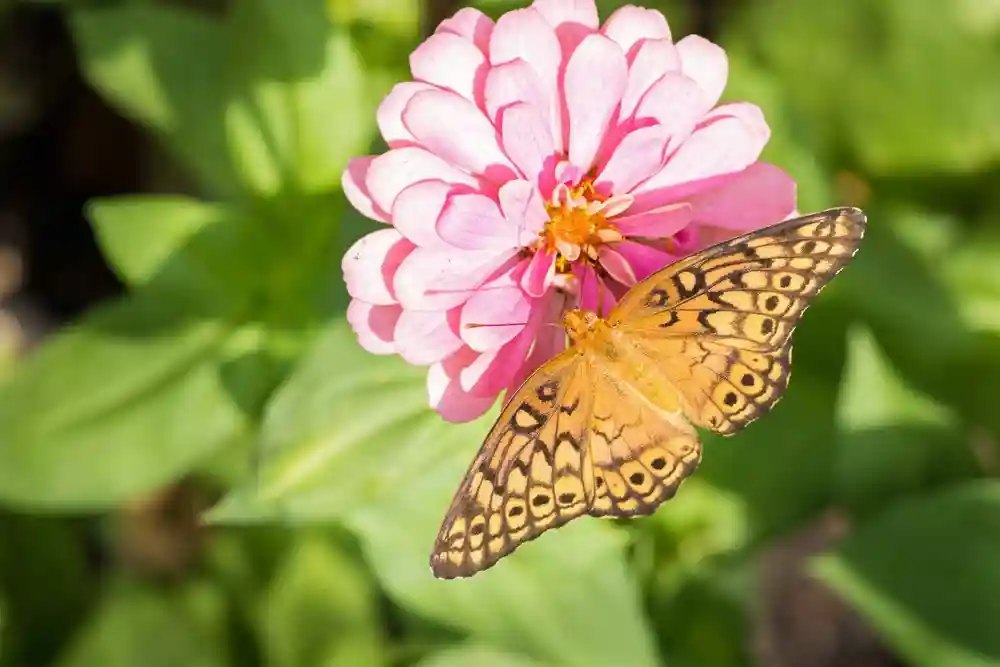 Euptoieta claudiaVariegated Fritillary (Euptoieta claudia)Half fritillary and half longwing, the variegated fritillary is the orange butterfly of American roadsides, pastures and vacant lots.Danaus plexippusMonarch (Danaus plexippus)The monarch is a large orange butterfly with black-outlined wing veins and a black, white-spotted border, found across North America and now on severa
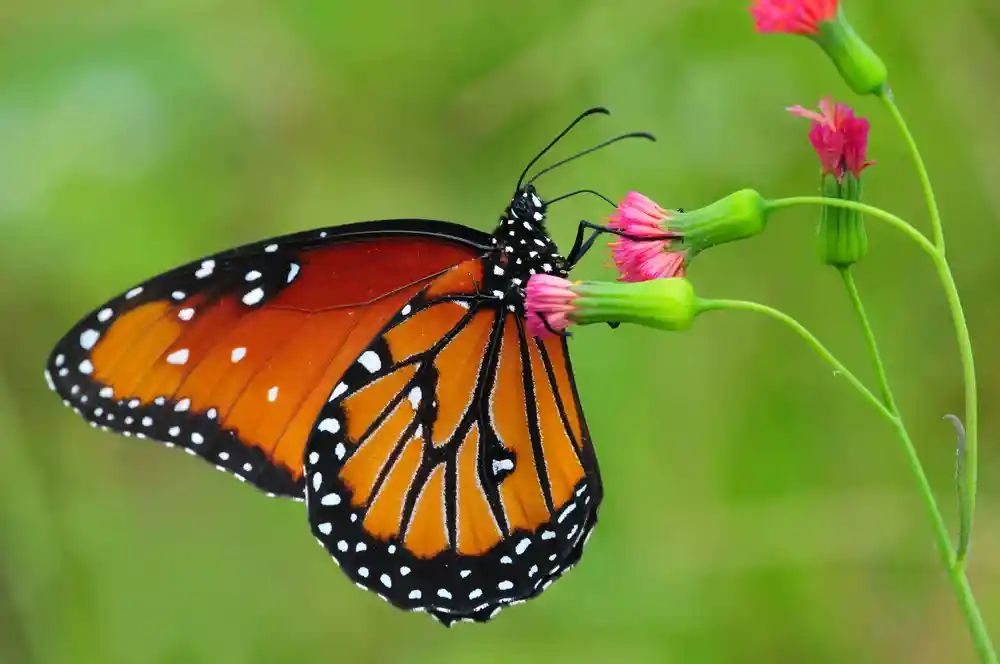 Danaus gilippusQueen (Danaus gilippus)A warm chestnut-brown milkweed butterfly of the southern states and the tropics, the queen is the monarch's smaller, darker cousin.
 Danaus eresimusSoldier (Danaus eresimus)The soldier (Danaus eresimus) is a milkweed butterfly of the American subtropics, found from southern Florida and south Texas through the West Indies
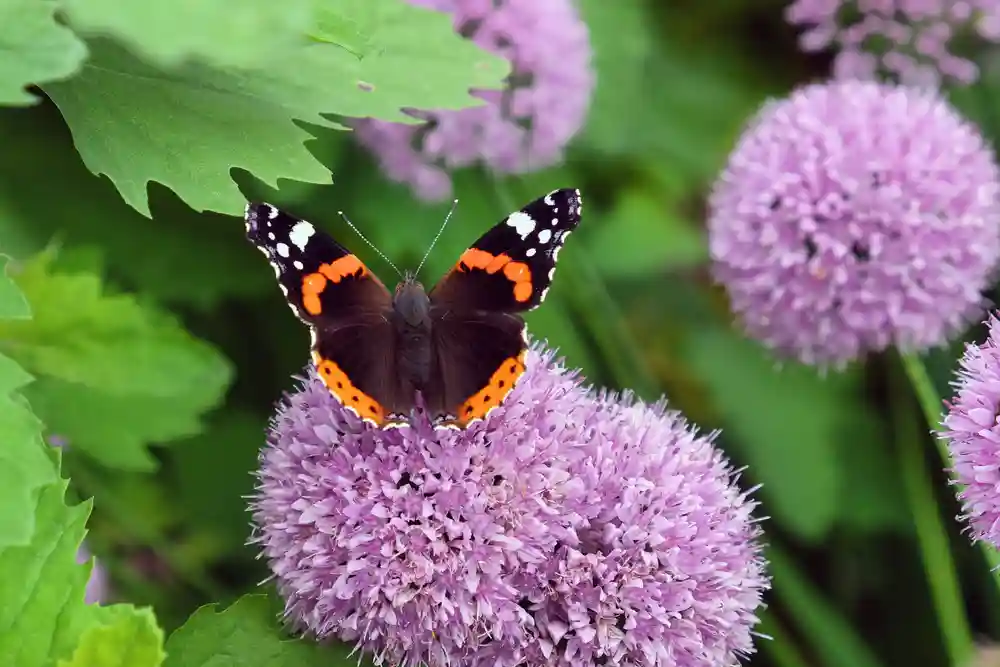 Vanessa atalantaRed Admiral (Vanessa atalanta)The red admiral (Vanessa atalanta) is a medium-sized blackish butterfly marked with one bright orange-red band across each forewing and a scatter of w
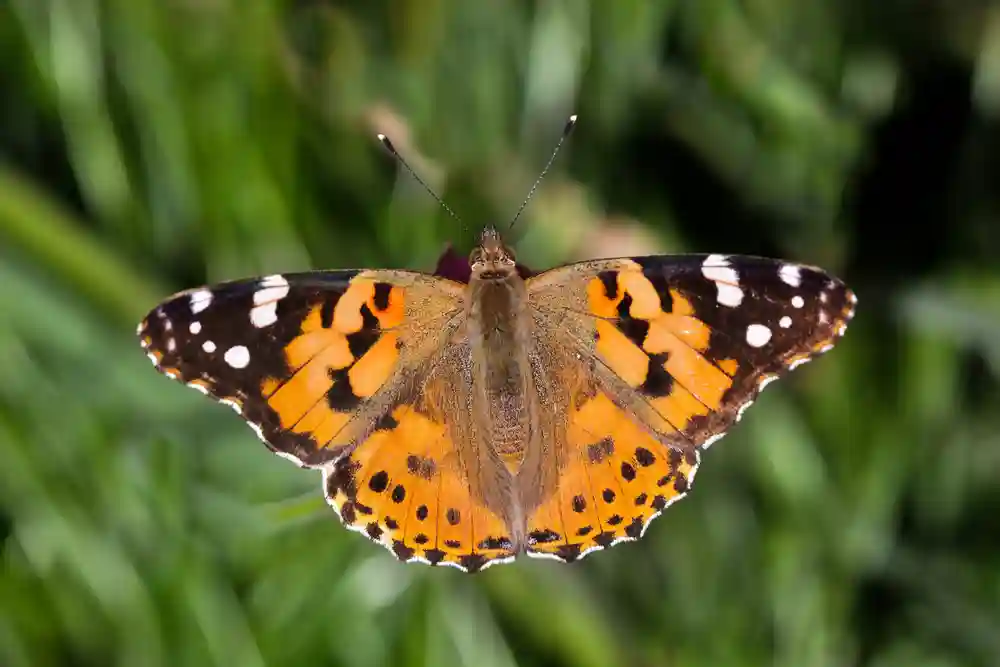 Vanessa carduiPainted Lady (Vanessa cardui)No other butterfly lives on so much of the planet.
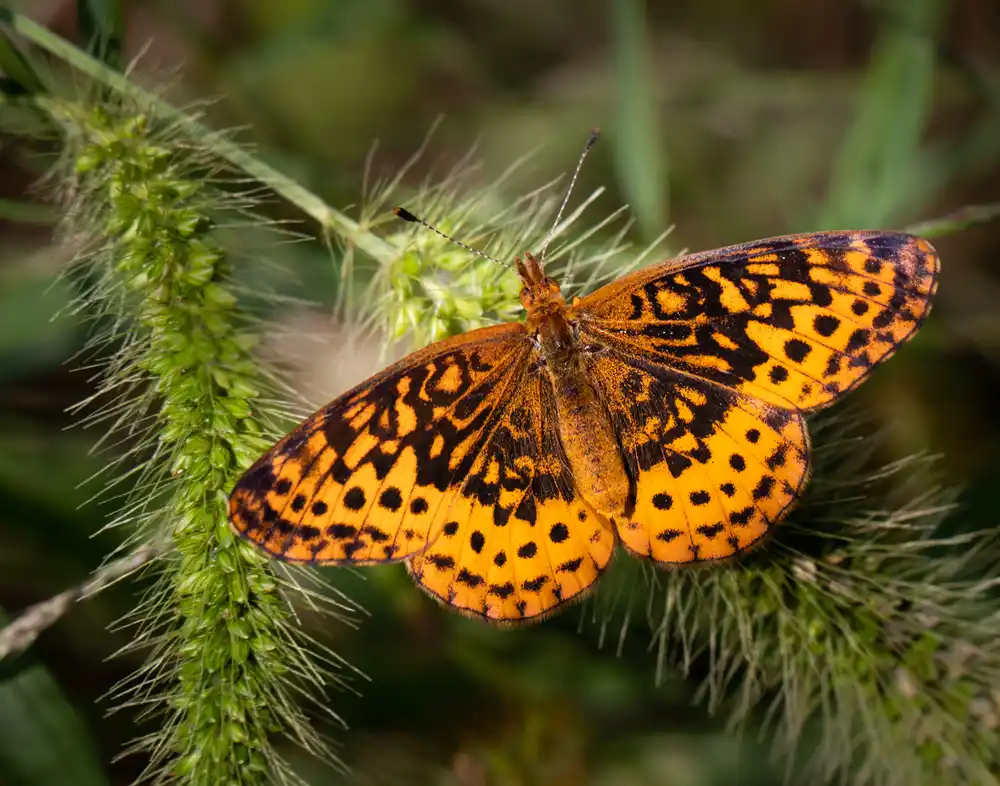 Phyciodes tharosPearl Crescent (Phyciodes tharos)Small, orange and endlessly busy, the pearl crescent is one of the butterflies most people in North America see without ever naming.
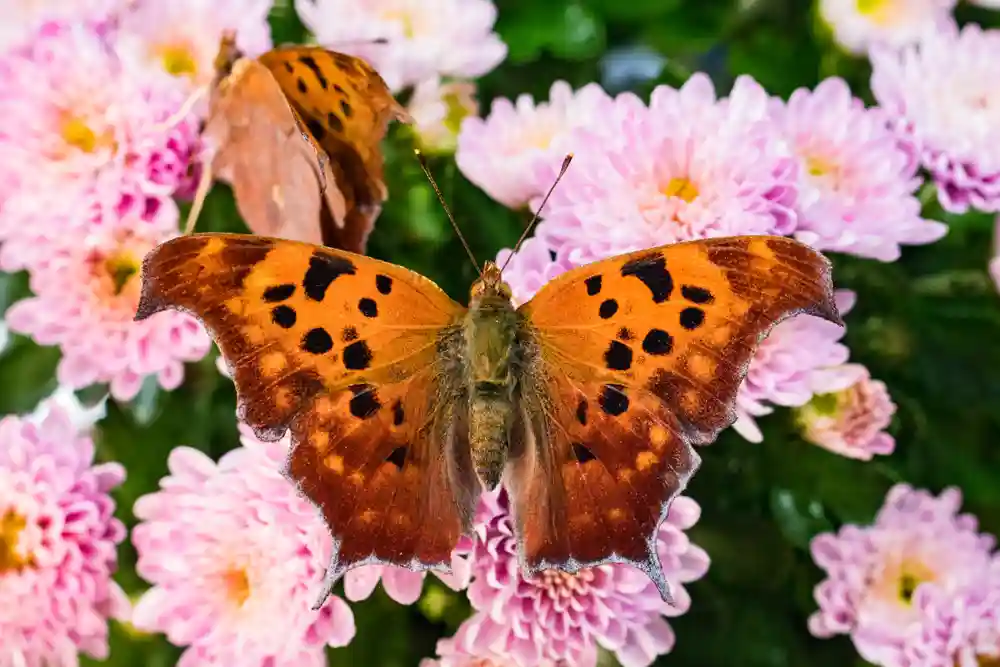 Polygonia interrogationisQuestion Mark (Polygonia interrogationis)The question mark is the largest of the North American anglewings, an orange-and-black woodland butterfly of the eastern United States, southeastern C
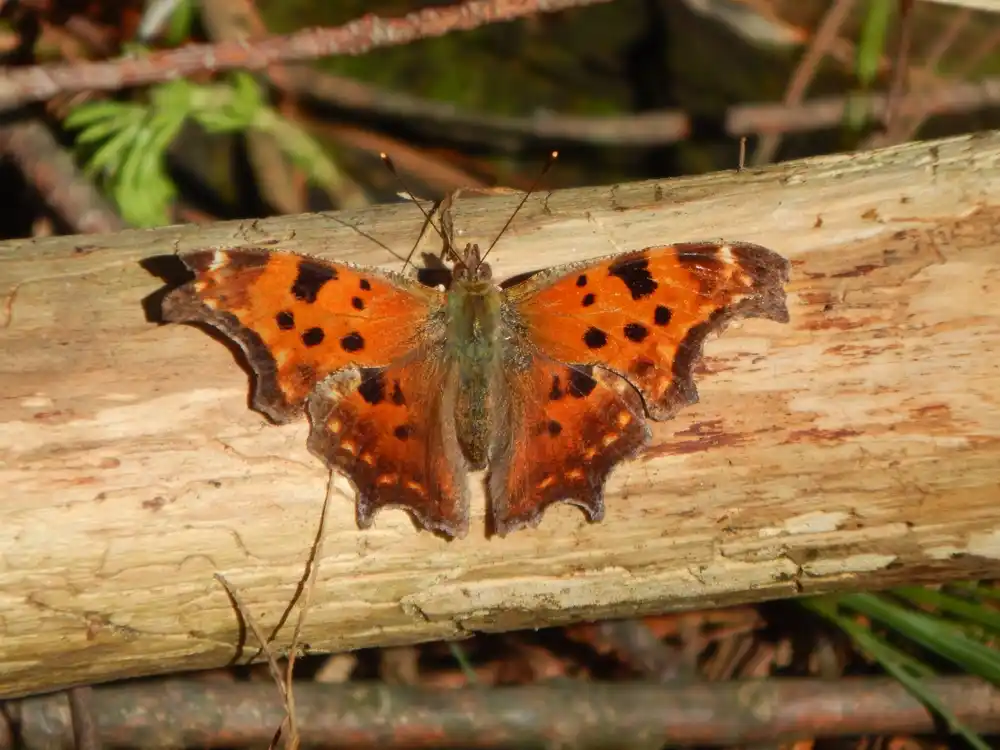 Polygonia commaEastern Comma (Polygonia comma)The eastern comma is an orange-and-black woodland butterfly of eastern North America with deeply ragged wing edges and a silvery comma-shaped mark on
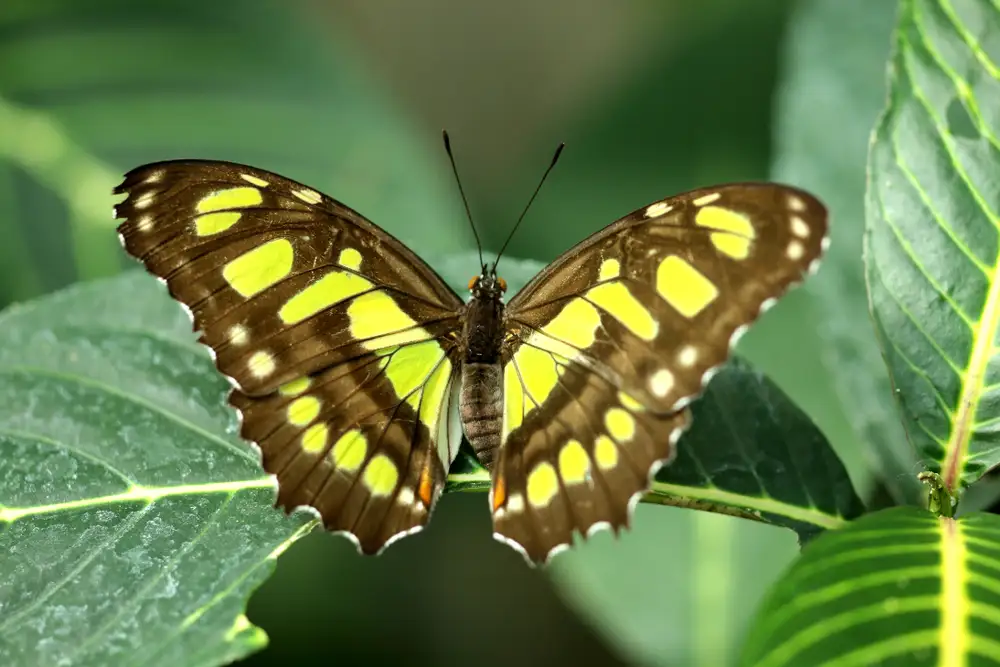 Siproeta stelenesMalachite (Siproeta stelenes)Panels of translucent apple green set in blackish brown give the malachite its name and make it one of the most recognisable butterflies of the Americ
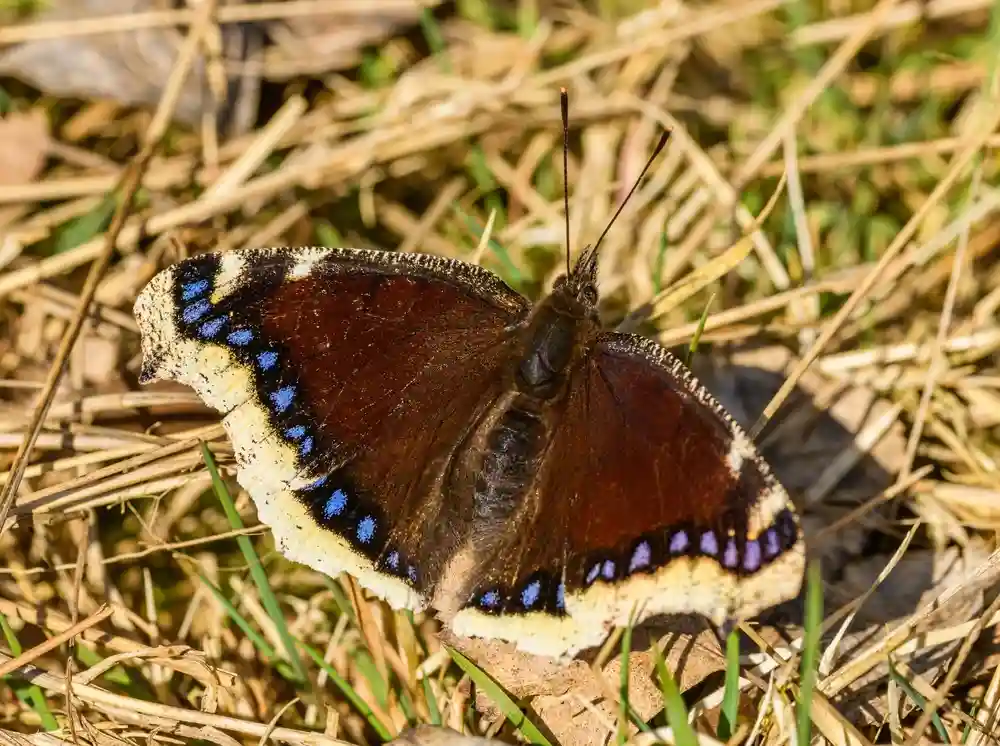 Nymphalis antiopaMourning Cloak (Nymphalis antiopa)The mourning cloak (Nymphalis antiopa) is a large dark butterfly of woodland, riverbank and suburb across North America and temperate Eurasia, and not
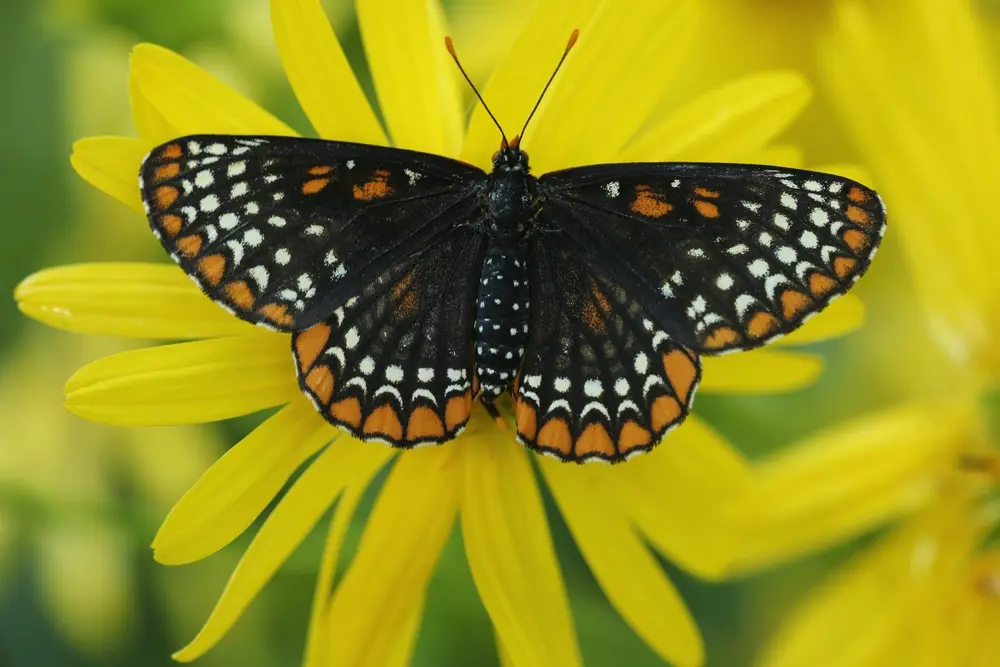 Euphydryas phaetonBaltimore Checkerspot (Euphydryas phaeton)Black wings tiled with cream squares and rimmed in brick orange, the Baltimore checkerspot is the state insect of Maryland and one of the most tightly
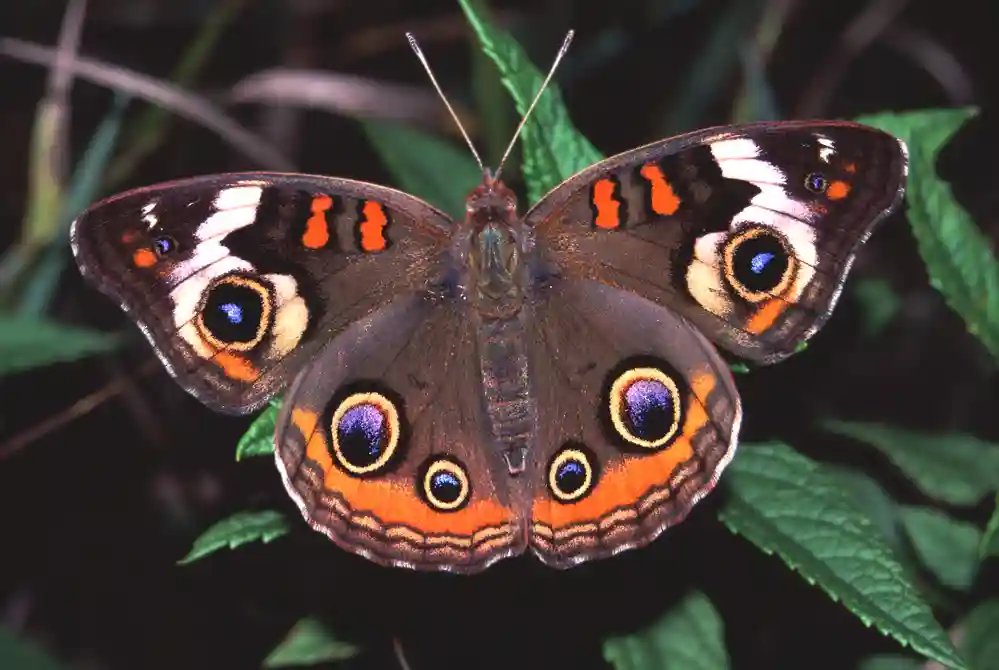 Junonia coeniaCommon Buckeye (Junonia coenia)Six large eyespots on a brown ground make the common buckeye one of the easiest North American butterflies to name and one of the hardest to approach.
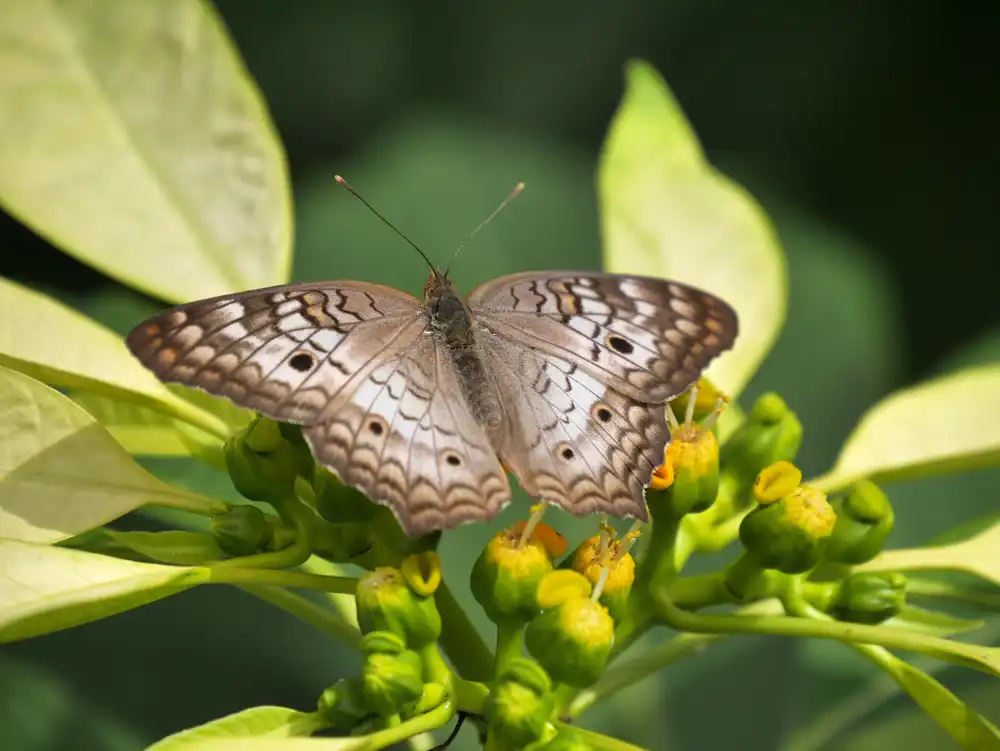 Anartia jatrophaeWhite Peacock (Anartia jatrophae)A pale, pearly butterfly of ditches, pond margins and wet weedy fields from Florida and Texas to Argentina.
Show all 47 other brush-footed species names
- Astyanax' Red-spotted Purple (Limenitis arthemis astyanax)
- Brownish Cracker (Hamadryas iphthime)
- California Sister (Adelpha bredowii)
- Common Banner (Epiphile adrasta)
- Common Mestra (Mestra amymone)
- Ruddy Daggerwing (Marpesia petreus)
- Spot-celled Sister (Adelpha basiloides)
- Tailed Cecropian (Historis acheronta)
- Tithian Sailor (Dynamine tithia)
- Variable Cracker (Hamadryas feronia)
- Waiter Daggerwing (Marpesia coresia)
- Weidemeyer's Admiral (Limenitis weidemeyerii)
- Empress Leilia (Asterocampa leilia)
- Pavon Emperor (Doxocopa pavon)
- Silver Emperor (Doxocopa laure)
- Tawny Emperor (Asterocampa clyton)
- Banded Orange Heliconian (Dryadula phaetusa)
- Erato Heliconian (Heliconius erato)
- Isabella's Heliconian (Eueides isabella)
- Julia Heliconian (Dryas julia)
- Mexican Fritillary (Euptoieta hegesia)
- Mexican Silverspot (Dione moneta)
- Scarce Bamboo Page (Philaethria dido)
- Zebra Heliconian (Heliconius charithonius)
- Klug's Clearwing (Dircenna klugii)
- Tiger Mimic-Queen (Lycorea cleobaea)
- American Snout (Libytheana carinenta)
- Orange Banner (Temenis laothoe)
- American Lady (Vanessa virginiensis)
- West Coast Lady (Vanessa annabella)
- Black Crescent (Phyciodes ptolyca)
- Mylitta Crescent (Phyciodes mylitta)
- Painted Crescent (Phyciodes picta)
- Phaon Crescent (Phyciodes phaon)
- Chestnut Crescent (Phyciodes argentea)
- Graphic Crescent (Phyciodes graphica)
- Gorgone Checkerspot (Chlosyne gorgone)
- Bordered Patch (Chlosyne lacinia)
- Banded Patch (Chlosyne endeis)
- Crimson Patch (Chlosyne janais)
- Definite Patch (Chlosyne definita)
- Elada Checkerspot (Texola elada)
- Elf (Microtia elva)
- Fulvia Checkerspot (Thessalia fulvia)
- Mimic (Hypolimnas misippus)
- Dotted Checkerspot (Poladryas minuta)
- Banded Peacock (Anartia fatima)
Gossamer-Winged (Lycaenidae)
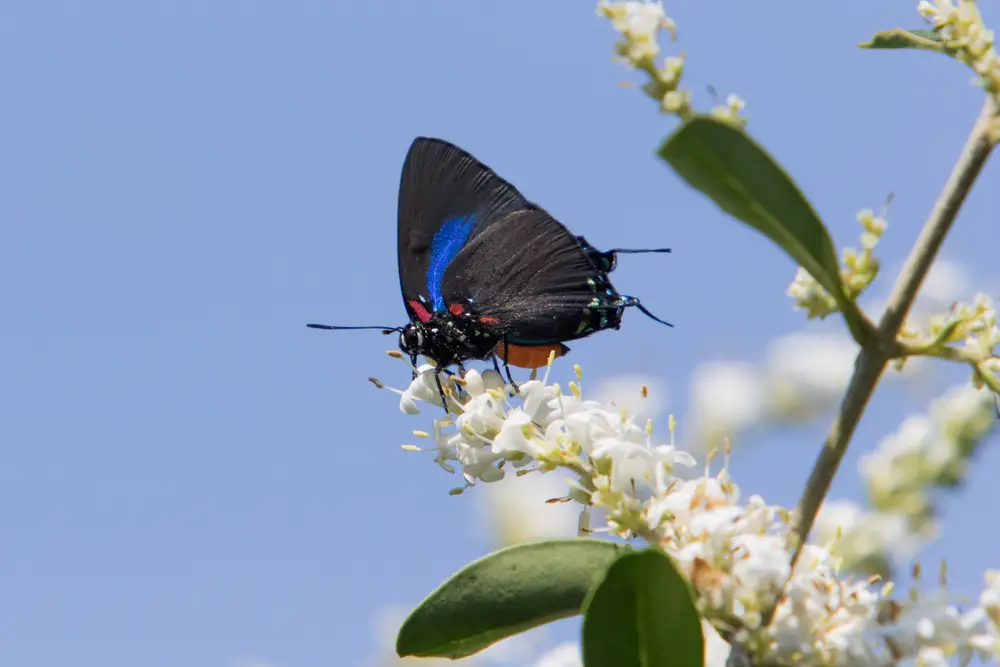 Atlides halesusGreat Purple Hairstreak (Atlides halesus)The great purple hairstreak (Atlides halesus) is the largest hairstreak in the United States, a tailed gossamer-wing of the southern states and Mexico
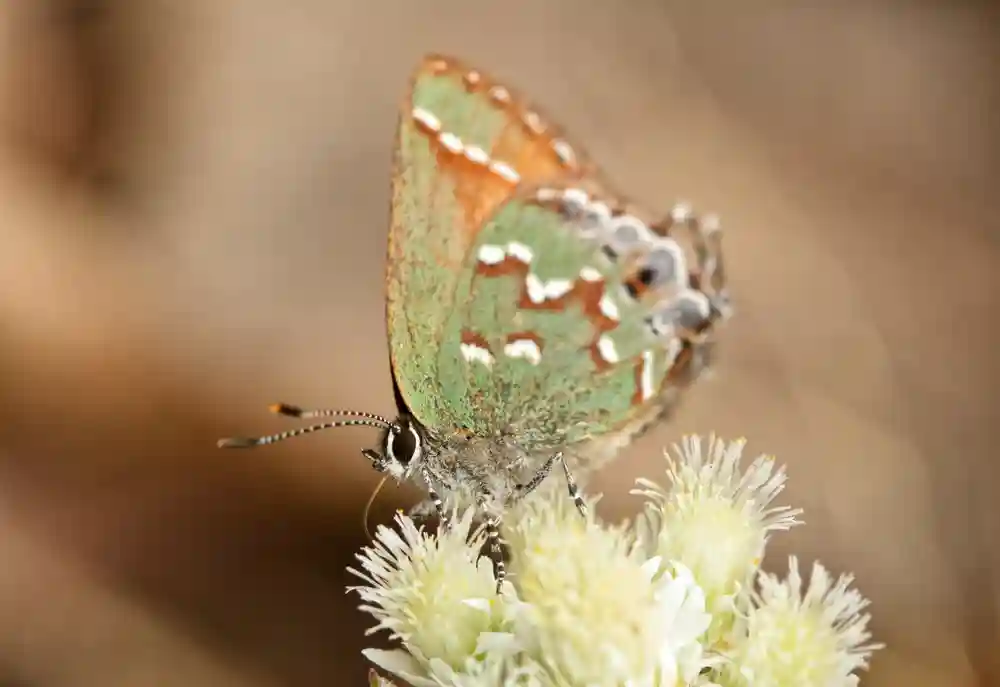 Callophrys gryneusJuniper Hairstreak (Callophrys gryneus)The juniper hairstreak (Callophrys gryneus) is a small North American butterfly, barely over an inch across, whose underside is a clear leaf green cro
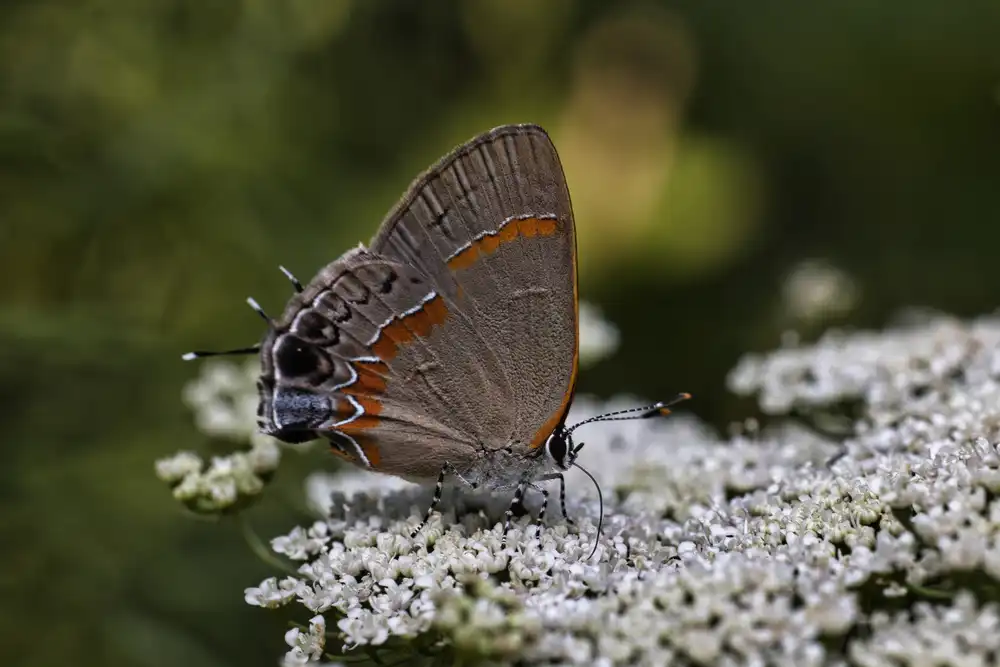 Calycopis cecropsRed-banded Hairstreak (Calycopis cecrops)The red-banded hairstreak is a small grey-brown butterfly of the southeastern United States, named for the broad white-and-red line that runs across t
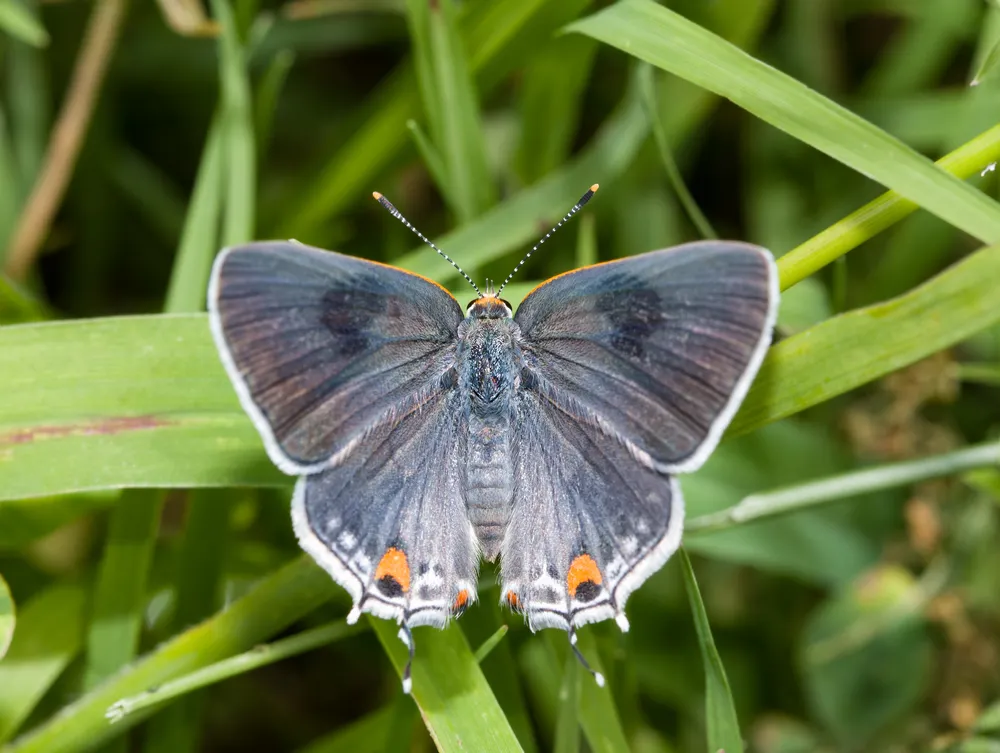 Strymon melinusGray Hairstreak (Strymon melinus)Small, slate-grey and almost impossible to avoid, the gray hairstreak is the most widespread hairstreak in North America and probably the least fussy Strymon melinusGray Hairstreak (Strymon melinus)Small, slate-grey and almost impossible to avoid, the gray hairstreak is the most widespread hairstreak in North America and probably the least fussy
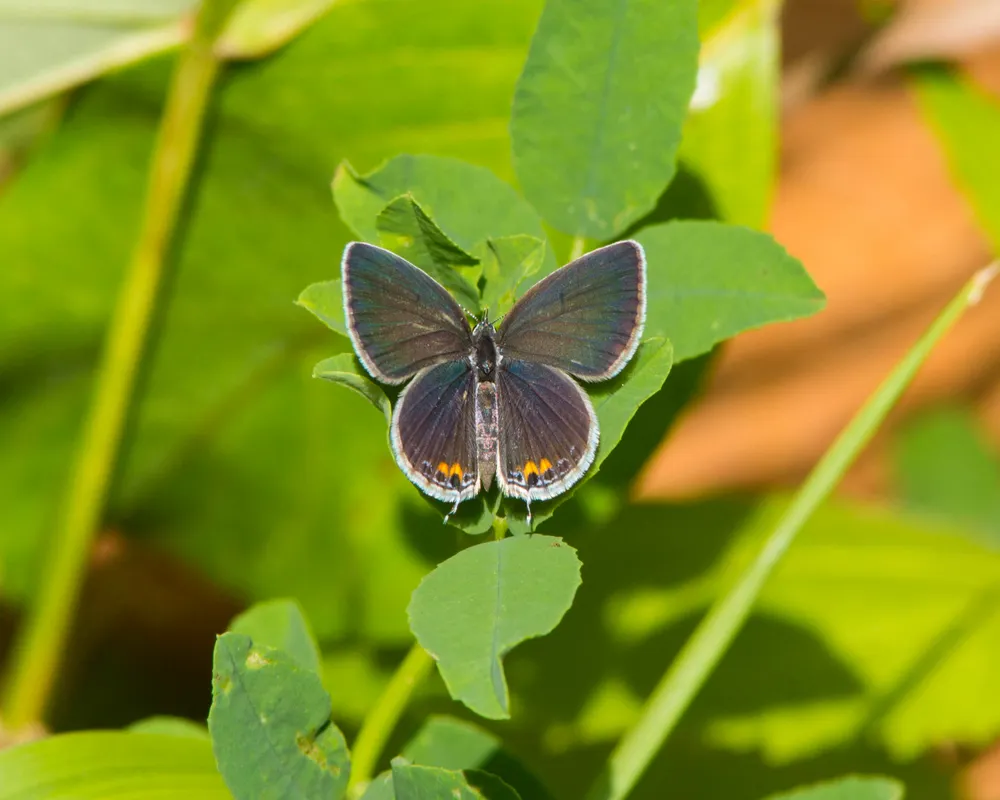 Cupido comyntasEastern Tailed Blue (Cupido comyntas)Barely an inch across and never far from a clover lawn, the eastern tailed blue is one of the most abundant butterflies in the eastern United States a
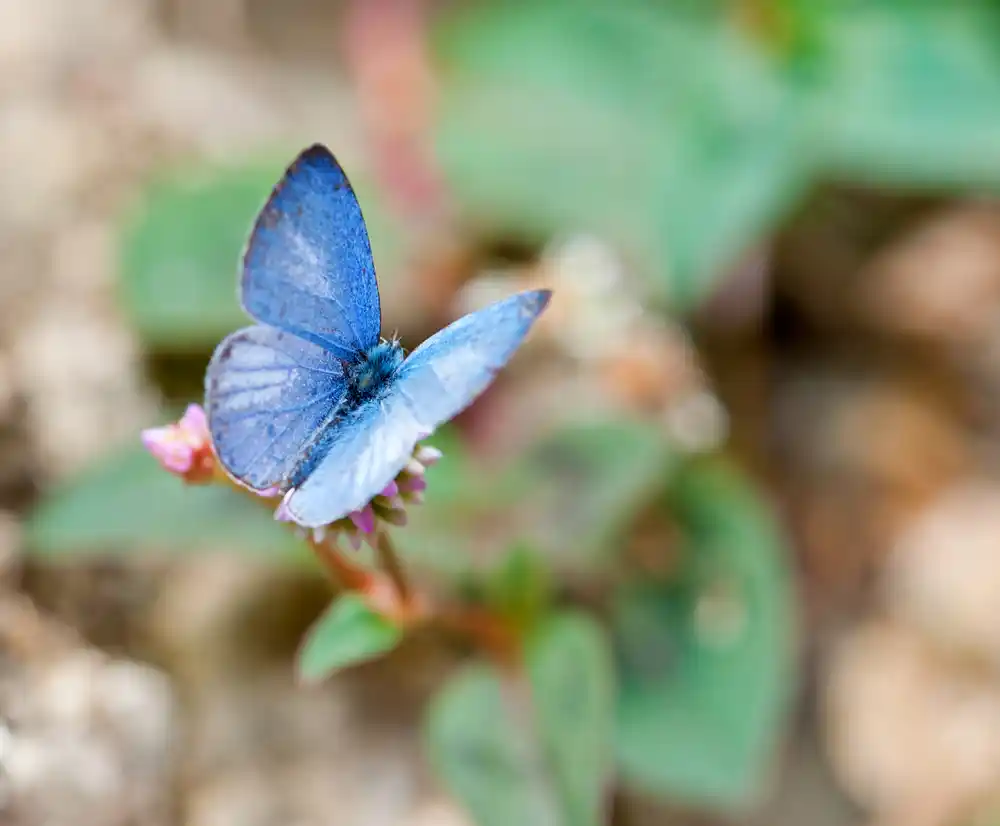 Celastrina ladonSpring Azure (Celastrina ladon)The spring azure is often the first butterfly of the year, a small violet-blue flake that appears along a woodland edge while the trees are still bare
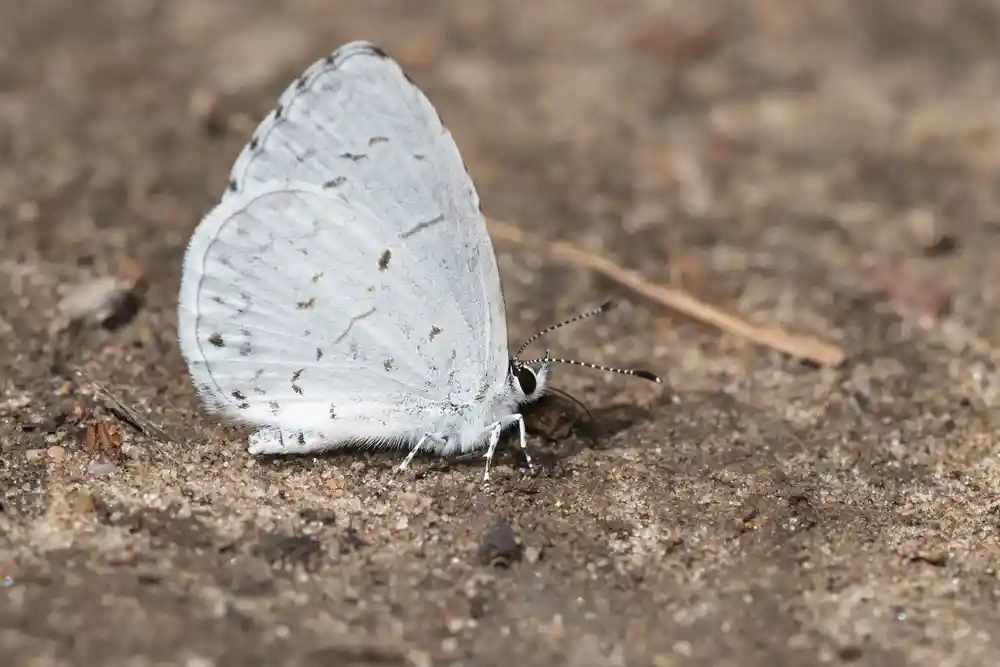 Celastrina neglectaSummer Azure (Celastrina neglecta)A pale, frosted blue butterfly barely an inch across, the summer azure is the one that flies when the spring azures have finished.
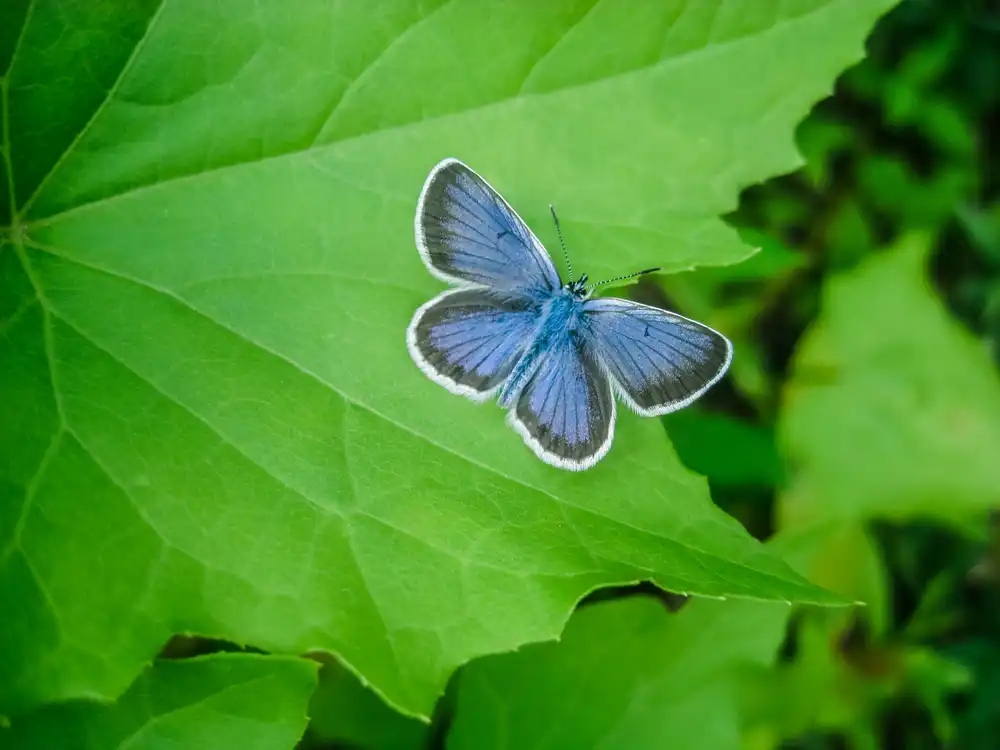 Glaucopsyche lygdamusSilvery Blue (Glaucopsyche lygdamus)One of the first blues on the wing each spring, the silvery blue flashes metallic silver-blue in flight and then settles to show a plain grey undersid
Show all 64 other gossamer-winged species names
- Harvester (Feniseca tarquinius)
- Gray Copper (Lycaena dione)
- Colorado Hairstreak (Hypaurotis crysalus)
- Mexican Cycadian (Eumaeus childrenae)
- Thicket Hairstreak (Callophrys spinetorum)
- Xami Hairstreak (Callophrys xami)
- Sandia Hairstreak (Callophrys mcfarlandi)
- Frosted Elfin (Callophrys irus)
- Henry's Elfin (Callophrys henrici)
- Eastern Pine Elfin (Callophrys niphon)
- Goodson's Greenstreak (Cyanophrys goodsoni)
- Tropical Greenstreak (Cyanophrys herodotus)
- Clench's Greenstreak (Cyanophrys miserabilis)
- Gold-bordered Hairstreak (Rekoa palegon)
- Marius Hairstreak (Rekoa marius)
- Sky-blue Groundstreak (Kisutam sillus)
- Oak Hairstreak (Satyrium favonius)
- Northern' Southern Hairstreak (Satyrium favonius ontario)
- Poling's Hairstreak (Satyrium polingi)
- Coral Hairstreak (Satyrium titus)
- Edwards' Hairstreak (Satyrium edwardsii)
- Banded Hairstreak (Satyrium calanus)
- King's Hairstreak (Satyrium kingi)
- Striped Hairstreak (Satyrium liparops)
- Behr's Hairstreak (Satyrium behrii)
- Soapberry Hairstreak (Phaeostrymon alcestis)
- Black Hairstreak (Satyrium pruni)
- Silver-banded Hairstreak (Chlorostrymon simaethis)
- Telea Hairstreak (Chlorostrymon telea)
- Strophius Hairstreak (Allosmaitia strophius)
- Orange-crescent Groundstreak (Ziegleria guzanta)
- Ruddy Hairstreak (Electrostrymon sangala)
- Muted Hairstreak (Electrostrymon joya)
- Dusky-blue Groundstreak (Calycopis isobeon)
- Red-crescent Scrub-Hairstreak (Strymon rufofusca)
- White Scrub-Hairstreak (Strymon albata)
- Lacey's Scrub-Hairstreak (Strymon alea)
- Red-lined Scrub-Hairstreak (Strymon bebrycia)
- Yojoa Scrub-Hairstreak (Strymon yojoa)
- Tailless Scrub-Hairstreak (Strymon cestri)
- Mallow Scrub-Hairstreak (Strymon istapa)
- Lantana Scrub-Hairstreak (Strymon bazochii)
- Bromeliad Scrub-Hairstreak (Strymon serapio)
- Big Bend Scrub-Hairstreak (Strymon solitario)
- Megarus Scrub-Hairstreak (Strymon megarus)
- Red-spotted Hairstreak (Tmolus echion)
- Leda Ministreak (Ministrymon leda)
- Clytie Ministreak (Ministrymon clytie)
- Zebra-striped Hairstreak (Panthiades bathildis)
- Aquamarine Hairstreak (Oenomaus ortygnus)
- White-M Hairstreak (Parrhasius m-album)
- Arizona Hairstreak (Erora quaderna)
- Cassius Blue (Leptotes cassius)
- Marine Blue (Leptotes marina)
- Cyna Blue (Zizula cyna)
- Western Pygmy-Blue (Brephidium exilis)
- Western Tailed-Blue (Cupido amyntula)
- Eastern Pygmy-Blue (Brephidium pseudofea)
- Rita Dotted-Blue (Euphilotes rita)
- Ceraunus Blue (Hemiargus ceraunus)
- Reakirt's Blue (Echinargus isola)
- Melissa Blue (Plebejus melissa)
- Acmon Blue (Icaricia acmon)
- Lupine Blue (Plebejus lupini)
White and Sulphurs (Pieridae)
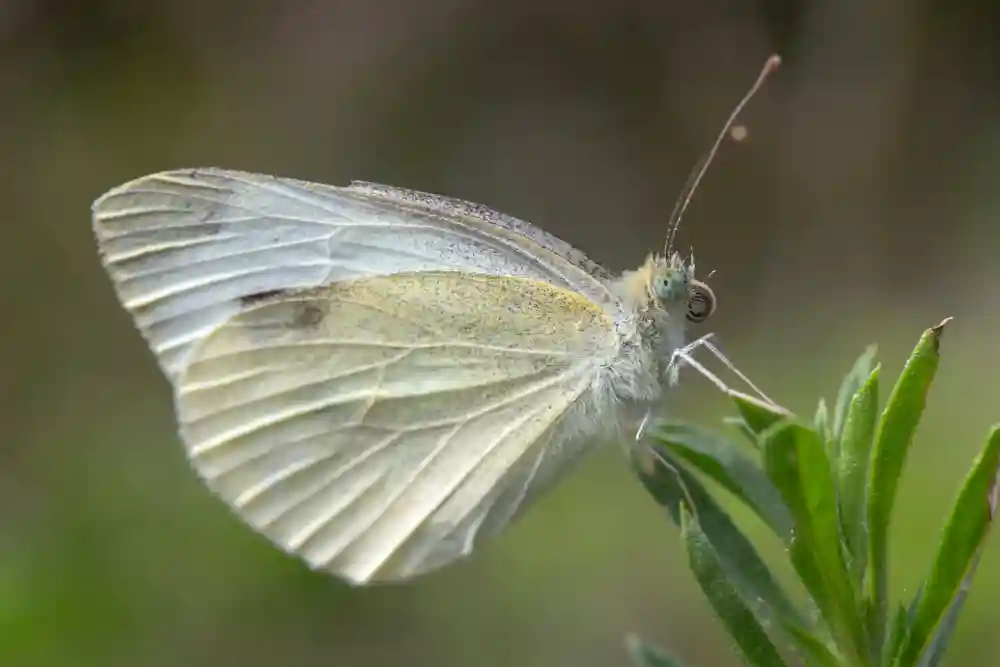 Pieris rapaeCabbage White (Pieris rapae)The cabbage white is probably the most-seen butterfly on the planet: a small, chalk-white insect with one or two black spots that drifts over allotmen
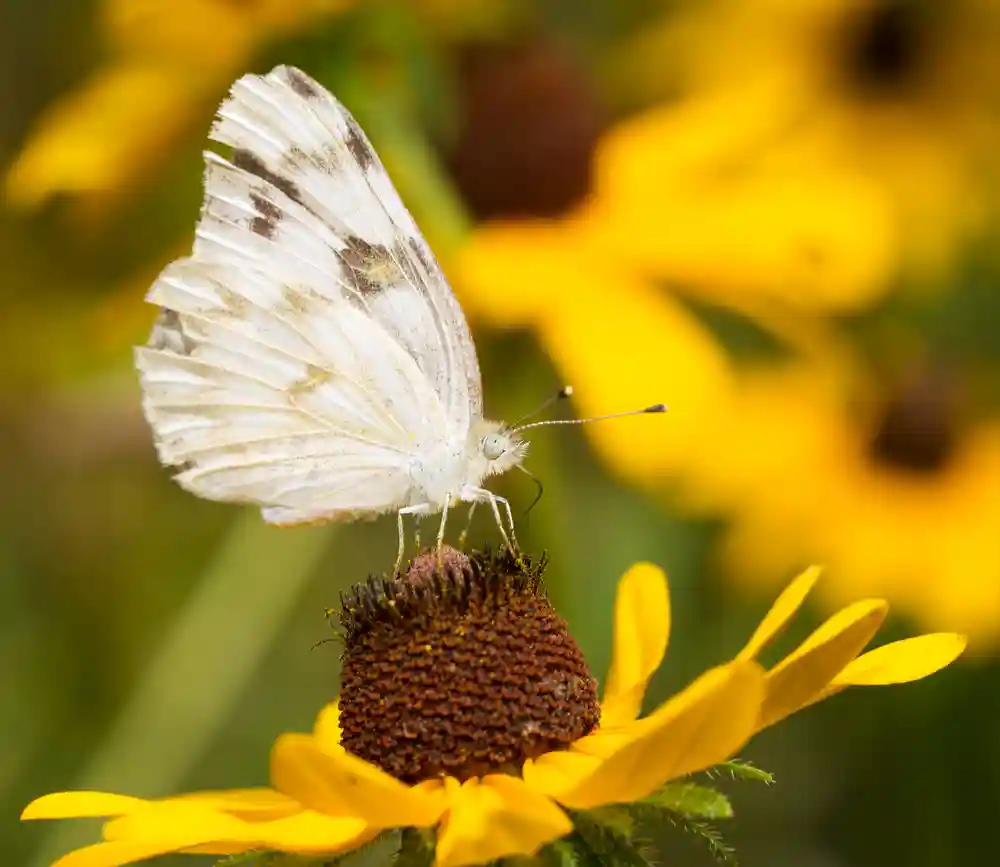 Pontia protodiceCheckered White (Pontia protodice)The checkered white is a medium-sized white butterfly of dry, open, disturbed ground across the United States and northern Mexico, recognised by the g
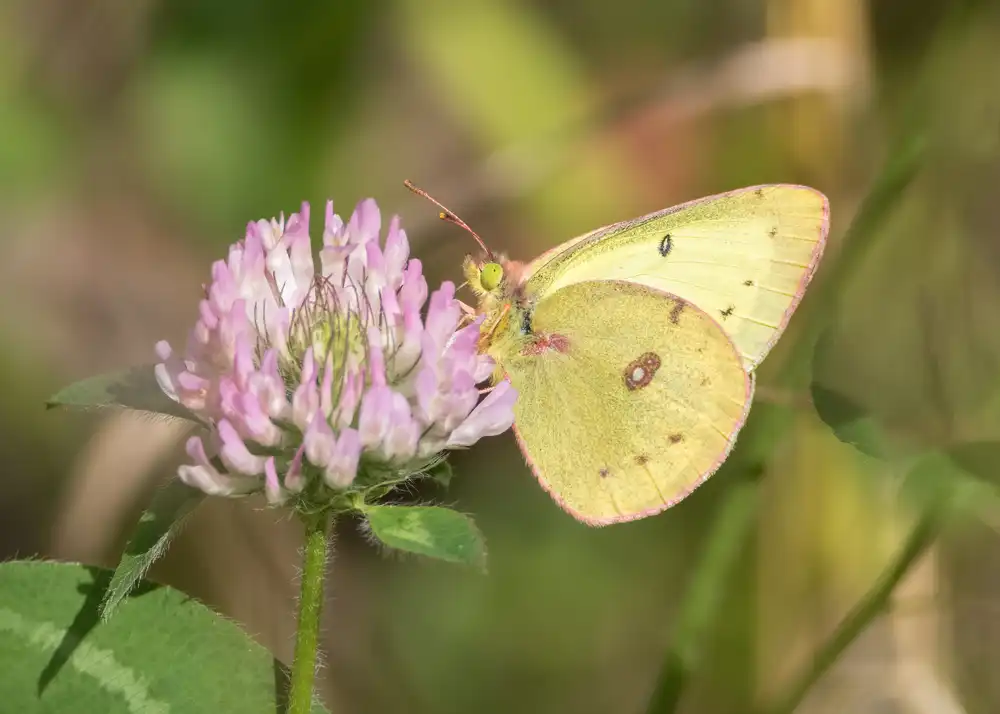 Colias philodiceClouded Sulphur (Colias philodice)The clouded sulphur is the plain yellow butterfly of North American roadsides, clover lawns and alfalfa fields, common from Alaska to the Gulf.
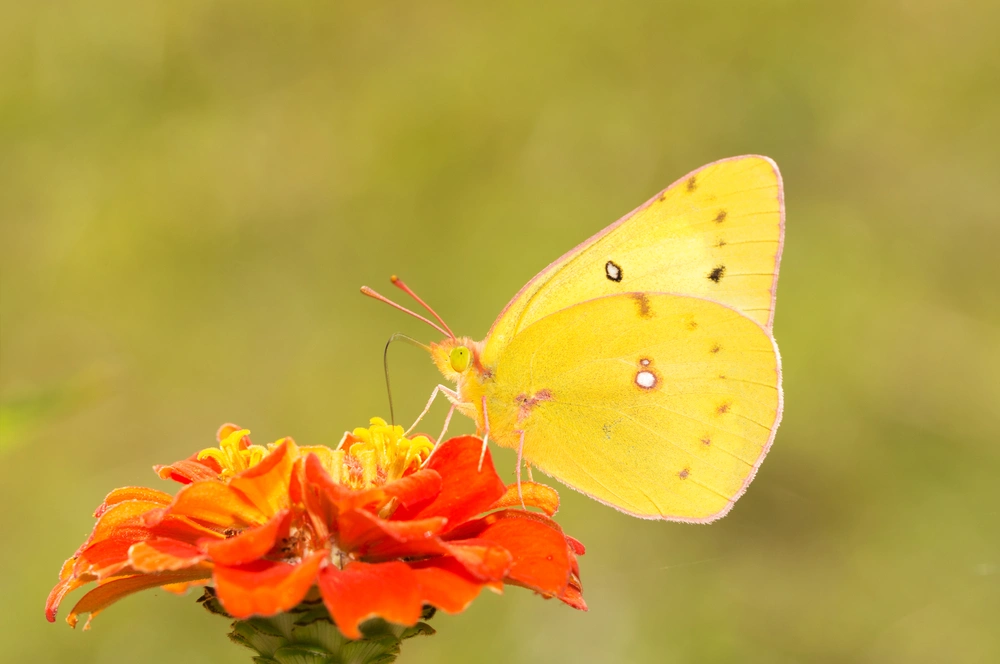 Colias eurythemeOrange Sulphur (Colias eurytheme)The orange sulphur is a medium-sized orange-and-black butterfly of open fields, roadsides and alfalfa farms across almost the whole of North America,
 Phoebis sennaeCloudless Sulphur (Phoebis sennae)The cloudless sulphur is a large, fast-flying lemon-yellow butterfly of the Americas, resident from Argentina north through the tropics to the southerEurema lisaLittle Yellow (Eurema lisa)A thumbnail-sized sulphur that flutters low over roadsides and fallow fields, the little yellow is one of the most numerous butterflies in eastern Nor
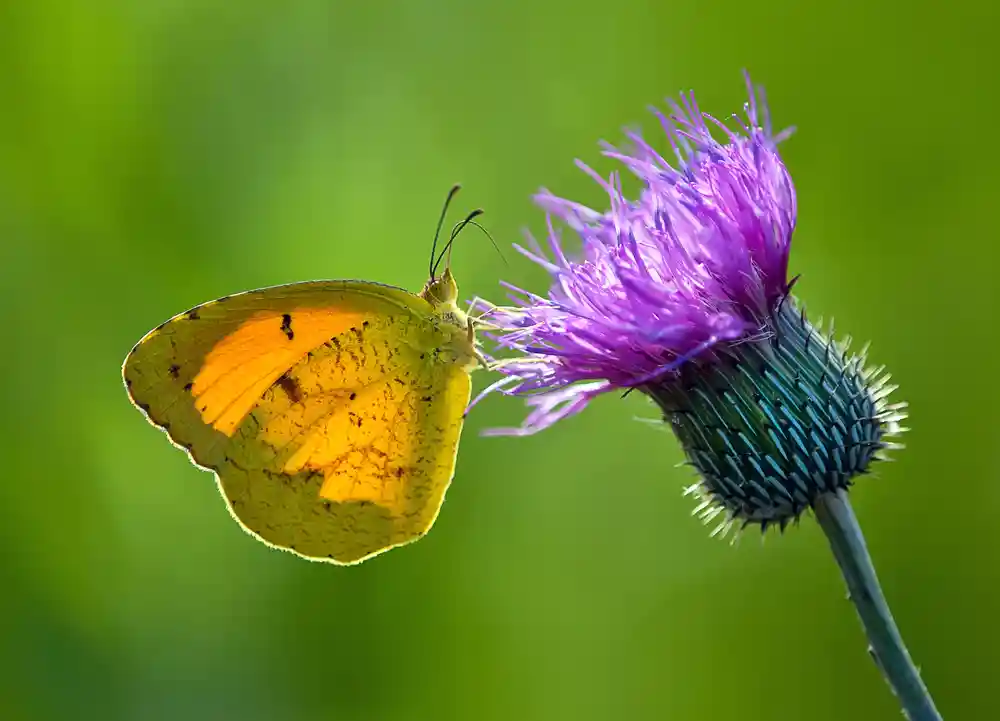 Eurema nicippeSleepy Orange (Eurema nicippe)The sleepy orange is a small, deep-orange sulphur of the southern United States, Mexico and Central America, easily known by the ragged black border t
Show all 33 other white and sulphurs species names
- Desert Orangetip (Anthocharis cethura)
- Southwestern Orangetip (Anthocharis sara thoosa)
- Costa-spotted Mimic-White (Enantia albania)
- Desert Marble (Euchloe lotta)
- Olympia Marble (Euchloe olympia)
- Pine White (Neophasia menapia)
- Florida White (Appias drusilla)
- Common Melwhite (Melete lycimnia)
- Pine White (Neophasia menapia)
- Mexican Dartwhite (Catasticta nimbice)
- Viardi White (Pieriballia viardi)
- Cross-barred White (Itaballia demophile)
- Mountain White (Oeneis melissa)
- Spring White (Pontia sisymbrii)
- Great Southern White (Ascia monuste)
- Giant White (Ganyra josephina)
- Southern Dogface (Colias cesonia)
- White Angled-Sulphur (Anteos clorinde)
- Yellow Angled-Sulphur (Anteos maerula)
- Large Orange Sulphur (Phoebis agarithe)
- Orange-barred Sulphur (Phoebis philea)
- Tailed Sulphur (Dercas verhuelli)
- Statira Sulphur (Aphrissa statira)
- Lyside Sulphur (Kricogonia lyside)
- Barred Yellow (Eurema daira)
- Boisduval's Yellow (Eurema boisduvaliana)
- Mexican Yellow (Eurema mexicana)
- Salome Yellow (Eurema salome)
- Ghost Yellow (Eurema albula)
- Tailed Orange (Eurema proterpia)
- Mimosa Yellow (Pyrisitia nise)
- Dina Yellow (Eurema dina)
- Dainty Sulphur (Nathalis iole)
Metalmark (Riodinidae)
- Rounded metalmark/ lost metalmark (Calephelis perditalis)
- Red-bordered Pixie (Melanis pixe)
Swallowtail (Papilionidae)
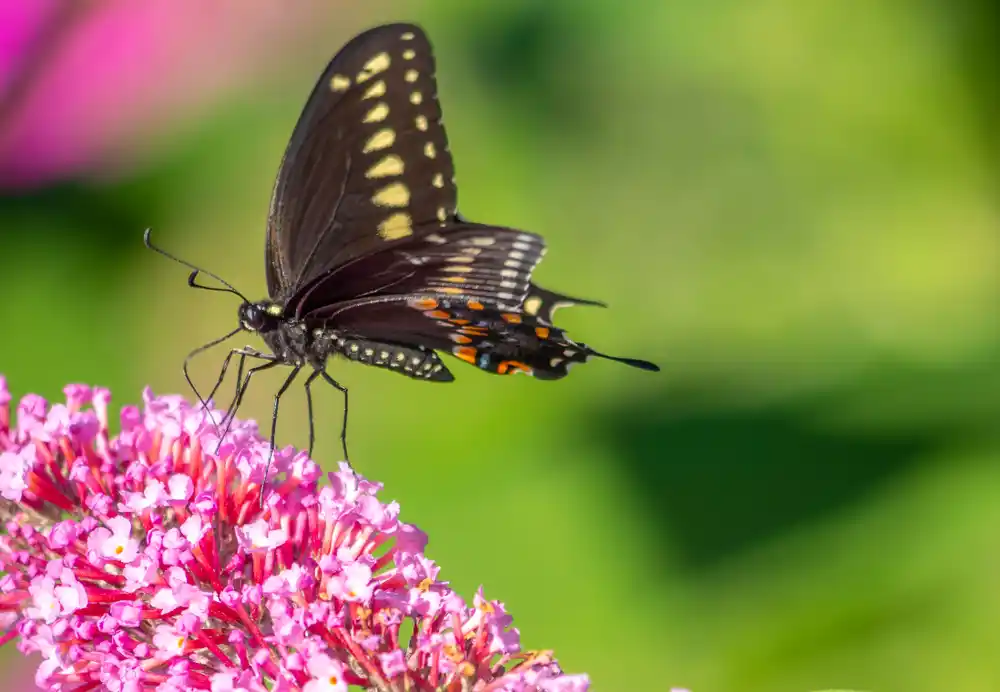 Papilio polyxenesBlack Swallowtail (Papilio polyxenes)The black swallowtail is a black, yellow-spotted butterfly of open country across most of North America, and its caterpillar is the familiar green-and
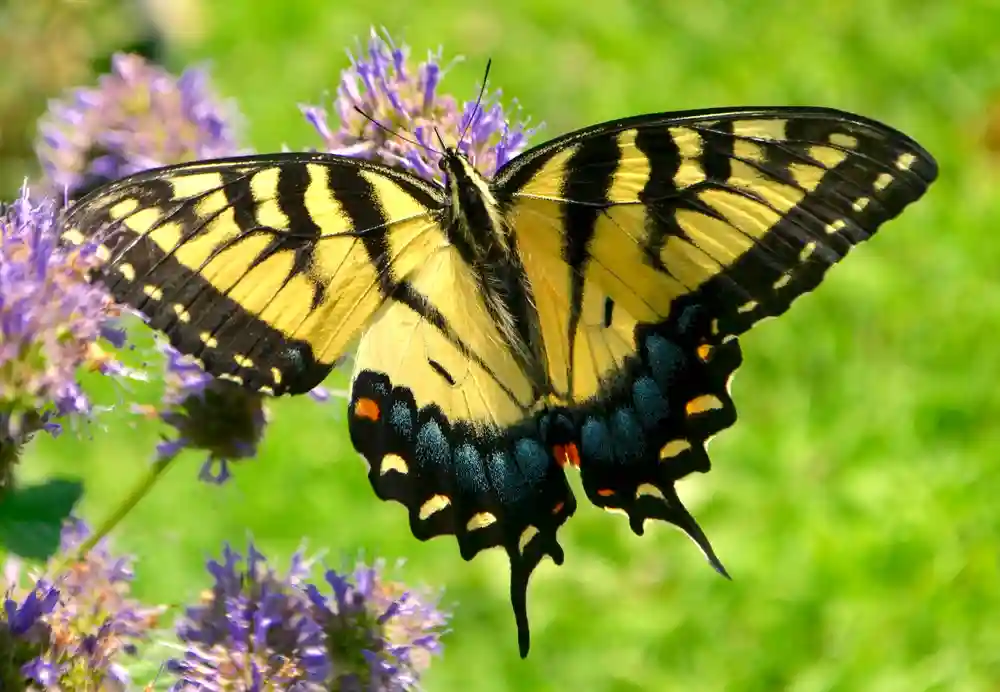 Papilio glaucusEastern Tiger Swallowtail (Papilio glaucus)The eastern tiger swallowtail is a large yellow butterfly with four black tiger stripes on each forewing and a tail on each hindwing, and it is the coPapilio cresphontesGiant Swallowtail (Papilio cresphontes)The largest butterfly in the United States and Canada, the giant swallowtail sails over citrus groves and woodland edges on dark wings crossed by a ba
 Papilio palamedesPalamedes Swallowtail (Papilio palamedes)The big dark swallowtail of southern swamp forests, the palamedes is tied almost entirely to one tree, the redbay.
 Papilio troilusSpicebush Swallowtail (Papilio troilus)The spicebush swallowtail is a black swallowtail of eastern North American woodland edges and swamps, marked by a row of ivory spots along the forewin
 Papilio multicaudataTwo-tailed Swallowtail (Papilio multicaudata)The largest butterfly in most of the American West, the two-tailed swallowtail is a pale yellow tiger swallowtail with unusually thin black stripes an
 Papilio rutulusWestern Tiger Swallowtail (Papilio rutulus)The western tiger swallowtail is a large lemon-yellow butterfly with four black tiger stripes on each forewing and a single tail on each hindwing, and
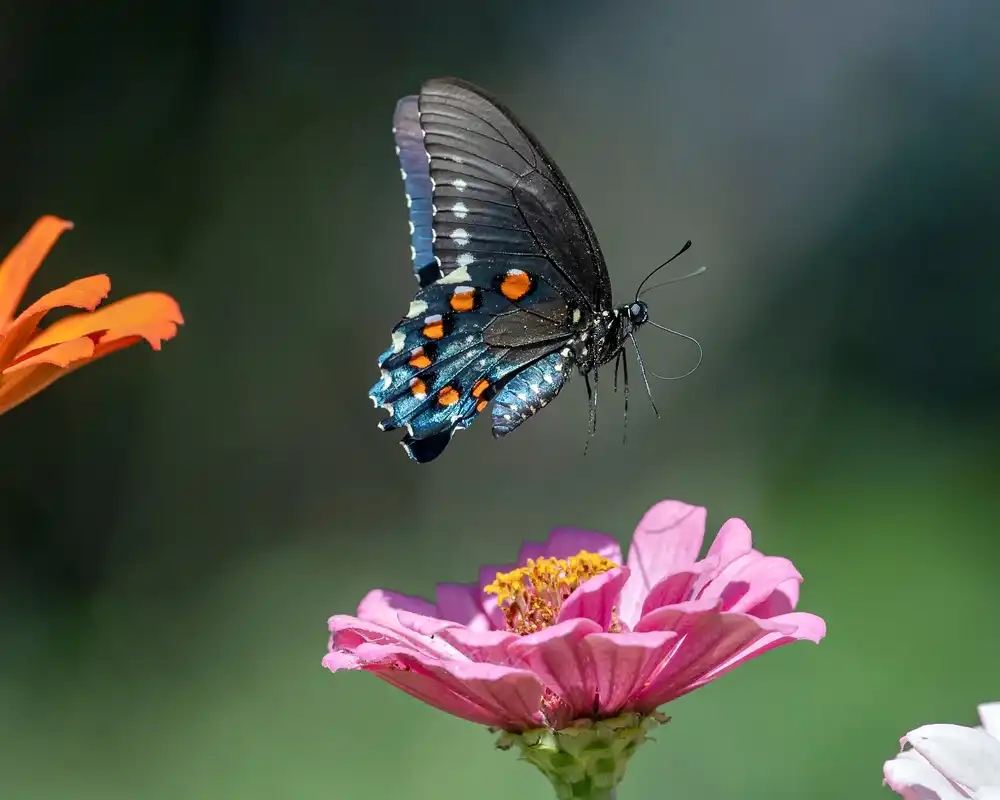 Battus philenorPipevine Swallowtail (Battus philenor)The pipevine swallowtail is a large black North American swallowtail with an iridescent blue to blue-green hindwing and a single curved row of seven o
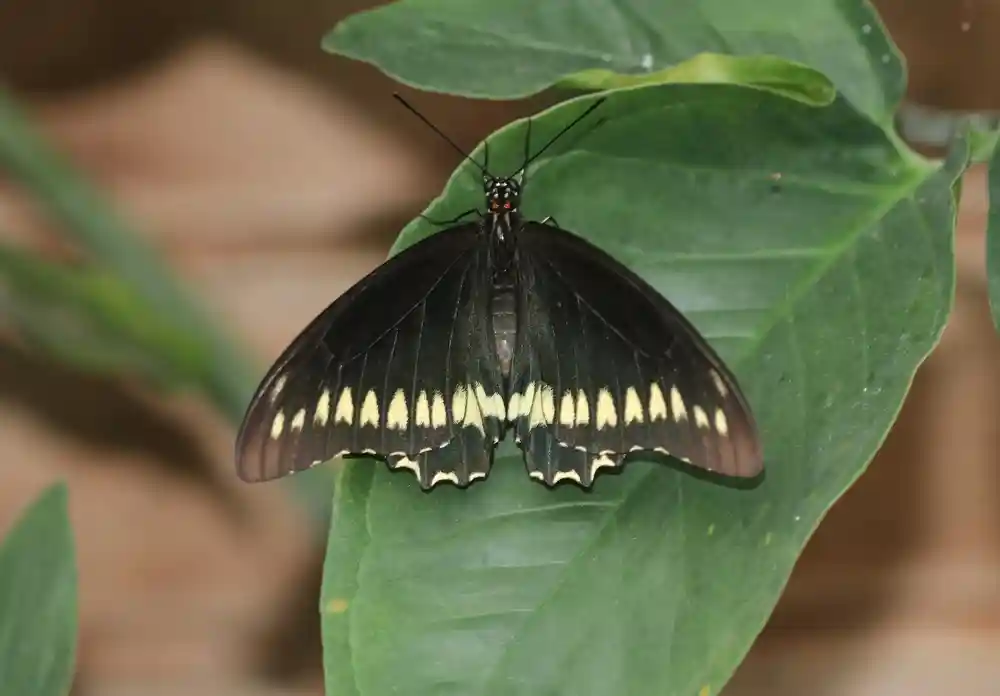 Battus polydamasPolydamas Swallowtail (Battus polydamas)The polydamas swallowtail is a large black butterfly with a yellow band across the outer wings and no tails at all, found from Florida and south Texas
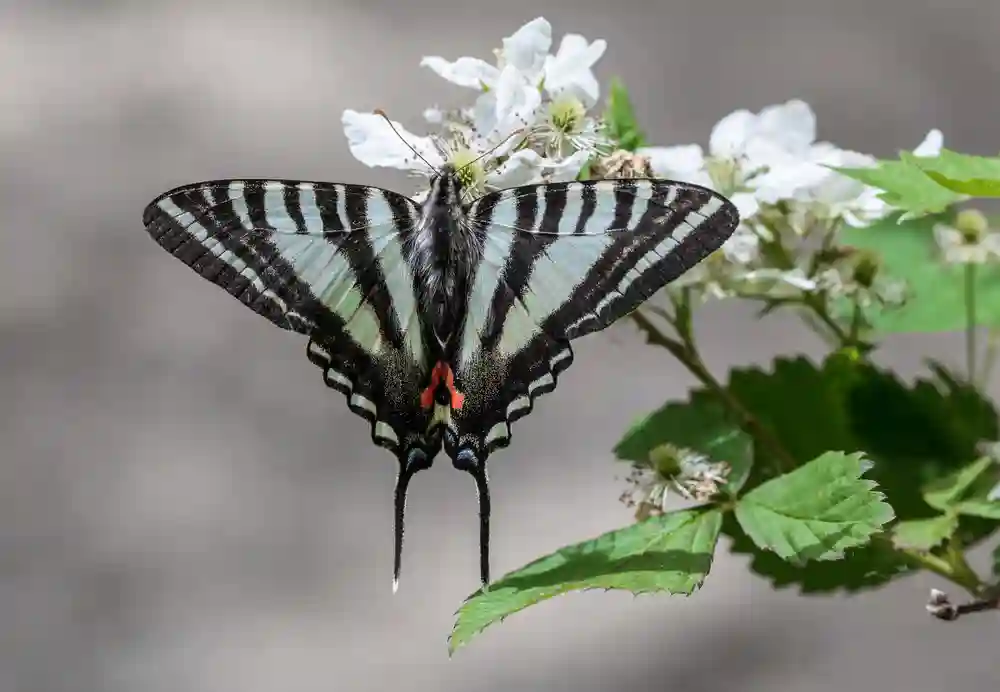 Protographium marcellusZebra Swallowtail (Protographium marcellus)The zebra swallowtail is a white-and-black striped butterfly of the eastern United States with the longest tails of any North American swallowtail, an
Show all 10 other swallowtail species names
- Broad-banded Swallowtail (Papilio astyalus)
- Dark Kite-Swallowtail (Eurytides philolaus)
- Magnificent Swallowtail (Papilio garamus)
- Mylotes Cattle Heart (Parides eurimedes)
- Ornythion Swallowtail (Papilio ornythion)
- Pink-spotted Swallowtail (Papilio pharnaces)
- Ruby-spotted Swallowtail (Papilio anchisiades)
- Thoas Swallowtail (Papilio thoas)
- Three-tailed Swallowtail (Papilio pilumnus)
- Victorine Swallowtail (Papilio victorinus)
Skipper (Hesperiidae)
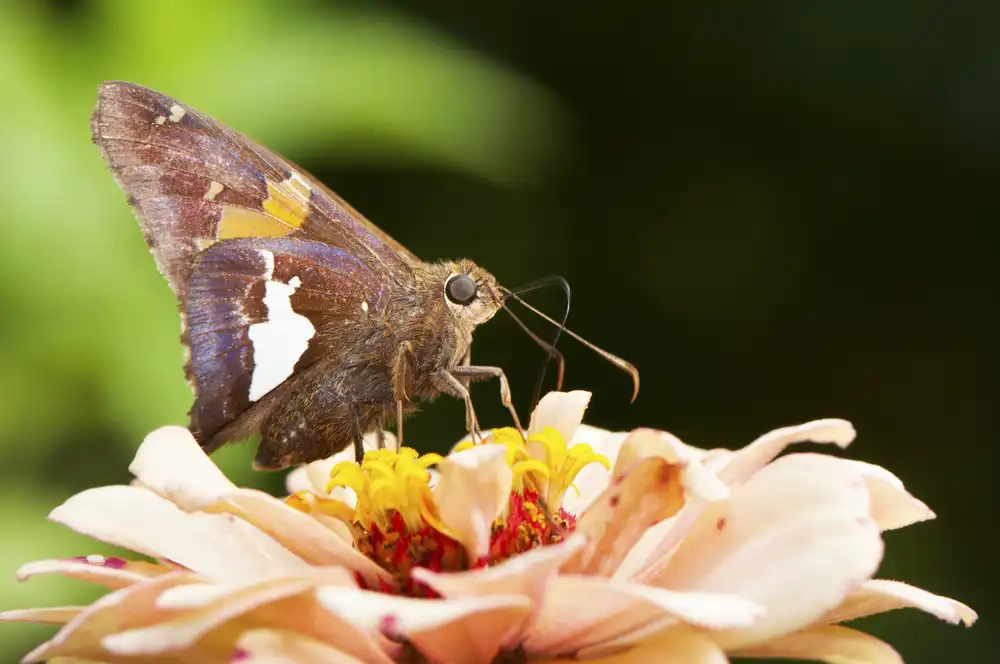 Epargyreus clarusSilver-spotted Skipper (Epargyreus clarus)The silver-spotted skipper is a large, chocolate-brown butterfly of gardens, field edges and woodland clearings across almost the whole of North Ameri
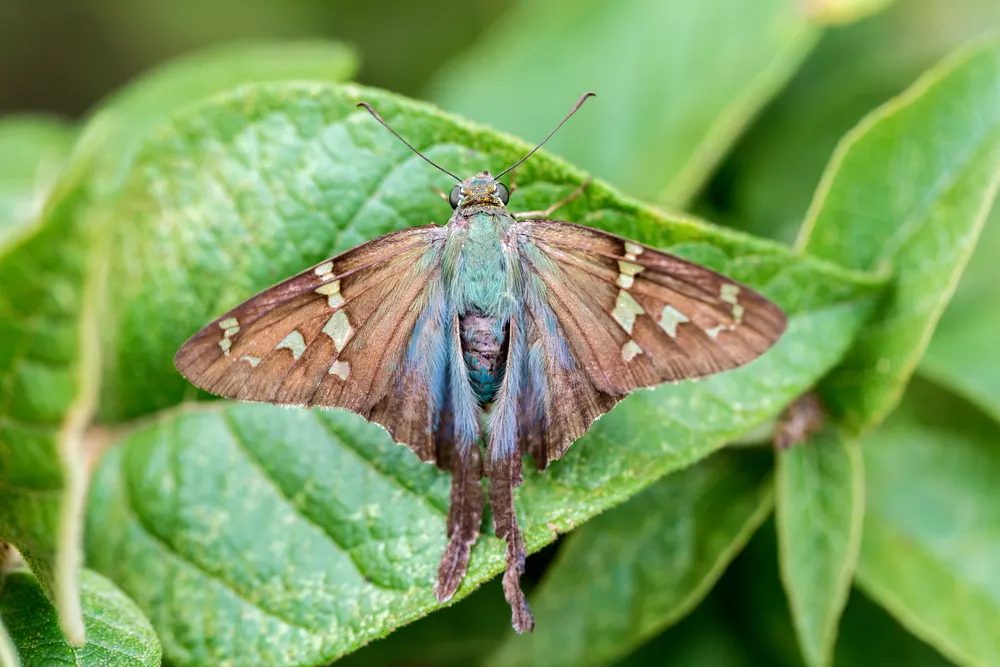 Urbanus proteusLong-tailed Skipper (Urbanus proteus)A stocky brown skipper with a shimmer of blue-green over its body and wing bases and two long tails trailing from the hindwings, the long-tailed skipp
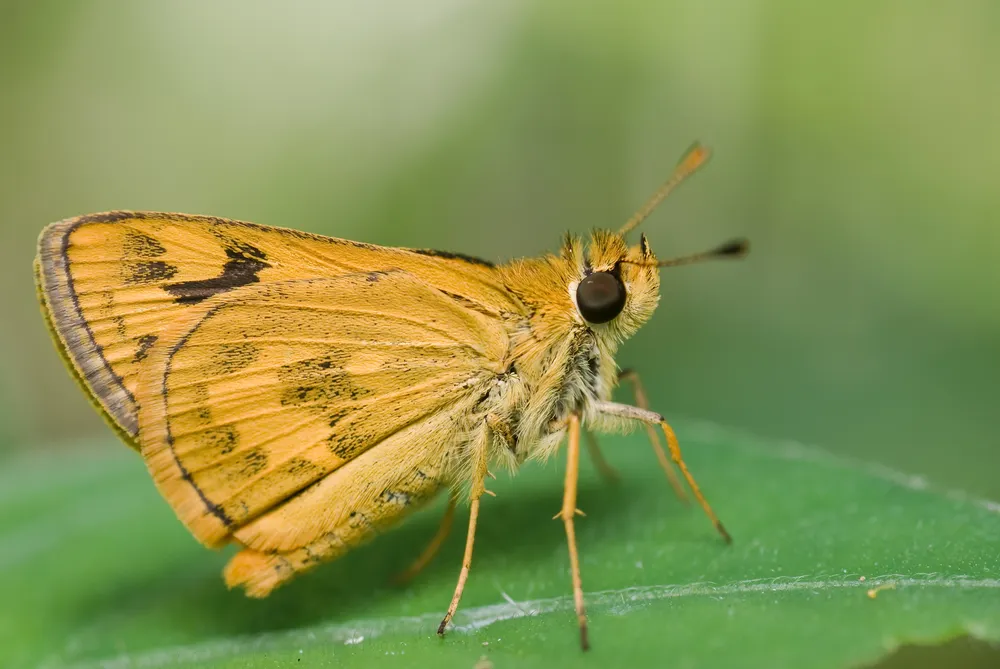 Hylephila phyleusFiery Skipper (Hylephila phyleus)A small orange rocket of a butterfly that sits on a flower with its forewings cocked up and its hindwings flat, the fiery skipper is one of the most f
Show all 197 other skipper species names
- Dull Firetip (Pyrrhopyge araxes)
- Skinner's Cloudywing (Achalarus albociliatus)
- Desert cloudywing (Achalarus casica)
- Jalapus Cloudywing (Achalarus jalapus)
- Hoary Edge (Achalarus lyciades)
- Coyote Cloudywing (Achalarus toxeus)
- Gold-spotted Aguna (Aguna asander)
- Emerald Aguna (Aguna claxon)
- Tailed Aguna (Aguna metophis)
- Starred Skipper (Arteurotia tractipennis)
- Frosted Flasher (Astraptes alardus)
- Gilbert's Flasher (Astraptes alector)
- Yellow-tipped Flasher (Astraptes anaphus)
- Small-spotted Flasher (Astraptes egregius)
- Two-barred Flasher (Astraptes fulgerator)
- Golden banded-Skipper (Autochton cellus)
- Chisos banded-Skipper (Autochton cincta)
- Sonoran banded-Skipper (Autochton pseudocellus)
- Obscure Bolla (Bolla brennus)
- Mottled Bolla (Bolla clytius)
- Potrillo Skipper (Cabares potrillo)
- Hoary Skipper (Carrhenes canescens)
- Fritzgaertner's flat (Celaenorrhinus fritzgaertneri)
- Stallings' flat (Celaenorrhinus stallingsi)
- Scarce streaky-Skipper (Celotes limpia)
- Common streaky Skipper (Celotes nessus)
- White-striped Longtail (Chioides catillus)
- Zilpa Longtail (Chioides zilpa)
- White-patched Skipper (Chiomara georgina)
- White-crescent Longtail (Codatractus alcaeus)
- Arizona skipper (Codatractus arizonensis)
- Mimosa Skipper (Cogia calchas)
- Acacia Skipper (Cogia hippalus)
- Outis Skipper (Cogia outis)
- Sickle-winged Skipper (Eantis tamenund)
- Broken Silverdrop (Epargyreus exadeus)
- Wild indigo Duskywing (Erynnis baptisiae)
- Sleepy Duskywing (Erynnis brizo)
- Funereal Duskywing (Erynnis funeralis)
- Horace's Duskywing (Erynnis horatius)
- Juvenal's Duskywing (Erynnis juvenalis)
- Mottled Duskywing (Erynnis martialis)
- Meridian Duskywing (Erynnis meridianus)
- Scudder's Duskywing (Erynnis scudderi)
- Rocky Mountain Duskywing (Erynnis telemachus)
- Mournful Duskywing (Erynnis tristis)
- Zarucco Duskywing (Erynnis zarucco)
- False Duskywing (Gesta invisa)
- Variegated Skipper (Gorgythion begga)
- Hermit Skipper (Grais stigmatica)
- Veined white-Skipper (Heliopetes arsalte)
- Laviana white-Skipper (Heliopetes laviana)
- Turk's-cap white-Skipper (Heliopetes macaira)
- Erichson's white-Skipper (Heliopyrgus domicella)
- Saltbush Sootywing (Hesperopsis alpheus)
- Purplish-black Skipper (Nisoniades rubescens)
- Red-studded Skipper (Noctuana stator)
- Glazed Pellicia (Pellicia arina)
- Morning glory Pellicia (Pellicia dimidiata)
- Guava Skipper (Phocides palemon)
- Common Sootywing (Pholisora catullus)
- Mexican Sootywing (Pholisora mejicana)
- Hammock Skipper (Polygonus leo)
- Manuel's Skipper (Polygonus manueli)
- Mexican Longtail (Polythrix mexicanus)
- Eight-spotted Longtail (Polythrix octomaculata)
- Mercurial Skipper (Proteides mercurius)
- White checkered Skipper (Pyrgus albescens)
- Common checkered-Skipper (Pyrgus communis)
- Tropical checkered Skipper (Pyrgus oileus)
- Desert checkered Skipper (Pyrgus philetas)
- Small checkered-Skipper (Pyrgus scriptura)
- Blue-studded Skipper (Sostrata nordica)
- Falcate Skipper (Spathilepia clonius)
- Aztec Scallopwing (Staphylus azteca)
- Golden-headed Scallopwing (Staphylus ceos)
- Hayhurst's Scallopwing (Staphylus hayhurstii)
- Mazans Scallopwing (Staphylus mazans)
- Texas powdered Skipper (Systasea pulverulenta)
- Arizona powdered Skipper (Systasea zampa)
- Southern Cloudywing (Thorybes bathyllus)
- Confusing Cloudywing (Thorybes confusis)
- Drusius Cloudywing (Thorybes drusius)
- Northern Cloudywing (Thorybes pylades)
- Brown-banded Skipper (Timochares ruptifasciatus)
- Mottled Longtail (Typhedanus undulatus)
- Double-striped Longtail (Urbanus belli)
- Dorantes Longtail (Urbanus dorantes)
- White-tailed Longtail (Urbanus doryssus)
- Esmeralda Longtail (Urbanus esmeraldus)
- Brown Longtail (Urbanus procne)
- Pronus Longtail (Urbanus pronus)
- Plain Longtail (Urbanus simplicius)
- Tanna Longtail (Urbanus tanna)
- Teleus Longtail (Urbanus teleus)
- Glassy-winged Skipper (Xenophanes tryxus)
- Short-tailed Skipper (Zestusa dorus)
- Sunrise Skipper (Adopaeoides prittwitzi)
- Bronze roadside-Skipper (Amblyscirtes aenus)
- Lace-winged Roadside-Skipper (Amblyscirtes aesculapius)
- Dusky roadside-Skipper (Amblyscirtes alternata)
- Bell's roadside-Skipper (Amblyscirtes belli)
- Cassus roadside-Skipper (Amblyscirtes cassus)
- Celia's roadside Skipper (Amblyscirtes celia)
- Dotted roadside-Skipper (Amblyscirtes eos)
- Pepper and Salt Skipper (Amblyscirtes hegon)
- Slaty roadside-Skipper (Amblyscirtes nereus)
- Nysa roadside-Skipper (Amblyscirtes nysa)
- Oslar's roadside-Skipper (Amblyscirtes oslari)
- Orange-headed roadside-Skipper (Amblyscirtes phylace)
- Simius roadside-Skipper (Amblyscirtes simius)
- Texas roadside-Skipper (Amblyscirtes texanae)
- Common roadside-Skipper (Amblyscirtes vialis)
- Delaware Skipper (Anatrytone logan)
- Glowing Skipper (Anatrytone mazai)
- Tropical least Skipper (Ancyloxypha arene)
- Least Skipper (Ancyloxypha numitor)
- Sachem (Atalopedes campestris)
- Arogos Skipper (Atrytone arogos)
- Sheep Skipper (Atrytonopsis edwardsi)
- Dusted Skipper (Atrytonopsis hianna)
- White-barred Skipper (Atrytonopsis pittacus)
- Python Skipper (Atrytonopsis python)
- Viereck's Skipper (Atrytonopsis vierecki)
- Brazilian Skipper (Calpodes ethlius)
- Hidden-ray Skipper (Conga chydaea)
- Orange Skipperling (Copaeodes aurantiacia)
- Southern Skipperling (Copaeodes minima)
- Redundant Skipper (Corticea corticea)
- Trebius' Fawn-spotted Skipper (Cymaenes odilia trebius)
- Double-dotted Skipper (Decinea percosius)
- Bay Skipper (Euphyes bayensis)
- Dion Skipper (Euphyes dion)
- Dukes' Skipper (Euphyes dukesi)
- Dun Skipper (Euphyes vestris)
- Dotted Skipper (Hesperia attalus)
- Juba Skipper (Hesperia juba)
- Meske's Skipper (Hesperia meskei)
- Cobweb Skipper (Hesperia metea)
- Ottoe Skipper (Hesperia ottoe)
- Pahaska Skipper (Hesperia pahaska)
- Uncas Skipper (Hesperia uncas)
- Green Skipper (Hesperia viridis)
- Apache Skipper (Hesperia woodgatei)
- Clouded Skipper (Lerema accius)
- Liris Skipper (Lerema ancillaris)
- Olive-clouded Skipper (Lerodea arabus)
- Eufala Skipper (Lerodea eufala)
- Tyrtaeus' Violet-patched Skipper (Monca telata tyrtaeus)
- Julia's Skipper (Nastra julia)
- Swarthy Skipper (Nastra lherminier)
- Neamathla Skipper (Nastra neamathla)
- Violet-banded Skipper (Nyctelius nyctelius)
- Edwards' Skipperling (Oarisma edwardsii)
- Twin-spot Skipper (Oligoria maculata)
- Evans' Skipper (Panoquina evansi)
- Hecebolus Skipper (Panoquina hecebola)
- Purple-washed Skipper (Panoquina leucas)
- Ocola Skipper (Panoquina ocola)
- Salt marsh Skipper (Panoquina panoquin)
- Obscure Skipper (Panoquina panoquinoides)
- Green-backed Ruby-eye (Perichares philetes)
- Chisos Skipperling (Piruna hafernicki)
- Small-spotted Skipperling (Piruna microstictus)
- Russet Skipperling (Piruna pirus)
- Four-spotted Skipperling (Piruna polingi)
- Aaron's Skipper (Poanes aaroni)
- Umber Skipper (Poanes melane)
- Taxiles Skipper (Poanes taxiles)
- Broad-winged Skipper (Poanes viator)
- Yehl Skipper (Poanes yehl)
- Zabulon Skipper (Poanes zabulon)
- Carus Skipper (Polites carus)
- Crossline Skipper (Polites origenes)
- Peck's Skipper (Polites peckius)
- Rhesus Skipper (Polites rhesus)
- Tawny-edged Skipper (Polites themistocles)
- Whirlabout (Polites vibex)
- Little Glassywing (Pompeius verna)
- Byssus Skipper (Problema byssus)
- Common Mellana (Quasimellana eulogius)
- Osca Skipper (Rhinthon cubana osca)
- Morrison's Skipper (Stinga morrisoni)
- Malicious Skipper (Synapte malitiosa)
- Salenus Skipper (Synapte salenus)
- Chestnut-marked Skipper (Thespieus macareus)
- Fantastic Skipper (Vettius fantasos)
- Pale-rayed Skipper (Vidius perigenes)
- Northern broken-Dash (Wallengrenia egeremet)
- Southern broken-Dash (Wallengrenia otho)
- Mary's giant-Skipper (Agathymus mariae)
- Orange giant-Skipper (Agathymus neumoegeni)
- Coahuila giant-Skipper (Agathymus remingtoni)
- Strecker's giant-Skipper (Megathymus streckeri)
- Ursine giant-Skipper (Megathymus ursus)
- Yucca giant-Skipper (Megathymus yuccae)
- Manfreda giant-Skipper (Stallingsia maculosa)
How to identify a butterfly in Texas
Start with the big orange ones. A Monarch has bold black veins on an orange ground; a Queen is chestnut-brown with white spots and only faint veining; a Viceroy is smaller with a black line curving across the hindwing; a Gulf Fritillary has silver spangles beneath. Big black butterflies are swallowtails or their mimics: the Pipevine Swallowtail shows one row of orange underside spots, the Black Swallowtail two, and the Red-spotted Purple has no tails at all.
The Valley's tropical species are the fun ones, and many are only ever seen there: emperors and daggerwings at fruit bait, scrub-hairstreaks on lantana and, on sunny mornings, the skippers that make up almost half the Texas list. When a butterfly looks wrong for the field guide, check the neighbouring states and countries on the United States butterfly guide and remember that in South Texas the odd one out is often a Mexican stray.
Frequently asked questions about Texas butterflies
What is the state butterfly of Texas?
The Monarch (Danaus plexippus) has been the official state butterfly of Texas since 1995. It was chosen because the entire eastern Monarch population migrates through Texas twice a year, breeding on the state's milkweeds in spring and funnelling south through central Texas in October on the way to its winter colonies in the mountains of Michoacán, Mexico.
How many species of butterflies are found in Texas?
Around 450 butterfly species have been recorded in Texas, more than in any other US state and roughly two-thirds of all the species known north of Mexico. The total is so high because Texas spans humid forest, prairie, Hill Country, desert and the subtropical Lower Rio Grande Valley, which receives many Mexican butterflies.
Which part of Texas has the most butterflies?
The Lower Rio Grande Valley has the greatest butterfly diversity in the United States. Cameron, Hidalgo and Starr counties together have recorded about 300 species, including dozens of tropical butterflies found nowhere else in the country. The National Butterfly Center in Mission and the state parks around it are the best places to see them.
When do Monarch butterflies migrate through Texas?
Monarchs pass through Texas twice a year. Northbound butterflies from Mexico arrive in March and early April and lay eggs on Texas milkweed. The southbound migration peaks in October, when butterflies from as far as Canada funnel through a corridor from Wichita Falls to Eagle Pass and roost in pecan and oak trees in the Hill Country.
When is the best time to see butterflies in South Texas?
Late October and early November is the peak in the Lower Rio Grande Valley, when resident species, rain-triggered emergences of snouts and sulphurs, southbound migrants and Mexican strays all overlap. The Texas Butterfly Festival in Mission is timed for these weeks, and a good day can produce well over 100 species.
Are Monarch and Queen butterflies related?
Yes. The Monarch and the Queen (Danaus gilippus) are sister species in the same genus, both breeding on milkweeds and both distasteful to birds because of the toxins their caterpillars absorb. The Queen is a darker chestnut-brown with white spots and only faint black veins, and it is a year-round resident of South and Central Texas.
What is the Zebra Heliconian butterfly in Texas?
The Zebra Heliconian (Heliconius charithonia) is a long-winged black butterfly striped with pale yellow that breeds on passion vines in South Texas and wanders north in late summer. It flies slowly, roosts in groups at night and is one of the few butterflies that eats pollen, which lets adults live for several months.
What is the Gulf Fritillary butterfly in Texas?
The Gulf Fritillary (Dione vanillae, formerly Agraulis vanillae) is a bright orange butterfly with black-ringed white spots on the forewing and large silver spangles on the underside. It is common in Texas gardens wherever passion vines grow, flies almost all year in the south and is a longwing rather than a true fritillary.
What is the largest butterfly in Texas?
The Giant Swallowtail (Papilio cresphontes) is the largest butterfly in Texas, with a wingspan that can reach about 150 mm. Its caterpillars, which look like bird droppings, feed on citrus, wafer ash and prickly ash. The Two-tailed Swallowtail of West Texas and the Eastern Tiger Swallowtail are the next largest.
Are any Texas butterflies endangered?
No Texas butterfly is currently listed under the federal Endangered Species Act, but the Monarch was proposed for listing as threatened in December 2024 after declining by more than 80 per cent. Several Rio Grande Valley specialities, such as the Blue Metalmark and the Manfreda giant-skipper, are at risk because their tiny US range has largely been cleared.
Published January 8, 2020 · Last updated September 21, 2026