

Why do Some Butterfly Species have Eyes on Wings

Some butterfly species, such as the small brown butterfly, possess eye-like markings on their wings. These wing markings are typically called false eyes, eyespots, or false eyespots and may occur in different colors and sizes. These can be easily differentiated, as they are circular and made of concentric rings. While different patterns have evolved to help the butterflies hide from predators, these conspicuous markings help butterflies to
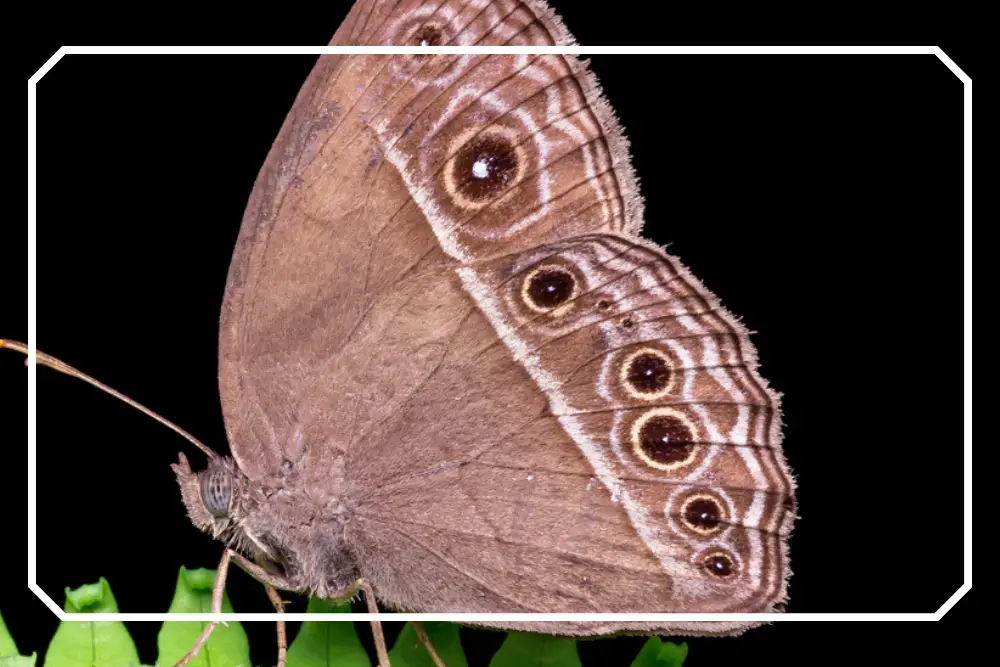
Butterfly with Eyes on Wings

Butterfly with Eyes on Wings

1. Intimidate Predators

The eyespots mimic the eyes of a large predator and are used for deterring any potential attacker. It makes the attacker think that it is up against a potentially dangerous animal. Some species, like the grayling, hide their eyespots at rest but expose them only when a potential predator is nearby.

2. Deflect an Attack

Instead of preventing the attack entirely, some butterfly species make use of their eyespots to distract potential predators. The eye-like markings draw the attention of the attacking animal and encourage it to aim for body parts, such as the edge of wings, which are not crucial for its survival. Squinting bush brown butterfly is one such butterfly species that use its eyespots for deflecting a predator’s attack.

Interesting Facts

  • Blue butterflies possess filamentous ‘tails’ at the edge of their wings, which combined with the markings create an impression of a “false head”. It misdirects predators like jumping spiders and birds.
Frequently Asked Questions

icon

Some butterflies have eyes on their wings as a defense mechanism to survive predator encounters. These markings, called eyespots, can intimidate a potential attacker by mimicking the eyes of a larger animal or can deflect an attack towards a less vital part of the wing, increasing survival chances.

icon

The eye-like markings on a butterfly’s wings are officially called ocelli but are more commonly known as eyespots or false eyespots. These patterns are typically circular and made of concentric rings, creating an illusion of a real eye to deter or misdirect predators like birds and spiders.

icon

Eyespots protect a butterfly using two primary strategies: intimidation and deflection. The large, staring spots can startle a predator into abandoning its attack. Alternatively, they can draw the predator’s strike towards the wing’s edge, a non-essential area that allows the butterfly to escape with survivable damage.

icon

No, the eyes on a butterfly’s wings are not real and cannot be used for vision. These markings are simply patterns of pigmented scales that mimic the appearance of vertebrate eyes. A butterfly’s true compound eyes, which it uses to see, are located on its head.

icon

A butterfly’s ‘false head’ marking works by misdirecting a predator’s attack away from its vital body parts. Found on some species, these markings are often combined with filamentous tails at the rear of the wings to trick predators into striking a less vulnerable area, preserving the actual head.

icon

No, not all butterfly species have eyespots on their wings. This defensive trait has evolved in certain species, such as the Squinting bush brown and grayling, as a specific adaptation to their environments and common predators. Many other species rely on different camouflage or warning colorations for protection.

icon

The difference is the intended outcome of the predator’s behavior. Intimidation aims to prevent an attack entirely by making the butterfly appear dangerous. Deflection, however, concedes an attack will happen but encourages the predator to strike a non-critical area like the wingtip, allowing the butterfly to escape.