
What do Butterflies Eat
Adult butterflies eat only liquids, and flower nectar is the main food of most species. They drink it through the proboscis, a coiled tube formed from two interlocking mouthparts. Many butterflies also take tree sap, the juice of rotting fruit, honeydew, and minerals from mud, dung and carrion, and a few Heliconius species collect and digest pollen. Caterpillars, by contrast, chew solid leaves of their host plant.

In this guide
- What do butterflies eat?
- How butterflies eat: the proboscis
- Nectar: the main food of most butterflies
- Sap, fruit, dung and mud: butterflies that rarely visit flowers
- The pollen eaters: Heliconius
- Food sources of some common butterflies
- What caterpillars eat, and why it is different
- How to feed butterflies in a garden or at home
- Did you know?
- Frequently asked questions
What do butterflies eat?
Butterflies eat nectar, the sugary liquid that flowers produce to attract pollinators, and they can take nothing but liquids because the adult has no jaws. Nectar is the staple for the great majority of species, but it is not the only item on the menu. Depending on the family, butterflies also drink fermenting tree sap, the juice of overripe fruit, honeydew excreted by aphids, the liquids in animal dung and carrion, sweat, and mineral-rich water from wet ground.
All of these supply what an adult butterfly needs: sugar for the energy that powers flight, and small amounts of amino acids, salts and other nutrients that help females mature eggs. Nothing an adult eats builds new tissue, because a butterfly does not grow. Its body was built by the caterpillar, which spent weeks chewing solid leaves; the adult only needs to keep that body fuelled for the few weeks it typically lives.
This division is the key to the whole subject. Lists of butterfly food that name milkweed for the monarch or stonecrop for the Apollo are really naming the caterpillar's host plant, which the adult never eats. A monarch caterpillar eats milkweed leaves; the adult monarch drinks nectar from almost any flower, milkweed included. The two diets are covered separately below, and the full story of larval food is in the guide to butterfly host plants.
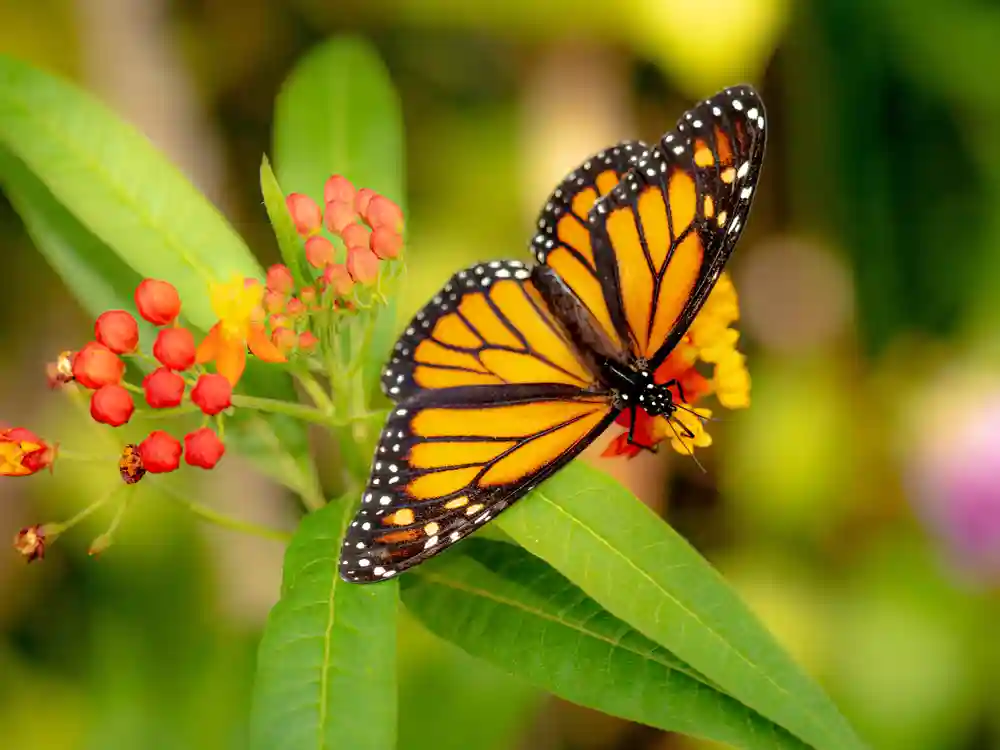
How butterflies eat: the proboscis
A butterfly drinks through its proboscis, a long, flexible tube that lies coiled like a watch spring beneath the head when not in use. It is often described as a straw, but it is really two half-tubes, the galeae, which lock together along their length with tiny hooks and plates to form a central food canal. The tube is uncoiled by pumping blood into it and by the action of small muscles, and it curls back when the pressure drops.
Liquid moves up the canal partly by capillary action and partly by suction from a muscular pump in the head, the cibarial pump, which draws nectar into the gut. The tip of the proboscis carries taste sensors and, in fruit and sap feeders, small brush-like structures that sponge up thin films of liquid. The length of the tube fixes which flowers a species can use: swallowtails and skippers with a long proboscis reach nectar at the base of tubular flowers, while blues and hairstreaks with short tubes need shallow, open blooms.
Butterflies taste with their feet before they drink. Chemoreceptors on the tarsi detect sugar the instant a butterfly lands on a flower, and that signal triggers the proboscis to unroll. The same sensors tell a female whether a leaf belongs to the right host plant, which is why butterflies drum their forelegs on foliage before laying. The parts of a butterfly guide shows where each of these structures sits.
Nectar: the main food of most butterflies
Nectar is a solution of sucrose, glucose and fructose, typically 15 to 50 per cent sugar, with traces of amino acids, lipids and minerals. Butterflies generally prefer thinner nectars of around 20 to 35 per cent sugar, which flow more easily through a narrow tube, and they favour flowers that are flat or clustered enough to land on, brightly coloured in red, orange, pink, purple or yellow, and open by day.
Some species are generalists that will visit almost anything in bloom. The painted lady is recorded on hundreds of plants and is one reason it thrives on every continent except Antarctica and South America. Others are more selective. The Karner blue, whose caterpillars eat only wild lupine, nectars as an adult on a modest range of prairie flowers such as butterfly weed, blazing star and wild bergamot. In Britain the orange-tip takes nectar mostly from cuckooflower and garlic mustard, the same plants its larvae eat, which is unusual.
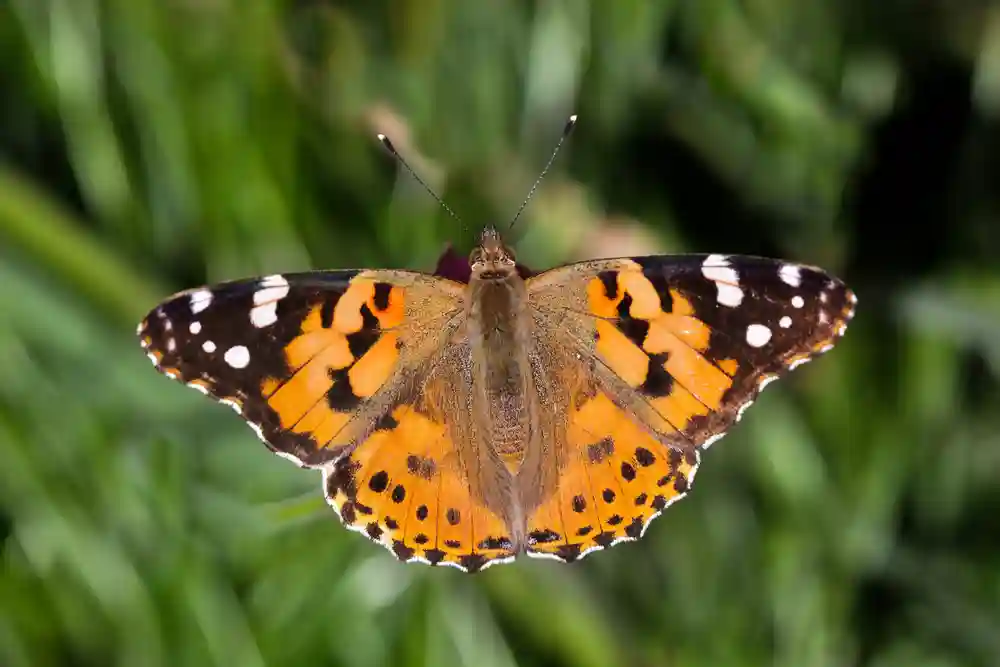
In North American gardens the most reliable butterfly nectar plants are milkweeds and butterfly weed, coneflowers, blazing stars, zinnias, lantana, phlox, ironweed, Joe-Pye weed, asters and goldenrod. Butterfly bush attracts many species but supports no caterpillars, so it is best planted alongside true host plants. A garden that flowers continuously from April to October feeds every generation of the season.
Sap, fruit, dung and mud: butterflies that rarely visit flowers
A whole group of butterflies, most of them in the brush-footed family, gets little or nothing from flowers. The mourning cloak, the question mark, the commas, the emperors, the red-spotted purple and the viceroy feed mainly on oozing tree sap, fermenting fruit, animal droppings and carrion. This suits species that fly in early spring and late autumn when few flowers are open, and it is why they turn up at sap runs on oaks and birches and on fallen apples and pears.
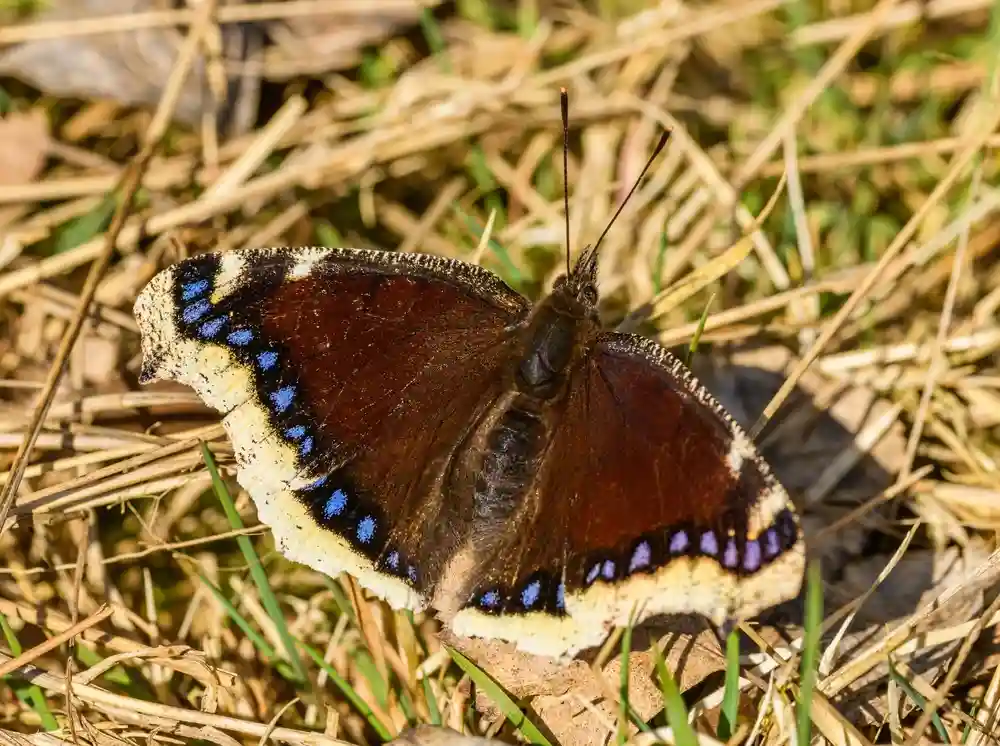
The purple emperor of European oak woods is the famous case: it never nectars, spending its life in the canopy sipping aphid honeydew and coming down only to feed on dung, carrion and puddles. Tropical forest butterflies follow the same pattern. The blue morpho lives on the juice of rotting fruit, fungi and sap on the forest floor, which is why butterfly houses feed morphos on sliced banana rather than flowers.

Mud-puddling is a different kind of feeding. On damp sand, riverbanks and the edges of puddles, crowds of butterflies, nearly always males, drink water to extract sodium and other minerals, passing the excess out the other end. Swallowtails, sulphurs and blues do it most. The sodium is handed to the female during mating as part of the spermatophore and improves the survival of her eggs. The same hunger for salt brings butterflies to sweaty skin, tears, urine and even the corpses of animals; some tropical species drink the tears of turtles and caimans.
The pollen eaters: Heliconius
One group of butterflies has broken the liquids-only rule. The longwings of the genus Heliconius, including the zebra longwing of Florida and the postman of Central and South America, deliberately collect pollen on the proboscis, moisten it with saliva and hold it in a ball while the amino acids leach out, then drink the resulting solution. They gather pollen mainly from cucurbit vines and Lantana, visiting the same plants along a learned route each morning.

The protein this provides changes their whole biology. Where most butterflies live two to four weeks, pollen-feeding Heliconius routinely survive four to six months and keep producing eggs throughout, and the zebra longwing's long life is one reason it is so easy to see year-round in Florida. The habit is unique to this genus and is one of the best-studied cases of diet shaping the lifespan of a butterfly.
Food sources of some common butterflies
The table separates what the adult drinks from what the caterpillar eats, because the original version of this page mixed the two. Nectar plants are those the species is most often recorded on; most nectar feeders will use many others.
| Butterfly | Adult food | Caterpillar food (host plant) |
|---|---|---|
| Monarch | Nectar of milkweeds, blazing star, goldenrod, asters, lilac, ironweed | Milkweeds only |
| Black swallowtail | Nectar of clover, thistle, milkweed, phlox | Carrot family: parsley, dill, fennel, Queen Anne's lace |
| Painted lady | Nectar of thistle, aster, cosmos, ironweed and hundreds more | Thistles, mallows, hollyhock, over 100 plants |
| Blue morpho | Rotting fruit, fermenting sap, fungi, mud | Legumes such as Machaerium and Inga |
| Apollo | Nectar of thistles, knapweed, scabious | Stonecrop and houseleek |
| Peacock | Nectar of buddleia, thistles, dandelion; willow catkins and rotting fruit in spring and autumn | Stinging nettle |
| Eastern tiger swallowtail | Nectar of milkweed, lilac, ironweed, phlox, wild cherry, honeysuckle | Wild cherry, tulip tree, ash, sweetbay |
| Baltimore checkerspot | Nectar of milkweed, viburnum, wild rose | White turtlehead |
| Common blue | Nectar of bird's-foot trefoil, clover, thistles | Bird's-foot trefoil and other legumes |
| Karner blue | Nectar of butterfly weed, blazing star, rock cress, goldenrod, raspberry | Wild lupine only |
| Zebra longwing | Nectar and pollen of lantana, Spanish needle, verbena | Passionflower vines |
| Purple emperor | Honeydew, tree sap, dung, carrion; never flowers | Sallow and other willows |
| Orange-tip | Nectar of cuckooflower, garlic mustard, bugle | Cuckooflower and garlic mustard seed pods |
| Ulysses | Nectar of lantana, ixora and other red flowers | Pink-flowered doughwood (Melicope elleryana) |
| Silver-spotted skipper | Nectar of thistle, milkweed, clover, buttonbush | Black locust, wisteria and other legumes |
What caterpillars eat, and why it is different
Caterpillars eat solid food, almost always the leaves of one plant family, and they do so with chewing mandibles that the adult loses entirely at metamorphosis. A monarch larva eats only milkweed, a black swallowtail larva only members of the carrot family, and a cabbage white larva only mustards and cabbages. The restriction is chemical, because each caterpillar can detoxify one set of plant defences and not others.
Everything the butterfly will ever weigh is eaten in this stage, so a caterpillar increases its mass a thousandfold or more before it pupates. The adult that emerges from the chrysalis is a different body with a different mouth, built for liquids and flight, which is why a garden that wants butterflies needs both nectar flowers for the adults and host plants for the larvae; one without the other supports only half the life cycle.
How to feed butterflies in a garden or at home
The simplest butterfly food is a continuous run of nectar flowers from spring to autumn, planted in sunny drifts of a single colour so they are easy to find. Beyond flowers, a shallow dish of overripe fruit will draw the sap-feeding species that ignore blooms. Banana, watermelon, orange, peach, pear and apple all work, and fruit that has started to ferment is more attractive than fresh; a splash of beer or a sprinkle of sugar speeds the process.
Sugar water is a good substitute where flowers are short, mixed at about one part sugar to nine parts water and offered on a sponge or a folded paper towel so the butterflies cannot fall in. Honey should be avoided because it ferments and grows mould quickly. A puddling station, a tray of damp sand with a pinch of salt or a little composted manure, will bring in the male swallowtails and sulphurs that need sodium. Everything should be changed every day or two, since spoiled fruit and sugar water attract wasps and ants and can harm the butterflies they were meant to feed.
Did you know?
- A monarch that leaves Canada in September feeds on nectar all the way to Mexico, arriving with more fat than it started with; that fat, topped up on warm winter days, carries it through four to five months of near-fasting in the overwintering colonies.
- The Madagascan hawkmoth Xanthopan has a proboscis about 30 cm long, but among butterflies the record is a few centimetres; most have a tube roughly as long as their body.
- Sugar water fed to butterflies in butterfly houses is usually a 10 per cent solution, close to the concentration of thin nectar.
- Puddling males can drink hundreds of times their body volume in water over a session, expelling the excess in droplets while retaining the sodium.
- Butterflies cannot taste sweetness in the air; they must land and touch a surface with their feet, which is why a butterfly seems to pause on a flower before feeding.
- The butterflies of the United Kingdom include several species, among them the purple emperor and the white admiral, whose adults feed almost entirely on honeydew in the tree canopy and are rarely seen at flowers.
In summary
Adult butterflies drink rather than eat: nectar for most species, plus tree sap, rotting fruit, honeydew, dung, carrion and mineral-rich mud for many brush-footed butterflies, and pollen for the long-lived Heliconius longwings. They feed through a coiled proboscis made of two locked galeae, taste with their feet, and take in sugar for flight and small amounts of amino acids and salts for reproduction. Caterpillars eat solid leaves of specific host plants instead, and a butterfly garden needs both, as the butterfly facts library explains stage by stage.
Frequently asked questions about what butterflies eat
What do adult butterflies primarily eat?
Flower nectar. Adult butterflies have no jaws and take only liquids, and nectar supplies the sugar they burn in flight. Many species add tree sap, rotting fruit, honeydew and minerals from mud or dung, and some brush-footed butterflies such as the mourning cloak and purple emperor rely on those foods instead of flowers.
How do butterflies use their proboscis to eat?
The proboscis is a tube formed from two interlocking mouthparts that coils under the head when not in use. When the butterfly's feet taste sugar, it uncoils the tube by blood pressure and muscle action, pushes the tip into the flower or fruit, and draws liquid up by capillary action and a suction pump in the head.
Do all butterfly species eat nectar from flowers?
No. Mourning cloaks, question marks, commas, emperors, morphos and the purple emperor feed mainly on fermenting sap, overripe fruit, honeydew, dung and carrion, and some almost never visit a flower. Heliconius longwings such as the zebra longwing and postman also collect pollen, which they digest on the proboscis for its protein.
What do monarch butterflies eat?
Adult monarchs drink nectar from a wide range of flowers, including milkweeds, blazing star, goldenrod, asters, lilac and ironweed. Only the caterpillar eats milkweed leaves. Migrating monarchs feed heavily on autumn nectar to build fat reserves, then live largely on that fat through four to five months in the Mexican overwintering colonies.
What types of fruit can butterflies eat?
Butterflies drink the juice of soft, overripe fruit such as banana, watermelon, orange, grapefruit, peach, pear, apple and strawberry. Fruit that has begun to ferment is the most attractive. They cannot bite, so cut or mashed fruit on a shallow dish works best, and it should be replaced every day or two before it moulds.
What do butterflies drink besides nectar?
Water and mineral-rich liquids. Many butterflies, especially males, drink from mud, damp sand, puddles and animal droppings to obtain sodium and other salts, and some will land on sweaty skin or drink tears. Sap-feeding species take fermenting tree sap and aphid honeydew, and forest butterflies such as the blue morpho drink from rotting fruit and fungi.
Are butterflies selective about their food sources?
Some are. Most nectar feeders are generalists that visit many flower types, choosing by colour, shape and the length of their proboscis. A few are more particular: orange-tips favour cuckooflower and garlic mustard, and Karner blues prefer prairie flowers such as butterfly weed and blazing star. Caterpillars are far more selective, usually restricted to one plant family.
Can you feed butterflies sugar water?
Yes. Mix about one part white sugar to nine parts water, soak a sponge or folded paper towel in it and place it on a shallow dish in the sun. Avoid honey, which ferments and moulds quickly, and change the solution daily. Fruit and native nectar flowers are better long-term foods than sugar water alone.
Why do butterflies gather on mud?
To collect sodium and other minerals that nectar lacks. The behaviour, called puddling, is seen mostly in males, which pass the sodium to the female during mating and improve the survival of her eggs. Swallowtails, sulphurs and blues gather in the largest numbers on riverbanks and damp paths, drinking large volumes of water and expelling the excess.
How long can a butterfly go without food?
Most butterflies need to feed most days and die within a few days without sugar in warm weather. Species that overwinter as adults are the exception: hibernating mourning cloaks and commas go months without eating, and overwintering monarchs in Mexico live four to five months mainly on fat stored during the autumn migration.
Published February 18, 2020 · Last updated September 21, 2026
Butterflies mentioned in this guide
Brush-Footed (Nymphalidae)Monarch (Danaus plexippus)Brush-Footed (Nymphalidae)Painted Lady (Vanessa cardui)Brush-Footed (Nymphalidae)Mourning Cloak (Nymphalis antiopa)Brush-Footed (Nymphalidae)Purple Emperor (Apatura iris) Brush-Footed (Nymphalidae)Blue Morpho (Morpho menelaus)Brush-Footed (Nymphalidae)Zebra (Heliconius charithonia)