
Common Green Birdwing (Ornithoptera priamus)
The Common Green Birdwing, with its stunning bright green and black wings, is more than just a visual marvel; it’s a fascinating subject of the natural world. Belonging to the genus Ornithoptera, which showcases some of the largest and most spectacular butterflies of the world, this species thrives throughout the year, especially flourishing in the summer and fall seasons.
Scientific Classification
- Family: Papilionidae
- Genus: Ornithoptera
- Common names: Cape York Birdwing
- Scientific Name: Ornithoptera priamus
Overview
This butterfly’s journey from egg to adult is a masterclass in adaptation and survival, reflecting the beauty and complexity of nature. Its vivid colors and patterns not only serve as a visual treat but also play a critical role in its survival strategies, from warding off predators to attracting mates. Let’s explore the life cycle and characteristics of the Common Green Birdwing, illuminating the nuances that make this species a subject of both scientific interest and general fascination.
Description and Identification
Caterpillar
The journey begins with the caterpillar, exhibiting a reddish-brown body adorned with spine-like projections. These spines share the caterpillar’s body color but are highlighted by bright orange marks. As it matures, the color transitions to black, with the orange markings fading to a pale yellow, a vivid testament to nature’s palette.
Pupa
The chrysalis stage is equally intriguing. A large, bright yellow cocoon with brown venations mimics a dead leaf, a camouflage strategy that’s as effective as it is ingenious.
Adult Butterfly
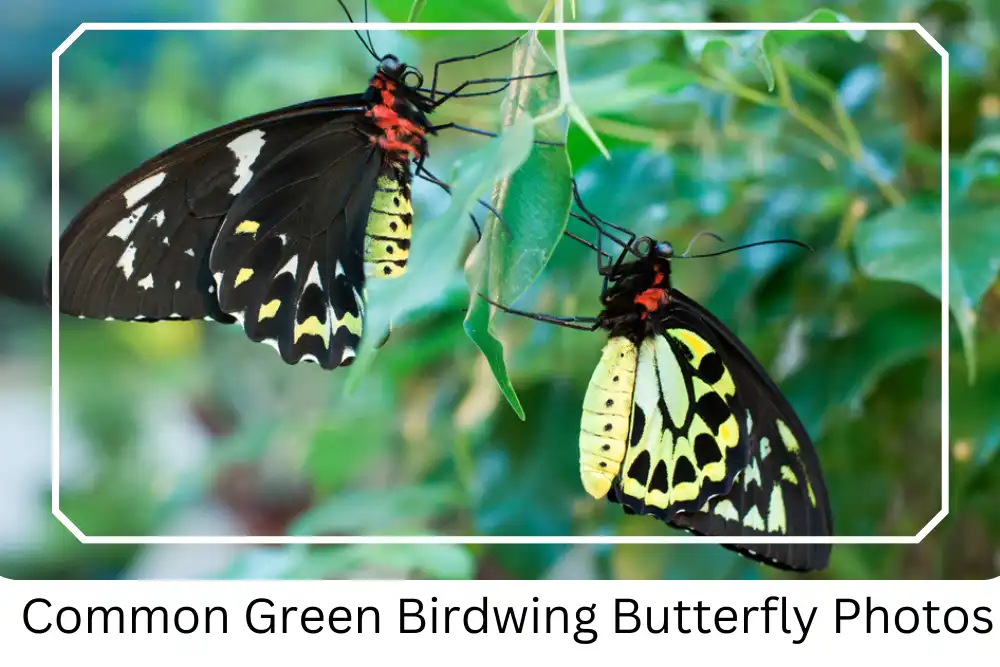
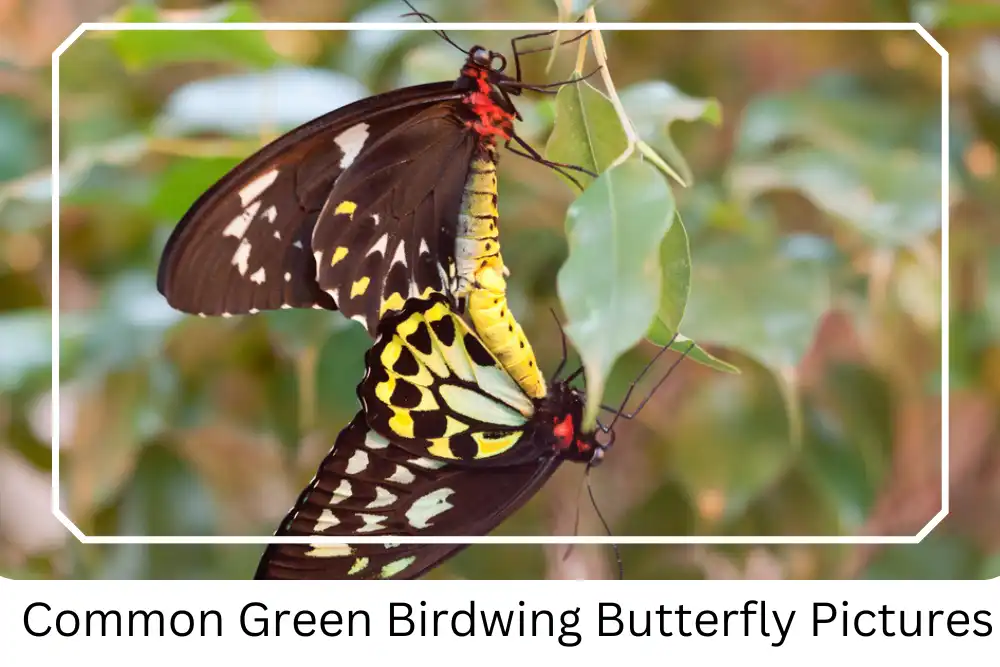
Sexual Dimorphism: The difference between males and females is pronounced, not just in size but also in coloration and wing patterns, showcasing nature’s diversity.
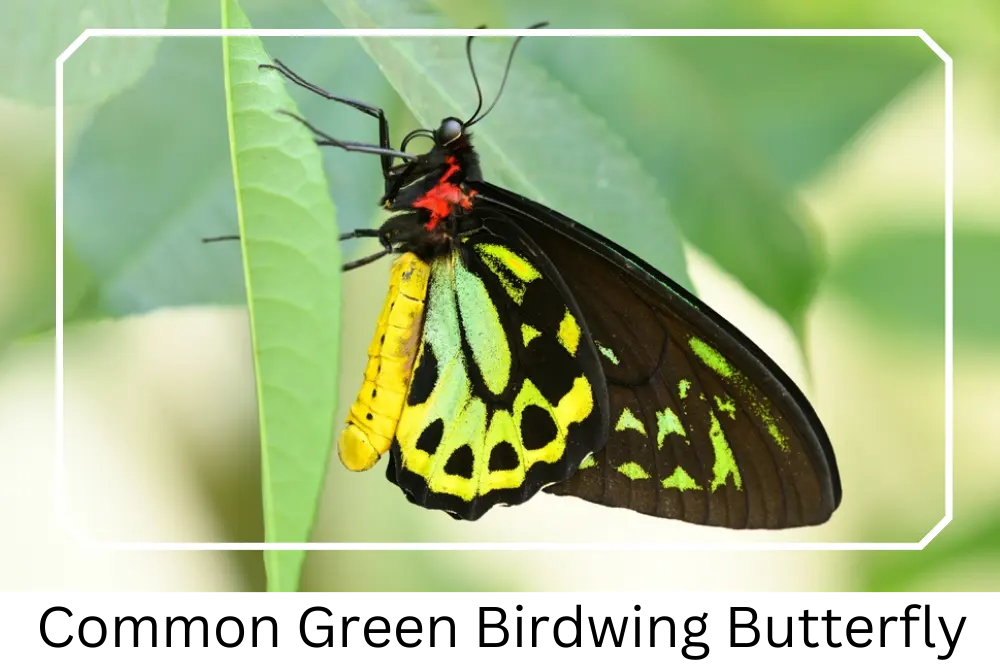
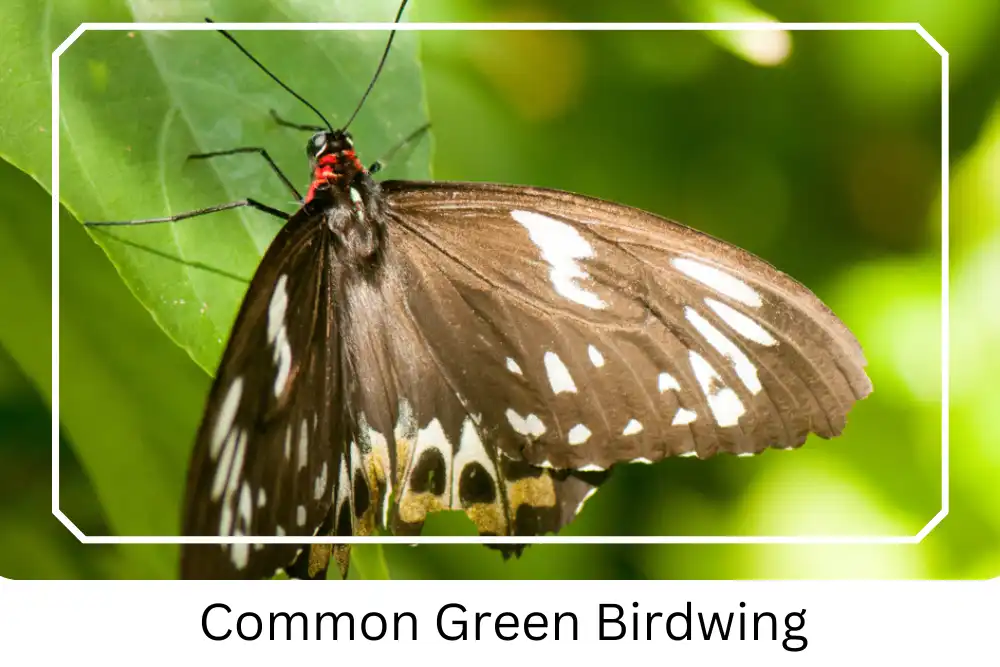
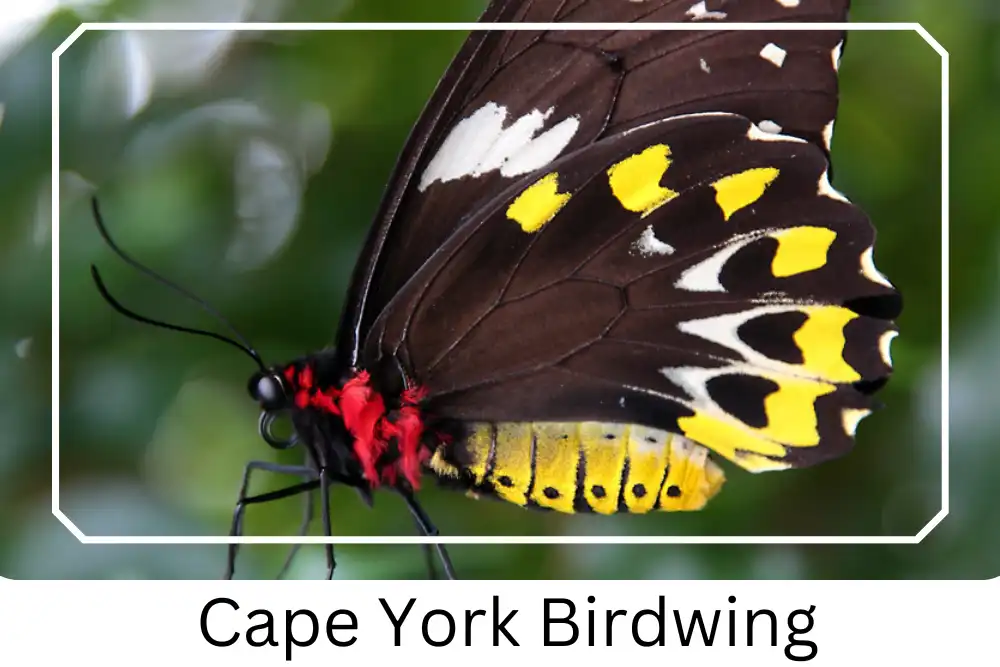
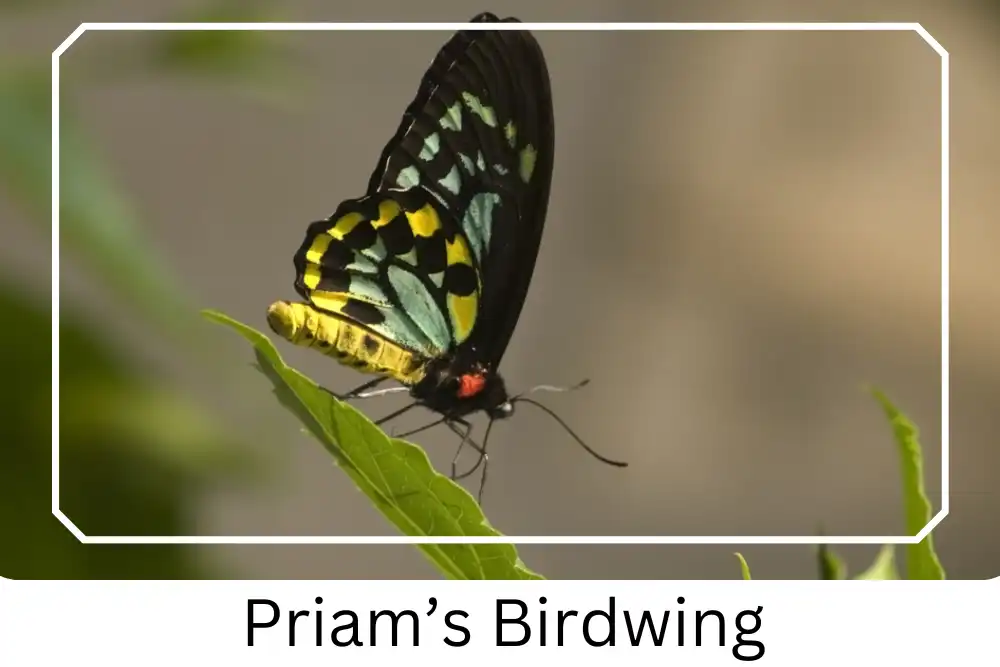
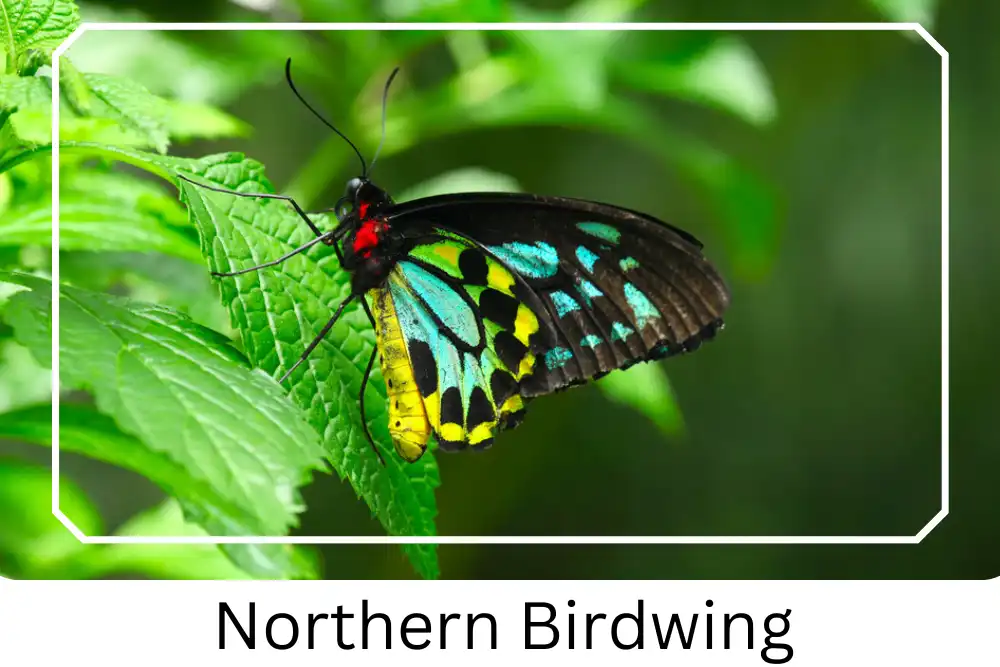
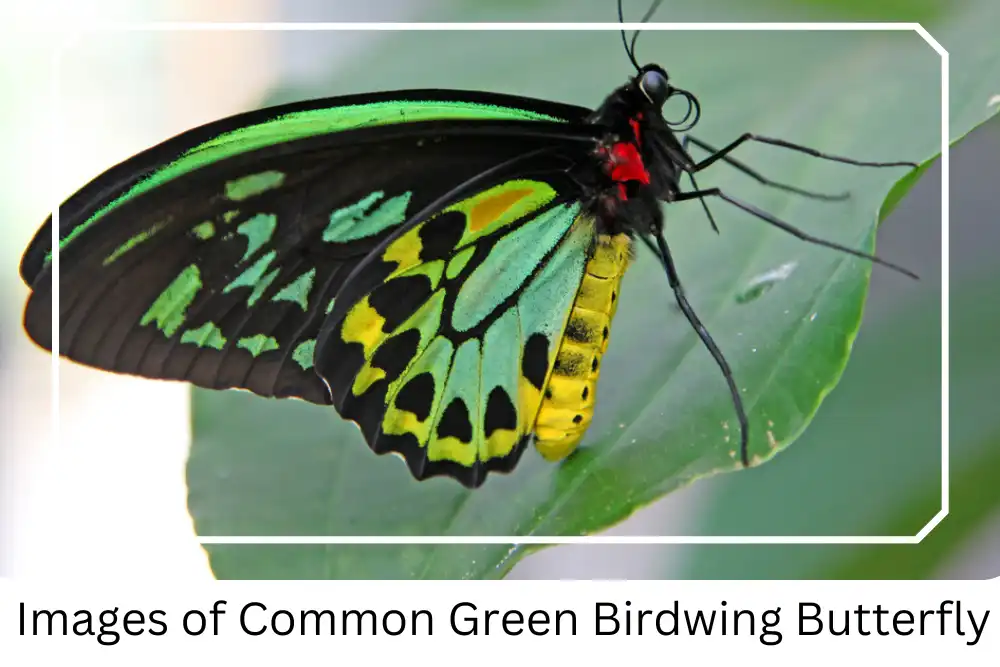
Color and Appearance: This species is known for its dazzling color. Males flaunt a leaf-like black mark over a green base on their primary wings, edged with black, while females display a duller brown with a series of white marks. The beauty of these wings is not just in their color but also in their form, with elongated shapes that enhance their aesthetic and functional appeal.
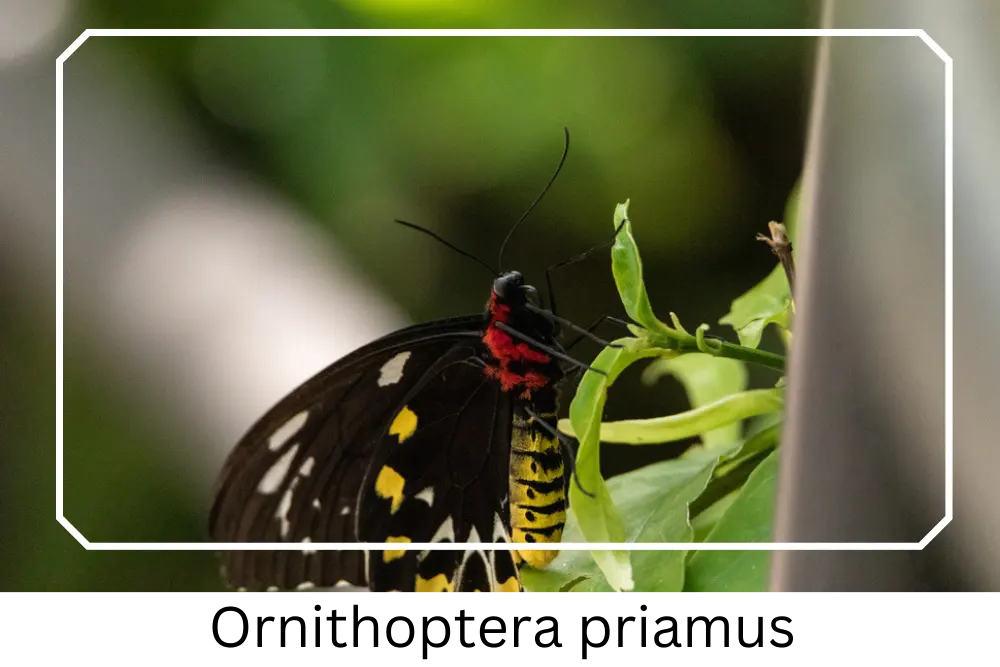 Average Wingspan: Spanning 18 to 22 cm (7.08 – 8.66 in), their wingspan is a testament to their grandeur, enabling strong, yet erratic flight patterns.
Flight Pattern: Characterized by strong flaps interspersed with gliding, their movement is as erratic as it is graceful, a dance in the air that captivates onlookers.
Eggs
The lifecycle begins anew with eggs that are round, bright green, and adorned with a black dotted circle, hinting at the life to come.
Quick Facts | |
| Distribution | Spanning New Guinea, the central and south Moluccas, Bismarck Archipelago, Solomon Islands, and northeast Australia. |
| Habitat | The lush tropical rainforests and their fringes provide the perfect setting, rich in biodiversity and beauty. |
| Host Plants | The diversity among subspecies is mirrored in their choice of host plants, showcasing the adaptability and ecological integration of this species. |
| Adult Diet | Primarily flower nectar, a choice that not only sustains them but also contributes to pollination, a crucial ecological role. |
How to Identify Common Green Birdwing?
Identifying the Common Green Birdwing involves looking for specific traits that distinguish it from other species. The vibrant green and black coloration of the wings is the most striking feature, especially in males. For females, the larger size and brown wings with white markings are key indicators. Observing the unique flight pattern, characterized by strong flaps followed by gliding, can also aid in identification. Furthermore, their presence in specific habitats like tropical rainforests and the unique appearance of their caterpillars and pupae provide additional clues.
Did You Know?
- The name Ornithoptera priamus pays homage to Priam, the legendary king of Troy, linking the butterfly’s grandeur to epic history.
- With 99 subspecies, the Common Green Birdwing not only exhibits remarkable diversity but also reflects evolution’s creativity in adapting to different environments.
Conclusion
The Common Green Birdwing is a marvel of nature, showcasing the intricate balance between beauty and survival. Its lifecycle, from the distinct caterpillar phase to the majestic adult butterfly, illustrates the wonders of evolution and adaptation. By understanding and appreciating these creatures, we gain insight into the complexity of ecosystems and the importance of conserving the natural world. The Common Green Birdwing is not just a butterfly; it’s a symbol of the diversity and resilience of life on Earth.
Common Green Birdwing Pictures

Scientific Classification

- Family: Papilionidae
- Genus: Ornithoptera
- Common names: Cape York Birdwing
- Scientific Name: Ornithoptera priamus
 Dr. James Watuwa on March 10, 2019.
 Butterfly Team