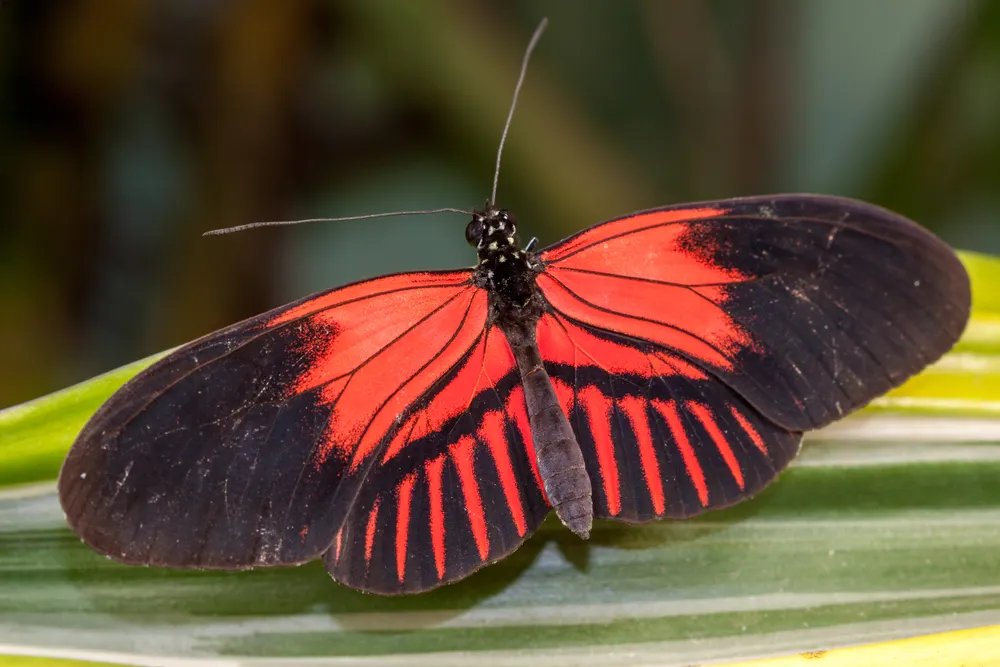

Butterflies
cannot bite because they do not possess any teeth. Caterpillars, however, have
chewing mouthparts with which they feed on the leaves of a host plant, and they
may bite if threatened. Once they turn into adult butterflies, they only
possess a long, straw-like proboscis, which they use for drinking nectar. They
also do not have any stinging structure, and therefore, they cannot sting.
There are a few primitive micromoth species that can bite with their chewing
mouthparts, which they use for chewing pollens.
Frequently Asked Questions
No, butterflies do not bite humans or any other animal. Adult butterflies lack the physical anatomy for biting, such as teeth or mandibles. Their mouthparts consist of a long, straw-like tube called a proboscis, which is designed exclusively for sipping liquids like nectar from flowers and cannot pierce skin.
Butterflies cannot bite because they do not have teeth or chewing mouthparts. Instead of a jaw, an adult butterfly has a proboscis, which is a soft, flexible tube used for drinking. This structure is physically incapable of piercing skin or chewing solid food, making biting anatomically impossible for them.
Butterflies eat by using their specialized mouthpart called a proboscis to drink liquids. This long, straw-like appendage uncoils to sip nectar from flowers, juice from rotting fruit, and moisture from damp soil. They do not consume solid food and rely entirely on this siphoning method for all nourishment.
Yes, it is possible for a caterpillar to bite, although it is uncommon. Unlike adult butterflies, caterpillars possess chewing mouthparts called mandibles, which they use to eat leaves. If a caterpillar feels threatened or is handled roughly, it may use these mandibles to deliver a defensive, pinch-like bite.
No, a butterfly cannot sting you under any circumstances. Butterflies do not possess a stinger or any other anatomical structure capable of injecting venom. Their defense mechanisms are primarily passive, such as camouflage and flight. They are completely harmless to humans in terms of stinging or biting.
Adult butterflies have siphoning mouthparts known as a proboscis. This structure is a long, flexible tube formed from fused mouthparts, which functions like a drinking straw. When not in use, it remains coiled under the butterfly’s head and is specifically adapted for drinking nectar and other liquids.
Yes, a few primitive species of micromoths can bite. Unlike most moths and butterflies, these specific moths have retained functional chewing mouthparts, or mandibles, into their adult stage. They use these mandibles not for defense against humans but to chew on solid pollen grains as a food source.