
Butterfly Facts
Butterflies are any of the slender-bodied, nectar-feeding insects that are scientifically classified under the order Lepidoptera within the kingdom Animalia. These colorful insects differ from moths because the butterflies are typically active during the day while their cousins are nocturnal.

1. What are the different stages of the life cycle of a butterfly?
The butterfly life cycle includes four different life stages:
- Eggs
- Caterpillar (Larva)
- Pupa (Chrysalis)
- Adult Butterfly
2. What are the host plants of common butterfly species?
Flowering plants like milkweed and passion vine serve as good host plants for some common butterfly species.
3. How long do butterflies live?
Butterflies generally live to be around 3-4 weeks old.
They drink nectar with their straw-like tongues called a proboscis.
5. What season do butterflies come out?
Although the season of maximum activity may vary among different butterflies, summer is the butterfly season for most species.
6. Do butterflies migrate?
Butterfly migration is a unique phenomenon undertaken by some species that usually fly a long distance to escape the cold weather of their breeding grounds.
7. Where do butterflies go in the winter?
While some butterflies migrate to warmer places, other non-migratory species become dormant when the weather gets cold.
8. What do butterflies look like?
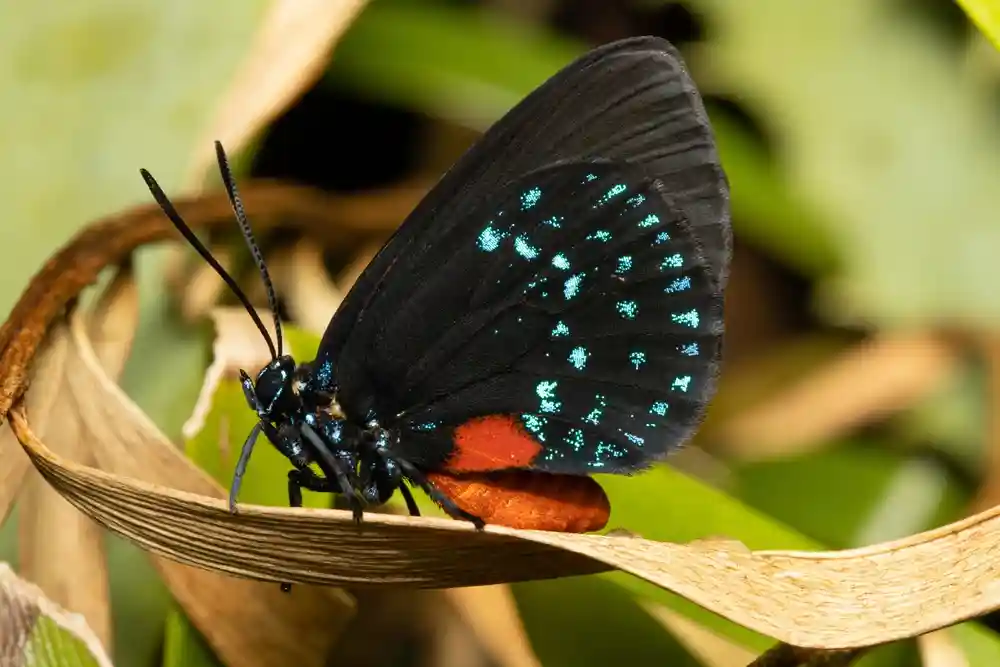
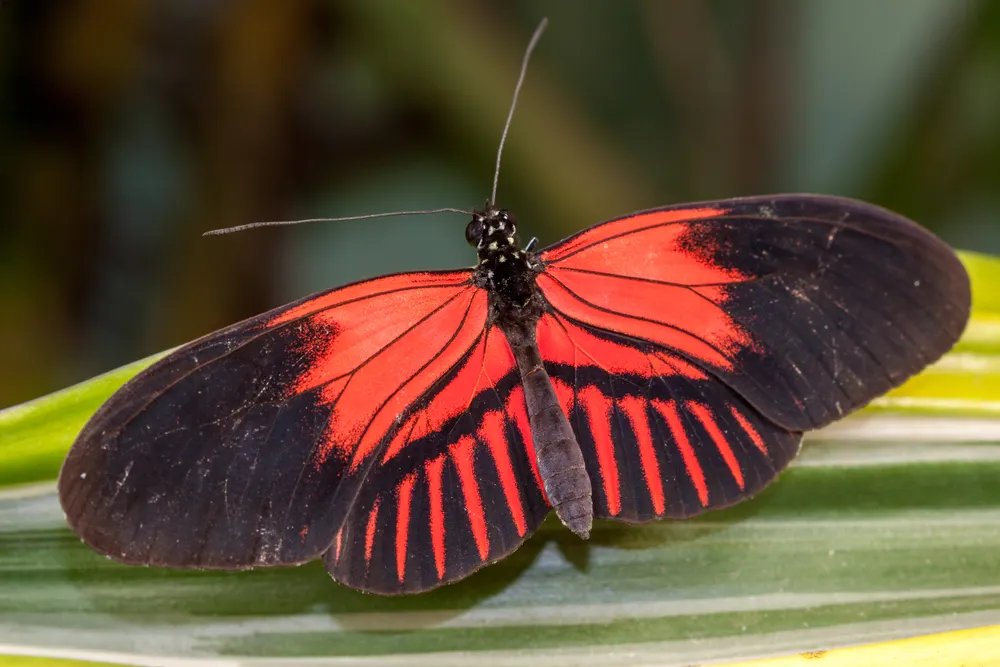
These insects are characterized by four large, vibrant-colored wings that have microscopic scales. They can be easily identified by a pair of dilated or clubbed antennae, six jointed legs, and a small head with compound eyes. Some of them have large, bright eyespots on their wings.
9. What is the flying mechanism of butterflies?
Instead of flying in a straight-line path, butterflies have a twisting-turning fluttering pattern.
10. Where do butterflies live?
Different butterfly species live in diverse locations and habitats.
11. What predators eat butterflies?
Many insectivores, including birds, snakes, and even other larger insects may feed on butterflies.
12. How do butterflies mate and reproduce?
A male butterfly mates by holding onto its female breeding partner’s abdomen using its clasper.
13. Do butterflies bite?
No, butterflies are aesthetically pleasing insects that cannot bite.
14. What do butterflies do?
From pollinating plants to providing a food source for predators, butterflies do several things that are beneficial to our environment.
15. What is a group of butterflies called?
A group of butterflies is usually called a swarm, army, or kaleidoscope. While some butterfly species like Cloudless Sulphur may fly in groups, there are species such as the Monarch that migrate alone.
16. Why are butterflies called ‘butterflies’?
Although the word has been used for centuries, its origin is not known. One theory is that butterflies, or witches who could change into butterflies, were thought to have stolen butter and milk, and then fluttered by.
17. Is a butterfly an animal?
Yes, butterflies are insects that are classified under the kingdom Animalia and order Lepidoptera.