
Life Cycle of a Butterfly
What is the Life Cycle of a Butterfly
The series of changes in shape, form, and activities that a butterfly goes through during its lifetime is the life cycle, while the complex biological process involved in the transformation from caterpillars to adult butterflies is called metamorphosis. Butterflies undergo complete metamorphosis in which the young differs from the adult in terms of their looks and feeding habits.
What are the Life Stages of a Butterfly
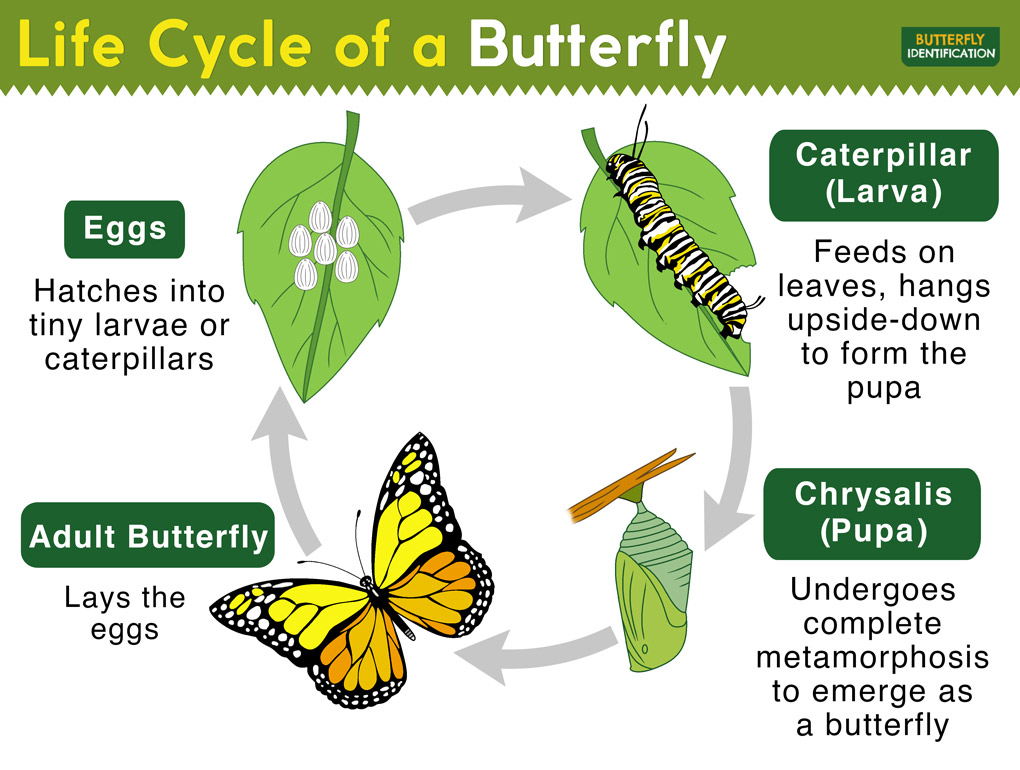
Butterflies go through four different stages in their life cycle, with each having a different goal. The caterpillars, for example, eat a lot, whereas adults reproduce. Depending on the butterfly species, these stages last from several weeks to a year.
First Stage: Egg
The life cycle starts with the adult female butterfly laying a cluster of small, round eggs on plants, which become food for the tiny worm-like caterpillars that hatch 4-6 days after they are laid.
Second Stage: Caterpillar
It is the larval stage during which the caterpillar emerges from the egg. It is also called the feeding stage because, at this stage, a caterpillar has only one job to do that is to eat.
Third Stage: Pupa
After a caterpillar attains its full-grown size, it stops eating and enters its chrysalis for the pupal stage.
Fourth Stage: Adult
In this stage, the chrysalis opens, and the adult butterfly or imago comes out. The adult butterfly has long antennae, long legs, and compound eyes. When it first emerges from the chrysalis, its long, colorful wings are damp, soft, and are folded against the body. The butterfly rests and waits for the wings to dry. Once fit for its first flight, the butterfly takes off in search of nectar-producing flowers. Adult females fly from one place to another to find plants suitable for laying eggs. While most butterflies live for 1-2 weeks, some species spend the winter as hibernating adults, surviving for several months.
Interesting Facts
- The Monarch butterfly caterpillar that hatches from its egg is about 2-6 mm long but grows up to 2 inches within a few weeks.
- Swallowtail butterflies spend the winter in the chrysalis stage, with the adults emerging in spring to search for host plants.
- Not all the larvae or caterpillars turn into adult butterflies because the immature larvae of moths are also called caterpillars.