

Caterpillars (Larvae of a Butterfly)

What Is a Caterpillar

The larva or caterpillar of a butterfly is the worm-like hatchling that emerges from a small egg and turns into a pupa in the next stage of its life cycle. During this larval stage, a hungry caterpillar eats constantly and grows at an astounding rate. The larva grows about 100 times its birth size while storing the food for using it as an adult. As it develops, it sheds its skin 4-5 times.

Most caterpillars have three pairs of true-legs, along with five pairs of prolegs. In addition to short antennae, mandibles, lower and upper lips, a caterpillar has six pairs of ocelli or simple eyes.
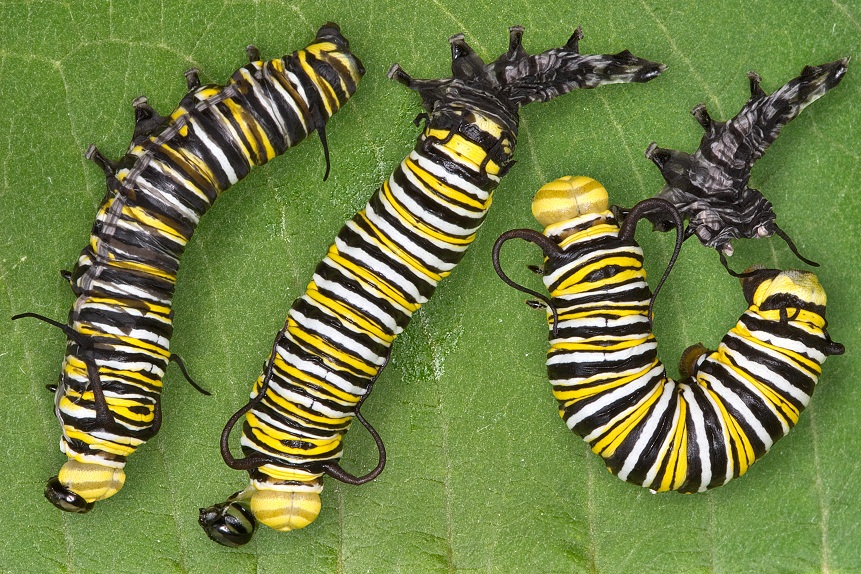
Caterpillars (Larvae of Butterfly)

How long do Caterpillars live Before Forming a Pupa

After hatching from the egg, it takes about two weeks for a larva to grow to its full size (about 2 inches long) before it is ready to form a pupa or chrysalis. Most caterpillars stay in their chrysalis for about 5-21 days before emerging as an adult butterfly.

What do Caterpillars Eat and Drink

Larvae of butterflies or caterpillars usually feed on leaves of the host plant, although some may eat other parts of the plant, including seeds and flowers. Some caterpillars are quite picky, and they feed on only one type of plant. The Monarch butterflies, for instance, only eat milkweeds. Other species, such as the Giant Swallowtail caterpillar, eats leaves of a hop, orange, and prickly ash tree.

Do they Need Water

The larvae do not need water because they get a sufficient amount of fluids from the different parts of plants they eat. Some overwintering caterpillars of Small Tortoiseshell, Brimstone, and Peacock butterflies obtain fluids from water vapor, moisture, and rain.

Video: Caterpillars Eating Leaves


Do Caterpillars Sleep

During the feeding stage, caterpillars remain inactive and stay hidden in shrubs, trees, and other sheltered areas. The state of rest in butterflies is called torpor.

Interesting Facts

  • Despite being cold-blooded animals, caterpillars are not considered worms because they are members of the Lepidoptera order of insects.
  • In addition to different bird species, human beings and insects such as yellow jackets and ladybird beetles may eat caterpillars.
 

Frequently Asked Questions

icon

A caterpillar typically stays in its larval stage for about two weeks after hatching from an egg. During this time, it focuses entirely on eating and growing, increasing its size by about 100 times. This rapid growth phase is crucial for storing the energy needed for its transformation.

icon

The primary diet of a butterfly caterpillar consists of leaves from its specific host plant. Some species are highly specialized; for example, Monarch caterpillars exclusively eat milkweed. While most eat leaves, a few species may also consume other plant parts like seeds and flowers to get nutrients.

icon

Caterpillars do not need to drink water separately because they get a sufficient amount from the plants they eat. The high moisture content in leaves provides all the hydration required for their rapid growth. Overwintering species may absorb moisture from rain or vapor in the air to survive.

icon

Caterpillars shed their skin because their exoskeleton is rigid and does not grow with them. This process, known as molting, occurs 4-5 times during the larval stage. Each time a caterpillar molts, it emerges larger, allowing it to continue its rapid growth before entering the pupal stage.

icon

A typical caterpillar has three pairs of true legs on its thorax and up to five pairs of fleshy prolegs on its abdomen. The true legs will develop into the adult butterfly’s legs. The prolegs are temporary, stump-like appendages that help the caterpillar grip surfaces and move effectively.

icon

Caterpillars use their six pairs of simple eyes, called ocelli, to see their environment. These eyes cannot form complex images but are very effective at detecting changes in light intensity. This simple vision helps them navigate their surroundings, find food sources, and avoid the shadows of potential predators.

icon

Caterpillars enter a state of rest called torpor rather than sleeping in the traditional sense. During these periods, they remain inactive and often hide in sheltered spots like under leaves. This state of reduced metabolic activity helps them conserve energy between constant feeding sessions and avoid being detected.