
Blue Nawab (Polyura schreiber)
The Blue Nawab, a species of butterfly that captivates with its majestic appearance, thrives across the lush landscapes of tropical Asia. This butterfly, known for its vibrant colors and dynamic flight, finds its home in a range of environments from India to Indonesia. Observing a Blue Nawab is a rare delight, as their elusive nature makes them a prized sighting for enthusiasts and photographers alike.
Scientific Classification
- Family: Nymphalidae
- Genus: Polyura
- Scientific Name: Polyura schreiber
Overview
Belonging to the brush-footed butterfly family, the Blue Nawab (Polyura schreiber) exhibits a combination of grace and beauty that is unmatched in the butterfly world. Their presence is a testament to the diversity and intricacy of nature, offering a glimpse into the rich biodiversity of their habitats. This butterfly not only adorns the environment but also plays a crucial role in the pollination of many plants, contributing to the ecological balance of its native regions.
Description and Identification
Caterpillar
The caterpillar stage of the Blue Nawab is as fascinating as its adult form. These larvae are predominantly green, featuring a distinctive crown made up of four horn-like protrusions on their heads. The patterns and markings of the mature larvae vary among species, but a yellow band on the seventh segment is a common sight, serving as a unique identifier for the species during its early stage of life.
Pupa
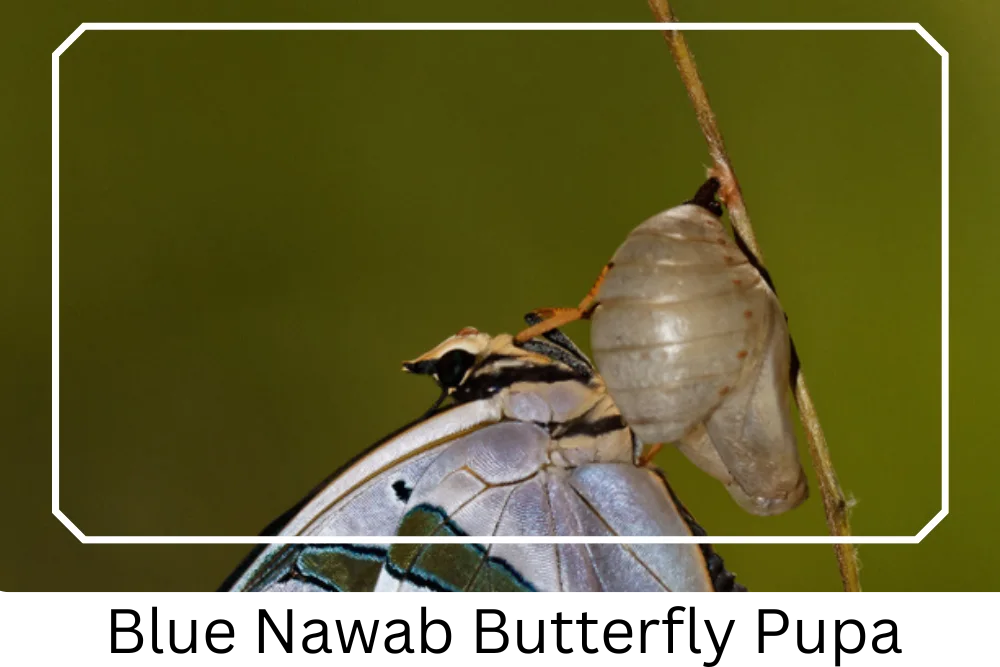
Transitioning into the pupa, the Blue Nawab exhibits a green chrysalis, accented with darker segment marks and venation. A striking feature is the longitudinal row of red dots on each side, making it a beautiful spectacle as it hangs from the branches of its host plant, awaiting its final transformation.
Adult Butterfly
Sexual Dimorphism: In the adult phase, sexual dimorphism is subtle, with the primary difference being size; females are generally larger than their male counterparts.
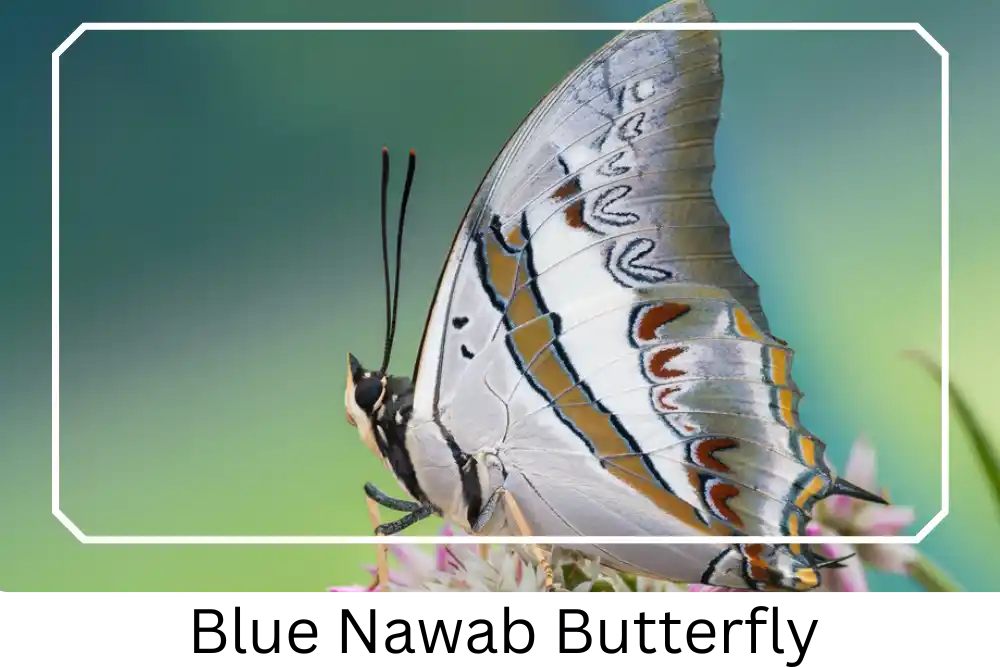
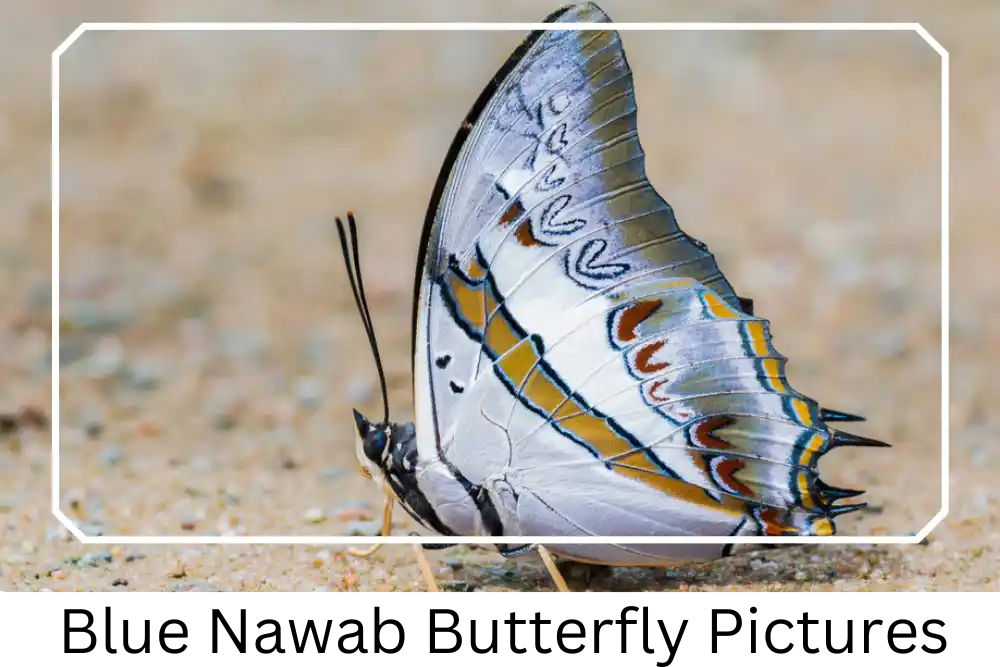
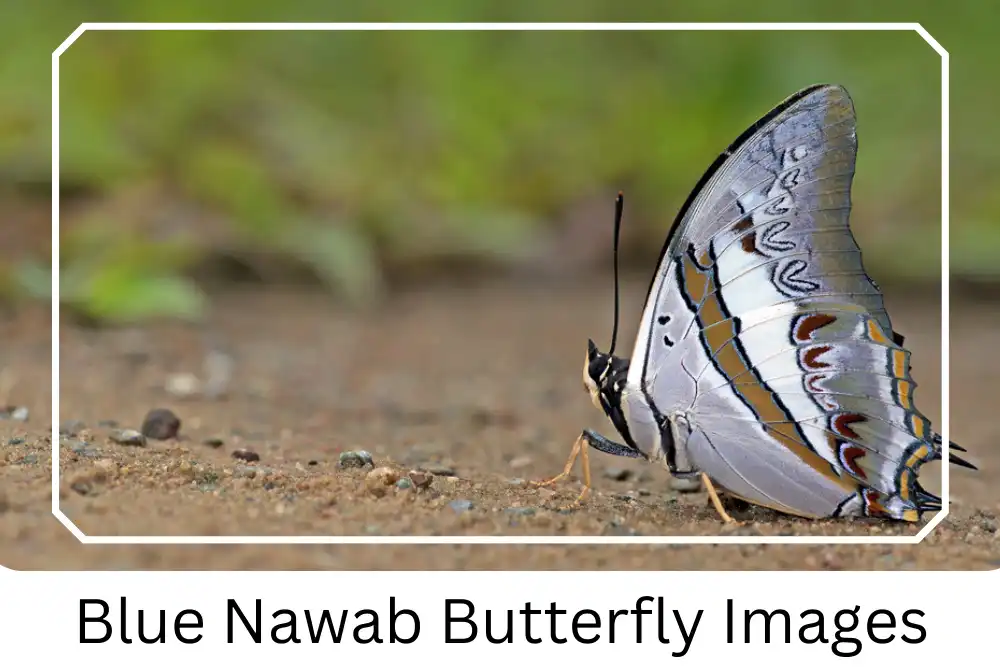
Color and Appearance: The Blue Nawab’s wings, when open, reveal a breathtaking display of white median bands set against a backdrop of vivid blue. The closed-wing view offers a silvery underside adorned with light brown and violet to purple patterns, and the presence of two pairs of tails on the hindwings adds to its elegance.
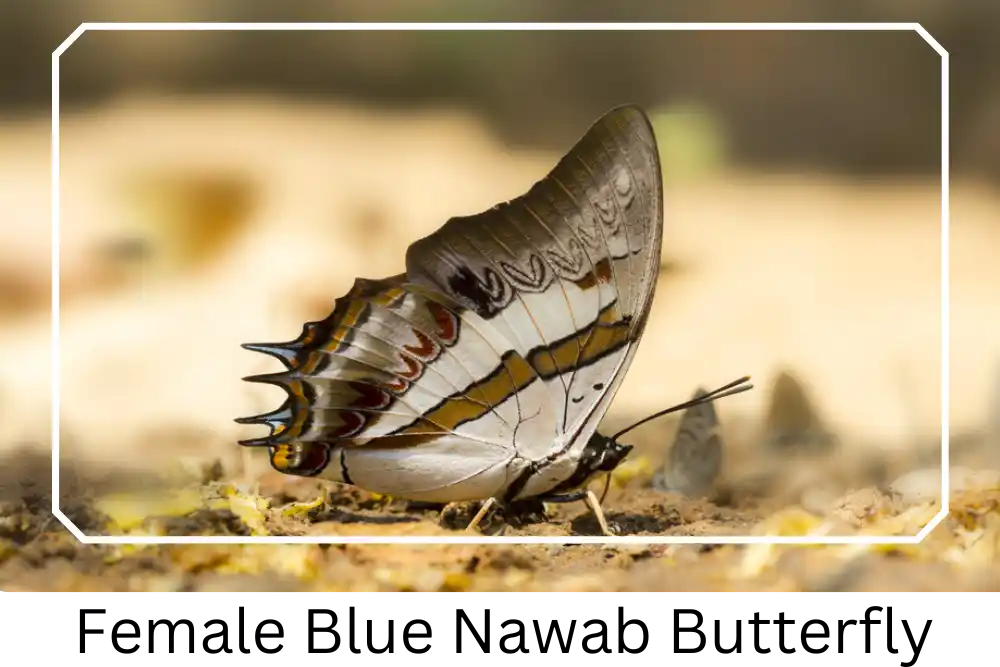
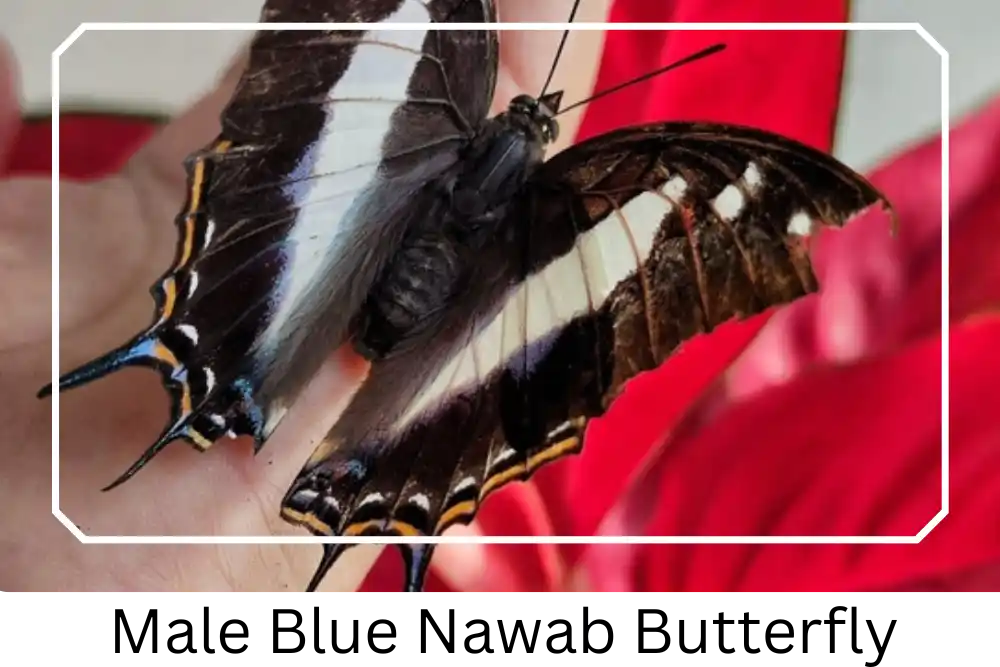 Average Wingspan: The wingspan of an adult Blue Nawab ranges from 60 to 80 mm (2.36 – 3.14 in), allowing for powerful and graceful flights across their habitat.
Flight Pattern: Characterized by strong and fast flaps, the flight of the Blue Nawab is a testament to its agility and strength, enabling it to navigate through its environment with precision.
Eggs
The eggs of the Blue Nawab are spherical and smooth, marked with pale yellow and purple, laid individually as they embark on the cycle of life anew.
Quick Facts | |
| Distribution | From the southern parts of India and Assam through Myanmar, Tenasserim, Southeast Asia, southern China, to Java, Indonesia. |
| Habitat | Inhabits urban parks and gardens, forested areas, and mangrove regions. |
| Lifespan of Adults | Few weeks |
| Host Plants | Varies with subspecies. |
| Adult Diet | Predominantly flower nectar; males occasionally consume decomposing animal matter and overripe fruits. |
How to Identify Blue Nawab?
Identifying a Blue Nawab butterfly in the wild involves looking for its unique color patterns and structural features. The vibrant blue and white bands on the open wings are unmistakable, distinguishing it from other species. Observers should also note the silvery underside with light brown and violet patterns when the wings are closed. The presence of two pairs of tails on the hindwings is another key identifier. Additionally, the size of the Blue Nawab, with an average wingspan of 60 to 80 mm, helps in its identification. The flight pattern, characterized by strong and fast flaps, can also give away its presence in a habitat. Paying attention to these details will greatly increase the chances of correctly identifying this magnificent butterfly.
Did You Know?
- The term ‘Nawab’ is attributed to this butterfly for its regal and majestic bearing, a characteristic that deeply resonates with butterfly enthusiasts.
- Blue Nawab butterflies are adept at utilizing a variety of host plants for their larvae, showcasing an impressive adaptability to their environment.
- Despite their elegant appearance, Blue Nawabs are skilled survivors, navigating through challenges from predators to habitat changes.
Conclusion
The Blue Nawab butterfly stands as a symbol of natural elegance and resilience, weaving a tapestry of beauty across the tropical landscapes of Asia. Its life cycle, from the distinctive caterpillar to the splendid adult, is a remarkable journey that highlights the wonders of nature. For enthusiasts and conservationists alike, the Blue Nawab is a reminder of the importance of preserving natural habitats to ensure that future generations can continue to marvel at these majestic creatures.
Blue Nawab Pictures
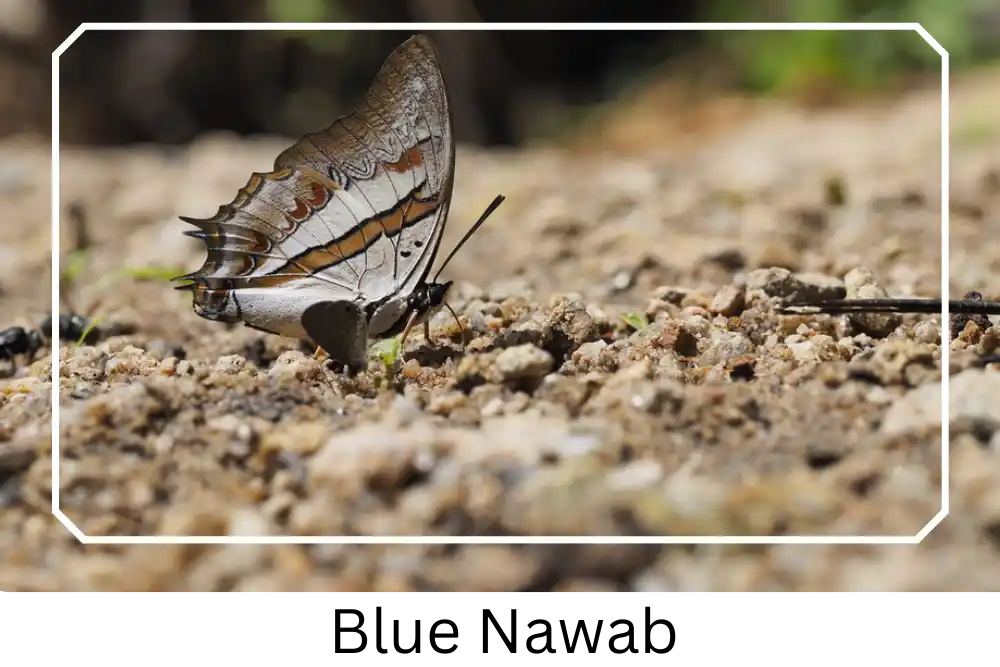


 Dr. James Watuwa on July 16, 2019.
 Butterfly Team