
Butterflies in Indonesia
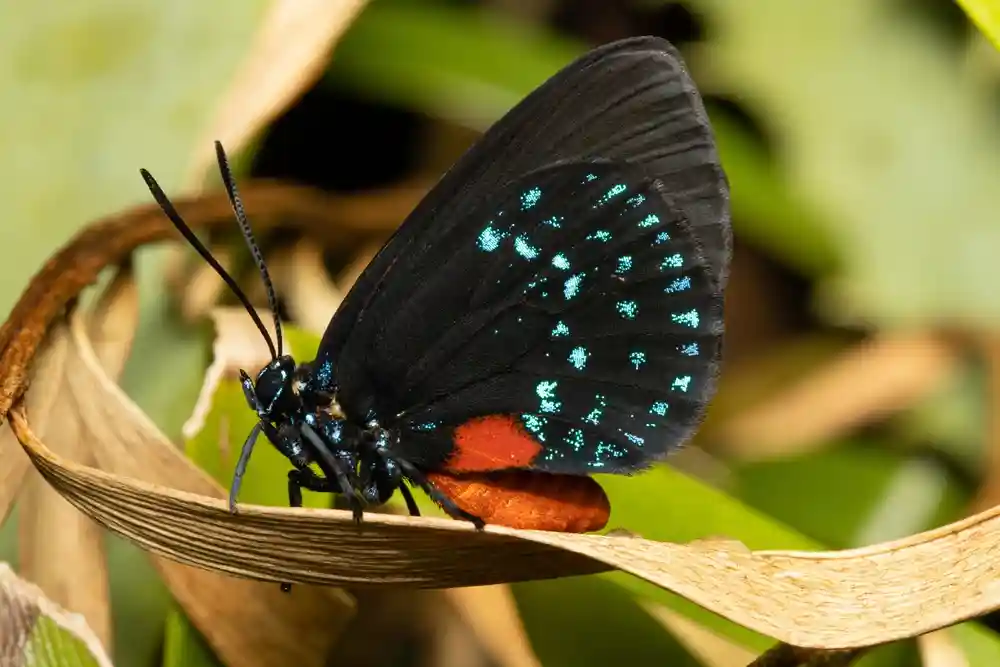
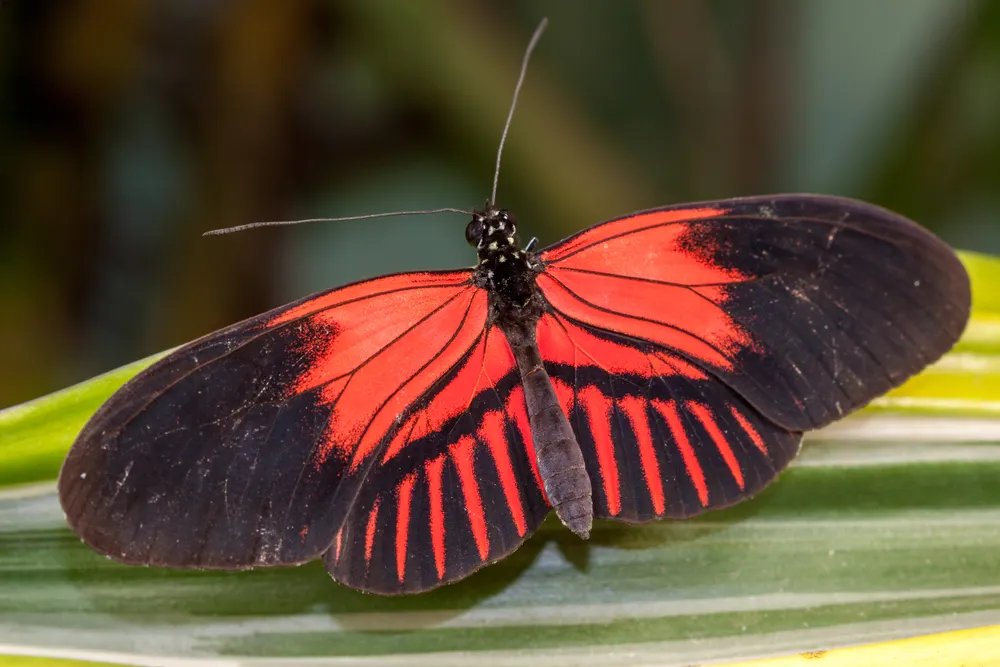
Despite deforestation due to population growth and rapid industrialization causing several rare butterflies to lose their home, some species can still be found in Indonesia. The nation is known for its birdwing butterflies like the Priapus Birdwing, the Obi Island Birdwing, and the Malay Birdwing. Other notable species include the Biak Tiger, the D’Abrera’s Tiger, and the Banana Skipper.

Butterflies in Indonesia
List of Different Butterfly Species of Indonesia
Brush-Footed (Nymphalidae)
- Bamboo Treebrown (Lethe europa)
- Bedford-Russell’s Tree-nymph (Idea tambusisiana)
- Biak Dark Crow (Euploea albicosta)
- Biak Threespot Crow (Euploea tripunctata)
- Biak Tiger (Parantica marcia)
- Blanchard’s Ghost (Idea blanchardii)
- Blanchard’s Wood Nymph (Ideopsis vitrea)
- Bonthain Tiger (Parantica sulewattan)
- Celebis Sailer (Neptis celebica)
- Cordelia’s Crow (Euploea cordelia)
- D’Abrera’s Tiger (Parantica dabrerai)
- Flores Tiger (Parantica wegneri)
- Hewitson’s Dwarf Crow (Euploea hewitsonii)
- Hewitson’s Small Tree-nymph (Ideopsis hewitsonii)
- Ismare Tiger (Danaus ismare)
- Javan Crow (Euploea gamelia)
- Kuekenthal’s Yellow Tiger (Parantica kuekenthali)
- Linnaeus’ Idea (Idea idea)
- Lompobatang Lady (Vanessa buana)
- Magou Crow (Euploea magou)
- Malayan Crow (Euploea redtenbacheri)
- Manado Yellow Tiger (Parantica menadensis)
- Morishita’s Tiger (Parantica hypowattan)
- Murphy’s Crow (Euploea caespes)
- Seram Crow (Euploea dentiplaga)
- Seram Small Tree-nymph (Ideopsis klassika)
- Short-banded Sailor (Neptis columella)
- Sulawesi Pied Crow (Euploea eupator)
- Sulawesi Striped Blue Crow (Euploea configurata)
- Sumatran Chocolate Tiger (Parantica tityoides)
- Sumatran Crow (Euploea martinii)
- Sumbawa Tiger (Parantica philo)
- Toxopeus’ Yellow Tiger (Parantica toxopei)
- Vollenhov’s Crow (Euploea eleusina)
- Westwood’s King Crow (Euploea westwoodii)
- Weymer’s Crow (Euploea latifasciata)
- Zinken’s Tiger (Parantica albata)
- Cirrochroa clagia
- Cyrestis nais
- Cyrestis telamon
- Elymnias ceryx
- Elymnias cumaea
- Elymnias cybele
- Elymnias vitellia
- Euploea morosa
- Idea durvillei
- Ideopsis oberthurii
- Moduza lymire
- Mynes websteri
- Neptis ida
- Parantica cleona
- Parantica pseudomelaneus
- Tanaecia amisa
- Vanessa dilecta
- Vanessa samani
Gossamer-Winged (Lycaenidae)
- Common Hedge Blue (Acytolepis puspa)
- Branded Imperial (Eooxylides tharis)
- Gram Blue (Euchrysops cnejus)
- Indian Cupid (Cupido lacturnus)
- Major Darkie (Allotinus major)
- Poritia phormedon
- Allotinus agnolia
- Allotinus nicholsi
- Allotinus paetus
- Allotinus parapus
- Allotinus maximus
- Allotinus brooksi
- Allotinus bidiensis
- Allotinus macassarensis
- Britomartis igarashii
- Udara aristinus
- Hypochrysops dinawa
- Arhopala alica
- Arhopala dajagaka
- Arhopala baluensis
- Arhopala denta
- Arhopala sangira
- Arhopala axiothea
- Arhopala bella
- Arhopala borneensis
- Arhopala hercules
- Arhopala helianthes
- Drupadia cineas
- Drupadia cinesia
- Philiris parsonsi
- Philiris petriei
- Philiris radicala
- Sukidion inores
- Tajuria discalis
- Philiris cyana
- Titea sublutea
- Philiris hemileuca
- Philiris hypoxantha
- Philiris agatha
- Philiris lavendula
- Philiris unipunctata
- Philiris intensa
- Philiris angabunga
- Philiris dinawa
- Philiris marginata
- Philiris vicina
- Philiris albihumerata
- Philiris oreas
- Philiris baiteta
- Philiris bubalisatina
- Philiris hindenburgensis
Whites and Sulphurs (Pieridae)
- Eastern Orange Albatross (Appias zarinda)
- Sulawesi Gull (Cepora eperia)
- Kuehn’s Jezebel (Delias kuhni)
- Rosenberg’s Painted Jezebel (Delias rosenbergii)
- Painted Jezebel (Delias hyparete)
- Striped Albatross (Appias libythea)
- Cepora celebensis
- Cepora fora
- Cepora timnatha
- Delias fruhstorferi
- Delias belisama
- Delias eumolpe
- Delias zebuda
Swallowtail (Papilionidae)
- Ascalaphus Swordtail (Papilio ascalaphus)
- Buru Opalescent Birdwing (Troides prattorum)
- Criton Birdwing (Troides criton)
- Giant Swordtail (Graphium androcles)
- Green-spotted Triangle (Graphium agamemnon)
- Green Swallowtail (Papilio blumei)
- Haliphron Birdwing (Troides haliphron)
- Jordan’s Swallowtail (Papilio jordani)
- Malay Birdwing (Troides amphrysus)
- Obi Island Birdwing (Ornithoptera aesacus)
- Palu Swallowtail (Losaria palu)
- Priapus Batwing (Atrophaneura priapus)
- Riedel’s Birdwing (Troides riedeli)
- Rippon’s Birdwing (Troides hypolitus)
- Rothschild’s Birdwing (Ornithoptera rothschildi)
- Sea Green Swallowtail (Papilio lorquinianus)
- Tabitha’s Swordtail (Graphium dorcus)
- Talaud Black Birdwing (Troides dohertyi)
- Tithonus Birdwing (Ornithoptera tithonus)
- Van de Poll’s Birdwing (Troides vandepolli)
- Wallace’s Golden Birdwing (Ornithoptera croesus)
- Yellow Zebra (Graphium deucalion)
- Atrophaneura dixoni
- Atrophaneura kuehni
- Atrophaneura luchti
- Atrophaneura semperi
- Graphium anthedon
- Graphium encelades
- Graphium meyeri
- Graphium rhesus
- Graphium stresemanni
- Pachliopta polyphontes
- Papilio deiphobus
- Papilio diophantus
- Papilio forbesi
- Papilio gambrisius
- Papilio gigon
- Papilio hipponous
- Papilio inopinatus
- Papilio lampsacus
- Papilio neumoegeni
- Papilio peranthus
- Papilio sataspes
- Papilio tydeus
- Papilio veiovis
- Troides staudingeri
Skipper (Hesperiidae)
- Banana Skipper (Erionota thrax)
- Pale Palm Dart (Telicota colon)
- Mimene kolbei
- Mimene melie
The Bali Butterfly Park – locally known as Taman Kupu-Kupu – is a must-see for butterfly enthusiasts. Covering almost one acre in area, hundreds of butterflies are known to flock here.