
Home / Swallowtail (Papilionidae) / Wallace’s Golden Birdwing (Ornithoptera croesus)

Wallace’s Golden Birdwing (Ornithoptera croesus)
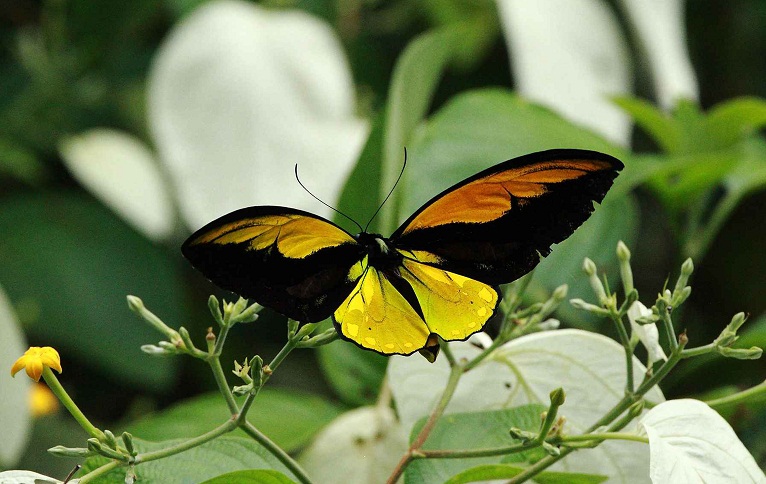
The Wallace’s Golden Birdwing, also known as the Wallace Butterfly, is a large, vibrantly-colored butterfly found in a very limited region in Indonesia. Named after the British naturalist Alfred Russel Wallace, this species is celebrated for its striking beauty and significant scientific value. Despite its captivating appearance, the Wallace’s Golden Birdwing faces the threat of extinction, classified as ‘Endangered’ (EN) by the IUCN 2.3.

Scientific Classification


  • Family: Papilionidae
  • Genus: Ornithoptera
  • Common names: Wallace Butterfly
  • Scientific Name: Ornithoptera croesus

Overview

Endemic to Indonesia’s northern part of the Maluku Islands (Moluccan Islands), the Wallace’s Golden Birdwing inhabits wet lowland environments, including swamps. There are six local subspecies, each contributing to the butterfly’s overall diversity. One of the most notable features of this species is the size difference between males and females, with females being conspicuously larger. The declining population of this butterfly underscores the urgent need for conservation efforts to protect its habitat and ensure its survival.

Description and Identification

Caterpillar

The appearance of the larva of Wallace’s Golden Birdwing has not been well documented. However, it is likely that the caterpillar is brown with a few rows of dark spines. As with many butterfly species, the caterpillars probably feed on the leaves of their host plants, helping them to grow and develop into pupae.

Pupa

The pupa of the Wallace’s Golden Birdwing has also not been extensively studied. Typically, the pupa attaches itself to the stem of its host plant, where it remains for several weeks. During this time, the transformation from pupa to adult butterfly occurs, culminating in the emergence of the butterfly.

Adult Butterfly

Sexual Dimorphism: Sexual dimorphism is strongly present in this species. Females are significantly larger than males, and their coloration and patterns differ.

Color and Appearance:

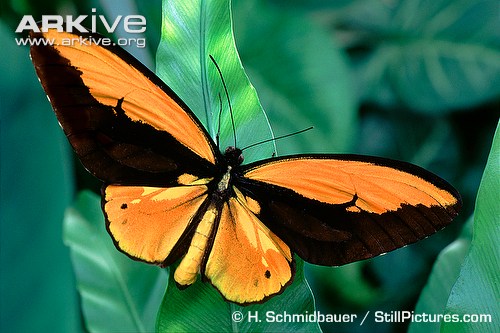
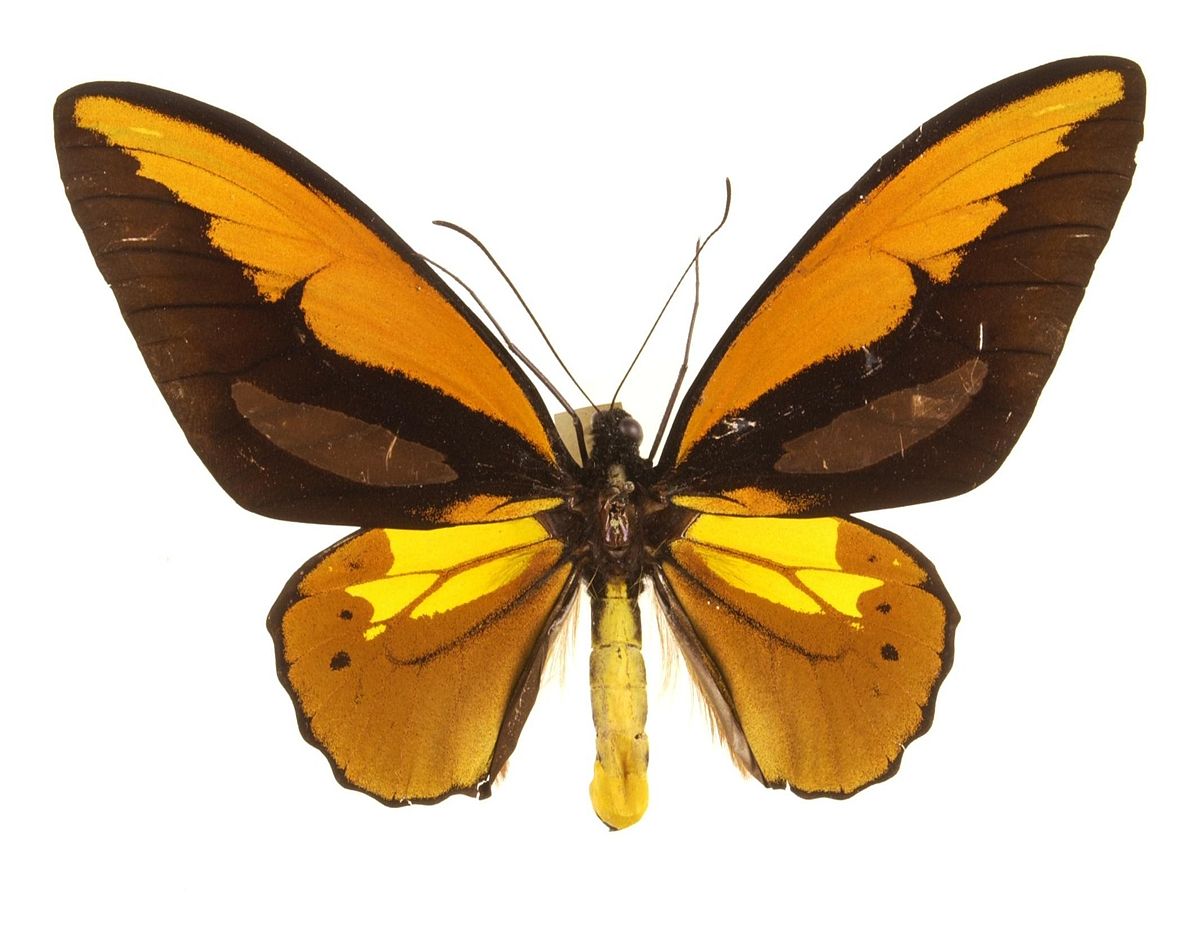
Males: When the wings are open, the male butterflies display black forewings with a leading edge that is either red or orange, and a longish, black odor-spot. The hindwings are red or orange with a few golden spots at the leading edge, with the entire edge being black along with several small golden and black spots at the outer edge.
When the wings are closed, the forewings show a black coloration with some green spots, while the hindwings display a golden color with a chain of black spots by the outer edge and a network of black venation.

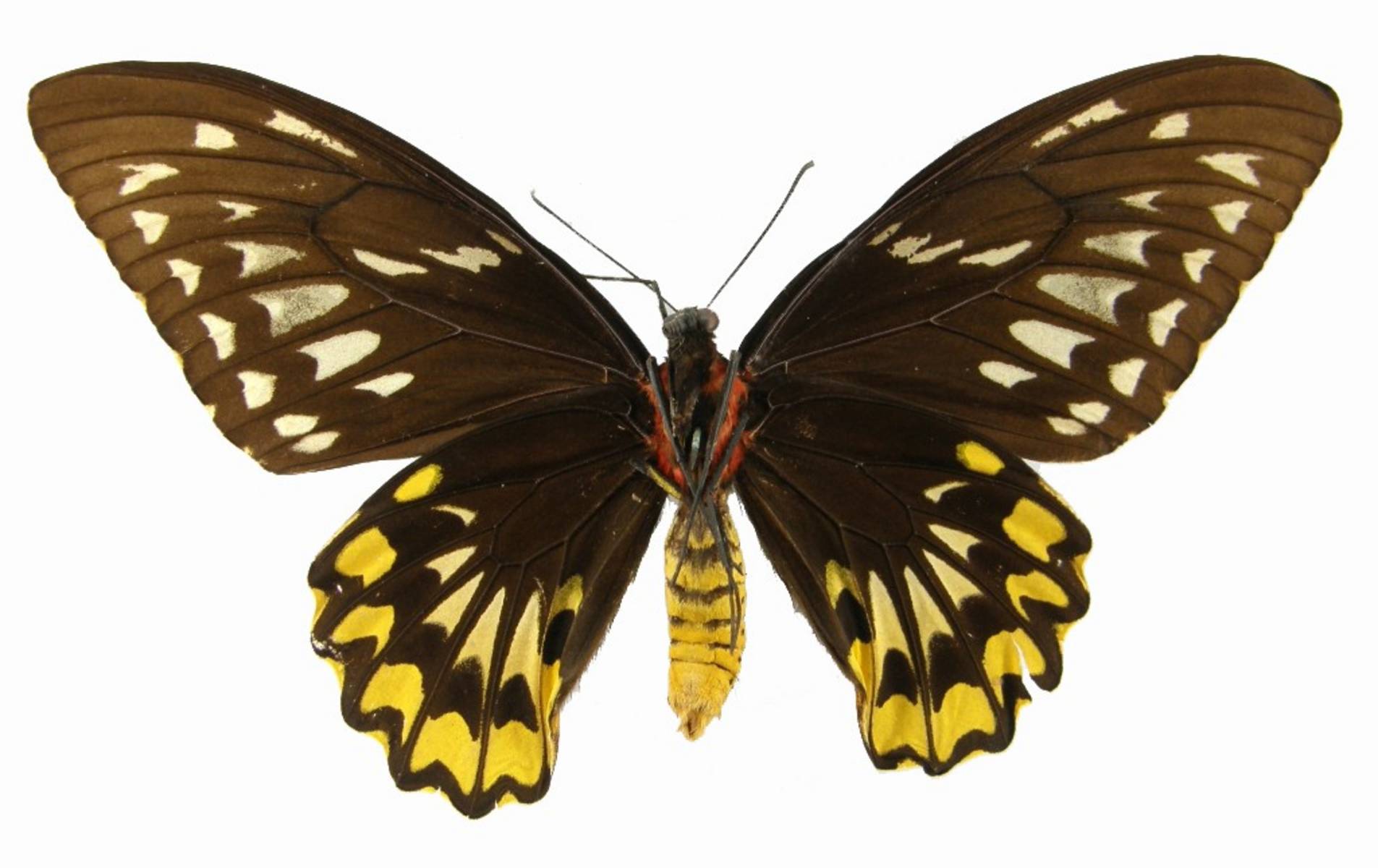
Females: The base color of the dorsal side is dark brown with a few small white spots on the forewings and large yellow marks on the hindwings. The ventral side is a fainter copy of the dorsal side.

Average Wingspan: The average wingspan ranges from 13 to 19 cm, with females generally on the larger end of this spectrum.

Flight Pattern: The flight pattern of the Wallace’s Golden Birdwing is slow and erratic, making it a distinctive sight as it moves through its habitat.

Lifespan: While specific lifespan data is scarce, most birdwing butterflies typically live for a few weeks to a couple of months as adults, depending on environmental conditions.

Mating Behavior: Males are known to patrol territories in search of females, engaging in courtship displays that include flying in a particular pattern to attract mates.

Eggs

The eggs of Wallace’s Golden Birdwing are mostly laid on the leaves of Pararistolochia species, the primary host plants for the caterpillars. These plants provide the necessary nutrients for the larvae to thrive.

Quick Facts

Distribution Indonesia’s northern part of the Maluku Islands (Moluccan Islands)
Habitat Wet lowland environments including swamps
Host Plants Species belonging to the genus Pararistolochia
Adult Diet Flower nectar
 

How to Identify Wallace’s Golden Birdwing?

Identifying Wallace’s Golden Birdwing involves observing several key features. Males can be recognized by their vibrant black, red, and orange coloration with golden spots, while females exhibit a darker brown with white and yellow markings. The size difference is also a notable characteristic, with females being larger. Look for their erratic flight pattern in wet lowland areas, especially around swamps. If you spot a butterfly laying eggs on Pararistolochia leaves or see caterpillars with brown bodies and dark spines, you may have found this endangered species. Their strong sexual dimorphism and specific habitat preferences make them distinguishable from other butterflies in the region.

Did You Know?

  • In his 1869 scientific-expedition chronicle, ‘The Malay Archipelago,’ Alfred Russel Wallace wrote that, when he first saw this butterfly, he almost fainted with its ‘glorious’ beauty and had a headache the rest of the day.
  • Another interesting fact is that the species’ name, ‘Birdwing,’ comes from their bird-like flight pattern and large wingspan, making them one of the most remarkable butterflies in the world.

Conclusion

The Wallace’s Golden Birdwing is not just a butterfly but a symbol of natural beauty and scientific wonder. Its endangered status highlights the importance of conservation efforts to protect its habitat. By learning more about this remarkable species, we can appreciate the biodiversity of our planet and the need to preserve it for future generations.

Wallace’s Golden Birdwing Pictures

Frequently Asked Questions

icon

The Wallace’s Golden Birdwing (Ornithoptera croesus) is a large, vibrantly colored butterfly native to Indonesia. It is known for its striking sexual dimorphism, where females are significantly larger than males. This species holds significant scientific value but is classified as Endangered, highlighting the urgent need for conservation efforts.

icon

The Wallace’s Golden Birdwing is endemic to a very limited region, specifically the northern Maluku Islands in Indonesia. Its natural habitat consists of wet lowland environments, including swamps. The species is divided into six distinct local subspecies, each found within this specific geographical area of the Moluccan Islands.

icon

You can differentiate male and female Wallace’s Golden Birdwings primarily by their size and coloration, a trait known as sexual dimorphism. Females are conspicuously larger than males. Additionally, their wing patterns and colors differ, with males displaying black forewings that have a distinct red or orange leading edge.

icon

The official conservation status of the Wallace’s Golden Birdwing is ‘Endangered’ (EN), according to the IUCN Red List 2.3. This classification indicates that the species faces a very high risk of extinction in the wild due to its declining population and the need for habitat protection efforts.

icon

The Wallace’s Golden Birdwing was named in honor of the renowned British naturalist Alfred Russel Wallace. Wallace, a contemporary of Charles Darwin, made significant contributions to the theory of evolution and conducted extensive fieldwork in the Malay Archipelago where this butterfly is found, leading to its discovery.

icon

The appearance of the Wallace’s Golden Birdwing caterpillar has not been extensively documented by scientists. However, it is believed to be brown and feature several rows of dark, protective spines along its body. Like other butterfly larvae, it feeds on the leaves of its specific host plants to grow.

icon

No, male and female Wallace’s Golden Birdwings are not the same size due to strong sexual dimorphism. Females of the species are significantly and conspicuously larger than their male counterparts. This size difference is one of the most notable features used to distinguish between the sexes in this species.

Leave a Reply

Your email address will not be published. Required fields are marked *

Scientific Classification

  • Family: Papilionidae
  • Genus: Ornithoptera
  • Common names: Wallace Butterfly
  • Scientific Name: Ornithoptera croesus
Published by Avatar on December 27, 2018.
Last Updated: May 30, 2024. ✅ Verified by: Butterfly Team