
Clouded Sulphur (Colias philodice)
The Clouded Sulphur is a delightful species of butterfly that graces much of North America with its presence. Known for their vibrant flights on sunny days, these small to medium-sized butterflies hover just above the ground, adding a splash of color to their natural habitats. Classified by the IUCN 2.3 as ‘LC’ (Least Concern), Clouded Sulphurs are a common sight, flourishing in a variety of sunny open lands.
Scientific Classification
- Family: Pieridae
- Genus: Colias
- Common names: Common Sulphur
- Scientific Name: Colias philodice
Overview
Thriving in diverse environments, from the south of Alaska through southeast and central parts of Canada to almost all of the United States, Clouded Sulphurs exhibit a fascinating lifecycle. Their journey from egg to butterfly showcases nature’s marvels, with each stage of their life tailored to survival and adaptation. This guide explores the Clouded Sulphur butterfly in detail, offering insights into their identification, behavior, and more.
Description and Identification
 Caterpillar
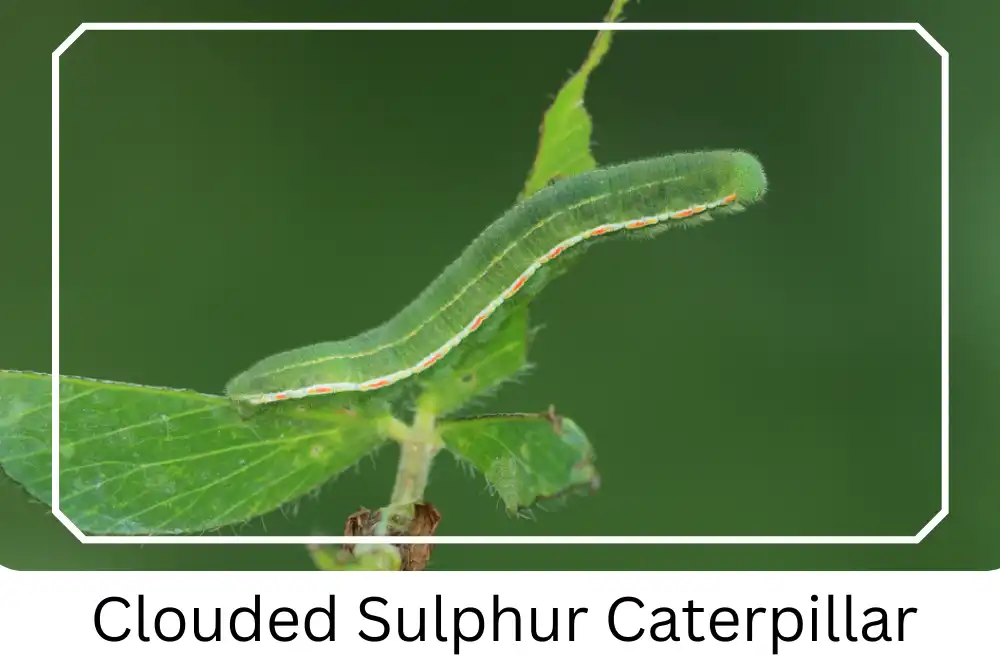
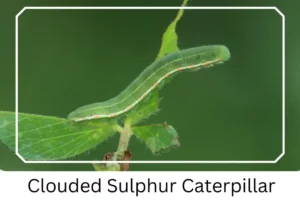
The larvae of the Clouded Sulphur are characterized by their vivid green color, adorned with a distinctive white stripe on each side of their body. This stripe may be accented with lines or bars of orange or pink. In their early stages, these larvae display a cannibalistic nature, often resorting to eating one another if given the opportunity.
 Pupa
Pupa
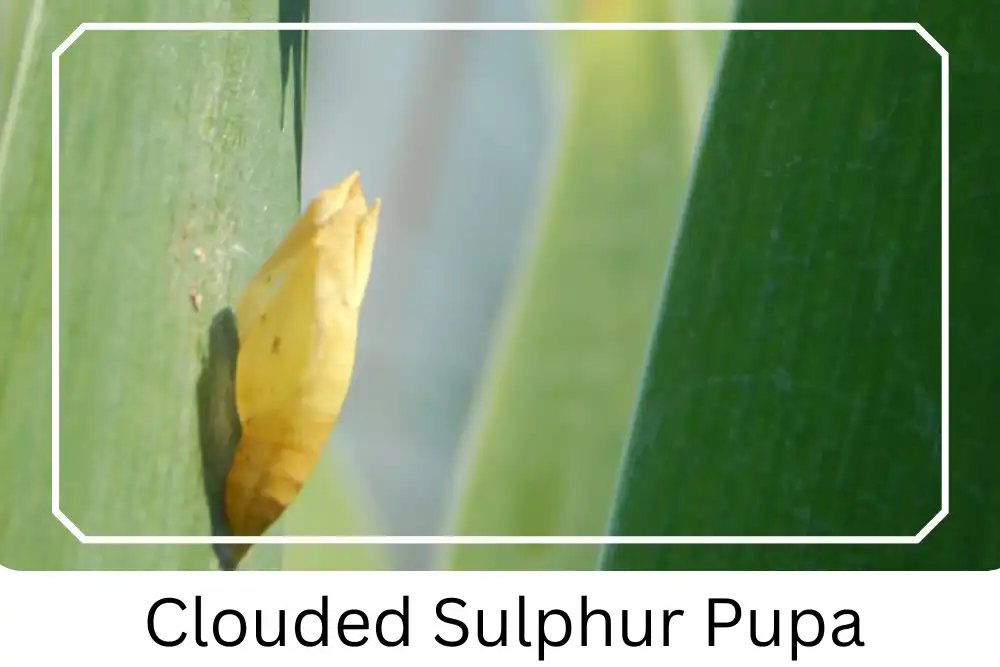
Transitioning into pupae, these creatures take on a green hue for camouflage. They suspend themselves in an upright position with a silken girdle. As they near the end of this stage, the chrysalis turns yellow, adorned with a pink ‘zipper,’ signaling the imminent emergence of the adult butterfly.
Adult Butterfly
Sexual Dimorphism: The adult Clouded Sulphur does not exhibit strong sexual dimorphism, making them somewhat unique.
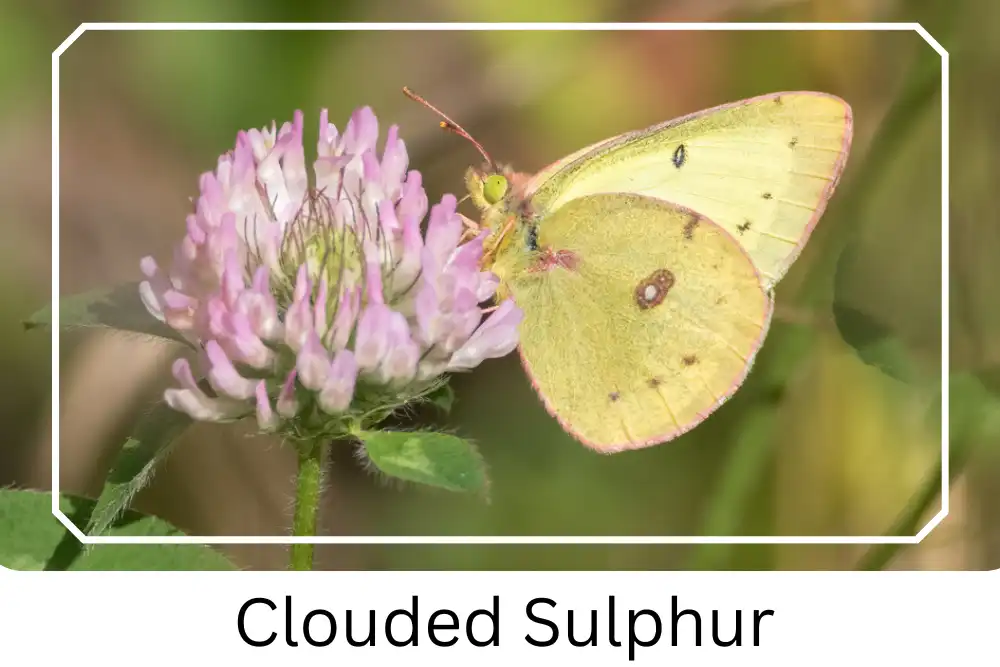
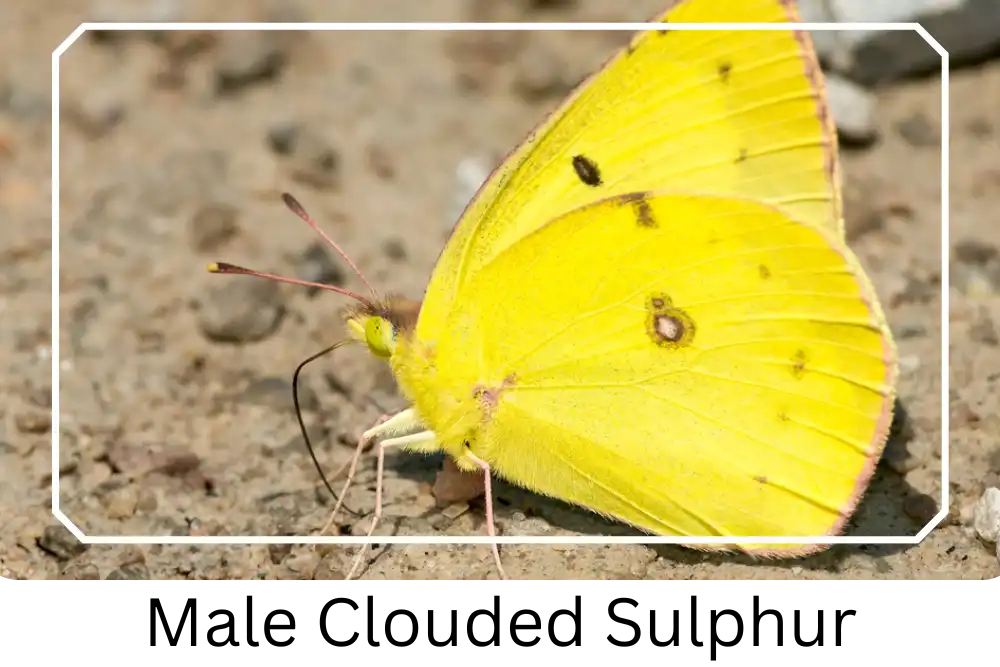
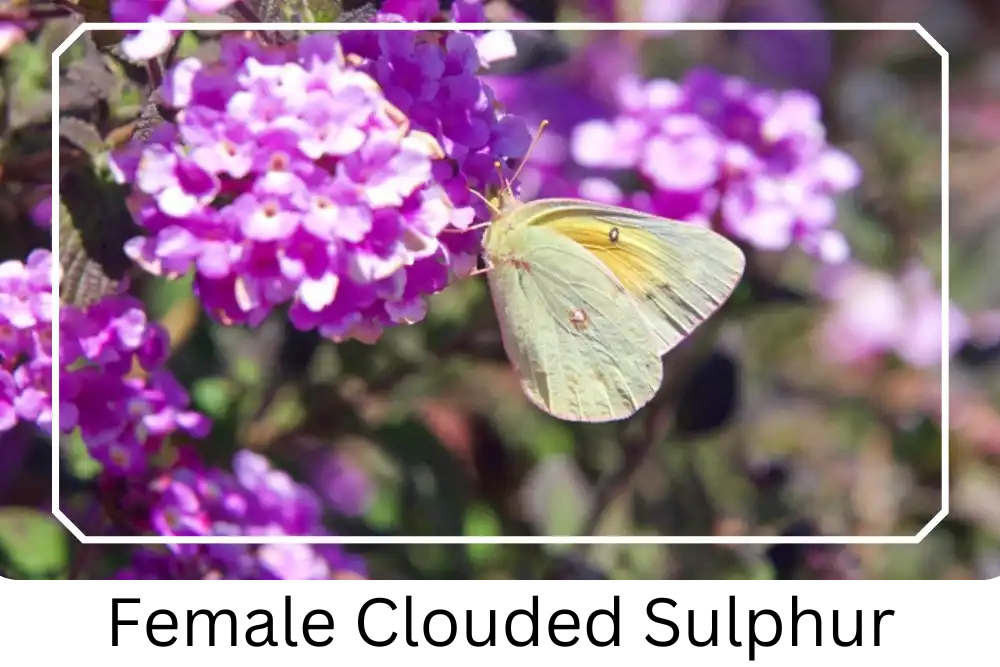
Color and Appearance: The males boast pale yellow wings with solid black borders, while females have yellow-dotted borders. The underparts of their forewings feature dark spots, and the hindwings are highlighted by a silver cell spot surrounded by orange-pink, often doubled. Males typically display a yellow underside when their wings are closed, whereas females may appear yellow or greenish-white.

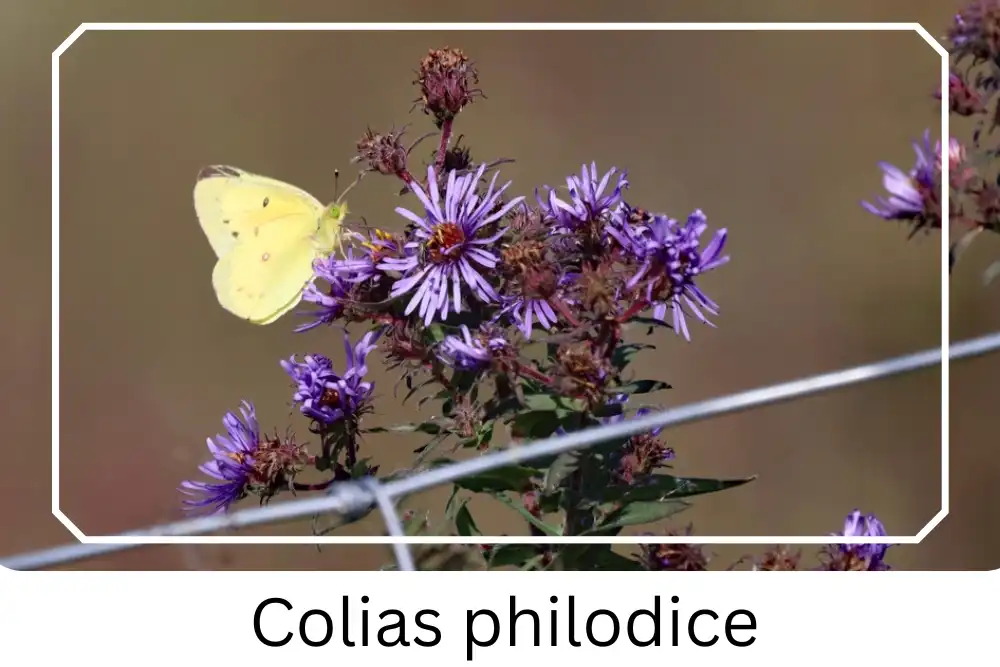 Average Wingspan: 1½ to 2¾ inches (3.8 to 7 cm)
Flight Pattern: Quick, sometimes erratic flights
Eggs
The beginning of life for the Clouded Sulphur starts with pale yellow eggs laid singly on host plants. These eggs undergo a color transformation, turning red and eventually gray just before hatching.
Quick Facts | |
| Distribution | From south of Alaska through southeast and central parts of Canada to all of the United States except for most parts of California, south Texas, and most of Florida. |
| Habitat | Prefers sunny open lands such as meadows, fields (especially alfalfa and clover fields), lawns, and road edges. |
| Lifespan of Adults | Ranges from 2 to 7 days, with some specimens living up to 24 days. |
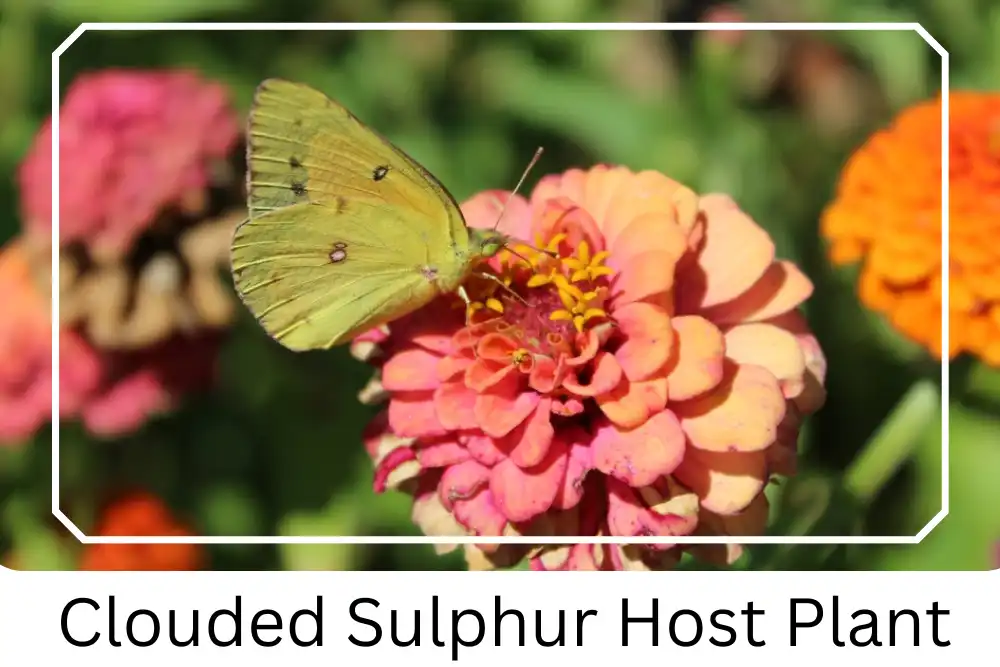
| Host Plants | Favors species belonging to the pea family (Fabaceae), including white clover (Trifolium repens), alfalfa (Medicago sativa), and pea (Pisum sativum). |
| Adult Diet | Primarily flower nectar and muddy water. |
How to Identify Clouded Sulphur Butterfly?
Identifying a Clouded Sulphur butterfly can be a delightful challenge for enthusiasts. Look for their vibrant yellow or occasionally white wings, which stand out against the natural greenery. In males, the solid black bordering the wings is a key characteristic, whereas females may feature yellow dots along these edges. The presence of dark submarginal spots on the forewings and a unique silver cell spot on the hindwings are definitive markers. Observing their flight pattern can also aid in identification; Clouded Sulphurs are known for their rapid and sometimes erratic flight, rarely venturing far from the ground. This guide, coupled with careful observation, will enhance your ability to recognize these charming creatures in their natural habitat.
Did You Know?
- A unique white form of the female Clouded Sulphur, known as ‘Alba,’ occasionally replaces the typical yellow coloration, while a similar white form in males is extremely rare.
- Clouded Sulphurs engage in mud-puddling behavior, where they gather in small to large groups in wet areas to sip water from the mud. This behavior is crucial for their survival, aiding in nutrient intake.
- The Clouded Sulphur’s ability to blend into its surroundings through its green pupal stage is a remarkable example of natural camouflage, aiding in protection from predators.
Conclusion
The Clouded Sulphur butterfly is a fascinating and widespread member of the North American butterfly fauna. With its vivid colors, interesting life stages, and unique behaviors, it offers endless opportunities for observation and study. Whether you’re a seasoned lepidopterist or a casual nature observer, understanding and identifying the Clouded Sulphur can add a rich layer to your outdoor experiences, highlighting the incredible diversity and adaptability of these beautiful insects.
Clouded Sulphur Pictures

Scientific Classification

- Family: Pieridae
- Genus: Colias
- Common names: Common Sulphur
- Scientific Name: Colias philodice
 Dr. James Watuwa on December 12, 2018.
 Butterfly Team