
Home / Gossamer-Winged (Lycaenidae) / Colorado Hairstreak (Hypaurotis crysalus)

Colorado Hairstreak (Hypaurotis crysalus)
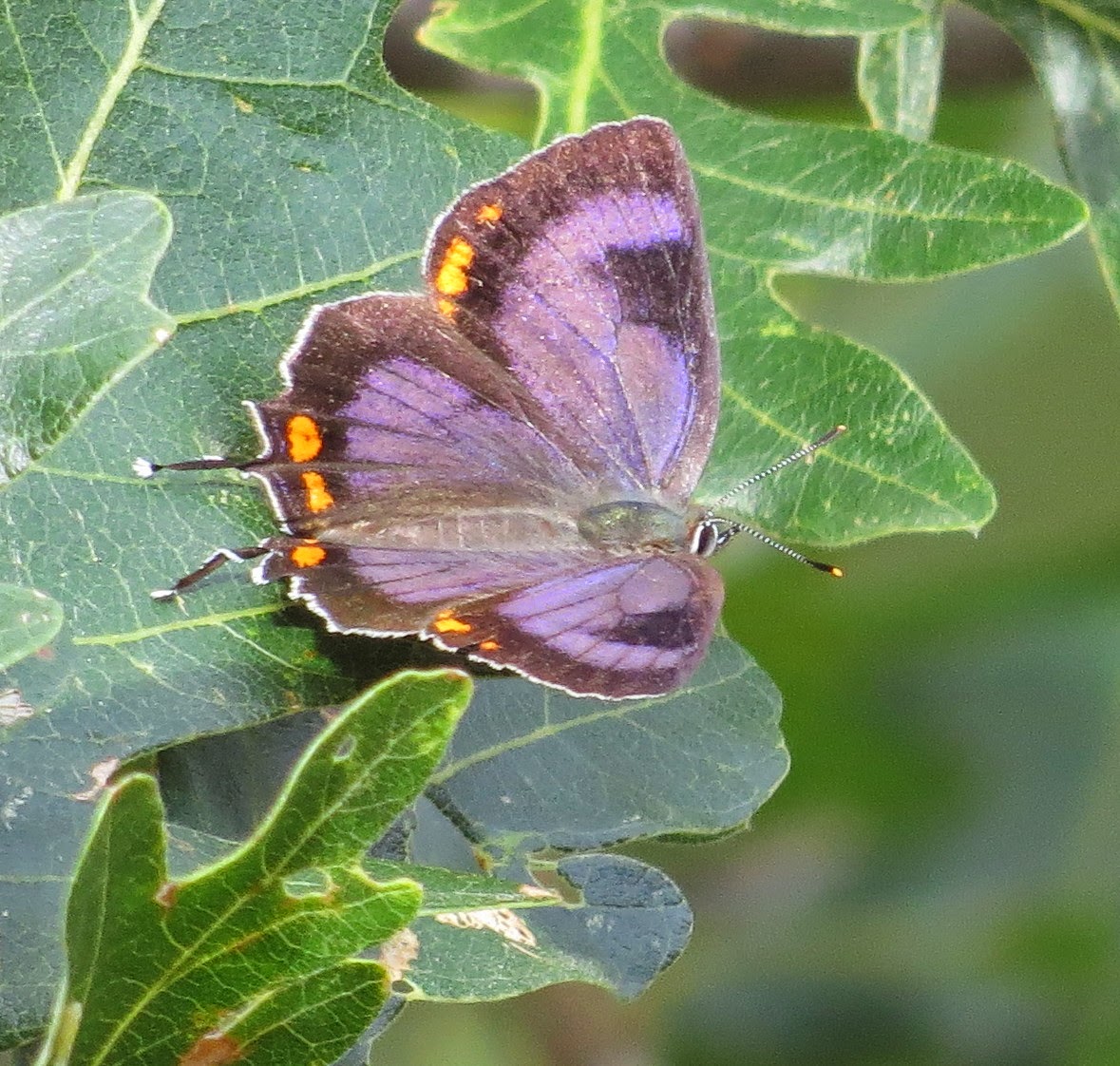
The Colorado Hairstreak is a stunning purple butterfly that thrives in the oak scrublands of the western United States, predominantly between mid-June and August. Belonging to the genus Hypaurotis, it is the only species within this genus, making it a unique and fascinating subject for butterfly enthusiasts and researchers alike.

Scientific Classification


  • Family: Lycaenidae
  • Genus: Hypaurotis
  • Scientific Name: Hypaurotis crysalus

Overview

The Colorado Hairstreak is most commonly found in Utah, Colorado, Arizona, New Mexico, and other states within the Colorado Plateau. This butterfly’s preferred habitat is the oak scrublands, where it relies heavily on the gambel oak (Quercus gambelii) as a host plant for its larvae. Adults of this species are known for their striking dark purple coloration and their preference for tree sap and honeydew over nectar from flowers.

Description and Identification

Caterpillar

The mature larva of the Colorado Hairstreak is a vibrant green, featuring a segmented body that tapers towards both ends. Fine hair-like structures cover the body, providing it with a soft, velvety texture that can be quite distinct upon close observation.

Pupa

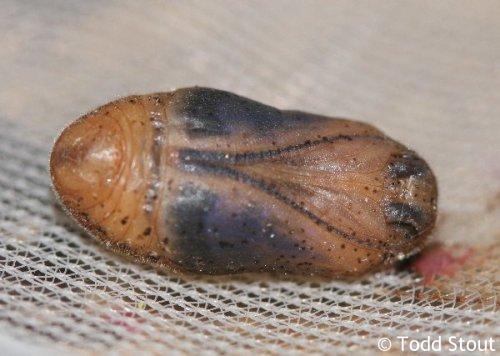
The pupa or chrysalis of the Colorado Hairstreak is light brown, adorned with dark, irregular spots. Additionally, a streak of purple can often be seen running along both sides of its body, adding to its unique appearance during this developmental stage.

Adult Butterfly

Sexual Dimorphism: Sexual dimorphism is present in the Colorado Hairstreak, with males and females displaying subtle differences in size and coloration.

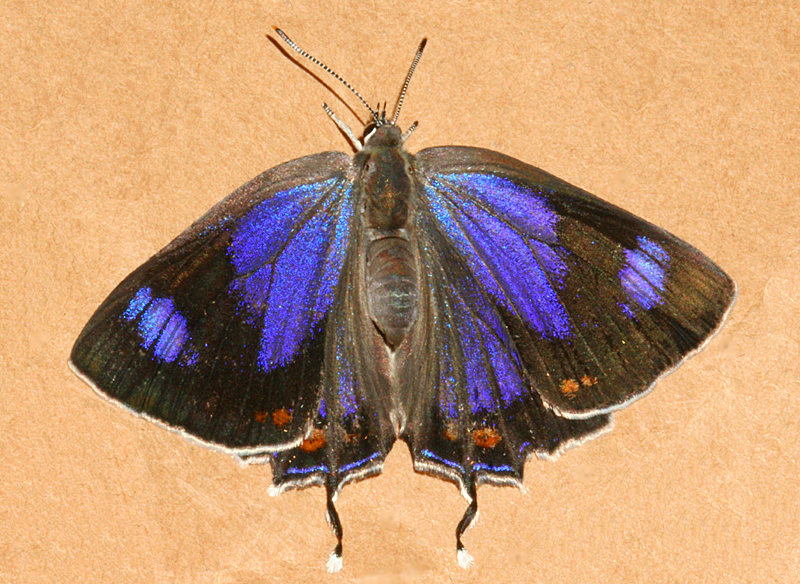
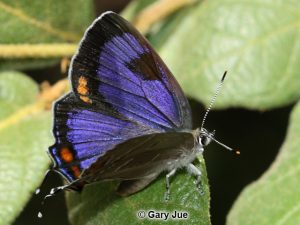
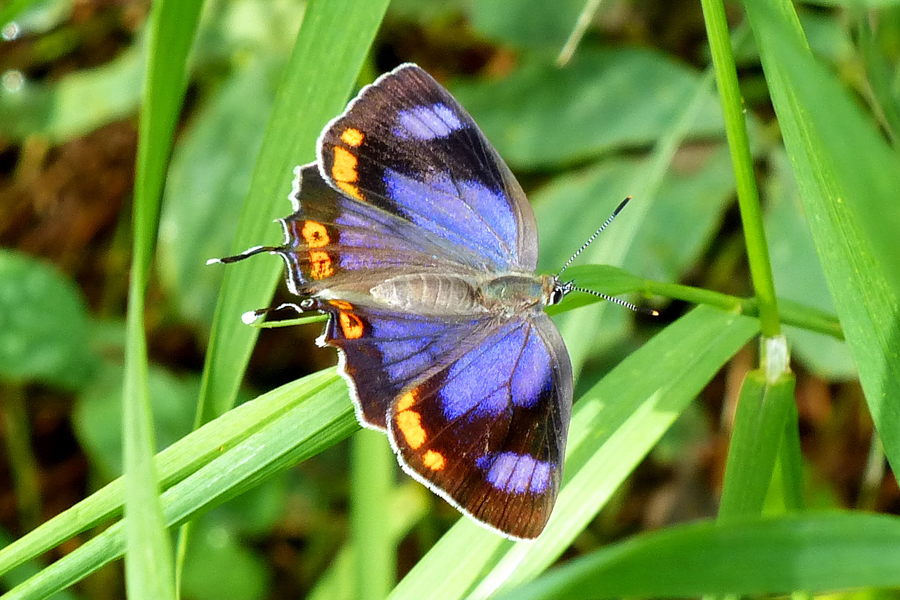
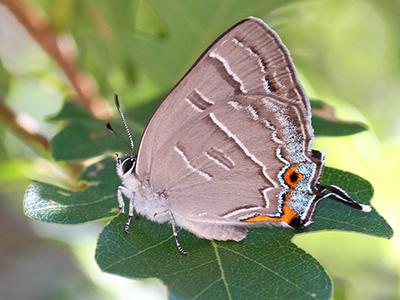
Color and Appearance: When the wings are open, the upperside exhibits a dark purple to violet coloration with a wide dark to black border. Both wings bear orange spots around the lower outer corner. When the wings are closed, the underside is pale to dark gray with dark and white markings, along with an orange patch near the margin of each forewing and an orange spot bearing a black center near the tail. Each hindwing also features a thin hairlike tail.

Average Wingspan: The Colorado Hairstreak has an average wingspan ranging from 2.5 to 3.3 inches, making it a medium-sized butterfly.

Flight Pattern: The flight pattern of the Colorado Hairstreak is typically average, characterized by short, quick flights interspersed with periods of rest.

Behavior: Colorado Hairstreak butterflies are often seen basking in the sunlight with their wings open, displaying their vibrant colors. They are more active during the warmer parts of the day and tend to rest in shaded areas during the hottest times.

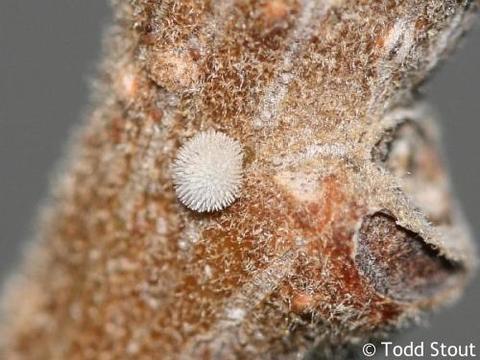
Reproduction: Females lay their eggs one at a time on the leaves of host plants. The eggs are white and are typically laid in late summer, allowing the larvae to hatch and develop in the optimal conditions of early autumn.

Eggs

The eggs of the Colorado Hairstreak are small and white, laid singly on the leaves of the host plant. This solitary egg-laying behavior helps to ensure the larvae have ample food supply upon hatching.

Quick Facts

Distribution Mostly found in Utah, Colorado, Arizona, New Mexico, and the Colorado Plateau states.
Habitat Typically found in the oak scrublands.
Lifespan of Adults Around 2 weeks.
Host Plants Prefers gambel oak (Quercus gambelii).
Adult Diet Adults prefer tree sap and honeydew secreted by other insects rather than nectar from flowers.

How to Identify Colorado Hairstreak?

Identifying the Colorado Hairstreak involves looking for specific physical and behavioral traits. The butterfly is easily recognizable by its dark purple to violet wings with wide black borders and orange spots near the lower corners. When the wings are closed, the underside displays a contrasting pattern of pale to dark gray with distinct dark and white markings. The presence of thin, hairlike tails on the hindwings is another distinguishing feature. Observing their habitat can also aid in identification; these butterflies are typically found in oak scrublands, often near gambel oaks.

Did You Know?

  • The Colorado Hairstreak was designated the state insect of Colorado in 1996, a testament to its unique beauty and regional significance.
  • Unlike many other butterflies, the Colorado Hairstreak prefers tree sap and honeydew as its primary food sources, rather than flower nectar.
  • These butterflies have a relatively short adult lifespan, living for only about two weeks.

Conclusion

The Colorado Hairstreak is a remarkable butterfly, not only for its striking appearance but also for its unique ecological preferences and behaviors. Its reliance on gambel oak for its life cycle and its unusual dietary habits make it a fascinating subject for study and conservation.

Frequently Asked Questions

icon

The Colorado Hairstreak butterfly has dark purple upper wings with a wide dark border and orange spots near the lower corners. Its underside is gray with various markings, an orange patch on the forewing, and an orange spot with a black center near the thin, hairlike tail on each hindwing.

icon

You can find the Colorado Hairstreak butterfly in the oak scrublands of the western United States. Its range is concentrated within the Colorado Plateau, including states like Utah, Colorado, Arizona, and New Mexico, where its host plant, the gambel oak, is abundant and provides essential habitat.

icon

Colorado Hairstreak caterpillars exclusively eat the leaves of the gambel oak (Quercus gambelii). This specific tree serves as the sole host plant for the larvae, providing all the necessary nutrients for them to grow and develop into the pupa stage before becoming an adult butterfly.

icon

You can tell the difference between male and female Colorado Hairstreaks through subtle variations in their size and coloration. This characteristic, known as sexual dimorphism, is present in the species, though the distinctions are not dramatic and may require close observation by an experienced viewer to identify accurately.

icon

Colorado Hairstreaks are found near gambel oak trees because the tree is their essential host plant. The caterpillars feed exclusively on its leaves for survival and development. Additionally, the adult butterflies often feed on tree sap and honeydew found on the oaks, making the tree critical for their entire lifecycle.

icon

The best time to see an adult Colorado Hairstreak butterfly is during its flight period, which typically occurs between mid-June and August. During these summer months, the butterflies are active in their oak scrubland habitats, making them more visible as they feed and seek out mates.

icon

The chrysalis of a Colorado Hairstreak is primarily light brown and is decorated with dark, irregular spots. A distinctive feature of the pupa is a streak of purple that often runs along both sides of its body, hinting at the vibrant coloration of the adult butterfly that will emerge.

Leave a Reply

Your email address will not be published. Required fields are marked *

Scientific Classification

  • Family: Lycaenidae
  • Genus: Hypaurotis
  • Scientific Name: Hypaurotis crysalus
Published by Avatar on July 10, 2019.
Last Updated: May 30, 2024. ✅ Verified by: Butterfly Team