
Holly Blue (Celastrina argiolus)
The Holly Blue butterfly, a striking inhabitant of manmade gardens, showcases a brilliant blue hue that captivates the eyes of observers. This small yet fascinating creature is distinguished by its presence across a variety of habitats, where it thrives in 14 local subspecies classified into four biological groups: argiolus, kollari, ladonides, and ladon. As a member of the ‘lycaenids’ or ‘blues’ family, the Holly Blue adds to the diversity of this family with its unique shades of blue, playing a vital role in the ecosystem it inhabits.
Scientific Classification
- Family: Lycaenidae
- Genus: Celastrina
- Common names: Hill hedge blue
- Scientific Name: Celastrina argiolus
Overview
The Holly Blue butterfly’s lifecycle and behaviors exhibit a fascinating adaptation to its environment, from its caterpillar stage to its adult form. This butterfly is commonly found across South Asia, Eurasia, and parts of North and Central America, making its home in gardens, parks, woodland rides, and other verdant landscapes. Its preference for host plants within the ‘holly’ (Ilex) genus underscores its intricate relationship with its surrounding flora. Through an examination of its life stages, from the camouflaged caterpillar to the elusive adult butterfly, we gain insight into the survival strategies that enable the Holly Blue to flourish across diverse environments.
Description and Identification
 Caterpillar
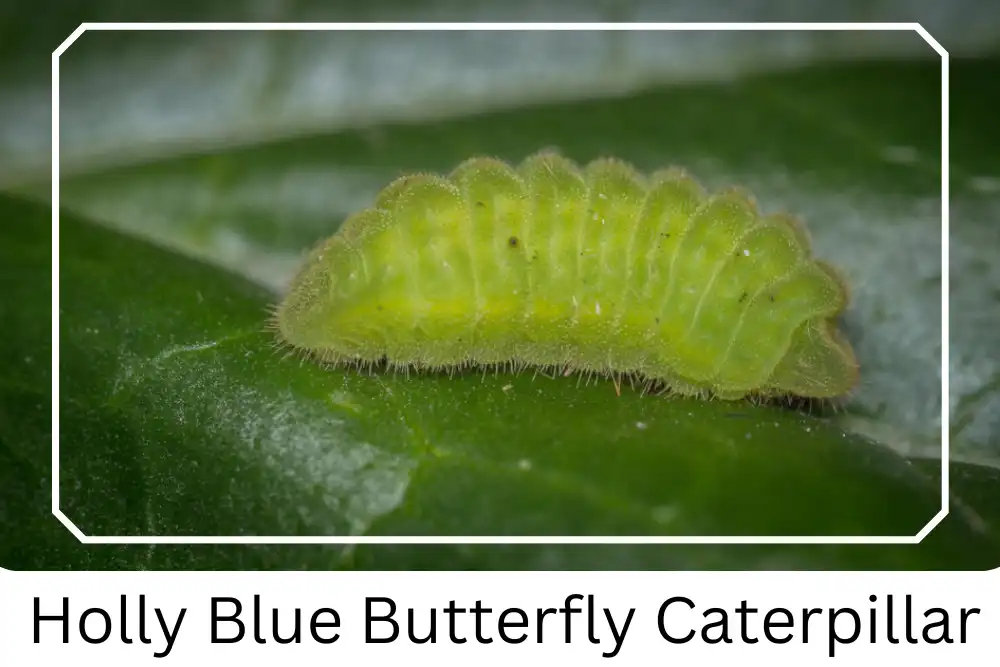
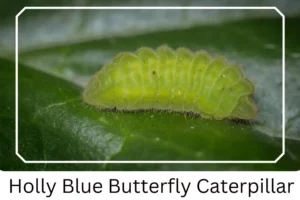
The Holly Blue caterpillar is characterized by its bright green coloration and segmented body, which allows it to blend seamlessly with the leaves of its host plants. This natural camouflage is further enhanced by minute, velvety hairs covering the dorsal side, offering it protection from predators.
Pupa
The chrysalis stage exhibits a light brown hue interspersed with dark patches, mimicking the appearance of a shelled groundnut. This coloration strategy is crucial for the pupa to remain inconspicuous among the dry leaves during autumn and winter, thereby increasing its chances of survival.
Adult Butterfly
Sexual Dimorphism: Moderately present, distinguishing males and females through subtle differences in wing coloration and pattern.
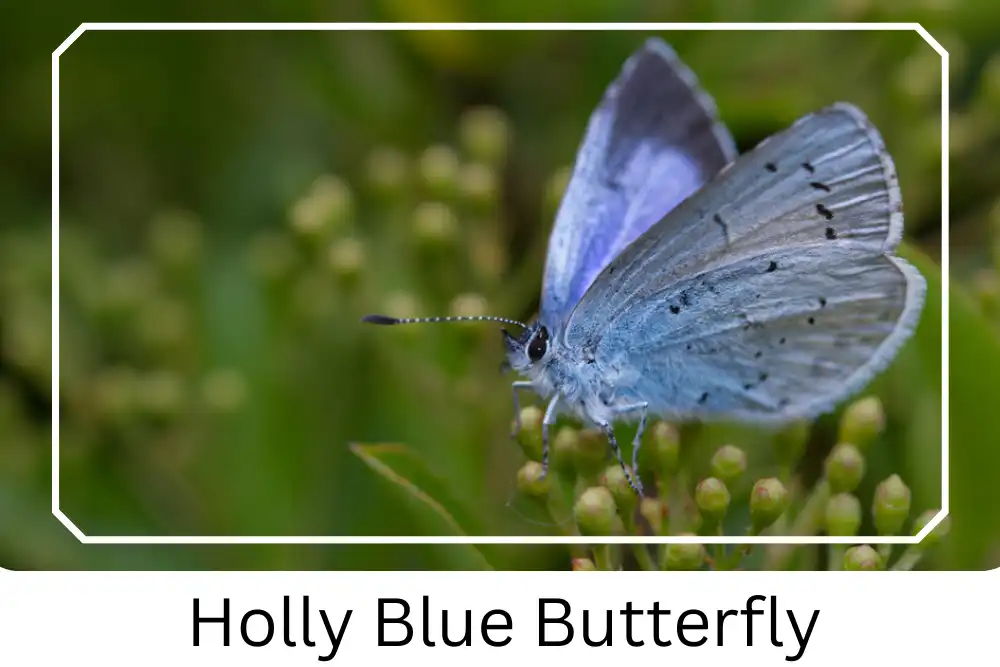
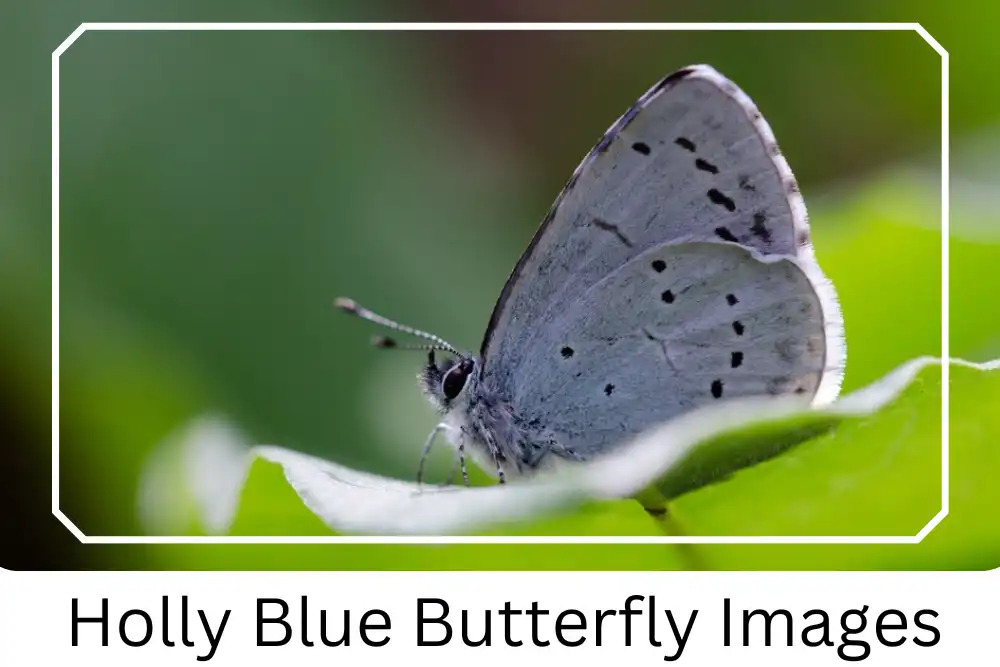
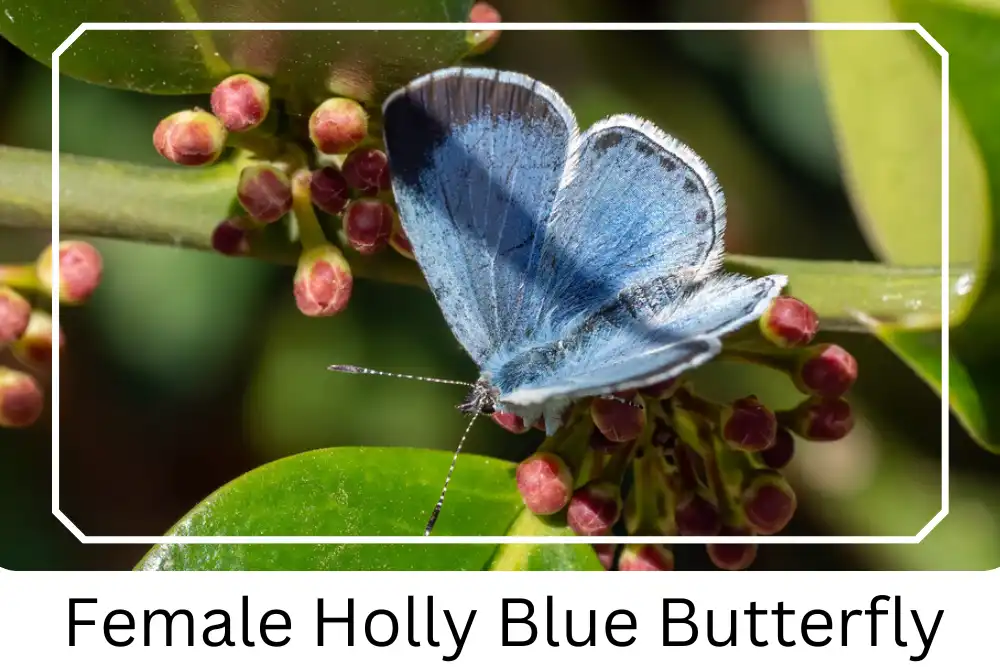
Color and Appearance: Males boast a vibrant blue on the dorsal side of their wings, edged with white, while females display a similar pattern but with black wing edges. The undersides of both sexes feature a pale blue to bluish-grey color with black spots, a key identifier from other species like the Common Blue.
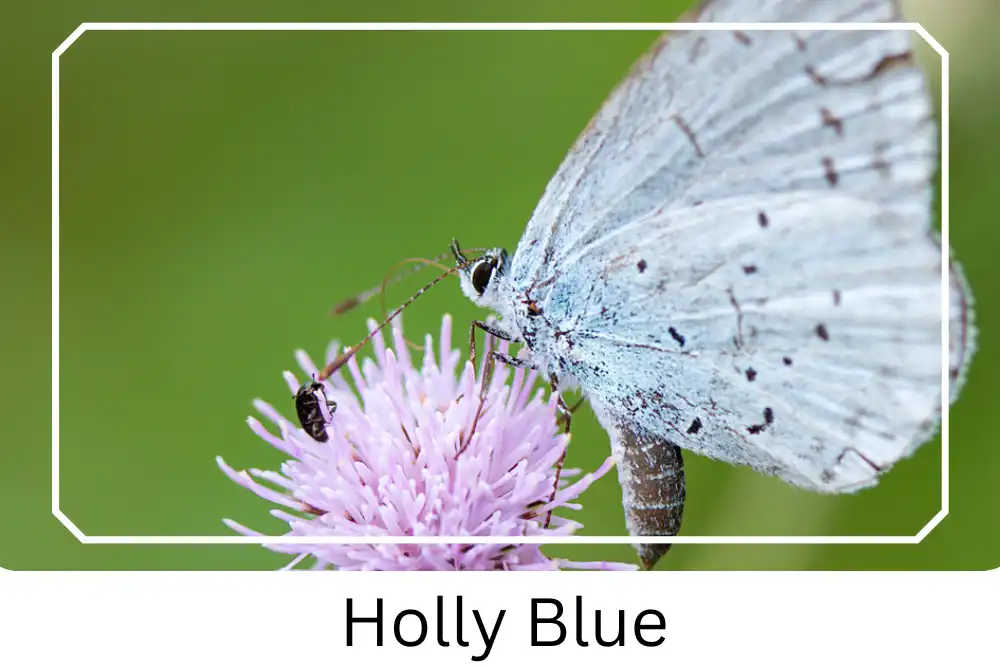
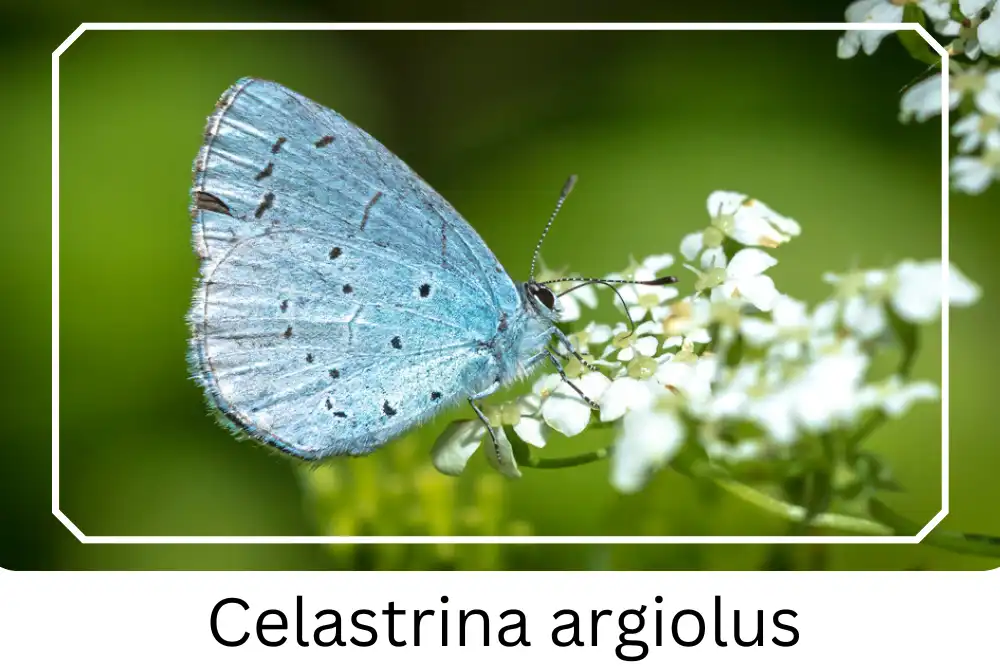 Average Wingspan: Ranges between 26-34 mm (1.02 – 1.33 in), a testament to its small size yet fast and erratic flight patterns.
Flight Pattern: The Holly Blue is known for its rapid, erratic flight, typically above head height, making it a challenge to observe up close.
Eggs
The Holly Blue butterfly eggs are laid individually, showcasing a white to pale greenish hue that blends with the surrounding foliage, ensuring the next generation’s safety.
Quick Facts | |
| Distribution | Widespread across South Asia, from Chitral in Pakistan to Kumaon in India, extending through Eurasia and reaching parts of North and Central America. |
| Habitat | Prefers gardens, parks, woodland rides, churchyards, and hedgerows, illustrating its adaptability to both natural and manmade environments. |
| Host Plants | Primarily species within the ‘holly’ (Ilex) genus, showcasing a specific ecological niche. |
| Adult Diet | Primarily consists of flower nectar, reflecting its role as a pollinator in various ecosystems. |
How to Identify Holly Blue Butterfly?
Identifying the Holly Blue butterfly amidst the myriad of flying insects can be a delightful challenge for enthusiasts. This species is marked by its distinct blue wings, which are more pronounced in males, and the unique flight pattern that sets it apart from its counterparts. Observers should note the butterfly’s preference for flying above head height, a behavior not common among other species. The underside of its wings features a distinguishing pale blue to bluish-grey color accompanied by small black spots, crucial for differentiation from similar species. To successfully identify the Holly Blue, one must also be familiar with its favored habitats such as gardens, parks, and hedgerows, where it is most likely to be found feeding on flower nectar or laying eggs on holly plants.
Did You Know?
- Holly Blue butterflies, apart from their fast-flying nature, engage in a unique behavior of flying predominantly above head height, making them a rare sight for butterfly watchers.
- This species exhibits a remarkable adaptability to changing seasons, with caterpillars and pupae displaying camouflage tactics that ensure their survival through different environmental conditions.
- The Holly Blue has been a subject of numerous studies due to its fluctuating population dynamics, which are influenced by various factors including predator-prey relationships and habitat changes.
Conclusion
The Holly Blue butterfly is not just a beautiful addition to its habitat but also a fascinating subject for study, reflecting the complex interplay between species and their environments. Through understanding its lifecycle, from the camouflaged caterpillar to the elusive adult, we gain insights into the survival strategies that allow this species to thrive.
Holly Blue Pictures


Scientific Classification

- Family: Lycaenidae
- Genus: Celastrina
- Common names: Hill hedge blue
- Scientific Name: Celastrina argiolus
 Dr. James Watuwa on January 24, 2019.
 Butterfly Team