
Large Citrus (Papilio aegeus)
The Large Citrus butterfly, a remarkable species known for its significant size and preference for citrus plants, plays a unique role in the ecosystems of Eastern Australia and Papua & New Guinea. This butterfly, belonging to the genus Papilio, is distinguished by its adaptability to various environments, making it a widespread species across its range. Despite its beauty, the larvae stage of the Large Citrus butterfly is often seen as a pest in citrus orchards, leading to a complex relationship with human agricultural practices.
Scientific Classification
- Family: Papilionidae
- Genus: Papilio
- Common names: Orchard Swallowtail Butterfly
- Scientific Name: Papilio aegeus
Overview
The Large Citrus butterfly, with its 11 local subspecies, showcases a fascinating lifecycle and adaptations that allow it to thrive in diverse habitats. From its caterpillar stage, with distinctive color changes, to its cryptically colored pupa and visually striking adult form, this species exhibits remarkable biological features. The butterfly’s lifecycle, from egg to adult, is a testament to the adaptability and resilience of these insects in their natural and agricultural environments.
Description and Identification
 Caterpillar
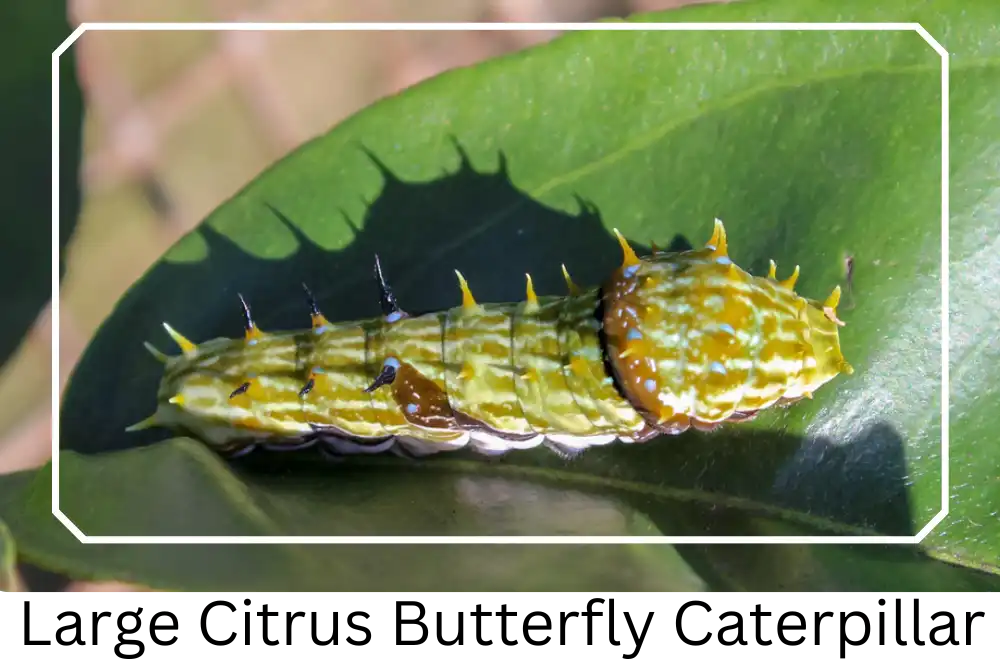
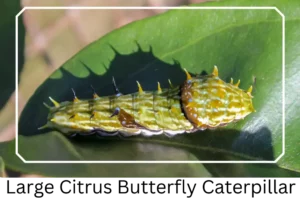
The journey of the Large Citrus butterfly begins in its caterpillar stage, which is initially brown with three white patches. As it grows, it undergoes a dramatic transformation, turning green with white, yellow, or brown markings, and reaching a length of up to 60 mm (2.4 in) before pupation.
 Pupa
Pupa
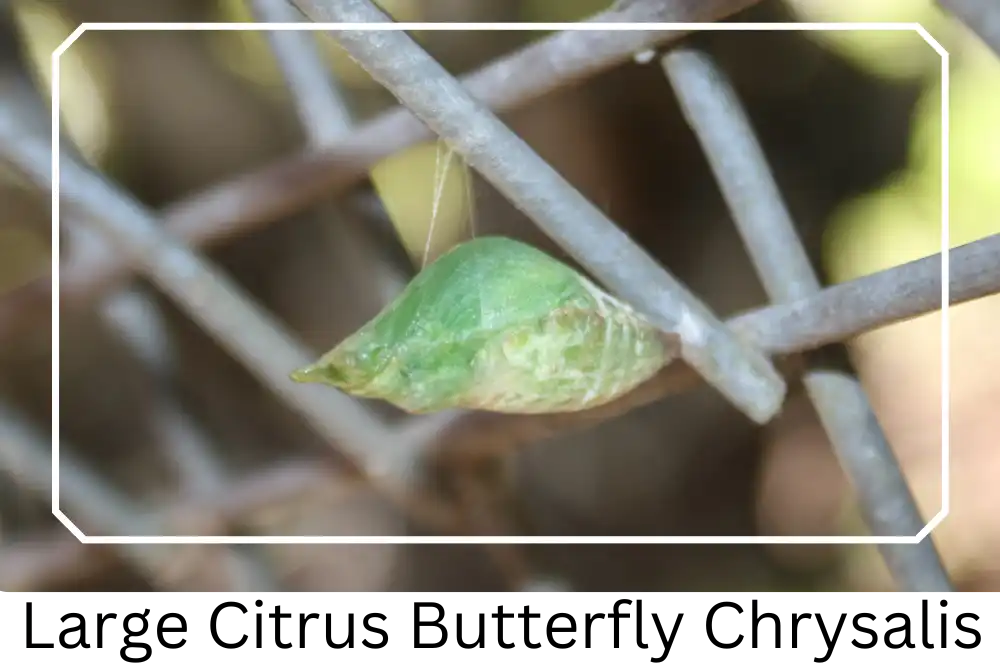
The chrysalis stage is equally intriguing, with the ability to camouflage itself through cryptic coloring that matches the stem it attaches to, ranging from green, brown, to grey, depending on its surroundings.
Adult Butterfly
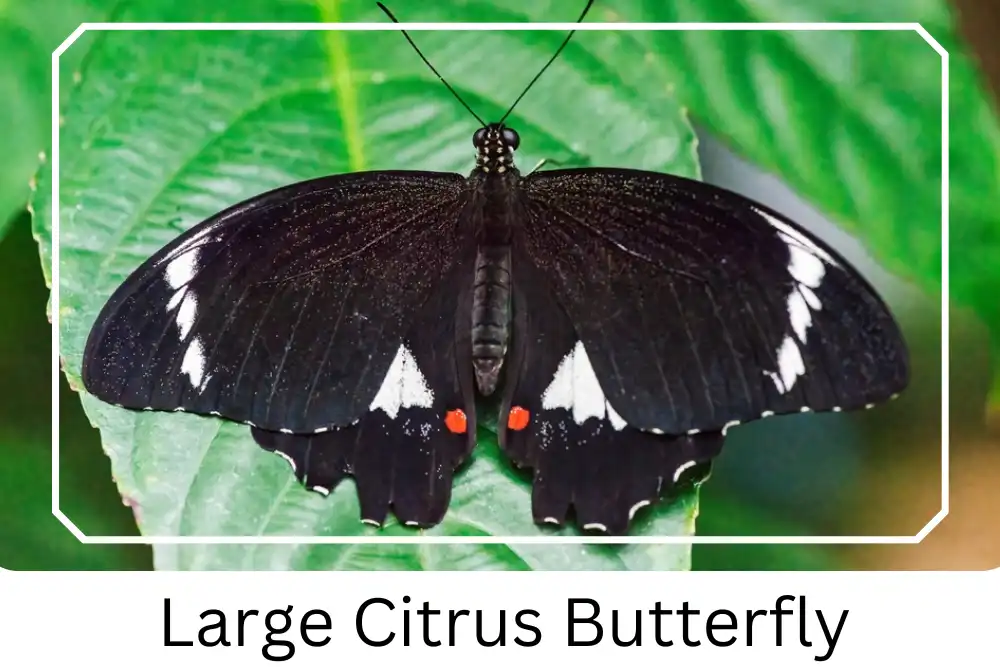
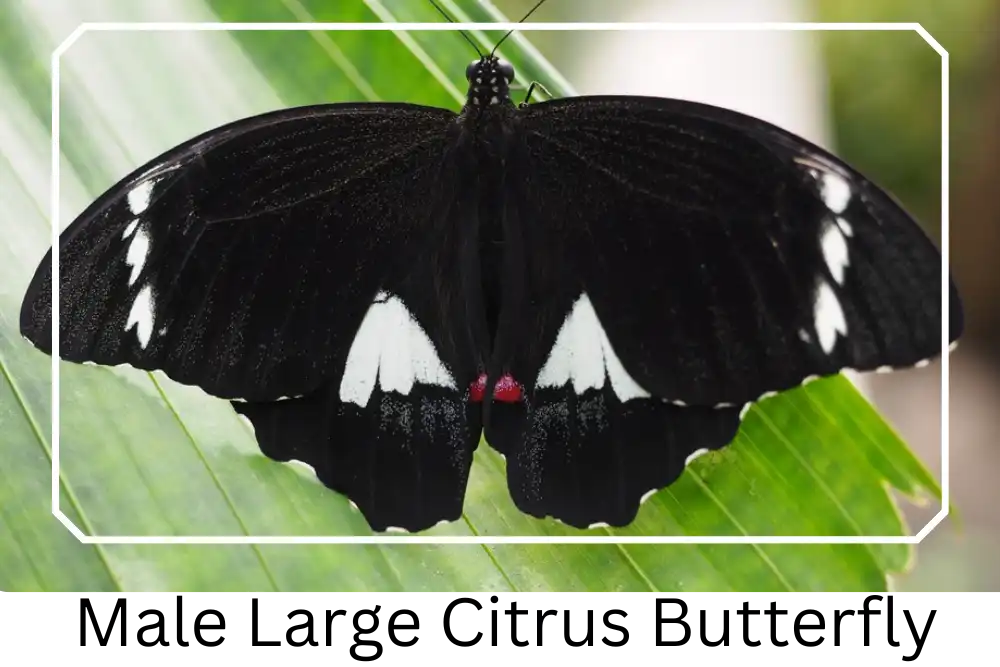
Sexual Dimorphism: The adult stage of the Large Citrus butterfly is where sexual dimorphism becomes evident, with variations in color and pattern between males and females. Both genders display a striking black base color with a white stripe when their wings are open. Females, however, feature additional white stripes on their forewings and a decorative chain of blue and orange to red crescents along the wing edges. The ventral side of the wings mirrors this coloration and pattern, presenting a mesmerizing view when the wings are closed.
Color and Appearance: A distinctive black base with white, and for females, additional blue and orange-red accents.
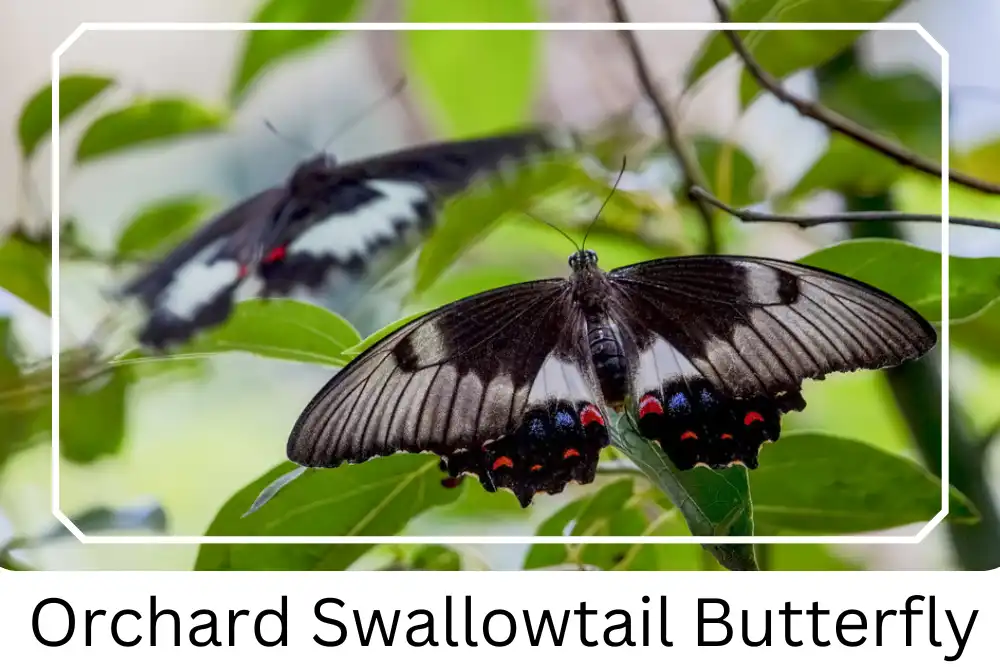
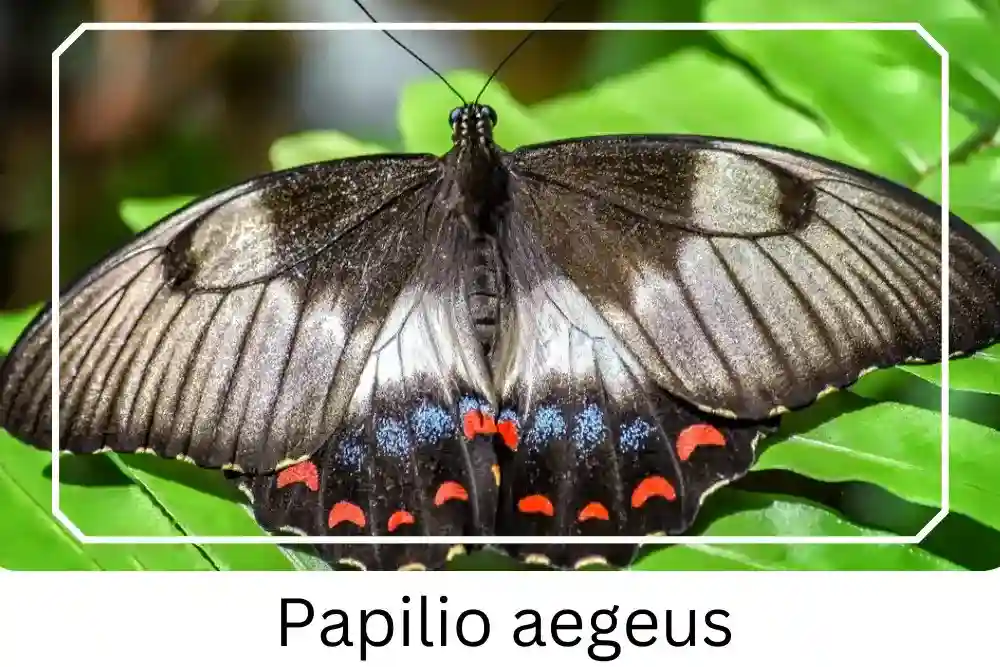 Average Wingspan: Females boast a wingspan of 140 mm (5.5 in), while males have a slightly smaller span of 120 mm (4.7 in).
Flight Pattern: Their flight is described as average and somewhat haphazard, reflecting their adaptability to various environments.
Eggs
The life cycle begins anew with the laying of creamy white, smooth, spherical eggs, each about 0.5 mm in diameter, placed delicately one at a time on host plants.
Quick Facts | |
| Distribution | Eastern Australia and Papua & New Guinea. |
| Habitat | Citrus fruit orchards, sunny lands, forests, and forest edges. |
| Lifespan of Adults | Up to two weeks. |
| Host Plants | Primarily citrus genus leaves, with a variety of other plants including Boronia, Clausena, and Zieria among others. |
| Adult Diet | Primarily flower nectar. |
How to Identify Large Citrus Butterfly?
Identifying the Large Citrus butterfly involves observing several key features across its life stages. In the caterpillar phase, look for the distinctive color change from brown with white patches to green with mixed markings. The chrysalis or pupa can be identified by its cryptic camouflage, which varies according to the color of the attached stem. Adult butterflies exhibit sexual dimorphism; males and females can be distinguished by the pattern and coloration of their wings. The presence of white stripes over a black base color is common to both, but females feature additional white stripes and colorful crescents on their wings.
Did You Know?
- Despite being part of a group known for their distinctive ‘tails’ on the hind wing, the Large Citrus butterfly lacks this characteristic feature, setting it apart from its relatives.
- This species’ adaptability in its larval stage to feed on a wide variety of plants beyond citrus makes it a unique member of its ecosystem, contributing to its widespread distribution.
Conclusion
The Large Citrus butterfly is a fascinating subject of study, from its early stages as a caterpillar to the majestic adult butterfly. Its lifecycle, marked by significant transformations and adaptability, highlights the complex interplay between species and their environments. Despite the challenges posed by its larval stage to citrus cultivation, the Large Citrus butterfly remains an integral part of the biodiversity in Eastern Australia and Papua & New Guinea, captivating observers with its beauty and resilience.
Large Citrus Butterfly Pictures



Scientific Classification

- Family: Papilionidae
- Genus: Papilio
- Common names: Orchard Swallowtail Butterfly
- Scientific Name: Papilio aegeus
 Dr. James Watuwa on January 17, 2019.
 Butterfly Team