
Butterflies in Egypt
Egypt has around 60 butterfly species, a small fauna for such a large country because more than nine-tenths of it is desert. The butterflies concentrate along the Nile Valley and Delta, in the oases, on the Red Sea hills of Gebel Elba and in the high mountains of South Sinai, where two species live nowhere else on Earth: the Sinai Baton Blue, one of the smallest butterflies in the world, and the Sinai Hairstreak. The Plain Tiger is the butterfly most people see, and the Painted Lady pours through the country every spring on its way to Europe.

On this page
Butterflies of Egypt at a glance
Egypt is a desert country with a river running through it, and its butterfly list reads that way. Around 60 species have been recorded, fewer than in Cyprus or Israel, and almost all of them live in the narrow green strips where water reaches: the Nile Valley and Delta, the Fayoum depression, the Western Desert oases of Siwa, Bahariya, Kharga and Dakhla, the Mediterranean coast west of Alexandria, and the wadis of the Eastern Desert and Sinai.
Three biogeographic worlds meet here. Mediterranean butterflies such as the Small White, Bath White and Mallow Skipper reach their southern limit in the Delta. African butterflies, among them the Plain Tiger, Danaid Eggfly, Yellow Pansy and Pioneer White, follow the Nile north and are joined at Gebel Elba, on the Sudanese border, by species like the Cream-banded Charaxes and Yellow Splendour Tip. A third group of true desert specialists, the Colotis orange-tips and Arabs, the Desert White and the Sahara Swallowtail, lives on the scattered shrubs of the wadis.
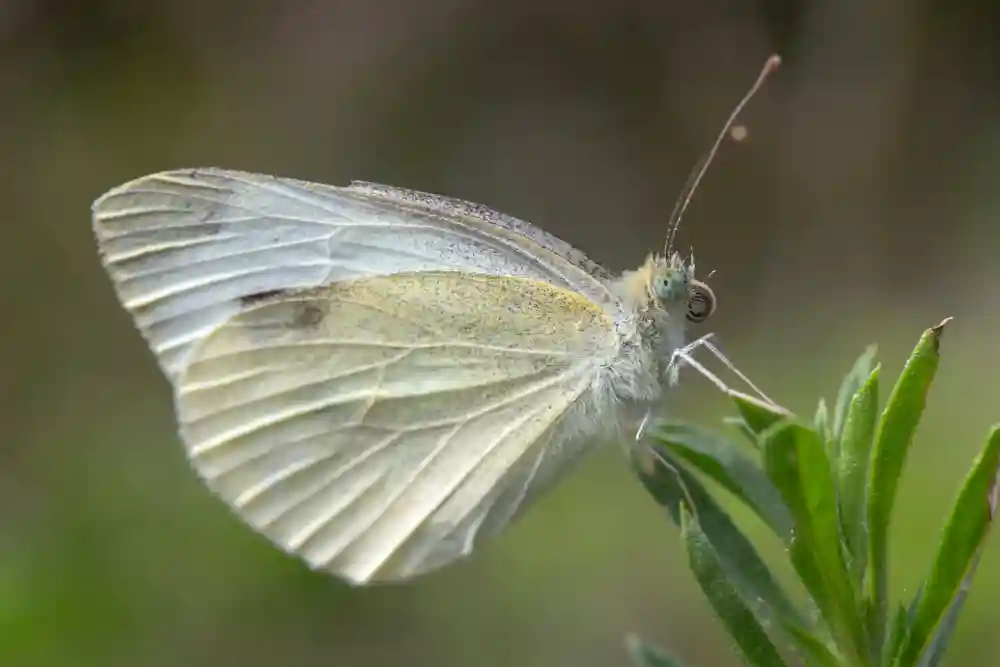
The whites and sulphurs are the largest family on the Egyptian list, followed by the blues, coppers and hairstreaks, then the brush-footed butterflies, ten skippers and a single swallowtail.
Signature Egyptian butterflies
The Plain Tiger (Danaus chrysippus), a smaller orange cousin of the Monarch, is the everyday butterfly of Egypt. Its caterpillars feed on the Sodom apple and other milkweeds that grow on canal banks and waste ground, so it flies in every village along the Nile. A painted fragment from the Theban tomb of Nebamun, about 3,350 years old, shows Plain Tigers over a papyrus marsh, the oldest recognisable butterfly in art.
The Sinai Baton Blue (Pseudophilotes sinaicus) is the country's most celebrated insect. With a wingspan of roughly 7 to 10 mm it is among the smallest butterflies in the world, and its entire range is a few square kilometres of the St Katherine Protectorate above 1,500 m, where its caterpillar eats only Sinai thyme (Thymus decussatus). It is listed as Critically Endangered. The Sinai Hairstreak (Satyrium jebelia) shares the same mountains and is the country's second endemic.
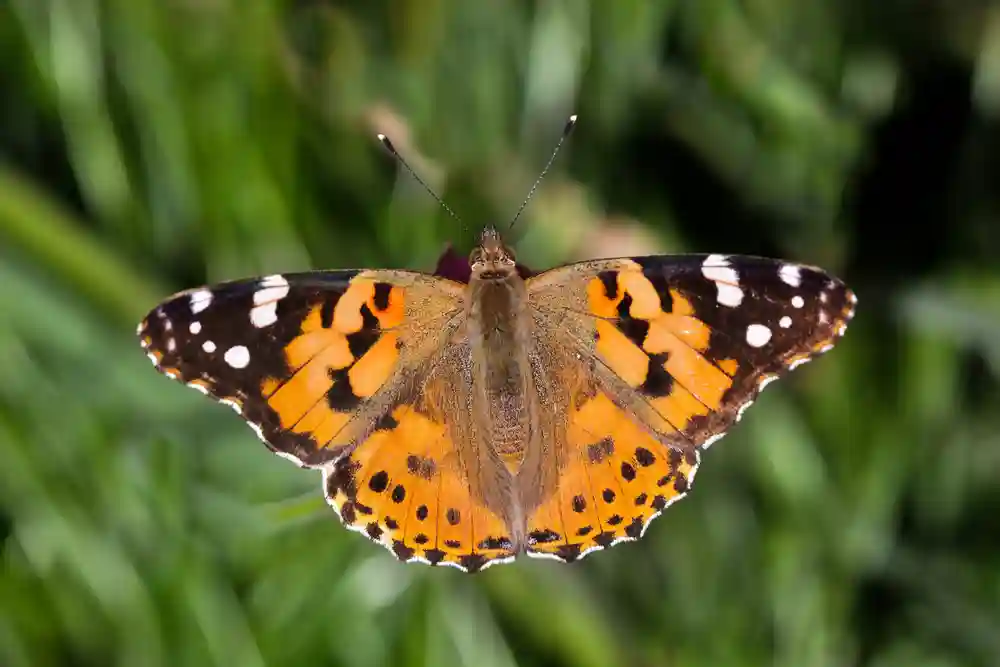
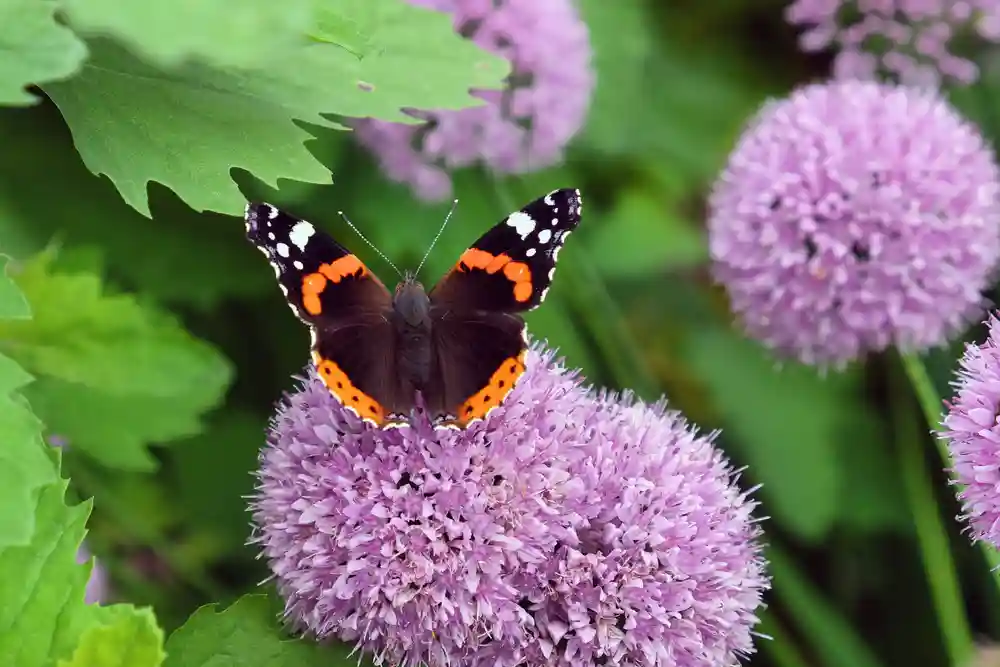
The Sahara Swallowtail (Papilio saharae) is Egypt's only swallowtail and its largest butterfly, a desert version of the Old World Swallowtail whose caterpillars eat wild umbellifers of the wadis. Among the migrants, the Painted Lady and Clouded Yellow are the two everyone notices, and the Clouded Yellow in particular can swarm over the clover (berseem) fields of the Delta in winter and spring. The Red Admiral is a cool-season visitor to the coast.
Gardeners meet the Long-tailed Blue and Lang's Short-tailed Blue on beans and other legumes, the Small Copper on sorrel in damp fields, and the Pomegranate Playboy (Deudorix livia), whose caterpillars bore into pomegranates.

The Egyptian butterfly calendar
Egypt has no real winter for butterflies in the south, and the Plain Tiger, Pioneer White, African Migrant and the small grass blues can be found in Aswan and Luxor in every month. Around Cairo and in the Delta the season quietens in December and January.
The great event is the northward passage of the Painted Lady. Butterflies that bred in the Sahel and Sudan after the autumn rains cross Egypt from February to April on their way to Europe; in the spring of 2019 the flight over Cairo and the Sinai was one of the largest ever recorded. Our guide to butterfly migration explains the round trip.
March to May is the peak in the Nile Valley, the oases and the Mediterranean coast, when the annual flowers are out and the Bath White, Desert White, Green-striped White and Sooty Orange Tip are all flying. The mountains of South Sinai lag behind: the Sinai Baton Blue emerges when the thyme flowers from late April into June, and the mountain wadis stay active until July. A second, smaller flight of most lowland species follows in September and October; our guide to the butterfly season explains why.
Where to see butterflies in Egypt
Because water dictates everything, the best butterfly sites are gardens, cultivated land and mountain springs rather than open desert.
- Aswan Botanical Garden (Kitchener's Island) — the classic spot, with Plain Tiger, Danaid Eggfly, Yellow Pansy, African Migrant and grass blues among the exotic trees all year.
- St Katherine Protectorate, South Sinai — the high wadis around Mount Sinai and Gebel Safsafa for the Sinai Baton Blue, Sinai Hairstreak, Moroccan Blue and Sahara Swallowtail in May and June; a local guide is needed for the Bedouin gardens where the thyme grows.
- The Nile Delta and Fayoum — clover and bean fields for Clouded Yellow, Small White, Long-tailed Blue and Lesser Fiery Copper from February to May.
- Wadi Degla and the Cairo wadis — Desert Orange Tip, Large Salmon Arab and Desert White on caper bushes after winter rain.
- Gebel Elba National Park — the Sudanese fauna of the far south-east; access is restricted.
Host plants and butterfly gardening in Egypt
Egyptian butterflies are tied to a short list of caterpillar host plants, most of them native shrubs and crops rather than ornamentals.
- Sodom apple and other milkweeds (Calotropis, Gomphocarpus) — the food of the Plain Tiger; one bush in a garden will bring the butterfly in.
- Caper bushes (Capparis) — the host of the Desert Orange Tip, Large Salmon Arab and Silver Orange-tip, and the reason those butterflies cluster around rocky wadis.
- Senna and cassia — for the African Migrant (Catopsilia florella), the big lemon-white sulphur that some lists mislabel as a grass blue.
- Beans, peas, clover and alfalfa — Long-tailed Blue, Lang's Short-tailed Blue and Clouded Yellow; the Delta's berseem fields are effectively a giant butterfly farm.
- Hollyhock and mallow — the Mallow Skipper.
- Pomegranate — the Pomegranate Playboy, welcome or not.
For nectar, lantana, Duranta, zinnias and flowering basil work in Cairo and Upper Egypt, while in Sinai the butterflies nectar on thyme, mint and the flowers of the Bedouin orchards. Avoid spraying: the insecticides used on cotton and vegetables are why once-common butterflies are scarce in the Delta.
Rare and threatened butterflies in Egypt
The Sinai Baton Blue is the conservation story of Egyptian butterflies. Since it was first studied in 2001 the whole population has been counted at a few thousand adults in good years and far fewer after drought, scattered across some 40 small patches of thyme. Goats browse the thyme, Bedouin collect it as a medicinal herb, and the climate of the high mountains is getting hotter and drier. It is now protected within the St Katherine Protectorate with the help of the local Jebeliya community.
Elsewhere the threats are the same as for wildlife across the country: the loss of natural vegetation to farmland and building along the Nile, heavy pesticide use, and the drying of desert springs. Several species on the list, such as Iolana alfierii, Kretania philbyi and the Cream-banded Charaxes, are known in Egypt from only a handful of sites in Sinai or Gebel Elba. The same problem applies across the region, as our pages on butterflies in Israel and butterflies in Algeria show.
Butterflies found in Egypt
57 species listed for Egypt, grouped by family. Linked names have a full profile on this site with pictures of every life stage. Species marked vagrant are occasional visitors rather than residents; endemic species occur nowhere else.
Brush-Footed (Nymphalidae)
Show all 8 other brush-footed species names
- Cream-banded Charaxes (Charaxes hansali)
- Danaid Eggfly (Hypolimnas misippus)
- Dark Brown (Chazara persephone)
- Desert Fritillary (Melitaea deserticola)
- Lesser Spotted Frillitary (Melitaea trivia)
- Plain Tiger (Danaus chrysippus)
- Yellow Pansy (Junonia hierta)
- Pseudotergumia pisidice
Gossamer-Winged (Lycaenidae)
Show all 16 other gossamer-winged species names
- Lang's Short-tailed Blue (Leptotes pirithous)
- Large Jewel Blue (Plebejidea loewii)
- Lesser Fiery Copper (Lycaena thersamon)
- Lesser Grass-blue (Zizina otis)
- Long-tailed Blue (Lampides boeticus)
- Moroccan Blue (Pseudophilotes abencerragus)
- Plains Cupid (Luthrodes pandava)
- Pomegranate Playboy (Deudorix livia)
- Provence Hairstreak (Tomares ballus)
- Sinai Baton Blue (Pseudophilotes sinaicus) endemic
- Sky-Blue Cupid (Chilades eleusis)
- Cigaritis myrmecophila
- Iolana alfierii
- Kretania philbyi
- Satyrium jebelia endemic
- Tarucus rosaceus
Whites and Sulphurs (Pieridae)
Pieris rapaeCabbage White (Pieris rapae)The cabbage white is probably the most-seen butterfly on the planet: a small, chalk-white insect with one or two black spots that drifts over allotmen Colias croceusClouded Yellow (Colias croceus)The clouded yellow (Colias croceus) is a fast, low-flying golden-orange butterfly of open grassland, breeding around the Mediterranean and North AfricPieris rapaeCabbage White (Pieris rapae)The cabbage white is probably the most-seen butterfly on the planet: a small, chalk-white insect with one or two black spots that drifts over allotmen
Show all 16 other whites and sulphurs species names
- Bath White (Pontia daplidice)
- Crimsontip (Colotis danae)
- Desert Orange Tip (Colotis liagore)
- Desert White (Pontia glauconome)
- Golden Arab-tip (Colotis chrysonome)
- Green-striped White (Euchloe belemia)
- Large Salmon Arab (Colotis fausta)
- Pale Grass Blue (Catopsilia florella)
- Pioneer White (Belenois aurota)
- Scarce Green Striped (Euchloe falloui)
- Silver Orange-tip (Colotis phisadia)
- Sooty Orange Tip (Zegris eupheme)
- Yellow Splendour Tip (Colotis protomedia)
- Calopieris eulimene
- Elphinstonia charlonia
- Euchloe aegyptiaca
Swallowtail (Papilionidae)
- Sahara Swallowtail (Papilio saharae)
Skipper (Hesperiidae)
Show all 10 skipper species names
- Borbo Skipper (Borbo borbonica)
- Dingy Swift (Gegenes nostrodamus)
- Mallow Skipper (Carcharodus alceae)
- Marbled Skipper (Gomalia elma)
- Orange Flat (Sarangesa phidyle)
- Pale Small-branded Swift (Pelopidas thrax)
- Carcharodus stauderi ambigua
- Carcharodus stauderi ramses
- Spialia doris amenophis
- Spialia doris doris
How to identify a butterfly in Egypt
Most Egyptian butterflies can be named on the spot. Anything large and orange with a black-and-white forewing tip is the Plain Tiger, and a female Danaid Eggfly mimics it so well that you need to check for the Plain Tiger's black veinless wings. A medium white with black tips is a Pieris, a white with green marbling underneath is a Bath, Desert or Green-striped White, and an orange, crimson or salmon wing-tip on a small white means one of the Colotis desert species.
The small blues are harder: look for tails (Long-tailed Blue, Lang's Short-tailed Blue), a plain brown underside with faint spots (grass blues) or the tiny size and mountain setting of the Sinai Baton Blue. For the wider picture, browse the other countries under Butterflies of the World.
Frequently asked questions about Egyptian butterflies
How many species of butterfly are there in Egypt?
Around 60 butterfly species have been recorded in Egypt, one of the shortest national lists in the Mediterranean region. The small total reflects the desert: butterflies survive only along the Nile Valley and Delta, in the oases, on the Mediterranean coast, at Gebel Elba and in the mountains of South Sinai, where two endemic species live.
What is the most common butterfly in Egypt?
The Plain Tiger (Danaus chrysippus) is the most widespread and most often seen butterfly in Egypt. It flies all year in the south and breeds on milkweeds along canals and in gardens from Aswan to the Delta. In farmland the Small White and Clouded Yellow are often just as numerous in winter and spring.
Which butterflies are found only in Egypt?
Two species are endemic to Egypt, both in the high mountains of South Sinai: the Sinai Baton Blue (Pseudophilotes sinaicus), which lives on Sinai thyme in the St Katherine Protectorate, and the Sinai Hairstreak (Satyrium jebelia). Several other butterflies on the Egyptian list occur nowhere else in the country outside Sinai or Gebel Elba.
What is the Sinai Baton Blue?
The Sinai Baton Blue is a tiny blue butterfly, about 7 to 10 mm across, found only above 1,500 m around Mount Sinai. Its caterpillars eat one plant, Sinai thyme, and are tended by ants. Discovered in 1974 and studied since 2001, it is listed as Critically Endangered because its whole population lives on a few dozen thyme patches.
Why does Egypt have so few butterflies?
More than 90 per cent of Egypt is hyper-arid desert with almost no plants, so there is nothing for caterpillars to eat. Butterflies are confined to the Nile, the oases, the coast and the mountains of Sinai, and most of those areas are intensively farmed and sprayed. The result is a fauna of around 60 species, dominated by hardy whites and blues.
When is the best time to see butterflies in Egypt?
March to May is the best period in the Nile Valley, the Delta, the oases and the Mediterranean coast, when the spring flowers are out and the Painted Lady migration is passing through. In the Sinai mountains the season runs later, from May to June, while Aswan and Luxor have Plain Tigers and whites in every month of the year.
Does the Painted Lady migrate through Egypt?
Yes. Painted Ladies that bred in the Sahel and Sudan after the autumn rains fly north across Egypt from February to April on their way to Europe, and their descendants return south in autumn. In spring 2019 an exceptional wave passed over Cairo and the Sinai, one of the largest Painted Lady movements ever recorded in the Middle East.
What orange-tip butterflies live in Egypt?
Egypt has several desert orange-tips and Arabs of the genus Colotis: the Desert Orange Tip (Colotis liagore), Silver Orange-tip (C. phisadia), Golden Arab-tip (C. chrysonome), Large Salmon Arab (C. fausta), Crimsontip (C. danae) and Yellow Splendour Tip (C. protomedia), plus the Sooty Orange Tip (Zegris eupheme). Most breed on caper bushes in rocky wadis.
Where is the best place to see butterflies in Egypt?
The Aswan Botanical Garden on Kitchener's Island is the easiest site, with Plain Tigers, Danaid Eggflies and African Migrants among the trees all year. For the endemic species, the high wadis of the St Katherine Protectorate in South Sinai are the only option, best visited in May and June with a local Bedouin guide.
Does Egypt have any swallowtail butterflies?
Only one, the Sahara Swallowtail (Papilio saharae), a desert relative of the Old World Swallowtail. It flies in the wadis of Sinai and the Eastern Desert, where its caterpillars feed on wild umbellifers such as Deverra. Records of the Old World Swallowtail itself in Egypt are rare and mostly refer to wanderers from the north.
Published November 1, 2023 · Last updated September 21, 2026