
Dappled White (Euchloe)
The Dappled White, belonging to the genus Euchloe, encompasses a fascinating group of Old World butterflies that grace various landscapes across Asia, North America, and Europe. Renowned for their distinctive white appearance, these butterflies are a vibrant testament to nature’s palette, predominantly observed during the spring and summer months. This guide explores the intricacies of the Dappled White butterflies, offering insights into their life cycle, habitat preferences, and distinctive features.
Scientific Classification
- Family: Pieridae
- Genus: Euchloe
- Common names: Dappled Whites
- Scientific Name: Euchloe
Overview
Dappled Whites are more than just a visual spectacle; they play a crucial role in the ecosystems they inhabit. Thriving in open grasslands, forest edges, and even human-made gardens, they contribute to pollination, demonstrating the interconnectedness of our planet’s biodiversity. With several species under their name, their presence across continents underlines their adaptability and the variety within their ranks. This comprehensive exploration aims to unveil the world of Dappled Whites, from their earliest stages as caterpillars to their majestic adult form, shedding light on their behaviors, dietary habits, and survival strategies.
Description and Identification
Caterpillar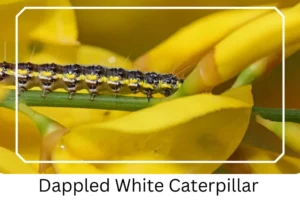
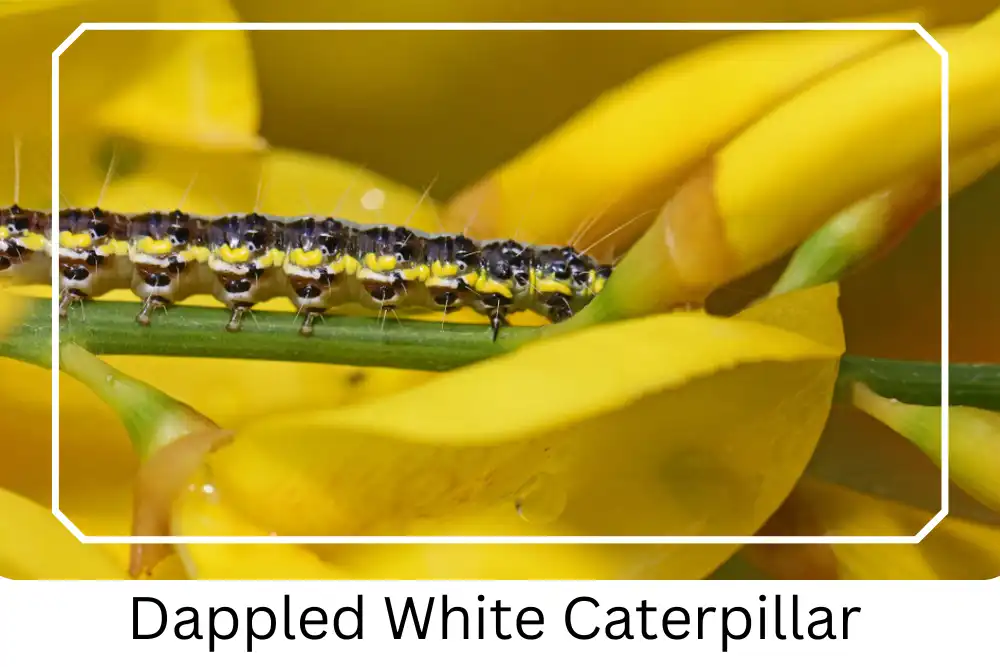
The journey of the Dappled White begins in its larval stage, where the caterpillar showcases a variety of sizes and colors. From a pale whitish hue to vibrant emerald green, some even adorned with unique spots and markings, these caterpillars are as diverse as they are fascinating.
Pupa
Transitioning into the pupa stage, the chrysalis mirrors this diversity in color and size. Their ability to camouflage is paramount, blending seamlessly with branches and leaves of host trees, a testament to their survival mechanisms until they emerge as adults.
Adult Butterfly
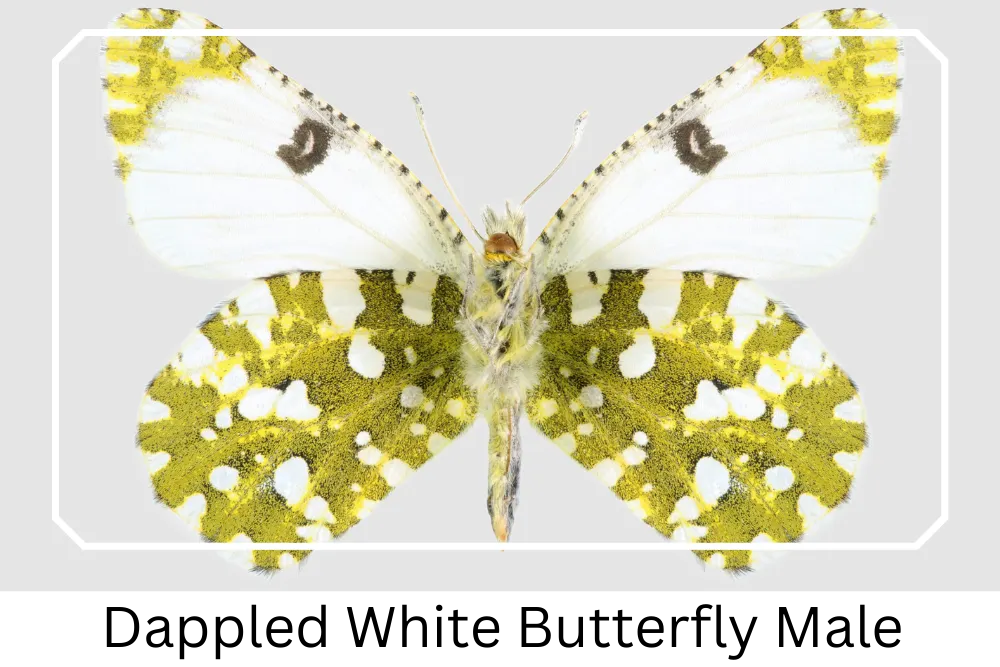
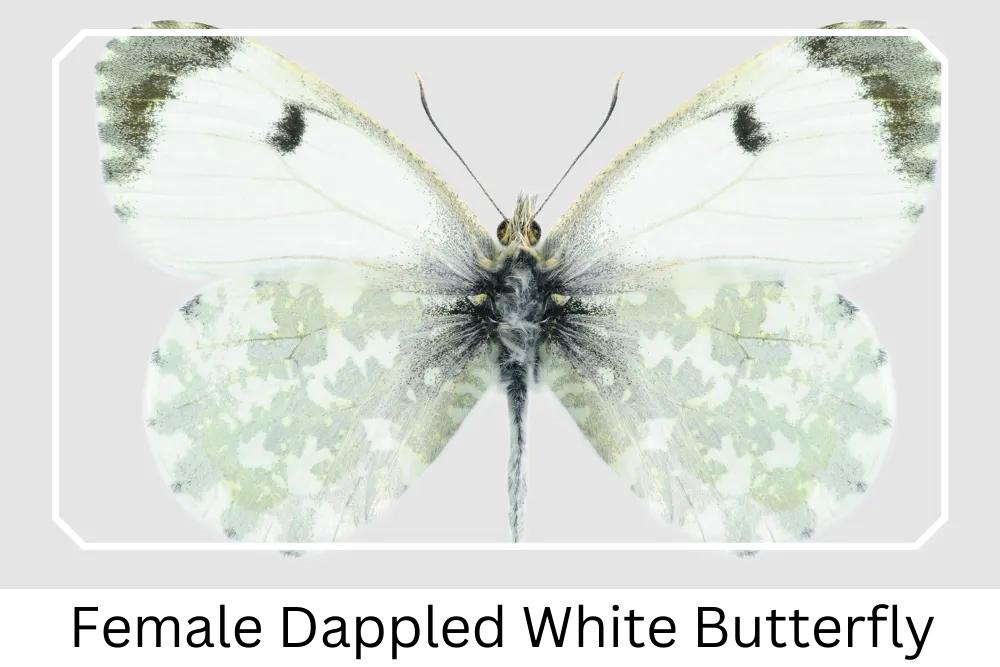
Sexual Dimorphism: Sexual dimorphism in Dappled Whites varies between species, reflecting in size, coloration, and pattern differences between males and females.
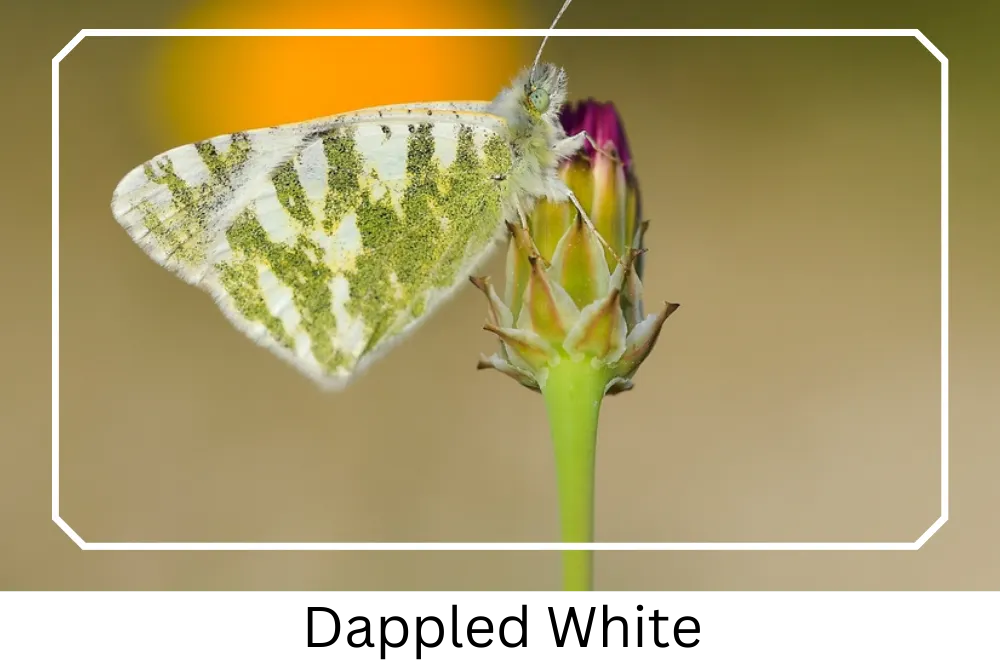
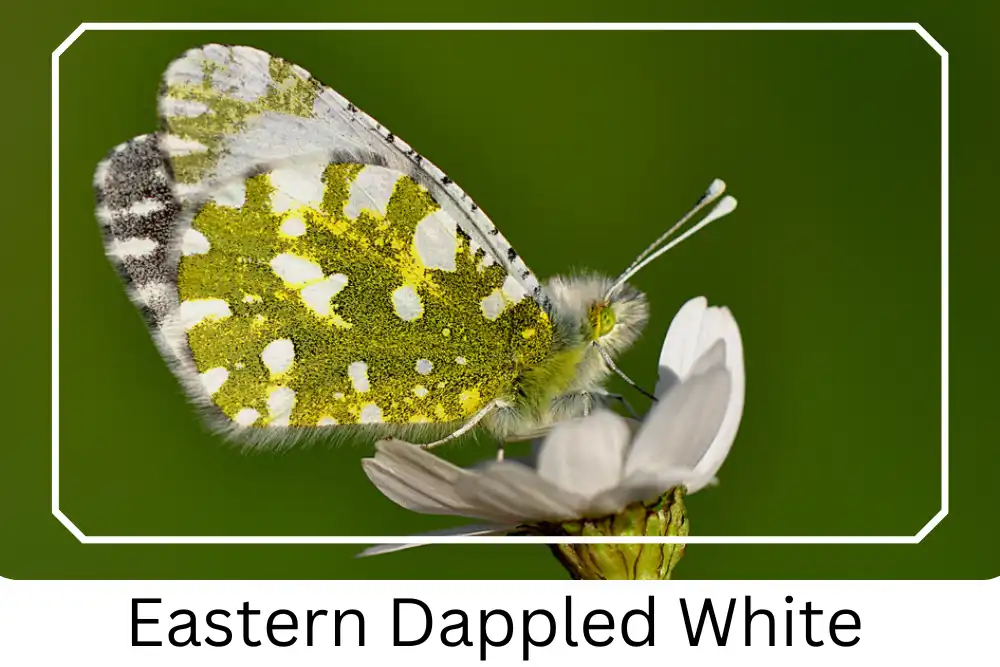
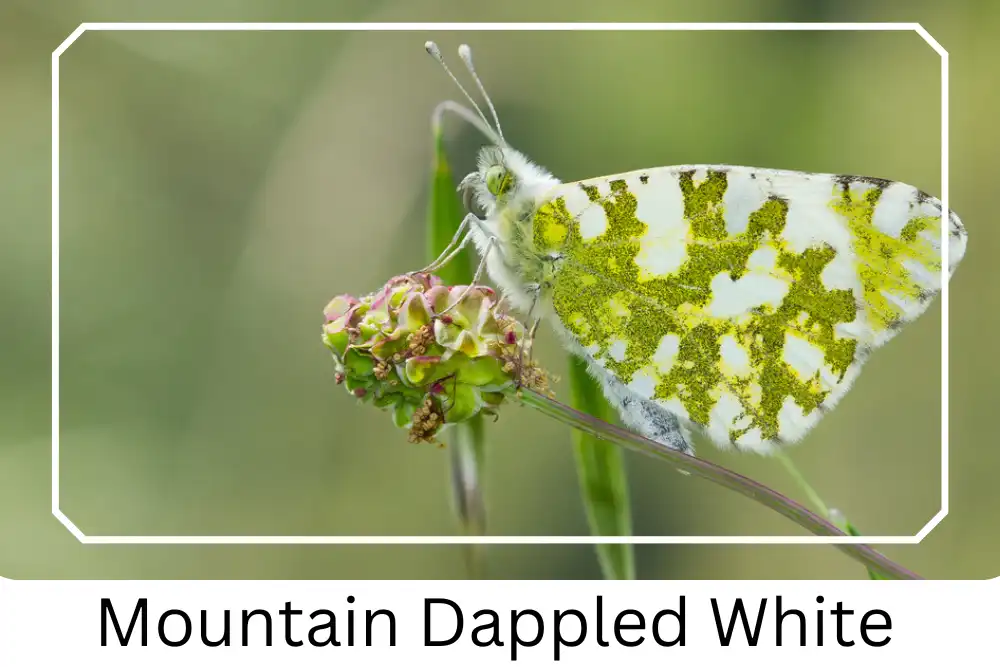
Color and Appearance: In their adult form, Dappled Whites display a mesmerizing array of colors. With wings unfurled, the dorsal view reveals minimal spots and vibrant colors, contrasting the ventral side’s rich patterns and white base adorned with spots and markings, often in shades of green.
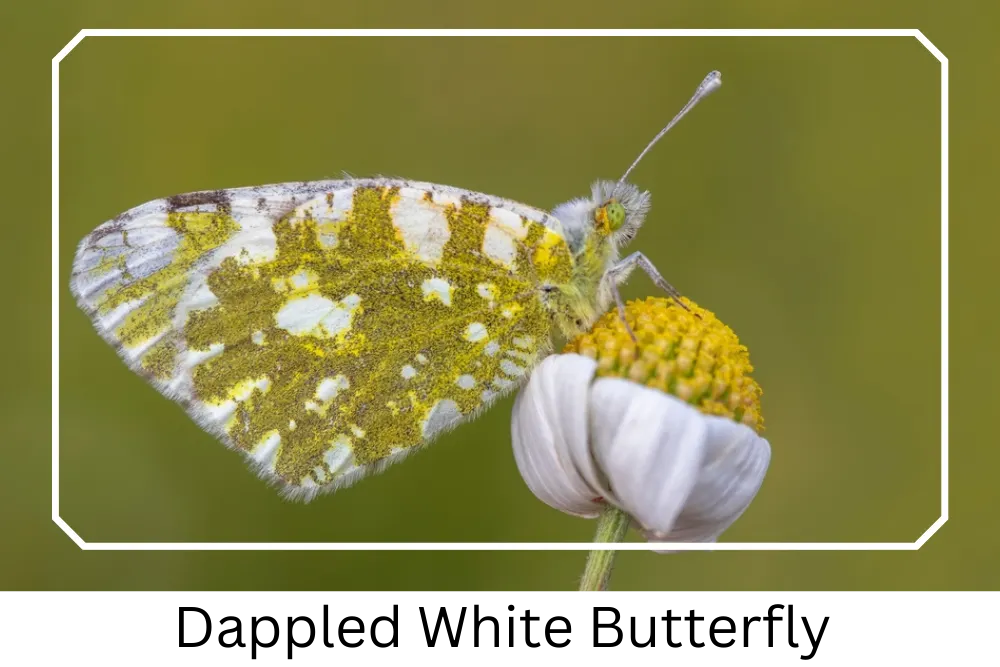
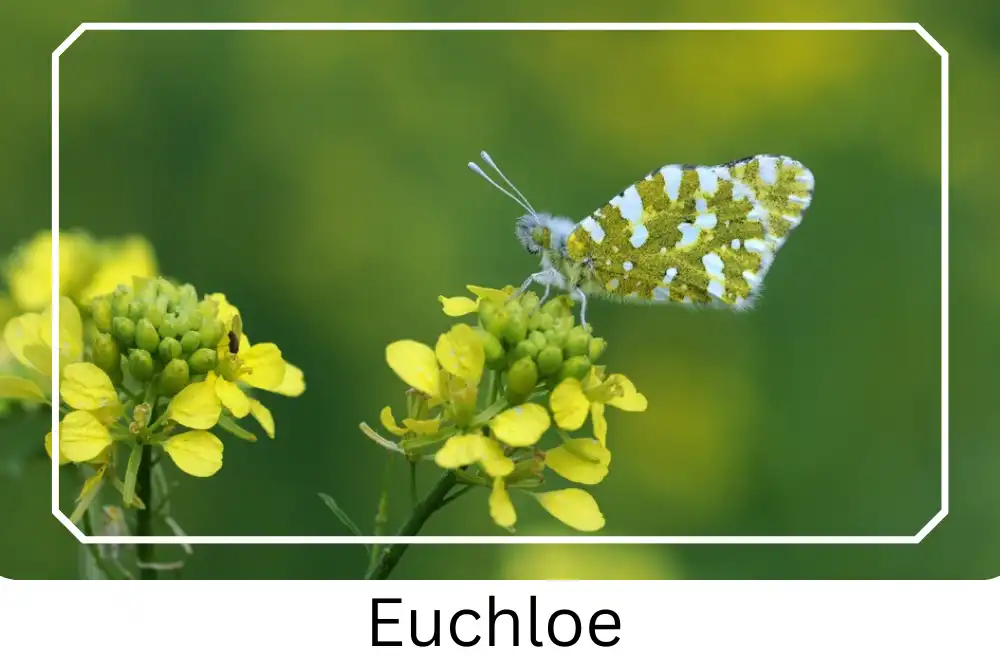 Average Wingspan: Boasting an average wingspan of 40 to 48 mm (1.57 – 1.88 in), these butterflies balance delicacy with agility, navigating their habitats with ease.
Flight Pattern: Their flight pattern ranges from average to fast, showcasing their adaptability and prowess in the air.
Eggs
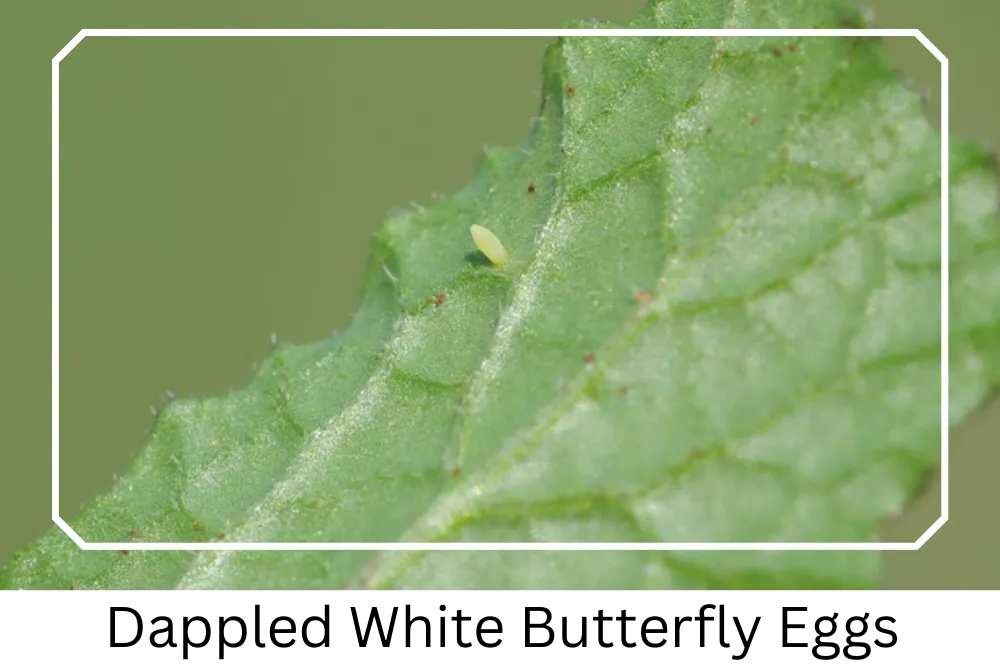
Dappled White Butterfly Eggs
The reproductive journey of the Dappled White continues with its eggs, which are elongated and boast a yellowish to light orange hue, meticulously laid one at a time to ensure the next generation’s survival.
Quick Facts | |
| Distribution | Europe, Central Asia, and North America (where they are affectionately known as ‘marbles’). |
| Habitat | Open grasslands, forest edges, human-made gardens. |
| Lifespan of Adults | 5 to 7 weeks. |
| Host Plants | A variety of species including Sinapis arvensis, Isatis tinctoria, and plants from the genus Brassicaceae. |
| Adult Diet | Primarily flower nectar. |
How to Identify Dappled White Butterfly?
Identifying a Dappled White butterfly is an engaging process that combines observation of color, pattern, and habitat. Look for their distinct white wings with subtle spots and markings, a signature trait. Their presence in open grasslands and edges of forests during spring and summer further hints at their identity. Paying attention to the ventral side of their wings, which showcases a richer array of spots and colors, can also aid in distinguishing them from similar species. Additionally, observing their flight pattern, which ranges from average to fast, and their preference for specific host plants and flowers for nectar, can provide conclusive identification cues.
Did You Know?
- The term ‘Marbles’ is a unique moniker given to the North American variants of these butterflies, highlighting the diverse common names that reflect their appearance and behaviors.
- Dappled Whites are not just visual marvels but are crucial for pollination, indicating their vital role in maintaining ecological balance.
Conclusion
The Dappled White butterflies, with their elegant flights and vibrant patterns, are a marvel of nature’s design. From their early days as caterpillars to their splendid adult form, they embody the resilience and beauty of the natural world. Understanding their lifecycle, behaviors, and habitat preferences not only enriches our knowledge but also fosters a deeper appreciation for the intricate web of life they are a part of. As we continue to explore and learn about these magnificent creatures, we are reminded of the importance of conservation and the role each species plays in our global ecosystem.
Dappled White Butterfly Pictures
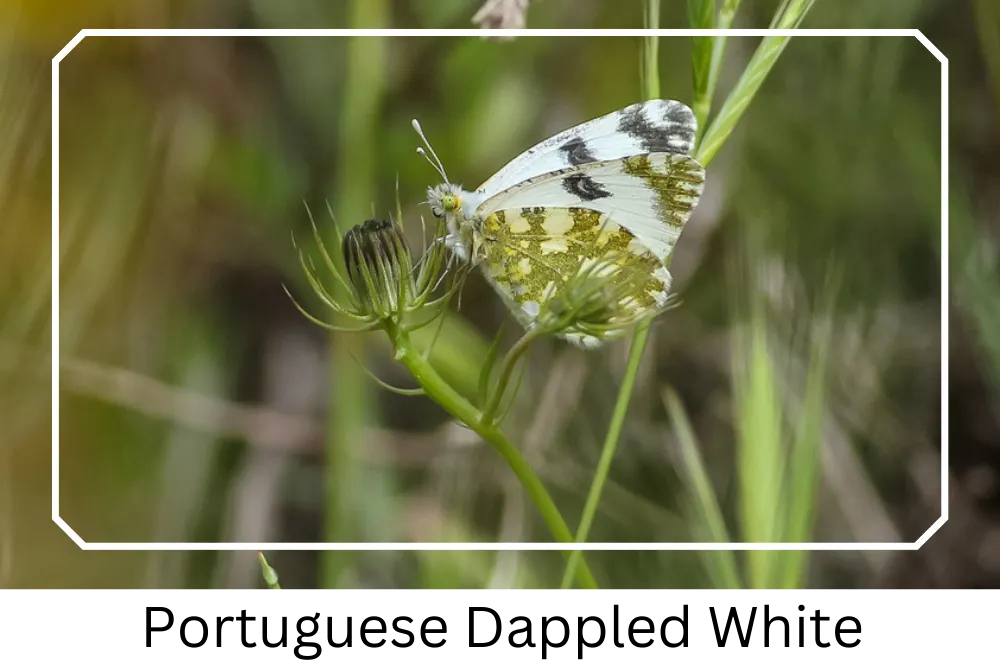
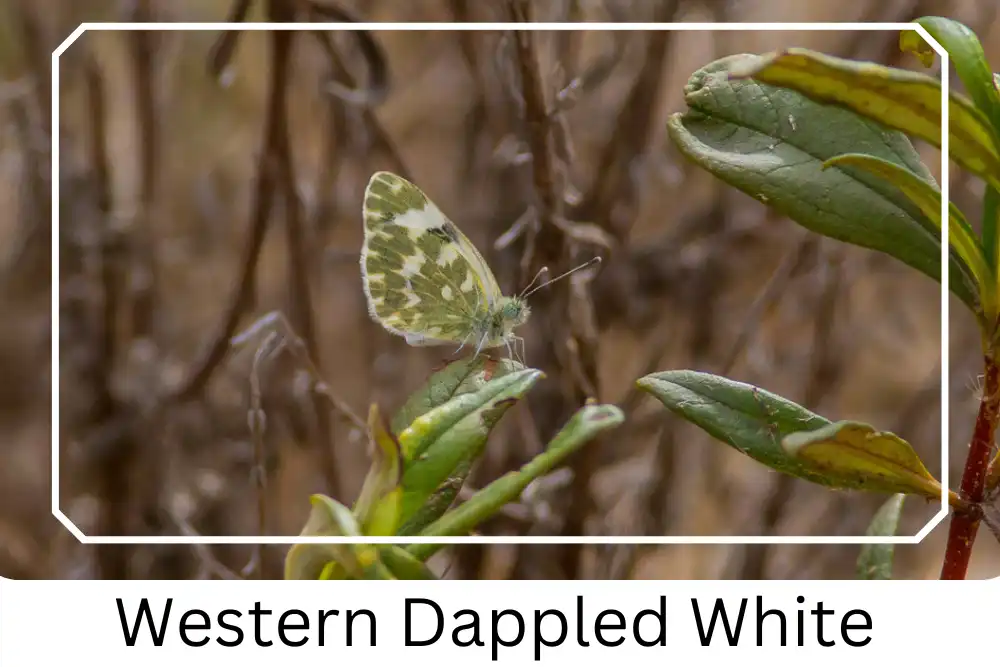

Scientific Classification

- Family: Pieridae
- Genus: Euchloe
- Common names: Dappled Whites
- Scientific Name: Euchloe
 Poppy Glendening on December 21, 2018.
 Butterfly Team