
Little Yellow (Eurema lisa)
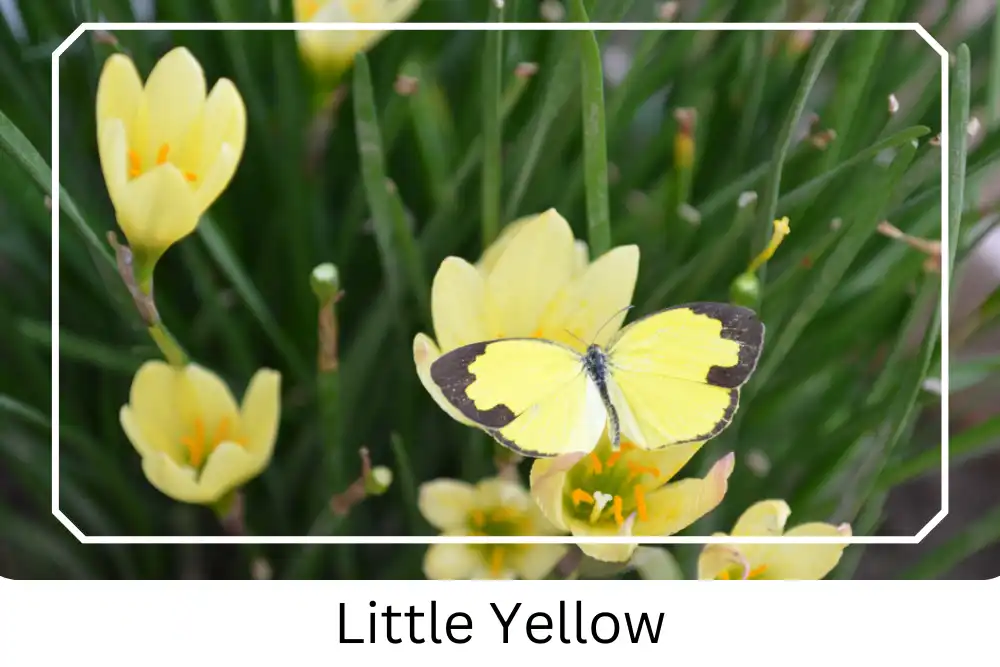
The Little Yellow, a radiant flavescent butterfly, adorns the landscapes of North and Central America with its vivid hues and dynamic presence. This butterfly, belonging to two subspecies – E. l. euterpe and E. l. centralis, thrives in the sunny expanses of old fields, mesmerizing onlookers with its delicate flutters on bright, sunny days.
Scientific Classification
- Family: Pieridae
- Genus: Eurema
- Common names: Little sulphur, little sulfur
- Scientific Name: Eurema lisa
Overview
Distinguished by its bright yellow coloring and small stature, the Little Yellow butterfly is a fascinating specimen in the butterfly kingdom. It navigates through open meadows and roadsides, contributing to the ecosystem’s biodiversity. Its lifecycle, from a visually unique caterpillar to a camouflaged pupa, culminates in the emergence of the adult butterfly, showcasing nature’s intricate designs and adaptations.
Description and Identification
Caterpillar
The mature larva of the Little Yellow presents a yellowish-green hue, adorned with a yellowish-white line stretching from head to tail on either side of its body. This distinctive marking aids in its identification during the larval stage.
Pupa
Mimicking the dry twigs of its host plant for camouflage, the chrysalis adopts a reddish-brown coloration. This clever adaptation protects it from predators during this vulnerable phase of its lifecycle.
Adult Butterfly
Sexual Dimorphism: There are no visible differences between the males and females, making identification based on sex a challenge for observers.
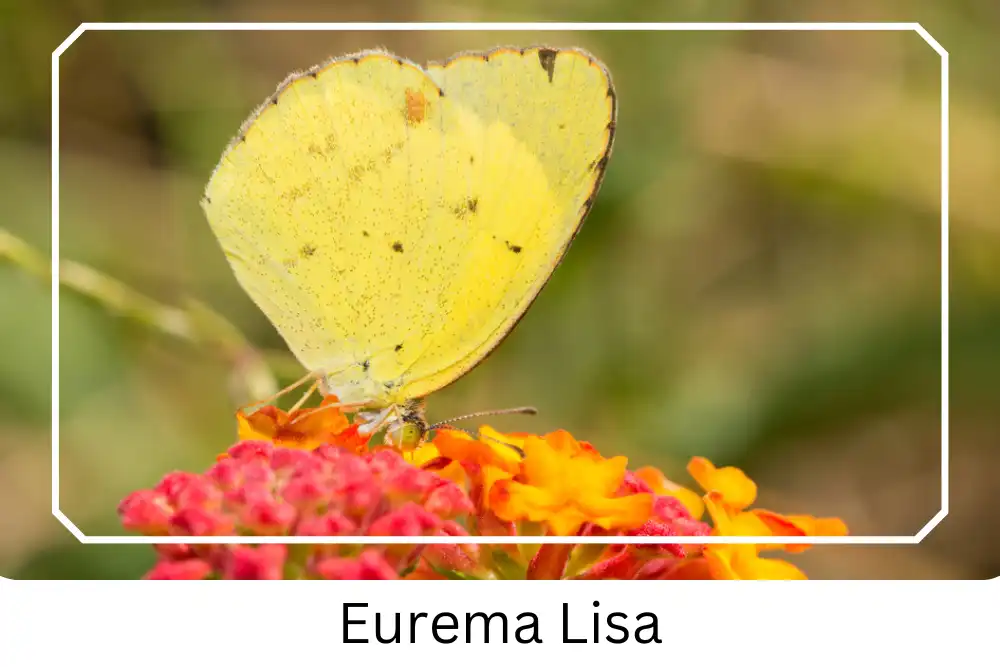
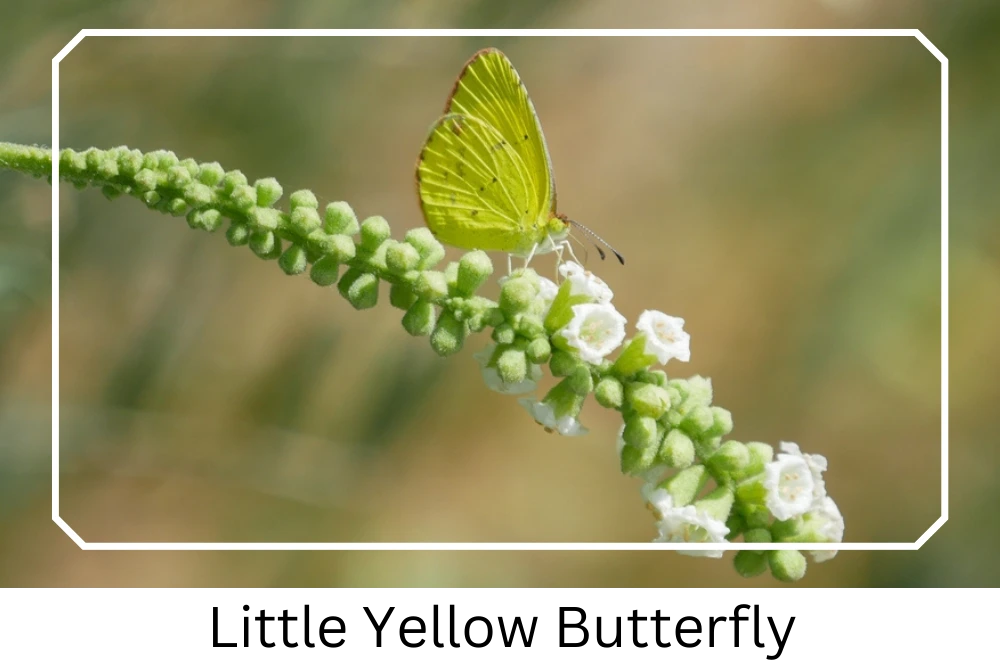
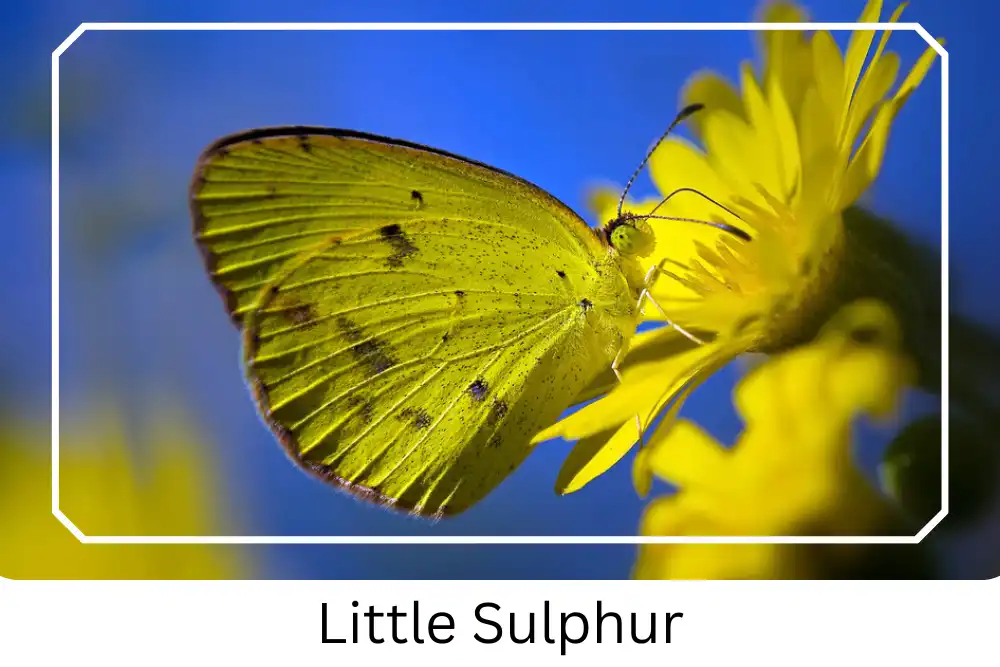
Color and Appearance: With the wings spread open, the dorsal side reveals a bright yellow base framed by a wide dark margin, with the primary wings’ outer corners featuring notably thicker borders. In contrast, the ventral side displays basal black spots and light gray blotches on the hind wings, providing a distinctive appearance when the wings are closed.
Average Wingspan: The wingspan ranges from 32 to 44 mm (1.25 – 1.73 in), a size that contributes to its swift and erratic flight pattern.
Flight Pattern: The flight of the Little Yellow is fast and erratic, an adaptation that likely aids in evading predators and navigating through its habitat.
Eggs
The eggs of the Little Yellow are bright yellow to cream in color, laid in close clusters but singularly, a strategy that may increase the survival rate of the offspring.
Quick Facts | |
| Distribution | Found throughout Central America and the southern regions of North America. |
| Habitat | Prefers open meadows and roadsides, where it can be seen fluttering in search of nectar. |
| Lifespan of Adults | Adults live up to 10 days, a brief yet vibrant phase of their lifecycle. |
| Host Plants | The partridge pea (Cassia fasciculata) serves as the preferred host plant for larvae. |
| Adult Diet | Adults feed on the nectar of various flower species, particularly those belonging to the genus Aster. |
How to Identify Little Yellow Butterfly?
Identifying the Little Yellow butterfly amidst the myriad of fluttering species can be quite the endeavor. Look for its distinctive bright yellow coloring and the dark margins on its wings when open. The erratic flight pattern is another key identifier, distinguishing it from its more gracefully flying cousins. Observing the egg laying process, with eggs being laid singly but in close clusters on the underside of host plant leaves, can also provide a clue. Additionally, the habitat can be a good indicator; Little Yellow butterflies are commonly found in open meadows and roadsides, especially in regions within their known distribution range.
Did You Know?
- Despite their vibrant appearance, Little Yellow butterflies have a remarkably short adult lifespan of up to 10 days, emphasizing the fleeting beauty of nature.
- The species is often mistaken for the Sulphur Butterfly due to their similar sizes, coloration, and shared habitats, particularly in regions like Wisconsin where both species are prevalent.
Conclusion
The Little Yellow butterfly, with its flavescent wings and dynamic lifecycle, is a testament to the complexity and beauty of nature. Its presence in North and Central America not only adds color and vibrancy to its environment but also plays a crucial role in the pollination process. By understanding and appreciating the unique characteristics and ecological importance of this butterfly, we can foster a deeper connection with the natural world around us.
Little Yellow Butterfly Pictures

Scientific Classification

- Family: Pieridae
- Genus: Eurema
- Common names: Little sulphur, little sulfur
- Scientific Name: Eurema lisa
 Poppy Glendening on November 21, 2018.
 Butterfly Team