
Butterflies in Cyprus
Cyprus has a little over 50 butterfly species, a short list for a Mediterranean island but one with three butterflies found nowhere else on Earth: the Cyprus Grayling, the Cyprus Meadow Brown and the Paphos Blue. The island's long, hot summer squeezes the main season into spring, when Painted Ladies stream north from Africa and the Eastern Festoon, Cleopatra and Swallowtail are on the wing, while the Troodos mountains keep butterflies flying through July. Brush-footed butterflies and the blues and coppers make up two-thirds of the fauna.

On this page
- Butterflies found in Cyprus
- Butterflies of Cyprus at a glance
- Signature butterflies of Cyprus
- The Cyprus butterfly calendar
- Where to see butterflies in Cyprus
- Host plants and butterfly gardening in Cyprus
- Rare and threatened butterflies of Cyprus
- How to identify butterflies in Cyprus
- Frequently asked questions
Butterflies of Cyprus at a glance
Cyprus is the third-largest island in the Mediterranean, yet its butterfly list stops at a little over 50 species, roughly a fifth of what mainland Turkey, only 70 km to the north, can offer. Cyprus has been separated from Asia long enough for some of its butterflies to evolve into distinct species. That isolation is the island's real interest: three of its butterflies are endemic, and several more are endemic subspecies, including the Cyprus race of the Eastern Festoon.
The brush-footed butterflies are the largest family here, with the graylings and browns of dry hillsides, the Two-tailed Pasha, the Cardinal and the migrant vanessids. The blues, coppers and hairstreaks come next, then a handful of whites and sulphurs, two swallowtails and four skippers. Several familiar European butterflies are missing altogether: there is no Peacock, no Small Tortoiseshell, no Scarce Swallowtail and no Brimstone on Cyprus.
Signature butterflies of Cyprus
The Cyprus Grayling (Hipparchia cypriensis) is the endemic most visitors meet. It is a mid-sized brown butterfly with a cryptic, marbled underside, flying from April on rocky slopes, in pine forest and along coastal scrub from sea level up into the Troodos, and settling on tree trunks and stones where it vanishes at once. The Cyprus Meadow Brown (Maniola cypricola) replaces the ordinary Meadow Brown of Europe and is common in grassy places in May and June. The Paphos Blue (Glaucopsyche paphos) is the third endemic, a small spring blue of the western hills whose caterpillars feed on legumes.
The Two-tailed Pasha (Charaxes jasius) is the island's showpiece, a big, fast, orange-bordered butterfly with two tails on each hindwing that breeds on the eastern strawberry tree and comes to rotting figs and wine baits in late spring and again in autumn. The Swallowtail is common on fennel and rue, and the Eastern Festoon, a cream, red and black swallowtail relative that breeds on birthwort, is one of the first butterflies of the Cypriot spring.

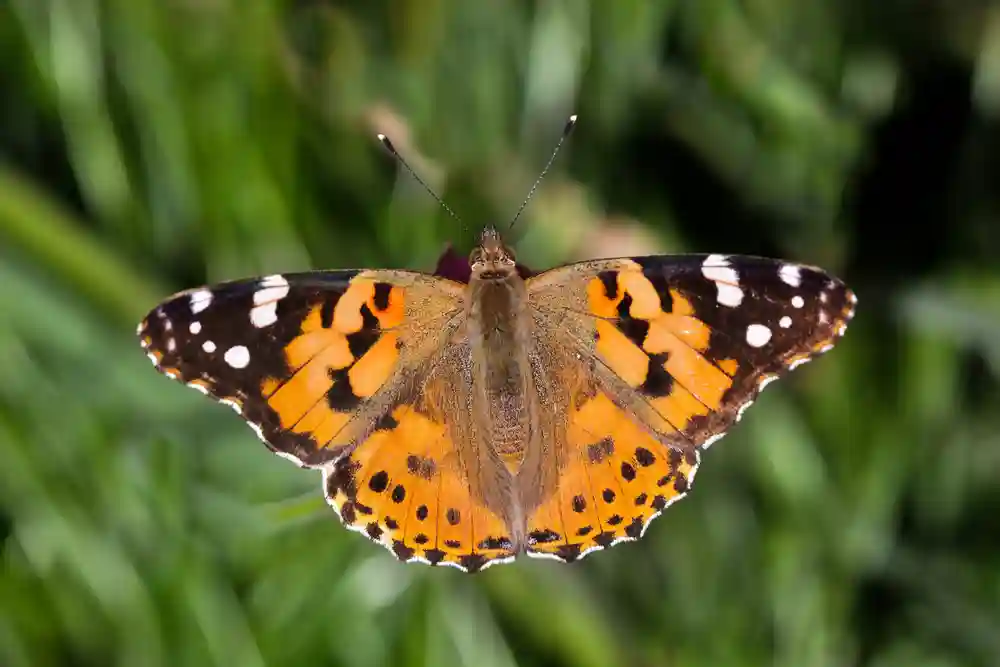
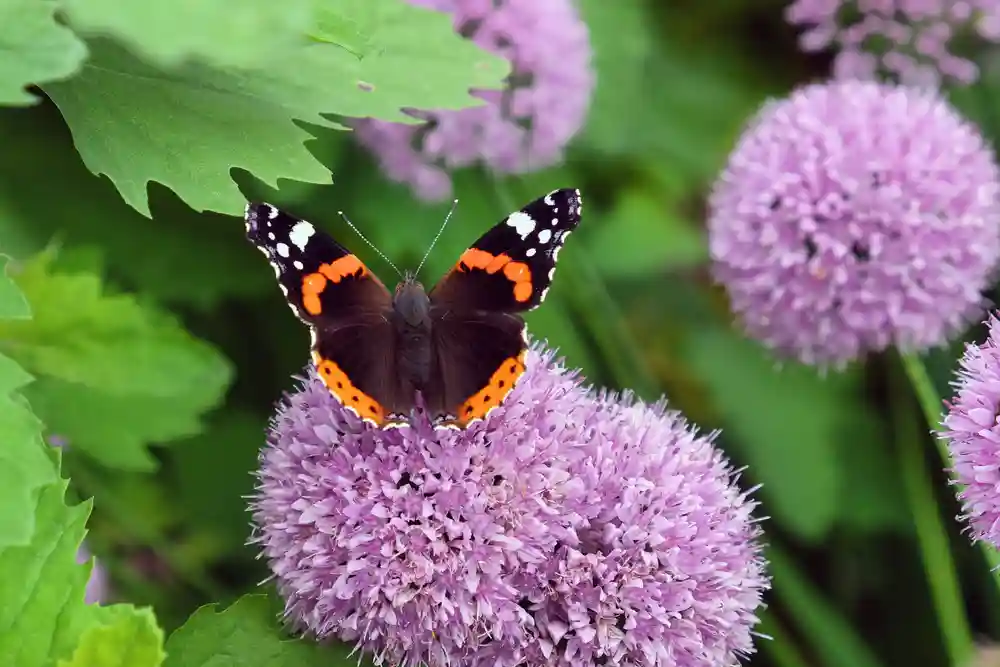
The migrants are the same ones the whole Mediterranean knows. The Painted Lady can carpet the island in March and April, the Red Admiral breeds on nettles in winter and spring, and the Plain Tiger, an African relative of the Monarch, arrives in late summer and breeds for a generation or two on milkweeds before the winter. In gardens and on farmland the Large and Small Whites, the Clouded Yellow, the Common Blue and the Long-tailed Blue are the everyday species.
The Cyprus butterfly calendar
Butterflies fly in every month on Cyprus. Even in January a Red Admiral, Clouded Yellow or Small White can be found on a sunny wall, and the Painted Lady breeds through the winter in the lowlands. The season proper starts in February with the Eastern Festoon and the Orange Tip on damp hillsides, followed in March by the Paphos Blue, the Cleopatra and the first Swallowtails.
March to May is the peak. This is when the Painted Lady migration from North Africa crosses the island, sometimes in astonishing numbers, and when the graylings, browns, blues and whites all overlap; our butterfly migration guide explains how the Painted Lady's multi-generation journey works. The Black-veined White, Cardinal and Southern White Admiral appear in May.
By June the coast has dried out and the action moves up into the Troodos, where the Cyprus Grayling, the Purple Hairstreak on the oaks and the Large Wall Brown fly until August. Autumn brings a second, smaller flight of the Two-tailed Pasha, fresh Long-tailed Blues and Small Coppers, and the Plain Tigers, and the first rains of October bring the lowland whites and blues back out. Read more about how climate shapes the year in our guide to the butterfly season.
Where to see butterflies in Cyprus
Cyprus is small enough to cover its main habitats in a week, and the best butterfly areas are all protected land with waymarked trails.
- Akamas Peninsula, in the far west — maquis, gorges and pine woods above the sea; the Paphos Blue, Cyprus Grayling, Eastern Festoon and Two-tailed Pasha, all best in April and May.
- Troodos Mountains — the nature trails around Mount Olympus and the Caledonia Falls for summer butterflies, including the Purple Hairstreak, Cardinal and Large Wall Brown into August.
- Paphos Forest and the Diarizos and Xeros valleys — riverside walks with Southern White Admirals, Holly Blues and Swallowtails.
- Cape Greco, in the south-east — coastal scrub where migrating Painted Ladies and Plain Tigers make landfall.
- The Pentadaktylos (Kyrenia) range in the north — limestone slopes for graylings, the Hermit and the Eastern Baton Blue.
The island's fauna is a subset of the Levantine one, so it is worth comparing this list with the far longer ones for butterflies in Turkey, butterflies in Greece and butterflies in Israel.
Host plants and butterfly gardening in Cyprus
A Cypriot garden supports butterflies best if it is planted for the dry summer rather than against it. Native and drought-tolerant plants provide the host plants the caterpillars need, and they keep flowering when watered lawns have long gone brown.
- Fennel, rue and wild carrot — the Swallowtail, whose striped green caterpillars are easy to find on fennel in May.
- Eastern strawberry tree (Arbutus andrachne) — the only food of the Two-tailed Pasha; a single tree can support a colony.
- Birthwort (Aristolochia) — the Eastern Festoon.
- Buckthorn (Rhamnus) — the Cleopatra, the island's big lemon-yellow sulphur.
- Nettles — Red Admiral and Painted Lady, and the nettle-tree (Celtis) for the European Nettle-tree Butterfly.
- Clovers, medicks and bladder senna — Common Blue, Long-tailed Blue, Clouded Yellow and Lang's Short-tailed Blue.
- Milkweeds — the Plain Tiger, which lays on them in late summer.
For nectar, lantana, Buddleja, thyme, oregano and the native Thymus capitatus scrub work well, and rotting figs or a sponge soaked in wine will bring the Two-tailed Pasha to a terrace.
Rare and threatened butterflies of Cyprus
Because so much of the Cypriot fauna is unique, the island carries a responsibility out of proportion to its size: if the Paphos Blue or the Cyprus Grayling were lost here, they would be lost everywhere. The endemics are not yet rare, but they depend on habitats under steady pressure. Coastal maquis is being cleared for tourism and housing, especially around the Akamas and along the south coast; wildfires in the pine forests of the Troodos and Paphos Forest have become larger and more frequent; and traditional grazing and terrace farming, which kept hillsides open and flowery, are disappearing.
Several butterflies are already scarce. The Eastern Festoon depends on birthwort that survives mainly on unsprayed field edges, the Black-veined White has thinned out with the loss of old almond and hawthorn stands, and the Hermit and the Cyprus subspecies of the White-banded Grayling are confined to a few limestone areas. The Natura 2000 network now covers the Akamas, the Troodos and much of the north coast, but the island still lacks a formal Red List for its butterflies.
Butterflies found in Cyprus
49 species listed for Cyprus, grouped by family. Linked names have a full profile on this site with pictures of every life stage.
Brush-Footed (Nymphalidae)
Show all 17 other brush-footed species names
- African Ringlet (Ypthima asterope)
- Cardinal (Argynnis pandora)
- Cyprus Grayling (Hipparchia cypriensis)
- Cyprus Meadow Brown (Maniola cypricola)
- Hermit (Chazara briseis)
- European Nettle-tree Butterfly (Libythea celtis)
- Large Tortoiseshell (Nymphalis polychloros)
- Large Wall Brown (Lasiommata maera)
- Oriental Meadow Brown (Hipparchia syriaca)
- Plain Tiger (Danaus chrysippus)
- Roxelana's Grayling (Kirinia roxelana)
- Southern Marbled Skipper (Hyponephele lupinus)
- Southern White Admiral (Limenitis reducta)
- Speckled Wood (Pararge aegeria)
- Two-tailed Pasha (Charaxes jasius)
- Wall Brown (Lasiommata megera)
- Pseudochazara anthelea
Gossamer-Winged (Lycaenidae)
 Polyommatus icarusCommon Blue (Polyommatus Icarus)The common blue is a small grassland butterfly of Europe, North Africa and temperate Asia in which the male is violet-blue above and the female mostly
 Celastrina argiolusHolly Blue (Celastrina argiolus)The holly blue is the small silvery-blue butterfly that flies round the tops of hedges and ivy-covered walls in spring, well above the height of every
 Neozephyrus quercusPurple Hairstreak (Neozephyrus quercus)The purple hairstreak is a small silvery-grey butterfly of oak woodland across Europe, North Africa and western Asia, and it is identified in flight b
 Lycaena phlaeasCommon Copper (Lycaena phlaeas)The common copper (Lycaena phlaeas), known as the small copper in Europe and the American copper in North America, is a small, fast-flying butterfly o
Show all 12 other gossamer-winged species names
- Tawny Silverline (Cigaritis acamas)
- African Babul Blue (Azanus jesous)
- Brown Argus (Aricia agestis)
- Dark Grass Blue (Zizeeria karsandra)
- Eastern Baton Blue (Pseudophilotes vicrama)
- Grass Jewel (Freyeria trochylus)
- Lang's Short-tailed Blue (Leptotes pirithous)
- Lesser Fiery Copper (Lycaena thersamon)
- Little Tiger Pierrot (Tarucus balkanica)
- Long-tailed Blue (Lampides boeticus)
- Persian Grass Blue (Luthrodes galba)
- Glaucopsyche paphos
Whites and Sulphurs (Pieridae)
 Anthocharis cardaminesOrange-tip (Anthocharis cardamines)The orange-tip is a small white butterfly of damp meadows, hedgerows, woodland rides and gardens across Europe and temperate Asia, and the male's defi
 Colias croceusClouded Yellow (Colias croceus)The clouded yellow (Colias croceus) is a fast, low-flying golden-orange butterfly of open grassland, breeding around the Mediterranean and North Afric
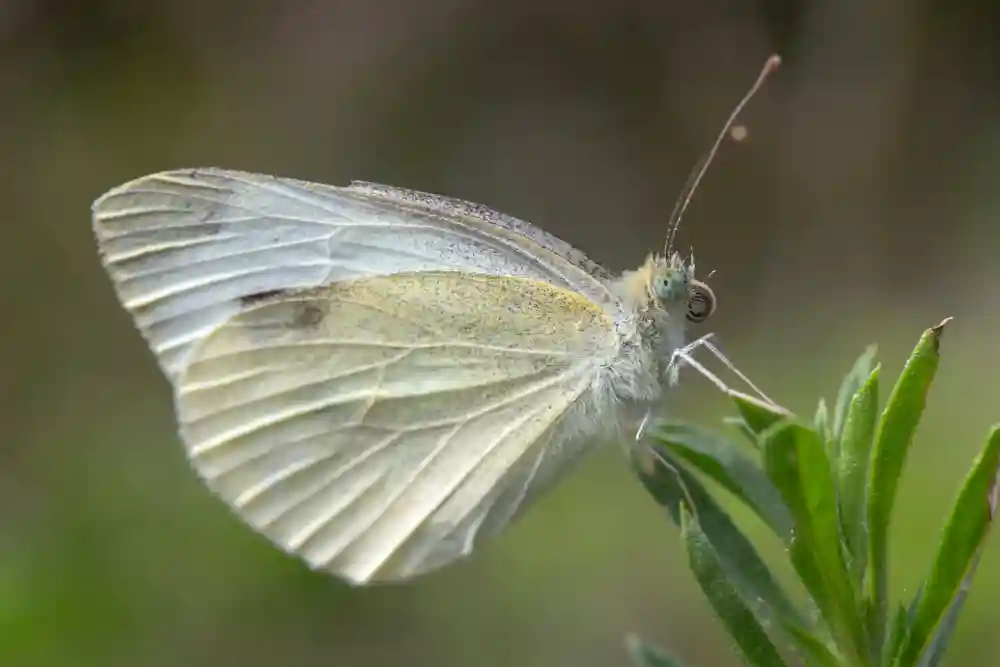 Pieris rapaeCabbage White (Pieris rapae)The cabbage white is probably the most-seen butterfly on the planet: a small, chalk-white insect with one or two black spots that drifts over allotmenPieris rapaeCabbage White (Pieris rapae)The cabbage white is probably the most-seen butterfly on the planet: a small, chalk-white insect with one or two black spots that drifts over allotmen
- Black-veined White (Aporia crataegi)
- Eastern Dappled White (Euchloe ausonia)
- Cleopatra (Gonepteryx cleopatra)
- Lesser Bath White (Pontia chloridice)
Swallowtail (Papilionidae)
- Eastern Festoon (Zerynthia cerisy)
Skipper (Hesperiidae)
- Mallow Skipper (Carcharodus alceae)
- Pygmy Skipper (Gegenes pumilio)
- Pale Small-branded Swift (Pelopidas thrax)
- Lulworth Skipper (Thymelicus acteon)
How to identify butterflies in Cyprus
With only about 50 species, Cypriot butterflies are among the easiest in Europe to name once the island's peculiarities are known. Any grayling with a plain grey-brown underside from the coast to the mountains is almost certainly the Cyprus Grayling; the Hermit is paler with a white band, and the Roxelana's Grayling flies only in the shade of trees. A meadow brown on Cyprus is the endemic Cyprus Meadow Brown unless it is the smaller, more orange Oriental Meadow Brown of dry hillsides.
Among the blues, the Common Blue, Holly Blue, Long-tailed Blue and Lang's Short-tailed Blue account for most sightings; the Paphos Blue is confined to spring in the west and has a pale underside with a curved row of black spots. The two swallowtails are unmistakable, and the only other large yellow butterfly is the Cleopatra, with orange forewing patches in the male. Among the whites, the Lesser Bath White and Eastern Dappled White show a green-mottled underside hindwing that the Small and Large Whites lack. Photograph the underside where possible, note the altitude and month, and compare with the neighbouring faunas under Butterflies of the World.
Frequently asked questions about butterflies in Cyprus
How many butterfly species are there in Cyprus?
A little over 50 butterfly species have been recorded on Cyprus, including the regular migrants. That is a short list for an island of its size, roughly a fifth of nearby Turkey's total, because islands are always poorer than the mainland. It is made up for by three endemic species and several endemic subspecies found nowhere else.
Which butterflies are found only in Cyprus?
Three species are endemic to Cyprus: the Cyprus Grayling (Hipparchia cypriensis), the Cyprus Meadow Brown (Maniola cypricola) and the Paphos Blue (Glaucopsyche paphos). The island also has endemic subspecies of wider species, such as the Cyprus race of the Eastern Festoon. All three endemics are still reasonably common in the right habitat.
Is the African Ringlet a rare migrant in Cyprus?
No. The African Ringlet (Ypthima asterope) is a small resident butterfly on Cyprus, not a migrant, with local colonies in grassy, scrubby places in the west and south. It is easily overlooked because it is small, brown and weak-flying. The island's true migrants are the Painted Lady, Red Admiral, Clouded Yellow, Long-tailed Blue and Plain Tiger.
When is the best time to see butterflies in Cyprus?
March to May is the peak in the lowlands, when the endemics, the Eastern Festoon, the Swallowtail and the Painted Lady migration all overlap. June to August is best in the Troodos mountains, where the Cyprus Grayling and Purple Hairstreak keep flying after the coast has dried out. Butterflies can be seen in every month of the year.
What is the largest butterfly in Cyprus?
The Two-tailed Pasha (Charaxes jasius) and the Swallowtail (Papilio machaon) are the largest, both reaching a wingspan of about 80 millimetres. The Two-tailed Pasha is the heavier, faster insect, with two tails on each hindwing; it breeds on the eastern strawberry tree and visits rotting fruit rather than flowers, flying in May and June and again in September and October.
Which white butterflies live in Cyprus?
Cyprus has the Large White, Small White, Lesser Bath White, Eastern Dappled White and Black-veined White, plus the Orange Tip and the yellow Cleopatra and Clouded Yellow in the same family. The Small White is the commonest in gardens; the Eastern Dappled White flies in spring on rocky ground and the Black-veined White in May around almond and hawthorn.
What blues and coppers are found in Cyprus?
The island has 16 gossamer-winged butterflies, including the Common Blue, Holly Blue, Long-tailed Blue, Lang's Short-tailed Blue, Brown Argus, Eastern Baton Blue and the endemic Paphos Blue, together with the Small Copper and Lesser Fiery Copper and two hairstreaks, the Purple Hairstreak of the Troodos oaks and the Tawny Silverline. Most fly from March to May.
Do Painted Ladies migrate through Cyprus?
Yes. Painted Ladies breed in North Africa and the Middle East over winter and move north in March and April, and Cyprus lies directly on their route. In strong years, such as 2019, the island can see thousands crossing the coast in a day. A southward return movement takes place in autumn, and small numbers breed on the island all winter.
Where are the best places to see butterflies in Cyprus?
The Akamas Peninsula in the west is the best single area, with all three endemics and the Two-tailed Pasha in April and May. The Troodos nature trails are best in summer, the Diarizos and Xeros valleys for riverside species, Cape Greco for migrants and the Pentadaktylos range in the north for graylings and the Hermit.
Are there Monarch butterflies in Cyprus?
The North American Monarch does not occur on Cyprus, but its African relative the Plain Tiger (Danaus chrysippus) does, arriving as a migrant in late summer and breeding on milkweeds for a generation or two before winter. It is smaller than the Monarch, plain orange with black wing tips and no black veins, and is easy to see around Cape Greco and the south coast in September.
Published October 30, 2023 · Last updated September 21, 2026