
Butterflies in India
India has more than 1,300 recorded butterfly species, roughly one in fifteen of the world's total, ranging from the Himalayan foothills and the rainforests of the north-east to the Western Ghats, the Deccan plains and the Andaman and Nicobar Islands. The everyday species are the milkweed butterflies such as the Common Tiger and Common Crow, the Common Mormon and Lime swallowtails, grass yellows and pansies, while the north-east and the Western Ghats hold hundreds of forest species, many of them found nowhere else on Earth.

On this page
Butterflies of India at a glance
India's butterfly fauna is one of the largest in the world, with more than 1,300 species recorded and new ones still being added from the eastern Himalaya, but the total is spread very unevenly. The north-east, where the Himalaya meets the forests of Myanmar, holds well over half the national list in a few states; the Western Ghats add a second, smaller centre of richness with dozens of endemics; the Andaman and Nicobar Islands have their own island forms; and the dry Deccan plains support a shorter list of tough, sun-loving species that most Indians know from their gardens.
Every family is well represented. The brush-footed butterflies are the largest group, from the milkweed tigers and crows to the bushbrowns, fourrings, evening browns and the forest barons and sailers. The blues, hairstreaks and their relatives are almost as numerous, including the oakblues, royals and flashes and the carnivorous Apefly and Moth Butterfly, whose caterpillars eat scale insects and ant grubs. The skippers, the whites and sulphurs, the swallowtails and a small but colourful set of metalmarks, the Punchinello and the Harlequin among them, complete the list.
Signature Indian butterflies
The Common Tiger is the butterfly most people picture first: an orange, black-veined milkweed butterfly that looks like a smaller Monarch and flies slowly through gardens across the whole country. Its relatives the Plain Tiger, Blue Tiger, Common Crow and, in the Western Ghats, the endemic Nilgiri Tiger and the huge, papery Malabar Tree Nymph are all distasteful to birds, and a whole set of edible butterflies copy them, led by the Great Eggfly, whose female mimics the Common Crow while the male flashes violet eyespots.

The swallowtails supply the giants. The Southern Birdwing of the Western Ghats and the Golden Birdwing of the Himalaya, at up to about 190 mm, are the largest butterflies in India, and the Common Mormon, Lime Butterfly, Common Rose, Tailed Jay and the Great Mormon are familiar in gardens and orchards. The north-east adds the Kaiser-i-Hind, a green-and-gold swallowtail of the high ridges, and the Bhutan Glory.

Forest brush-foots include the Commander, with its chocolate wings and white band, the Orange Oakleaf, which vanishes among dead leaves the moment it closes its wings, the Blue Nawab and the Common Nawab, and the Lemon, Peacock and Blue Pansies of open ground. The Common Leopard and the fast-spreading Tawny Coster are the orange butterflies of wasteland. In the Himalaya the fauna turns European, and the Holly Blue, Small Copper, Common Brimstone and the whites of the list all fly alongside Indian species above 1,500 m.

Among the small butterflies the Red Pierrot, Common Pierrot and Grass Jewel are on every campus, while the Harlequin, a metalmark of the north-eastern forests, is among the most patterned butterflies in the country.
The Indian butterfly calendar
In peninsular India the butterfly year follows the monsoon. Numbers are lowest in the hot, dry months of April and May, climb once the rains arrive in June, and peak between August and November, when the grass has grown, host plants are in fresh leaf and second and third generations overlap. Many species have distinct wet- and dry-season forms: the Common Evening Brown and the bushbrowns lose their eyespots in the dry months, and the pansies are smaller and paler in summer.
The Himalayan foothills follow a temperate pattern with two peaks, April to June and September to October, and the high valleys of Sikkim and Uttarakhand are best in June and July. The north-east is richest in the weeks before the monsoon, from March to May, when swallowtails and blues gather in hundreds at riverside puddles.
India also has a true migration. Each year the milkweed butterflies of the Western Ghats, the Blue Tiger, Dark Blue Tiger, Common Crow and Double-banded Crow, move east to the plains ahead of the south-west monsoon and return to the Ghats in October and November after the north-east monsoon, passing in streams of thousands and roosting in clusters at sites such as Aralam in Kerala. Our guide to butterfly migration explains how these movements are tracked.
Where to see butterflies in India
Almost any Indian garden with lantana and a curry-leaf plant will show a dozen species, but the country's real butterfly wealth is in its forests.
- Arunachal Pradesh and Sikkim — Namdapha, Pakke and Eaglenest are the richest butterfly country in India, with over 500 species in a single reserve and the Kaiser-i-Hind in the high forest.
- The Western Ghats — Silent Valley, Periyar, Agumbe and Aralam Wildlife Sanctuary in Kerala, where the milkweed butterfly migration roosts in autumn.
- Uttarakhand — the Bhimtal Butterfly Research Centre and the oak forests around Nainital for Himalayan species.
- City butterfly parks — Bannerghatta near Bengaluru, Ovalekar Wadi near Mumbai, Asola Bhatti in Delhi and the walk-through park in Thiruvananthapuram.
- The Andaman Islands — endemic crows, oakleafs and sergeants in the forests around Port Blair.
The Himalayan fauna continues into Nepal, and the Western Ghats species have close relatives across the strait in Sri Lanka.
Host plants and butterfly gardening in India
Indian butterfly gardening is easy because so many caterpillar host plants are already kitchen and courtyard plants.
- Curry leaf, lime and other citrus — the Common Mormon and Lime Butterfly; a single curry-leaf bush produces caterpillars all year.
- Calotropis (crown flower) and other milkweeds — the Plain Tiger, Common Tiger and Blue Tiger.
- Birthwort (Aristolochia indica) — the Common Rose and Crimson Rose, and in the Western Ghats the Southern Birdwing.
- Senna and cassia — the Common Emigrant, Mottled Emigrant and the grass yellows.
- Bryophyllum (air plant) — the Red Pierrot, whose caterpillars tunnel inside the fleshy leaves.
- Passion vine — the Tawny Coster, which has spread across India in the last two decades.
- Grasses and bamboo — the evening browns, bushbrowns, fourrings and most skippers.
For nectar, lantana, ixora, marigold, cosmos, Stachytarpheta and the wild Tridax and Ageratum weeds do most of the work, and a tray of rotting banana brings in the oakleafs, nawabs and evening browns that never visit flowers.
Conservation and protected butterflies
India protects butterflies by law more extensively than most countries. Hundreds of species are listed in the schedules of the Wildlife (Protection) Act, 1972, which makes their collection and trade an offence, and the Kaiser-i-Hind, Bhutan Glory, the birdwings and many Andaman endemics carry the highest level of protection. Illegal collecting for the trade nevertheless continues in the north-east and the Ghats.
The larger threat is habitat. Lowland forest in the north-east is being cleared for plantations and roads, the shola grasslands of the Western Ghats, home of the Nilgiri Tiger and the Palni and Nilgiri Fourrings, are shrinking under tea, eucalyptus and wattle, and the Andaman forests face tourism development. Endemics with tiny ranges, among them the Malabar Tree Nymph, the Travancore Evening Brown and the Nicobar Crow, are the most exposed.
The encouraging trend is public interest: state butterfly declarations since Maharashtra chose the Blue Mormon in 2015, Big Butterfly Month counts every September, and dozens of new butterfly parks have turned a once-obscure group into one of the most watched in the country.
Butterflies found in India
301 species listed for India, grouped by family. Linked names have a full profile on this site with pictures of every life stage.
Brush-Footed (Nymphalidae)
Danaus genutiaCommon Tiger (Danaus genutia)Asia's answer to the monarch, the common tiger sails slowly over scrub and garden on tawny orange wings whose every vein is inked in heavy black. Hypolimnas bolinaBlue Moon (Hypolimnas bolina)The blue moon, or great eggfly, is a black tropical butterfly whose white wing patches burn electric blue when the light strikes them at the right ang
Show all 53 other brush-footed species names
- Andaman Crow (Euploea andamanensis)
- Andaman Oakleaf (Kallima albofasciata)
- Andaman Palmking (Amathusia andamanensis)
- Andaman Sergeant (Athyma rufula)
- Andaman Viscount (Tanaecia cibaritis)
- Bamboo Tree Brown (Lethe europa)
- Blue Tiger (Tirumala limniace)
- Commander (Moduza procris)
- Common Crow (Euploea core)
- Common Evening Brown (Melanitis leda)
- Common Fourring (Ypthima huebneri)
- Common Tree Brown (Lethe rohria)
- Dingy Bushbrown (Mycalesis perseus)
- Gaudy Baron (Euthalia lubentinai)
- Glad-eye Bushbrown (Mycalesis junonia)
- Malabar Tree Nymph (Idea malabarica)
- Manipur Goldenfork (Lethe kabrua)
- Nicobar Crow (Euploea scherzeri)
- Nilgiri Fourring (Ypthima chenu)
- Nilgiri Jewel Fourring (Ypthima striata)
- Nilgiri Tiger (Parantica nilgiriensis)
- Pallid Forester (Lethe satyavati)
- Palni Bushbrown (Heteropsis davisoni)
- Palni Fourring (Ypthima ypthimoides)
- Red-disc Bushbrown (Heteropsis oculus)
- Red-eye Bushbrown (Heteropsis adolphei)
- Roy's Argus (Callerebia dibangensis)
- Small Long-brand Bushbrown (Mycalesis igilia)
- Southern Duffer (Discophora lepida)
- Tailed Palmfly (Elymnias caudata)
- Tamil Catseye (Zipaetis saitis)
- Tawny Coster (Acraea terpsicore)
- Tranvancore Evening Brown (Parantirrhoea marshalli)
- White-barred Bushbrown (Mycalesis anaxias)
- Aemona pealii
- Hyponephele neoza
- Neptis palnica
- Ypthima davidsoni
- Ypthima fusca
- Cethosia mahratta
- Cirrochroa nicobarica
- Cyrestis tabula
- Hestina jermyni
- Kallima horsefieldi
- Karanasa rohtanga
- Lethe dakwania
- Mycalesis evansii
- Mycalesis manii
- Mycalesis radza
- Pantoporia ferrari
- Ypthima cantlei
- Ypthima kedarnathensis
- Ypthima tabella
Gossamer-Winged (Lycaenidae)
 Celastrina argiolusHolly Blue (Celastrina argiolus)The holly blue is the small silvery-blue butterfly that flies round the tops of hedges and ivy-covered walls in spring, well above the height of every
 Lycaena phlaeasCommon Copper (Lycaena phlaeas)The common copper (Lycaena phlaeas), known as the small copper in Europe and the American copper in North America, is a small, fast-flying butterfly o
Show all 128 other gossamer-winged species names
- Acamas Blue (Cigaritis acamas)
- African Babul Blue (Azanus jesous)
- Angled Sunbeam (Curetis acuta)
- Apefly (Spalgis epius)
- Baby Royal (Bullis buto)
- Balkan Pierrot (Tarucus balkanicus)
- Banded Blue Pierrot (Discolampa ethion)
- Banded Lineblue (Prosotas aluta)
- Bhutya Lineblue (Prosotas bhutea)
- Blue Gem (Poritia erycinoides)
- Blue Imperial (Ticherra acte)
- Blue Royal (Pratapa icetoides)
- Bold Line-blue (Nacaduba pactolus)
- Branded Royal (Tajuria melastigma)
- Branded Yamfly (Yasoda tripunctata)
- Bright Babul Blue (Azanus ubaldus)
- Bright Sunbeam (Curetis bulis)
- Broad Spark (Sinthusa chandrana)
- Broadtail Royal (Creon cleobis)
- Brown Argus (Aricia agestis)
- Brown Lineblue (Prosotas lutea)
- Brown Tit (Hypolycaena thecloides)
- Brown Yamfly (Drina donina)
- Burmese Sunbeam (Curetis saronis)
- Chocolate Royal (Remelana jangala)
- Ciliate Blue (Anthene emolus)
- Club Silverline (Cigaritis syama)
- Comic Oakblue (Arhopala comica)
- Common Acacia Blue (Surendra quercetorum)
- Common Brownie (Miletus chinensis)
- Common Cerulean (Jamides celeno)
- Common Flash (Rapala nissa)
- Common Gem (Poritia hewitsoni)
- Common Guava Blue (Virachola isocrates)
- Common Hedge Blue (Acytolepis puspa)
- Common Imperial (Cheritra freja)
- Common Pierrot (Castalius rosimon)
- Common Red Flash (Rapala iarbus)
- Common Shot Silverline (Cigaritis ictis)
- Common Silverline (Cigaritis vulcanus)
- Common Tit (Hypolycaena erylus)
- Dark Cornelian (Deudorix epijarbas)
- Dark Grass Blue (Zizeeria karsandra)
- Dark Pierrot (Tarucus ananda)
- De Niceville's Oakblue (Arhopala agrata)
- Dingy Lineblue (Petrelaea dana)
- Doherty's Dull Oakblue (Arhopala khamti)
- Dull Babul Blue (Azanus uranus)
- Dull-green Hairstreak (Esakiozephyrus icana)
- Eastern Bath White (Tarucus theophrastus)
- Eastern Baton Blue (Pseudophilotes vicrama)
- Eastern Blue Sapphire (Heliophorus oda)
- Elbowed Pierrot (Caleta elna)
- Falcate Oak Blue (Mahathala ameria)
- Forest Pierrot (Taraka hamada)
- Forget-me-not (Catochrysops strabo)
- Golden Copper (Lycaena thetis)
- Gram Blue (Euchrysops cnejus)
- Grass Jewel (Freyeria trochylus)
- Green Flash (Artipe eryx)
- Green Oakblue (Arhopala eumolphus)
- Green Sapphire (Heliophorus androcles)
- Hewitson's Dull Oakblue (Arhopala oenea)
- Himalayan Pierrot (Tarucus venosus)
- Indigo Flash (Rapala varuna)
- King Cerulean (Jamides bochus)
- Large Guava Blue (Virachola perse)
- Large Jewel Blue (Plebejidea loewii)
- Large Purple Line-blue (Nacaduba berenice)
- Lilac Oakblue (Arhopala camdeo)
- Lime Blue (Chilades lajus)
- Long-banded Silverline (Cigaritis lohita)
- Long-tailed Blue (Lampides boeticus)
- Long-tailed Line-blue (Prosotas nora)
- Malayan (Megisba malaya)
- Mandarin Blue (Charana mandarinus)
- Margined Hedge Blue (Celatoxia marginata)
- Margined Lineblue (Prosotas pia)
- Metallic Cerulean (Jamides alecto)
- Metallic Green Hairstreak (Chrysozephyrus duma)
- Metallic Hedge Blue (Callenya melaena)
- Monkey Puzzle (Rathinda amor)
- Moth Butterfly (Liphyra brassolis)
- Narrow Spark (Sinthusa nasaka)
- Opaque Six-line Blue (Nacaduba beroe)
- Orchid Tit (Chliaria othona)
- Pale Grand Imperial (Neocheritra fabronia)
- Pale Grass Blue (Pseudozizeeria maha)
- Pale Hedge Blue (Udara dilecta)
- Pale Pea-blue (Catochrysops panormus)
- Peacock Royal (Tajuria cippus)
- Plain Hedge Blue (Celastrina lavendularis)
- Plain Pushblue (Flos apidanus)
- Plains Cupid (Luthrodes pandava)
- Pointed Ciliate Blue (Anthene lycaenina)
- Powdered Oakblue (Arhopala bazalus)
- Purple Line-blue (Prosotas dubiosa)
- Purple Sapphire (Heliophorus epicles)
- Purple-brown Tailless Oakblue (Arhopala arvina)
- Quaker (Neopithecops zalmora)
- Red Imperial (Suasa lisides)
- Red Pierrot (Talicada nyseus)
- Redspot (Zesius chrysomallus)
- Saffron (Mota massyla)
- Scarce Guava Blue (Virachola smilis)
- Scarce Silverstreak (Iraota rochana)
- Scarce Slate Flash (Rapala scintilla)
- Scarlet Flash (Rapala dieneces)
- Silver Royal (Ancema blanka)
- Silver Streaked Acacia Blue (Zinaspa todara)
- Silverstreak Blue (Iraota timoleon)
- Small Cupid (Chilades parrhasius)
- Spotted Pierrot (Tarucus callinara)
- Spotted Royal (Tajuria maculata)
- Straight Pierrot (Caleta roxus)
- Straightwing Blue (Orthomiella pontis)
- Suffused Flash (Rapala suffusa)
- Sword-tailed Flash (Bindahara phocides)
- Una (Una usta)
- Violet Line-blue (Nacaduba calauria)
- White Lineblue (Nacaduba angusta)
- White Royal (Tajuria illurgis)
- White-banded Hedge Blue (Lestranicus transpectus)
- White-banded Line-blue (Nacaduba kurava)
- White-bordered Copper (Lycaena pavana)
- Witch (Araotes lapithis)
- Yamfly (Loxura atymnus)
- Zizula hylax
Whites and Sulphurs (Pieridae)
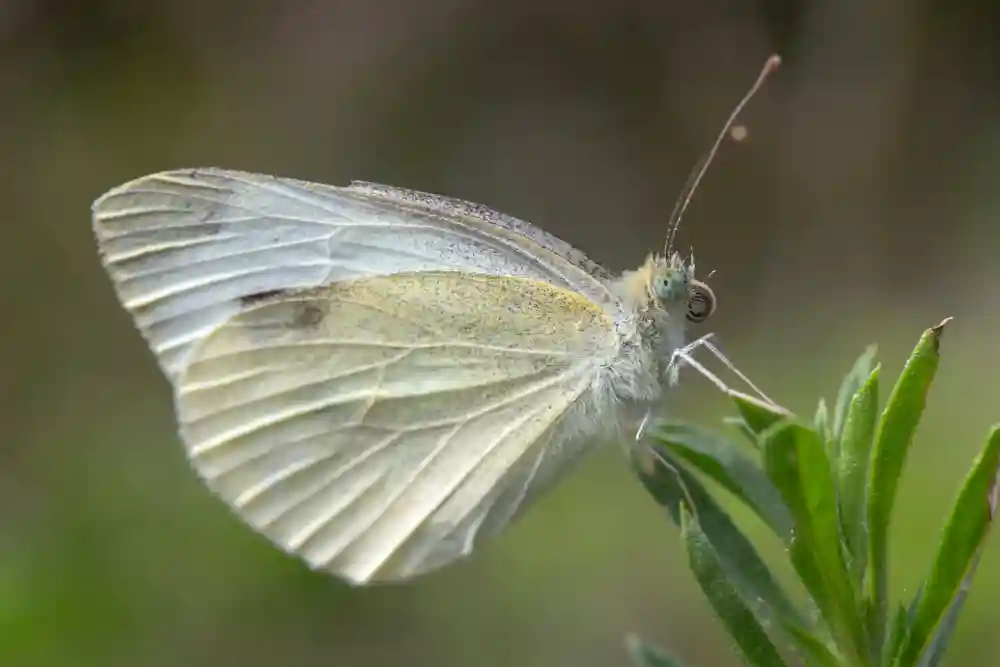 Pieris rapaeCabbage White (Pieris rapae)The cabbage white is probably the most-seen butterfly on the planet: a small, chalk-white insect with one or two black spots that drifts over allotmenPieris rapaeCabbage White (Pieris rapae)The cabbage white is probably the most-seen butterfly on the planet: a small, chalk-white insect with one or two black spots that drifts over allotmen
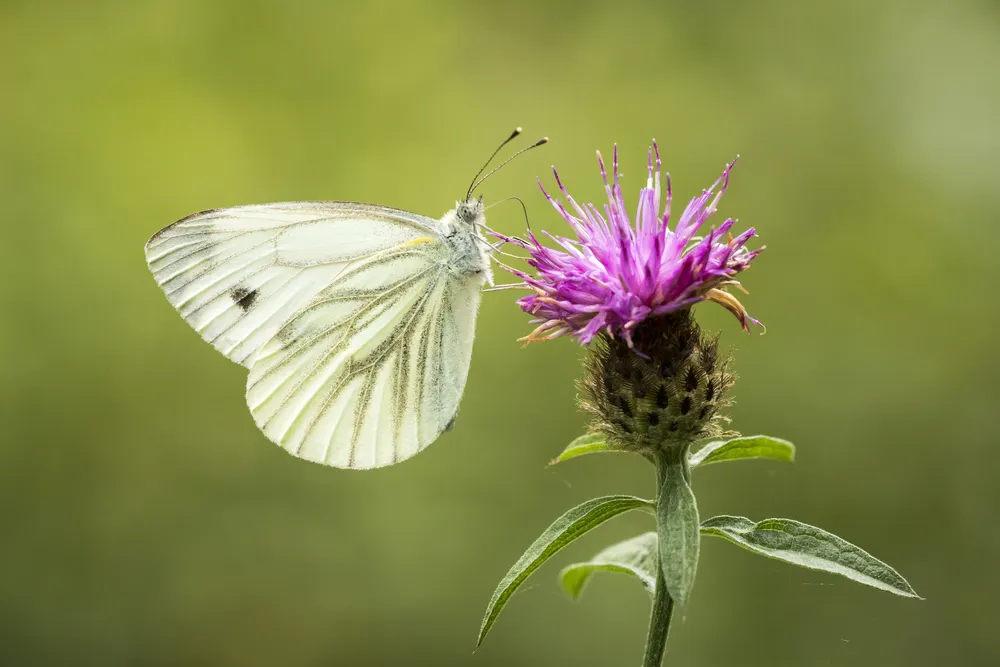 Pieris napiGreen-veined White (Pieris napi)The green-veined white (Pieris napi) is a medium-sized white butterfly of damp meadows, woodland rides, hedgerows and stream banks across Europe, Nort
 Gonepteryx rhamniBrimstone (Gonepteryx rhamni)The brimstone is a large, leaf-shaped yellow butterfly of woodland edges, hedgerows and gardens across Europe, North Africa and temperate Asia, and th
 Colias croceusClouded Yellow (Colias croceus)The clouded yellow (Colias croceus) is a fast, low-flying golden-orange butterfly of open grassland, breeding around the Mediterranean and North Afric
Show all 39 other whites and sulphurs species names
- Himalayan Blackvein (Aporia leucodice)
- Indian Cabbage White (Pieris canidia)
- Lesser Bath White (Pontia chloridice)
- Peak White (Pontia callidice)
- Eastern Bath White (Pontia edusa)
- Common Gull (Cepora nerissa)
- Lesser Gull (Cepora nadina)
- White Orangetip (Ixias marianne)
- Yellow Orange Tip (Ixias pyrene)
- Yellow Jezebel (Delias agostina)
- Common Jezebel (Delias eucharis)
- Painted Jezebel (Delias hyparete)
- Hill Jezebel (Delias belladonna)
- Dark Jezebel (Delias berinda)
- Redspot Jezebel (Delias descombesi)
- Redbase Jezebel (Delias pasithoe)
- Redbreast Jezebel (Delias acalis)
- Spotted Sawtooth (Prioneris thestylis)
- Plain Puffin (Appias indra)
- Striped Albatross (Appias libythea)
- Striped Albatross (Appias olferna)
- Chocolate Albatross (Appias lyncida)
- White Albatross (Appias albina)
- Black-spotted White (Leptosia nina)
- Great Orange Tip (Hebomoia glaucippe)
- Small Salmon Arab (Colotis amata)
- Silver Orange-tip (Colotis phisadia)
- Large Salmon Arab (Colotis fausta)
- Small Orangetip (Colotis etrida)
- Crimsontip (Colotis danae)
- Lemon Migrant (Catopsilia pomona)
- White Migrant (Catopsilia pyranthe)
- Plain Sulphur (Dercas lycorias)
- No-brand Grass-yellow (Eurema brigitta)
- Lined Grass-yellow (Eurema laeta)
- Common Grass Yellow (Eurema hecabe)
- Three-spot Grass Yellow (Eurema blanda)
- Tree Yellow (Gandaca harina)
- Pale Clouded Yellow (Colias hyale)
Metalmark (Riodinidae)

Show all 16 other metalmark species names
- Punchinello (Zemeros flegyas)
- Broad-banded Punch (Dodona deodata)
- Lesser Punch (Dodona dipoea)
- Common Punch (Dodona durga)
- Tailed Punch (Dodona eugenes)
- Orange Punch (Dodona egeon)
- Mixed Punch (Dodona ouida)
- Striped Punch (Dodona adonira)
- White Punch (Dodona henrici)
- Dark Judy (Abisara fylla)
- Tailed Judy (Abisara neophron)
- Spot Judy (Abisara chela)
- Malay Tailed Judy (Abisara savitri)
- Plum Judy (Abisara echerius)
- Straight Plum Judy (Abisara kausambi)
- Columbine (Stiboges nymphidia)
Swallowtail (Papilionidae)
Show all 17 swallowtail species names
- Andaman Clubtail (Losaria rhodifer)
- Andaman Mormon (Papilio mayo)
- Andaman Swordtail (Graphium epaminondas)
- Blue Mormon (Papilio polymnestor)
- Common Mormon (Papilio polytes)
- Common Raven (Papilio castor)
- Crimson Rose (Atrophaneura hector)
- Great Windmill (Byasa dasarada)
- Kaisar-i-Hind (Teinopalpus imperialis)
- Lime Swallowtail (Papilio demoleus)
- Malabar Banded Peacock (Papilio buddha)
- Malabar Banded Swallowtail (Papilio liomedon)
- Malabar Raven (Papilio dravidarum)
- Malabar Rose (Pachliopta pandiyana)
- Southern Birdwing (Troides minos)
- Spangle (Papilio protenor)
- Parnassius nandadevinensis
Skipper (Hesperiidae)
Show all 38 skipper species names
- Orangetail Awl (Bibasis sena)
- Pale Green Awlet (Bibasis gomata)
- Small Green Awlet (Burara amara)
- Indian Awlking (Choaspes benjaminii)
- Similar Awlking (Choaspes xanthopogon)
- Hooked Awlking (Choaspes furcata)
- Slate Awl (Hasora anura)
- Common Banded Awl (Hasora chromus)
- White Banded Awl (Hasora taminatus)
- Yellow Banded Awl (Hasora schoenherr)
- Common Awl (Hasora badra)
- Plain Banded Awl (Hasora vitta)
- Large Banded Awl (Hasora khoda)
- Violet Awl (Hasora leucospila)
- Dingy Scrub-hopper (Aeromachus dubius)
- Blue-spotted Scrub Hopper (Aeromachus kali)
- Common Bush Hopper (Ampittia dioscorides)
- Chocolate Demon (Ancistroides nigrita)
- Atkinson's Bob (Arnetta atkinsoni)
- Forest Hopper (Astictopterus jama)
- Paintbrush Swift (Baoris farri)
- Rice Swift (Borbo cinnara)
- Sikkim Ace (Halpe sikkima)
- Indian Dart (Potanthus pseudomaesa)
- Common Dartlet (Oriens gola)
- Ceylon Dartlet (Oriens goloides)
- Tiger Hopper (Ochus subvittatus)
- Spotted Angle (Caprona agama)
- Mallow Skipper (Carcharodus alceae)
- Brown Pied Flat (Coladenia agni)
- Tricolour Pied Flat (Coladenia indrani)
- Marbled Skipper (Gomalia elma)
- Marbled Flat (Lobocla liliana)
- Yellow Flat (Mooreana trichoneura)
- Zigzag Flat (Odina decoratus)
- Indian Grizzled Skipper (Spialia galba)
- Apostictopterus fuliginosus
- Badamia exclamationis
How to identify butterflies in India
With more than 1,300 species, the first step is to know the region. The plains share a short list of common species that a beginner can learn in a season; the Ghats, the Himalaya, the north-east and the islands each add their own. Mimicry is the classic trap: the female Common Mormon copies the Common Rose, the Danaid Eggfly female copies the Plain Tiger, and the Common Mime copies the Blue Tiger and Common Crow, so check the body colour and the shape of the hindwing before naming any dark, red-spotted butterfly.
Seasonal forms are the second trap. A plain brown butterfly with no eyespots in February and a heavily spotted one in September may both be the Common Evening Brown, and the pansies, bushbrowns and Common Leopard change the same way. Among the small blues, the underside pattern and the presence of tails matter more than the shade of blue, and the lineblues and oakblues often need a photograph of the underside at rest. The neighbouring countries on our Butterflies of the World pages share most of India's families and the same mimicry rings.
Frequently asked questions about Indian butterflies
How many species of butterflies are found in India?
More than 1,300 butterfly species have been recorded in India, roughly one in fifteen of the world's total. The north-eastern states hold well over half of them, the Western Ghats form a second centre of richness with many endemics, and the Andaman and Nicobar Islands add their own island species. New species are still being described from the eastern Himalaya.
What is the national butterfly of India?
India has no officially declared national butterfly. A public poll in 2020 shortlisted the Krishna Peacock, Indian Nawab, Orange Oakleaf, Common Jezebel and others, but no declaration followed. Several states have their own: Maharashtra chose the Blue Mormon in 2015, Karnataka the Southern Birdwing, Kerala the Malabar Banded Peacock, Tamil Nadu the Tamil Yeoman and Arunachal Pradesh the Kaiser-i-Hind.
What are the most common butterflies in India?
The commonest butterflies across India are the Common Tiger, Plain Tiger, Blue Tiger and Common Crow among the milkweed butterflies, the Common Mormon and Lime Butterfly among swallowtails, the Common Grass Yellow and Common Emigrant, the Lemon and Peacock Pansies, the Common Evening Brown, the Great Eggfly, the Tawny Coster and the Red and Common Pierrots.
What is the largest butterfly in India?
The Southern Birdwing of the Western Ghats and the Golden Birdwing of the Himalaya are the largest butterflies in India, with female wingspans reaching about 190 mm. Both are black-and-yellow swallowtails whose caterpillars feed on birthwort vines. The smallest Indian butterfly is the Grass Jewel, with a wingspan of about 15 mm.
Why are the Western Ghats important for butterflies?
The Western Ghats are a global biodiversity hotspot with more than 330 butterfly species, dozens of them found nowhere else, including the Malabar Tree Nymph, Nilgiri Tiger, Southern Birdwing, Travancore Evening Brown and the Palni and Nilgiri Fourrings. The range also hosts an annual migration of milkweed butterflies between the hills and the plains.
Are there butterflies found only in India?
Yes, India has many endemic butterflies. The Western Ghats endemics include the Malabar Tree Nymph, Nilgiri Tiger, Tamil Catseye and several fourrings and bushbrowns, while the Andaman and Nicobar Islands have their own crows, oakleafs, sergeants and viscounts such as the Andaman Crow and Nicobar Crow. Many north-eastern species are shared with Bhutan and Myanmar but occur nowhere else.
When is the best time to see butterflies in India?
The monsoon and post-monsoon months from August to November are the best across peninsular India, when host plants are in fresh leaf and several generations overlap. In the Himalayan foothills the peaks are April to June and September to October, and the forests of the north-east are richest from March to May, before the rains.
Do butterflies migrate in India?
Yes. Every year the milkweed butterflies of the Western Ghats, mainly the Blue Tiger, Dark Blue Tiger, Common Crow and Double-banded Crow, move east to the plains before the south-west monsoon and return to the hills in October and November, passing in streams of thousands. Painted Ladies and Common Emigrants also make shorter seasonal movements across the north.
Where can the Andaman Crow butterfly be found?
The Andaman Crow is found only in the Andaman Islands, where it flies in the evergreen forest and coastal scrub around Port Blair and on the larger islands. It is one of several endemic milkweed butterflies of the island chain, alongside the Nicobar Crow, and is protected under India's Wildlife (Protection) Act.
Are Indian butterflies protected by law?
Yes. Hundreds of Indian butterfly species are listed in the schedules of the Wildlife (Protection) Act, 1972, which prohibits catching, keeping or trading them without a permit. The Kaiser-i-Hind, Bhutan Glory, the birdwings, the Malabar Banded Peacock and many Andaman endemics receive the highest level of protection, equivalent to that given to tigers and elephants.
Published November 6, 2023 · Last updated September 21, 2026