
Butterflies in the Dominican Republic
The Dominican Republic is the second largest island nation in the Greater Antilles after Cuba. It has a tropical climate that suits several butterfly species, which can be seen in the various forests and coastal plains. Notable species include the Dirce Beauty, the Jamaican Monarch, and the Prickly Ash Swallowtail.

Butterflies in the Dominican Republic
List of Various Butterfly Species of the Dominican Republic
Brush-Footed (Nymphalidae)
- American Lady (Vanessa virginiensis)
- Antillean Clearwing (Greta diaphanus)
- Antillean Daggerwing (Marpesia eleuchea)
- Antillean Mapwing (Hypanartia paullus)
- Cream-banded Emperor (Asterocampa idyja)
- Danaid Eggfly (Hypolimnas misippus)
- Dingy Purplewing (Eunica monima)
- Dirce Beauty (Colobura dirce)
- Gulf Fritillary (Agraulis vanillae)
- Isabella’s Longwing (Eueides isabella)
- Jaeger’s Anetia (Anetia jaegeri)
- Jamaican Monarch (Danaus cleophile)
- Julia Heliconian (Dryas iulia)
- Lesser False Fritillary (Anetia briarea)
- Malachite (Siproeta stelenes)
- Mangrove Buckeye (Junonia genoveva)
- Many-banded Daggerwing (Marpesia chiron)
- Mexican Fritillary (Euptoieta hegesia)
- Monarch Butterfly (Danaus plexippus)
- Orion Cecropian (Historis odius)
- Painted Lady (Vanessa cardui)
- Queen Butterfly (Danaus gilippus)
- Red Admiral (Vanessa atalanta)
- Scarlet Leafwing (Siderone galanthis)
- Soldier (Danaus eresimus)
- Tropical Buckeye (Junonia evarete)
- Tropical Milkweed Butterfly (Lycorea halia)
- Variegated Fritillary (Euptoieta claudia)
- White Peacock (Anartia jatrophae)
- Zebra Longwing (Heliconius charithonia)
- Adelpha gelania
- Anaea troglodyta floridalis
- Anetia pantheratus
- Antillea pelops
- Archaeoprepona demophoon
- Archimestra teleboas
- Calisto archebates
- Calisto batesi
- Calisto confusa
- Calisto grannus
- Calisto obscura
- Calisto pulchella
- Doxocopa thoe
- Hamadryas amphichloe
- Libytheana terena
- Lucinia sida
- Myscelia aracynthia
Gossamer-Winged (Lycaenidae)
- Cassius Blue (Leptotes cassius)
- Ceraunus Blue (Hemiargus ceraunus)
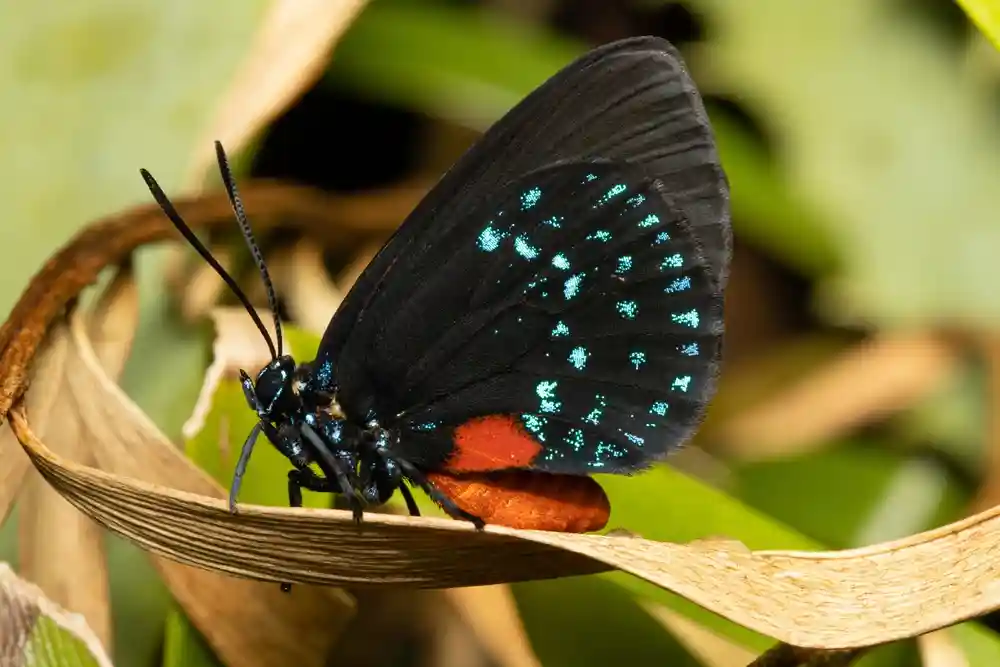
- Fulvous Hairstreak (Electrostrymon angelia)
- Gray Ministreak (Ministrymon azia)
- Mallow Hairstreak (Strymon istapa)
- Miami Blue (Cyclargus thomasi)
- Silver-banded Hairstreak (Chlorostrymon simaethis)
- Allosmaitia fidena
- Strymon columella
- Strymon limenia
Whites and Sulphurs (Pieridae)
- Apricot Sulphur (Phoebis argante)
- Barred Yellow (Eurema daira)
- Cloudless Sulphur (Phoebis sennae)
- Dainty Sulphur (Nathalis iole)
- Florida White (Appias drusilla)
- Giant White (Ganyra josephina)
- Great Southern White (Ascia monuste)
- Hall’s Sulphur (Pyrisitia leuce)
- Hispaniolan Mimic-white (Dismorphia spio)
- Little Yellow (Pyrisitia lisa)
- Lyside Sulphur (Kricogonia lyside)
- Orange-barred Sulphur (Phoebis philea)
- Southern Dogface (Zerene cesonia)
- Tailed Orange (Pyrisitia proterpia)
- Yellow Angled-sulphur (Anteos maerula)
- Eurema elathea elathea
- Eurema priddyi
- Melete salacia
Swallowtail (Papilionidae)
- Androgeus Swallowtail (Papilio androgeus)
- Chequered Swallowtail (Papilio demoleus)
- Polydamas Swallowtail (Battus polydamas)
- Prickly Ash Swallowtail (Papilio pelaus)
- Schaus’ Swallowtail (Papilio aristodemus)
- Eurytides zonaria
- Heraclides machaonides
Skipper (Hesperiidae)
- Three-spotted Skipper (Cymaenes tripunctus)
- Tropical Checkered Skipper (Burnsius oileus)
- Zarucco Duskywing (Erynnis zarucco)
- Zephodes Duskywing (Ephyriades zephodes)
- Choranthus haitensis
- Perichares philetes
- Pyrrhocalles antiqua
- Rhinthon bushi
- Wallengrenia drury
One of the best places to see butterflies in the Dominican Republic is the Jardin Botánico Nacional Gardens.