
Butterflies in China
China has one of the largest butterfly faunas on Earth: about 1,300 species in the classic reference works and more than 2,000 in the newest national checklists, spread from the tropical rainforest of Hainan and Yunnan to the Tibetan Plateau and the birch forests of the north-east. The everyday butterflies are Asian swallowtails, cabbage whites, the Peacock, the Small Tortoiseshell and the pansies and tigers of the south, while the country's treasures are the Golden Kaiser-i-Hind, the Chinese three-tailed swallowtails and the Apollos of the high mountains. China has no official national butterfly, but the Kaiser-i-Hind is protected at the highest level, alongside the giant panda.

On this page
Butterflies of China at a glance
China stretches across almost every climate a butterfly can use, from the monsoon rainforest of Hainan and southern Yunnan, through the subtropical hills of the Yangtze basin, to the cold steppes of Inner Mongolia, the Tibetan Plateau above 4,000 m and the Siberian-style forests of Heilongjiang. The result is a butterfly list that keeps growing. The standard monograph of the 1990s recognised roughly 1,300 species, and the national catalogue published in 2017 raised the total to more than 2,000, which puts China among the three or four richest butterfly countries in the world. Yunnan alone holds several hundred species, more than any other province.
The brush-footed butterflies are by far the largest family, and China is especially rich in the groups that Europe and North America lack: the tigers and crows of the milkweed subfamily, the oakleafs and maps, the sailers and sergeants, the nawabs and archdukes, and a bewildering array of browns, ringlets and bushbrowns. The swallowtails include more than 100 species nationally, from the tropical birdwings to the Apollos of the high mountains, and the blues, hairstreaks, whites and skippers each add hundreds more. Seven metalmarks, the punches and judies of the southern forests, round off the six families.
Signature Chinese butterflies
The Golden Kaiser-i-Hind is the most celebrated butterfly in China, a dark green swallowtail with a golden-yellow hindwing patch that lives in the canopy of evergreen forest in the south-eastern provinces and is one of only two butterflies with Class I state protection, the level given to the giant panda. Its relative, the Kaiser-i-Hind proper, flies in the Himalayan foothills of Yunnan and Tibet. The three-tailed swallowtails of the genus Bhutanitis, black with rippled cream lines, are found in the mountains of Sichuan and Yunnan and are China's other great swallowtail rarity.
The common swallowtails are everywhere. The Asian Swallowtail is the yellow-and-black species of city parks from Beijing to Guangzhou, the Chinese Peacock and the Great Mormon are the large dark ones that visit garden flowers, the Paris Peacock flashes green in the southern forests, and the Old World Swallowtail ranges across the whole north on fennel and wild carrot. Along the Tibetan margins and in the north-west the Apollo and a dozen other Parnassius species replace them, white butterflies with red spots that fly only in short mountain summers.

In the south the brush-foots take over. The Orange Oakleaf of Yunnan and Guangxi is the most famous dead-leaf mimic in the world, the Common Map settles flat on wet rocks with its wings spread like a chart, the Paper Kite drifts through the forests of Hainan and Guangdong like a scrap of tissue, and the Common Tiger, Blue Tiger and Chestnut Tiger are the milkweed butterflies of every southern roadside. Further north the fauna becomes familiar to a European: the Peacock, Small Tortoiseshell, Asian Comma and Painted Lady are the common garden butterflies of the Yangtze valley and the north, and the Chinese Bushbrown is the brown butterfly of shaded paths across the centre and south.

The butterfly year in China
There is no single Chinese butterfly season, because the country spans 35 degrees of latitude. In Hainan and the Xishuangbanna lowlands of Yunnan, butterflies fly all year, with a peak from the end of the rains in October through the dry, warm months to April. In the subtropical belt from Shanghai to Chengdu the season runs from March, when the first Asian Swallowtails and cabbage whites emerge, to November, with the greatest variety in June and again in September. On the north China plain and in Manchuria the year is compressed into May to September, and on the Tibetan Plateau the Apollos and alpine ringlets have only July and early August.
China's most spectacular event is the mass emergence in the Butterfly Valley of Jinping County, in the Honghe prefecture of Yunnan, where in late May and June tens of millions of Junglequeen butterflies (Stichophthalma howqua) hatch within a few weeks and drift through the forest like falling leaves.
Migration is less famous than in the Americas but real. Chestnut Tigers marked in Japan have been recaptured on the Chinese coast and in Taiwan after crossing more than 2,000 km of sea, and Painted Ladies sweep north across the whole country each spring from the deserts of the north-west. Our guide to butterfly migration explains how such journeys are tracked.
Where to see butterflies in China
- Xishuangbanna, Yunnan — the tropical botanical garden at Menglun and the surrounding rainforest, the single richest butterfly area in the country, with birdwings, nawabs, oakleafs and jungle kings.
- Gaoligong Mountains, western Yunnan — a transect from subtropical valley to alpine ridge that passes through most of China's butterfly zones in one day.
- Butterfly Valley, Jinping County, Yunnan — the Junglequeen emergence in late May and June.
- Emei Shan, Sichuan — a sacred mountain whose forest trails hold Bhutanitis swallowtails, Chinese Windmills and a long list of browns.
- Hainan Island — Diaoluoshan and Wuzhishan for Paper Kites, Golden Birdwings and tropical lycaenids.
Host plants and butterfly gardening in China
Chinese gardens have attracted butterflies for two thousand years, and the traditional plants are still the best ones. The key is to pair nectar flowers with the host plants the caterpillars need.
- Citrus, Sichuan pepper and other rue-family trees — the food of the Asian Swallowtail, Chinese Peacock, Great Mormon and Paris Peacock.
- Fennel, wild carrot and coriander — Old World Swallowtail across the north.
- Dutchman's pipe (Aristolochia) — the windmills, roses and, in the far south, the Golden Birdwing.
- Stinging nettle and ramie — Peacock, Small Tortoiseshell, Asian Comma and Indian Red Admiral.
- Milkweeds and Cynanchum vines — the tigers and crows of the south; Magnolia and Michelia — the Kaiser-i-Hind, where it occurs.
- Bamboo and grasses — bushbrowns, palmflies, evening browns and most skippers.
For nectar, Lantana and Buddleja are the mainstays in the south, and Sedum and chrysanthemums keep the autumn tortoiseshells going in the north.
Protected and threatened butterflies
China revised its List of Wildlife under Special State Protection in 2021, and for the first time it gave butterflies serious cover. The Golden Kaiser-i-Hind and the Kaiser-i-Hind are Class I species, which forbids capture, possession and trade without a national permit. Class II protection covers the three-tailed swallowtails of the genus Bhutanitis, the Chinese Luehdorfia of the Yangtze hills, the Apollo and the birdwings. The Kaiser-i-Hinds and the birdwings are also on CITES Appendix II, so they cannot leave the country as specimens without export papers.
The pressures are those of any fast-developing country: forest conversion to rubber and tea in Yunnan and Hainan, urban sprawl across the eastern lowlands, pesticide use in intensive farmland, and a specimen trade that once drove collecting of the rarest swallowtails to near-extinction in parts of Guangxi. The counterweight is a fast-growing network of nature reserves, butterfly monitoring by universities and citizen groups since the 2010s, and the popularity of butterfly valleys and gardens as tourist attractions, which gives intact forest a local value.
Butterflies found in China
273 species listed for China, grouped by family. Linked names have a full profile on this site with pictures of every life stage.
Brush-Footed (Nymphalidae)
 Junonia orithyaBlue Pansy (Junonia orithya)The male blue pansy has hindwings of electric cobalt set with orange-ringed eyespots, and he spends the day sitting on a patch of bare sunlit earth ch
 Mycalesis gotamaChinese Bush Brown (Mycalesis gotama)The Chinese bush brown (Mycalesis gotama) is a small, dull brown grass butterfly of East Asia — Japan, Korea, China, Taiwan and northern Indochina — t
 Polygonia c-albumComma (Polygonia c-album)The comma (Polygonia c-album) is a medium-sized orange-and-brown butterfly of woodland edges, hedgerows and gardens across Europe, North Africa and te
 Phalanta phalanthaLeopard (Phalanta phalantha)The leopard (Phalanta phalantha) is a medium-sized tawny-orange butterfly speckled all over with small black spots and wavy black lines, and it flies
 Cyrestis thyodamasCommon Map (Cyrestis thyodamas)Held flat against a leaf, the common map looks less like an insect than like a page torn from an atlas: a pale cream ground ruled across with dozens o
 Danaus genutiaCommon Tiger (Danaus genutia)Asia's answer to the monarch, the common tiger sails slowly over scrub and garden on tawny orange wings whose every vein is inked in heavy black.
 Hypolimnas bolinaBlue Moon (Hypolimnas bolina)The blue moon, or great eggfly, is a black tropical butterfly whose white wing patches burn electric blue when the light strikes them at the right angKallima inachusOrange Oakleaf (Kallima inachus)Open, it is a blaze of violet-blue and burnt orange.
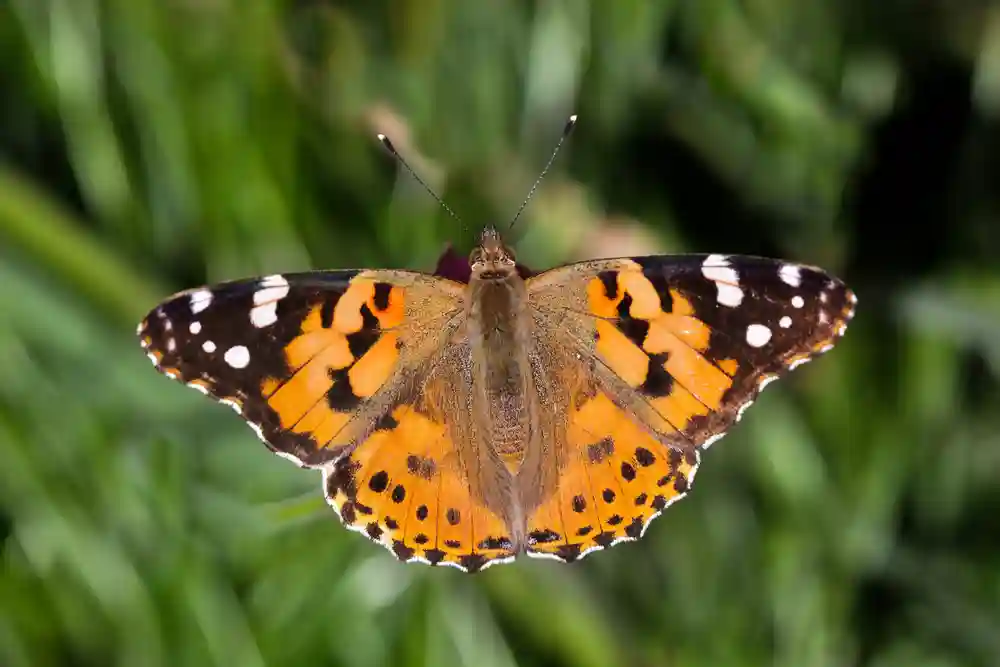 Vanessa carduiPainted Lady (Vanessa cardui)No other butterfly lives on so much of the planet.
 Idea leuconoePaper Kite (Idea leuconoe)The paper kite is a large Southeast Asian milkweed butterfly with semi-transparent chalk-white wings netted in black veins and rows of black spots, an
 Aglais ioPeacock (Aglais io)Four huge eyespots on a rust-red ground make the peacock one of the most recognisable butterflies in Europe.
 Aglais urticaeSmall Tortoiseshell (Aglais urticae)Orange-red with a black-and-yellow chequered front edge and a rim of blue crescents, the small tortoiseshell is the butterfly that turns up on a garde
Show all 118 other brush-footed species names
- Angled Castor (Ariadne ariadne)
- Angled Red Forester (Lethe chandica)
- Asian Comma (Polygonia c-aureum)
- Autumn Leaf (Doleschallia bisaltide)
- Banded Treebrown (Lethe confusa)
- Baron (Euthalia aconthea)
- Bhutan Seargeant (Athyma jina)
- Black Prince (Rohana parisatis)
- Black-spotted Labyrinth (Neope muirheadii)
- Blackvein Sergeant (Athyma ranga)
- Blue Admiral (Kaniska canace)
- Ceylon Blue Glassy Tiger (Ideopsis similis)
- Blue Spotted Crow (Euploea midamus)
- Blue Tiger (Tirumala limniace)
- Chestnut Tiger (Parantica sita)
- Chocolate Pansy (Junonia iphita)
- Chocolate Tiger (Parantica melaneus)
- Clear Sailer (Neptis nata)
- Clipper (Parthenos sylvia)
- Colour Sergeant (Athyma nefte)
- Commander (Moduza procris)
- Common Beak (Libythea lepita)
- Common Crow (Euploea core)
- Common Cruiser (Vindula erota)
- Common Duffer (Discophora sondaica)
- Common Earl (Tanaecia julii)
- Common Five-ring (Ypthima baldus)
- Common Jester (Symbrenthia lilaea)
- Common Lascar (Pantoporia hordonia)
- Common Maplet (Chersonesia risa)
- Common Nawab (Polyura athamas)
- Common Palmfly (Elymnias hypermnestra)
- Common Sailer (Neptis hylas)
- Common Silverstreak (Lethe europa)
- Common Yeoman (Cirrochroa tyche)
- Constable (Dichorragia nesimachus)
- Courtesan (Euripus nyctelius)
- Danaid Eggfly (Hypolimnas misippus)
- Dark Blue Tiger (Tirumala septentrionis)
- Dark Evening Brown (Melanitis phedima)
- Dark Green Fritillary (Argynnis aglaja)
- Darkbrand Bushbrown (Mycalesis mineus)
- Dryad (Minois dryas)
- Empress (Sasakia funebris)
- Evening Brown (Melanitis leda)
- Five-dot Sergeant (Limenitis sulpitia)
- Gaudy Baron (Euthalia lubentina)
- Glassy Tiger (Parantica aglea)
- Gray Count (Tanaecia lepidea)
- Gray Pansy (Junonia atlites)
- Great Nawab (Polyura eudamippus)
- Himalayan Sergeant (Athyma opalina)
- Hungarian Glider (Neptis rivularis)
- Indian Fritillary (Argynnis hyperbius)
- Indian Red Admiral (Vanessa indica)
- Japanese Emperor (Sasakia charonda)
- Jungle King (Thauria lathyi)
- Jungle-glory (Thaumantis diores)
- Large Faun (Faunis eumeus)
- Large Silverstripe (Argynnis childreni)
- Lemon Pansy (Junonia lemonias)
- Leopard Lacewing (Cethosia cyane)
- Lesser Purple Emperor (Apatura ilia)
- Malay Baron (Euthalia monina)
- Marbled Map (Cyrestis cocles)
- Orange Staff Sergeant (Athyma cama)
- Pachmarhi Bushbrown (Mycalesis perseoides)
- Pallas' Fritillary (Argynnis laodice)
- Pallas' Sailer (Neptis sappho)
- Pasha (Herona marathus)
- Peacock Pansy (Junonia almana)
- Plain Tiger (Danaus chrysippus)
- Popinjay (Stibochiona nicea)
- Red Lacewing (Cethosia biblis)
- Red Ring Skirt (Hestina assimilis)
- Ringlet (Aphantopus hyperantus)
- Rustic (Cupha erymanthis)
- Sergeant Emperor (Mimathyma chevana)
- Shan Nawab (Polyura nepenthes)
- Short Banded Sailer (Phaedyma columella)
- Silver-washed Fritillary (Argynnis paphia)
- Single Ring Bushbrown (Mycalesis sangaica)
- Siren (Hestina persimilis)
- Small Staff Sergeant (Athyma zeroca)
- Small Yellow Sailer (Neptis miah)
- South China Bushbrown (Mycalesis mucianus)
- Southern Sullied Sailer (Neptis clinia)
- Spotted Leopard Butterfly (Timelaea maculata)
- Staff Sergeant (Athyma selenophora)
- Stately Nawab (Polyura dolon)
- Straight-banded Treebrown (Lethe verma)
- Striated Ringlet (Ypthima multistriata)
- Striped Blue Crow (Euploea mulciber)
- Studded Sergeant (Athyma asura)
- Sullied sailer (Neptis soma)
- Tabby (Pseudergolis wedah)
- Tawny Coster (Acraea terpsicore)
- Tiger Palmfly (Elymnias nesaea)
- White-edged Blue Baron (Euthalia phemius)
- Yellow Coster (Telchinia issoria)
- Yellow Dryad (Aemona amathusia)
- Yellow Pansy (Junonia hierta)
- Yellow Sailer (Neptis ananta)
- Yellow-tipped Archduke (Lexias pardalis)
- Yerbury's Sailer (Neptis yerburii)
- Charaxes bernardus
- Polyura narcaea
- Lethe syrcis
- Argynnis sagana
- Mycalesis francisca
- Tanaecia jahnu
- Tanaecia whiteheadi
- Helcyra superba
- Choaspes hemixanthus
- Araschnia prorsoides
- Timelaea albescens
- Mandarinia regalis
- Euthalia pratti
Gossamer-Winged (Lycaenidae)
 Celastrina argiolusHolly Blue (Celastrina argiolus)The holly blue is the small silvery-blue butterfly that flies round the tops of hedges and ivy-covered walls in spring, well above the height of every
 Lycaena phlaeasCommon Copper (Lycaena phlaeas)The common copper (Lycaena phlaeas), known as the small copper in Europe and the American copper in North America, is a small, fast-flying butterfly o
Show all 48 other gossamer-winged species names
- Alpine Argus (Agriades orbitulus)
- Angled Sunbeam (Curetis acuta)
- Apefly (Spalgis epius)
- Broad Spark (Sinthusa chandrana)
- Chocolate Royal (Remelana jangala)
- Ciliate Blue (Anthene emolus)
- Club Silverline (Cigaritis syama)
- Common Acacia Blue (Surendra quercetorum)
- Common Cerulean (Jamides celeno)
- Common Flash (Rapala nissa)
- Common Hedge Blue (Acytolepis puspa)
- Common Pierrot (Castalius rosimon)
- Dark Grass Blue (Zizeeria karsandra)
- Dark Himalayan Oakblue (Arhopala rama)
- Dusky Sapphire (Heliophorus eventa)
- Eros Blue (Polyommatus eros)
- Falcate Oak Blue (Mahathala ameria)
- Fluffy Tit (Zeltus amasa)
- Forest Pierrot (Taraka hamada)
- Forget-me-not (Catochrysops strabo)
- Gram Blue (Euchrysops cnejus)
- Green Flash (Artipe eryx)
- King Cerulean (Jamides bochus)
- Lesser Grass-blue (Zizina otis)
- Lime Blue (Chilades lajus)
- Long-banded Silverline (Cigaritis lohita)
- Long-tailed Blue, Pea Blue (Lampides boeticus)
- Long-tailed Line-blue (Prosotas nora)
- Malayan (Megisba malaya)
- Metallic Cerulean (Jamides alecto)
- Pale Grass Blue (Pseudozizeeria maha)
- Pale Hedge Blue (Udara dilecta)
- Plains Cupid (Luthrodes pandava)
- Plumbago Blue (Leptotes plinius)
- Powdered Oakblue (Arhopala bazalus)
- Purple Line-blue (Prosotas dubiosa)
- Purple Sapphire (Heliophorus epicles)
- Reverdin's Blue (Plebejus argyrognomon)
- Short-tailed Blue (Cupido argiades)
- Silverstreak Blue (Iraota timoleon)
- Slate Flash (Rapala manea)
- Straight Pierrot (Caleta roxus)
- White-banded Line-blue (Nacaduba kurava)
- Yamfly (Loxura atymnus)
- Heliophorus saphir
- Heliophorus ila
- Zizula hylax
- Lycaena li
Whites and Sulphurs (Pieridae)
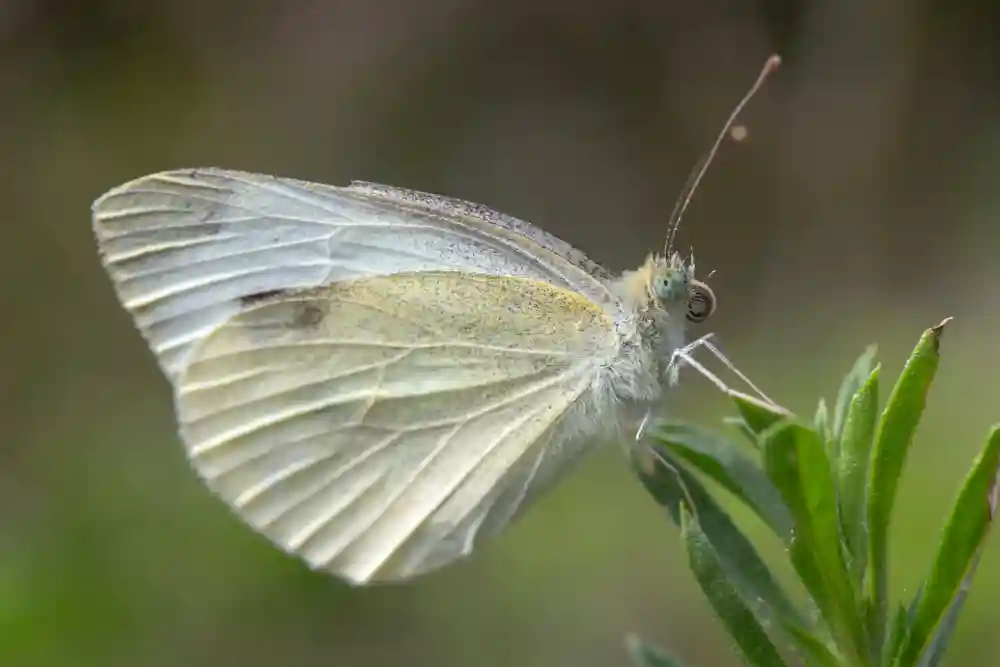 Pieris rapaeCabbage White (Pieris rapae)The cabbage white is probably the most-seen butterfly on the planet: a small, chalk-white insect with one or two black spots that drifts over allotmenPieris rapaeCabbage White (Pieris rapae)The cabbage white is probably the most-seen butterfly on the planet: a small, chalk-white insect with one or two black spots that drifts over allotmen
Show all 25 other whites and sulphurs species names
- Black-spotted White (Leptosia nina)
- Black-veined White (Aporia crataegi)
- Chocolate Albatross (Appias lyncida)
- Common Grass Yellow (Eurema hecabe)
- Common Gull (Cepora nerissa)
- Dark Clouded Yellow (Colias fieldii)
- Eastern Bath White (Pontia edusa)
- Gray-veined White (Pieris melete)
- Great Orange Tip (Hebomoia glaucippe)
- Hill Jezebel (Delias belladonna)
- Indian Cabbage White (Pieris canidia)
- Lemon Migrant (Catopsilia pomona)
- Lesser Brimstone (Gonepteryx mahaguru)
- Lesser Gull (Cepora nadina)
- Painted Jezebel (Delias hyparete)
- Redbase Jezebel (Delias pasithoe)
- Redspot Jezebel (Delias descombesi)
- Striped Albatross (Appias libythea)
- Three-spot Grass Yellow (Eurema blanda)
- White Albatross (Appias albina)
- White Migrant (Catopsilia pyranthe)
- Yellow Orange Tip (Ixias pyrene)
- Yellow Tip (Anthocharis scolymus)
- Gonepteryx amintha
- Aporia goutellei
Metalmark (Riodinidae)
Show all 7 metalmark species names
- Broad-banded Punch (Dodona deodata)
- Common Punch (Dodona durga)
- Dark Judy (Abisara fylla)
- Orange Punch (Dodona egeon)
- Plum Judy (Abisara echerius)
- Punchinello (Zemeros flegyas)
- Tailed Judy (Abisara neophron)
Swallowtail (Papilionidae)
Papilio memnonGreat Mormon (Papilio memnon)One of the largest swallowtails in Asia, the great Mormon is really several butterflies in one. Lamproptera megesGreen Dragontail (Lamproptera Meges)Half the wing is glass, the tails are longer than the body, and the flight is a blurred hover over wet sand.
 Papilio machaonOld World Swallowtail (Papilio machaon)The Old World swallowtail is a large yellow-and-black butterfly with a tail on each hindwing and a red eyespot above it, found right across Europe, No
Show all 29 other swallowtail species names
- Alpine Black Swallowtail (Papilio maackii)
- Asian Swallowtail (Papilio xuthus)
- Black-and-white Helen Swallowtail (Papilio nephelus)
- Blue Triangle (Graphium sarpedon)
- Chequered Swallowtail (Papilio demoleus)
- Byasa confusa
- Common Birdwing (Troides helena)
- Common Jay (Graphium doson)
- Common Mime (Papilio clytia)
- Common Mormon (Papilio polytes)
- Common Peacock (Papilio bianor)
- Common Rose (Pachliopta aristolochiae)
- Common Windmill (Byasa polyeuctes)
- Dragon Swallowtail (Sericinus montela)
- Five-bar Swallowtail (Graphium antiphates)
- Glacial Apollo (Parnassius glacialis)
- Glassy Bluebottle (Graphium cloanthus)
- Golden Birdwing (Troides aeacus)
- Green-spotted Triangle (Graphium agamemnon)
- Long-tailed Spangle (Papilio macilentus)
- Paris Peacock (Papilio paris)
- Red Helen (Papilio helenus)
- Southern Chinese Peacock (Papilio dialis)
- Spangle Swallowtail (Papilio protenor)
- Veined Jay (Graphium chironides)
- White Dragontail (Lamproptera curius)
- Papilio elwesi
- Papilio syfanius
- Calinaga davidis
Skipper (Hesperiidae)
Show all 27 skipper species names
- Banded Demon (Notocrypta paralysos)
- Chestnut Angle (Odontoptilum angulata)
- Chestnut Bob (Iambrix salsala)
- Chinese Dart (Potanthus confucius)
- Chocolate Demon (Ancistroides nigrita)
- Colon Swift (Caltoris cahira)
- Common Bush Hopper (Ampittia dioscorides)
- Common Straight Swift (Parnara guttata)
- Dark Palm Dart (Telicota bambusae)
- Forest Hopper (Astictopterus jama)
- Fulvous Pied Flat (Pseudocoladenia dan)
- Grass Demon (Udaspes folus)
- Immaculate Snow Flat (Tagiades gana)
- Indian Awlking (Choaspes benjaminii)
- Indian Palm Bob (Suastus gremius)
- Pale Green Awlet (Bibasis gomata)
- Restricted Demon (Notocrypta curvifascia)
- Rice Swift (Borbo cinnara)
- Rounded Palm-redeye (Erionota torus)
- Slate Awl (Hasora anura)
- Small Branded Swift (Pelopidas mathias)
- Spotted Snow Flat (Tagiades menaka)
- Water Snow Flat (Tagiades litigiosa)
- Yellow Flat (Mooreana trichoneura)
- Abraximorpha davidii
- Isoteinon lamprospilus
- Ampittia virgata
How to identify butterflies in China
Region matters more than anything. A big yellow-and-black swallowtail in a Beijing park is the Asian Swallowtail; on a Shanxi hillside on fennel it is the Old World Swallowtail; a large dark one shot with green in a Guangdong garden is the Chinese Peacock, and if the green forms a broad band it is the Paris Peacock. A white butterfly with red spots on a mountain pass in Sichuan or Xinjiang is one of the Apollos. In the south an orange butterfly with black veins is the Common Tiger, a pale blue-and-black one with a slow flight is the Blue Tiger, and a butterfly that vanishes when it lands on leaf litter is the Orange Oakleaf.
Small brown butterflies with eyespots on shady paths are bushbrowns or five-rings, black-and-white gliders along streams are sailers and sergeants, and the tiny blues on lawns are almost always the Pale Grass Blue, the commonest butterfly in Chinese cities. China's fauna overlaps heavily with its neighbours, so the butterflies of Japan page covers many of the same northern and central species and the butterflies of India page many of the southern ones; every other country is listed under Butterflies of the World.
Frequently asked questions about Chinese butterflies
How many species of butterflies are there in China?
Estimates range from about 1,300 species in the standard monographs of the 1990s to more than 2,000 in the national catalogue published in 2017, which makes China one of the richest butterfly countries in the world. Yunnan province holds more species than any other, and the tropical south-west and Hainan are the centres of diversity.
What is the national butterfly of China?
China has no officially designated national butterfly. The Golden Kaiser-i-Hind (Teinopalpus aureus), a green-and-gold swallowtail of the southern evergreen forests, is treated as the country's flagship and is one of only two butterflies with Class I state protection, the same level as the giant panda. Its image is widely used in Chinese conservation campaigns.
Which butterflies are most common in China?
In cities and farmland the Small White, Indian Cabbage White, Pale Grass Blue, Asian Swallowtail and Small Copper are the most common butterflies, with the Peacock, Small Tortoiseshell and Asian Comma in the north and centre. In the south the Common Tiger, Blue Pansy, Common Mormon, Chinese Bushbrown and the grass yellows are the everyday species of gardens and roadsides.
Are tiger butterflies found in China?
Yes. The milkweed butterflies known as tigers are common across southern China. The Common Tiger, Plain Tiger, Blue Tiger, Dark Blue Tiger, Glassy Tiger and Chestnut Tiger all occur, and the Chestnut Tiger is a long-distance migrant that crosses the East China Sea between Japan, the Chinese coast and Taiwan. Their caterpillars feed on milkweeds and related vines, which make the adults distasteful to birds.
What pansy butterflies live in China?
Six pansies of the genus Junonia fly in China, mainly in the south: the Blue Pansy, Peacock Pansy, Lemon Pansy, Yellow Pansy, Chocolate Pansy and Grey Pansy. All are medium-sized brush-footed butterflies with prominent eyespots on the wings that flutter low over open, sunny ground and bask with their wings flat. The Blue Pansy reaches as far north as the Yangtze in warm years.
Is the Common Sailer found in China?
Yes, the Common Sailer (Neptis hylas) is one of the most widespread butterflies in central and southern China. It is black with rows of white bands and spots and is named for its gliding flight, a few flaps followed by a long sail on flat wings, along forest edges and streams. China has more than 40 sailers and sergeants in the same pattern, told apart by the arrangement of the white markings.
Why are some Chinese butterflies called sergeants and commanders?
The names come from the British naturalists who named Asian butterflies in the nineteenth century and saw military insignia in the bold white bands and stripes on their dark wings. Sergeants (Athyma), staff sergeants, the Commander (Moduza procris), the Constable and the Courtesan are all brush-footed butterflies of the same forest-edge group, and the names are still used across China, India and South-East Asia.
Which crow butterflies are native to China?
Several crows of the genus Euploea live in southern China, including the Common Crow, Blue Spotted Crow and Striped Blue Crow. They are large, slow-flying, dark brown butterflies with white spots and often a purple-blue sheen, protected from birds by the poisonous milkweed and oleander plants their caterpillars eat. Their pattern is copied by harmless mimics such as the female Great Eggfly.
Which butterflies are protected in China?
Under the 2021 list of Wildlife under Special State Protection, the Golden Kaiser-i-Hind and the Kaiser-i-Hind are Class I protected species, and the three-tailed swallowtails (Bhutanitis), the Chinese Luehdorfia, the Apollo and the birdwings are Class II. Capturing or trading them without a permit is a criminal offence, and the Kaiser-i-Hinds and birdwings are also listed on CITES Appendix II.
When is the best time to see butterflies in China?
It depends on the region. Southern Yunnan and Hainan are good all year, best from October to April; the Yangtze provinces peak in June and September; the north around Beijing is best from late May to August; and the Tibetan Plateau and high Sichuan only in July and early August. The Butterfly Valley emergence at Jinping in Yunnan happens in late May and June.
Published September 20, 2023 · Last updated September 21, 2026