
Butterflies in Ireland
Ireland has around 35 butterfly species seen every year, about 32 of them breeding residents plus three regular migrants, the Painted Lady, Red Admiral and Clouded Yellow, one of the shortest lists of any European country because the island was cut off from Britain and the continent soon after the last Ice Age. The familiar garden species are the Small Tortoiseshell, Peacock, Speckled Wood and the whites, while the specialities are the Marsh Fritillary of damp grassland, the Cryptic Wood White, described as a species only in 2011, and the Pearl-bordered Fritillary, which in Ireland flies only on the limestone of the Burren. Ireland has no national butterfly, and the Old World Swallowtail and Monarch are rare vagrants, not residents.

On this page
- Butterflies found in Ireland
- Butterflies of Ireland at a glance
- Signature Irish butterflies
- The Irish butterfly calendar
- Where to see butterflies in Ireland
- Host plants and butterfly gardening in Ireland
- Declines, the Irish Red List and conservation
- Vagrants and rare visitors to Ireland
- Frequently asked questions
Butterflies of Ireland at a glance
Ireland is a mild, wet island at the Atlantic edge of Europe, and its butterfly fauna is small for the same reason its reptile fauna is: the land bridge to Britain drowned early, before most species had recolonised after the ice. Around 35 butterflies are recorded every year on the island, counting the Republic and Northern Ireland together, of which about 32 breed. Britain has 59. Missing from Ireland are the Purple Emperor, White Admiral, Swallowtail, Marbled White and most of the blues, skippers and hairstreaks.
What Ireland lacks in variety it makes up in abundance. The brush-footed butterflies are the largest family, with the vanessids, four resident fritillaries and the browns of every hedgerow and dune; the whites and sulphurs include the country's most widespread butterfly, the Green-veined White; the blues, coppers and hairstreaks number just nine, and there are only two established skippers. The island also has butterflies of its own: the Cryptic Wood White, separated from the Wood White in 2011, is found across Ireland but almost nowhere in Britain, and several Irish populations are distinct subspecies.
Signature Irish butterflies
The Marsh Fritillary is Ireland's conservation flagship, a chequered orange, cream and brown butterfly of damp, tussocky grassland where devil's-bit scabious grows. It is the only Irish butterfly protected under the EU Habitats Directive, and Ireland holds some of the most important remaining colonies in Europe, from the Burren to the wet grasslands of Fermanagh and Donegal.
The Burren of County Clare is the other headline. Its limestone pavement and flower-rich grassland hold the Pearl-bordered Fritillary at its only Irish sites, in May, together with the Brown Hairstreak, the true Wood White, the Dingy Skipper and the Small Blue, the smallest Irish butterfly. The Dark Green Fritillary flies over dunes and limestone in July, and the Silver-washed Fritillary, the largest resident, glides through oak and hazel woodland at the same season.

Gardens and hedgerows belong to the vanessids: the Small Tortoiseshell and Peacock on nettles, the migrant Red Admiral and Painted Lady, and the Comma, which was absent from Ireland until it colonised County Wexford around the turn of the century and has since spread across the south and east. The Orange-tip and Green-veined White mark spring in every damp lane, the Brimstone is confined to the midlands and west where its buckthorn grows, and the Common Blue, Small Copper and Holly Blue are the three small butterflies most people learn first.

The Irish butterfly calendar
The Irish year begins with the hibernators. Small Tortoiseshells, Peacocks and Brimstones wake in sheds and ivy on the first mild days of March, joined by the Comma in the south-east; the winter strategy is described in our guide to where butterflies go in the winter. April brings the Holly Blue and the first Green-veined Whites, and late April to May is the spring peak, with the Orange-tip, Speckled Wood, Cryptic Wood White, Dingy Skipper, Green Hairstreak on heath and bog margins, and the Burren's Pearl-bordered Fritillary.
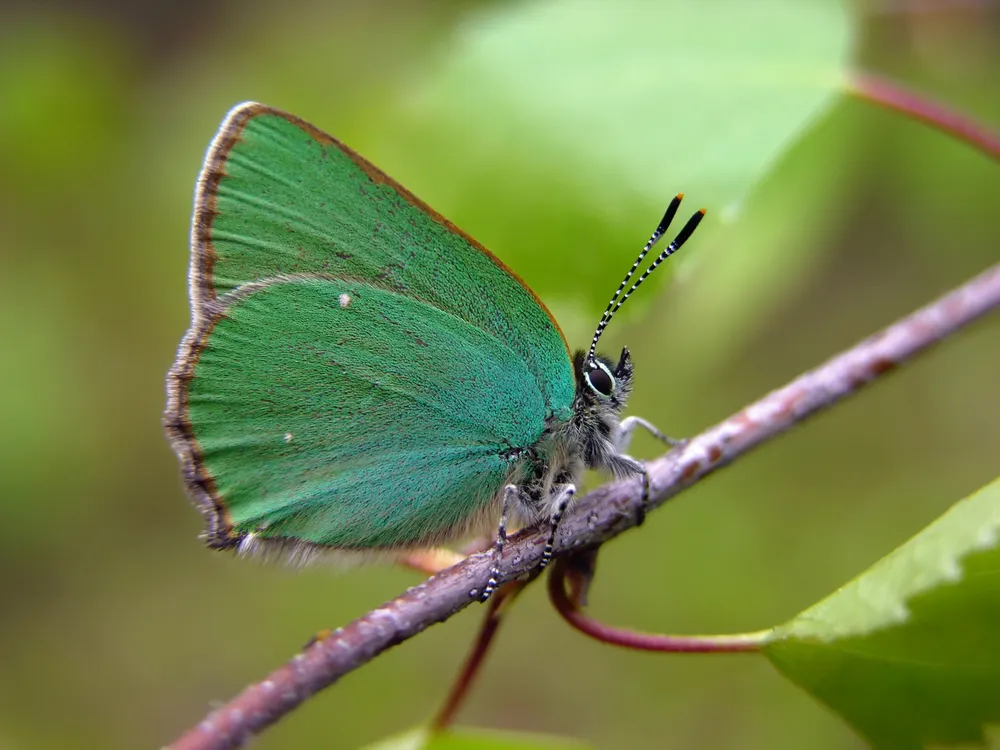
Numbers climb through June, when the Common Blue, Small Heath and Marsh Fritillary emerge, to a peak in July and the first half of August: Meadow Brown and Ringlet fill the grasslands, the Gatekeeper appears on the south-east coast, the fritillaries and the Grayling fly on dunes and limestone, and the Purple Hairstreak dances over oak crowns in the evening. In good years the Clouded Yellow arrives in numbers from the south and breeds on clover into the autumn.
September and October are Red Admiral months, with butterflies feeding on ivy blossom and windfall fruit before most leave southwards, though in the mild south-west a growing number now overwinter. Why Painted Lady numbers swing from a handful to millions between years is covered in our butterfly migration guide.
Where to see butterflies in Ireland
- The Burren, County Clare — the richest butterfly area in Ireland, with more than 30 species; May for the Pearl-bordered Fritillary, June for the Marsh Fritillary, late summer for the Brown Hairstreak.
- Bog of Allen, County Kildare — Lullymore and the surrounding cutaway bog for the Large Heath, Marsh Fritillary and Green Hairstreak.
- Raven Nature Reserve, County Wexford — dunes and pinewood near Curracloe for the Dark Green Fritillary, Small Blue and Grayling, and the area where the Comma and Essex Skipper first settled in Ireland.
- Howth Head and the Dublin coast — Grayling, Small Blue and Wall Brown on the sea cliffs.
- Killarney National Park, County Kerry — Silver-washed Fritillary and Purple Hairstreak in the oakwoods, and the first place to look for a vagrant Monarch after an autumn Atlantic storm.
Almost every Irish species also flies across the water, so the fuller list for the butterflies of the United Kingdom is the natural comparison; the continental faunas under Butterflies of the World show what never made the crossing.
Host plants and butterfly gardening in Ireland
An Irish butterfly garden needs shelter from the wind, sun and the right caterpillar host plants, most of which are native and free.
- Common nettle in full sun — Small Tortoiseshell, Peacock, Red Admiral and Comma.
- Cuckooflower and garlic mustard — Orange-tip and Green-veined White.
- Holly and ivy — the Holly Blue's spring and summer broods in turn.
- Bird's-foot trefoil and kidney vetch — Common Blue and Small Blue.
- Devil's-bit scabious — the Marsh Fritillary, if there is a wet meadow nearby.
- Long grass and a hedge — Meadow Brown, Ringlet, Speckled Wood and Small Heath breed in unmown tussocks.
- Purging buckthorn — the only food of the Brimstone caterpillar, and the reason the butterfly is missing from most of the east and north.
Nectar plants that stand up to Irish weather include marjoram, knapweed, devil's-bit scabious, hebe, buddleia and, above all, flowering ivy, which feeds the last Red Admirals of October.
Declines, the Irish Red List and conservation
The Irish Butterfly Monitoring Scheme, run by the National Biodiversity Data Centre with volunteers walking fixed routes since 2008, shows a decline in overall butterfly abundance of roughly a third in its first fifteen years. The 2010 Irish Red List rated the Pearl-bordered Fritillary and the Wall Brown as Endangered, and the Marsh Fritillary, Large Heath, Small Blue and several more as Vulnerable or Near Threatened; the Wall Brown, once common inland, has retreated to the coasts, and the Small Blue has gone from many of its old dune sites.
The pressures are drainage and agricultural improvement of wet grassland, peat extraction on the raised bogs, the loss of hedgerows and unimproved pasture, scrub encroachment on the Burren where cattle no longer graze in winter, and increasingly wet summers. Conservation is led by the Burren Programme's farmer payments for traditional winterage grazing, Marsh Fritillary habitat schemes in the west, and the Irish Peatland Conservation Council's work on the Bog of Allen. A few species are moving the other way: the Comma, Essex Skipper and Gatekeeper have all arrived or spread within the past twenty-five years as the climate warms.
Butterflies found in Ireland
45 species listed for Ireland, grouped by family. Linked names have a full profile on this site with pictures of every life stage.
Brush-Footed (Nymphalidae)
 Polygonia c-albumComma (Polygonia c-album)The comma (Polygonia c-album) is a medium-sized orange-and-brown butterfly of woodland edges, hedgerows and gardens across Europe, North Africa and te
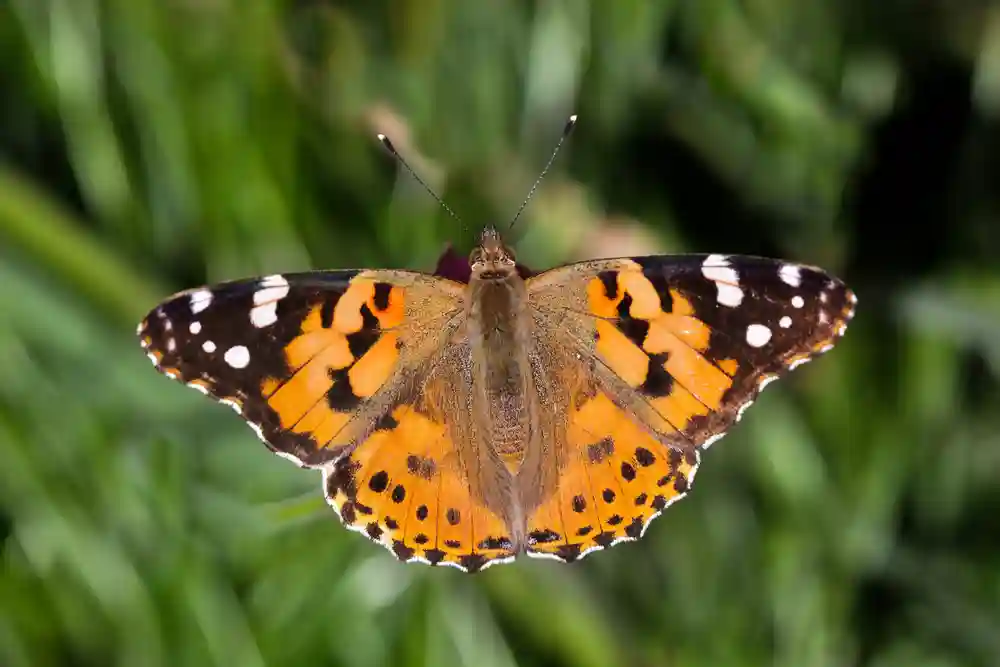 Vanessa carduiPainted Lady (Vanessa cardui)No other butterfly lives on so much of the planet.
 Aglais ioPeacock (Aglais io)Four huge eyespots on a rust-red ground make the peacock one of the most recognisable butterflies in Europe.
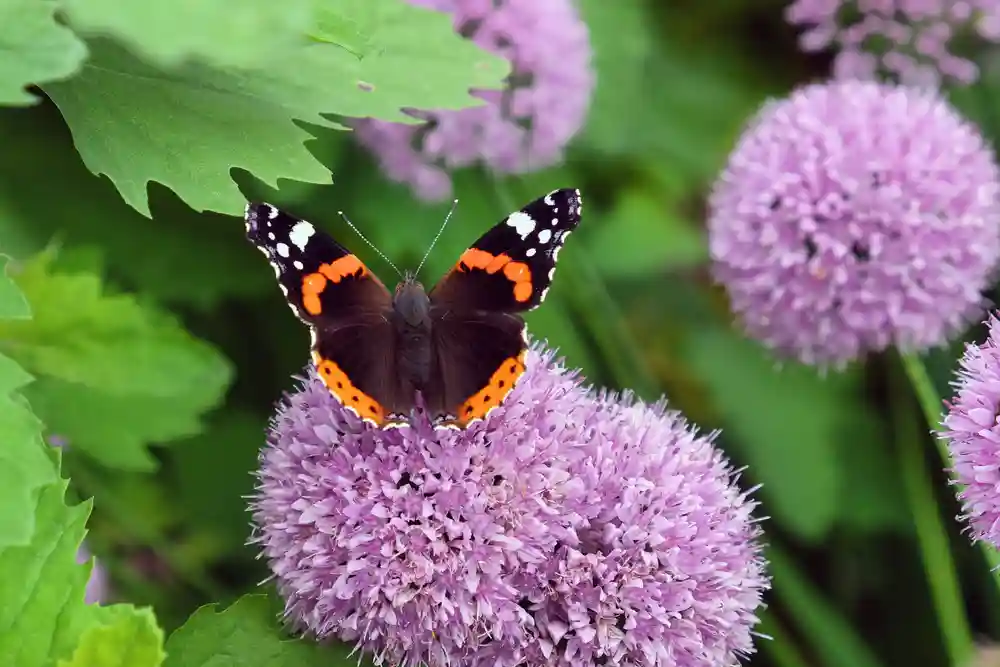 Vanessa atalantaRed Admiral (Vanessa atalanta)The red admiral (Vanessa atalanta) is a medium-sized blackish butterfly marked with one bright orange-red band across each forewing and a scatter of wAglais urticaeSmall Tortoiseshell (Aglais urticae)Orange-red with a black-and-yellow chequered front edge and a rim of blue crescents, the small tortoiseshell is the butterfly that turns up on a garde
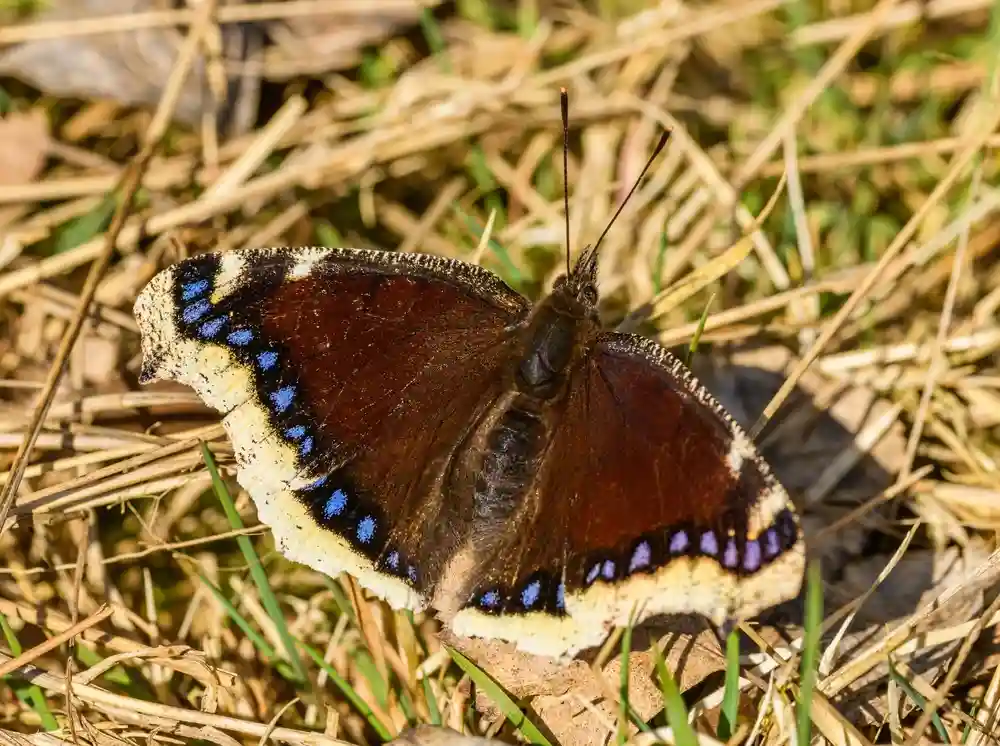 Nymphalis antiopaMourning Cloak (Nymphalis antiopa)The mourning cloak (Nymphalis antiopa) is a large dark butterfly of woodland, riverbank and suburb across North America and temperate Eurasia, and not
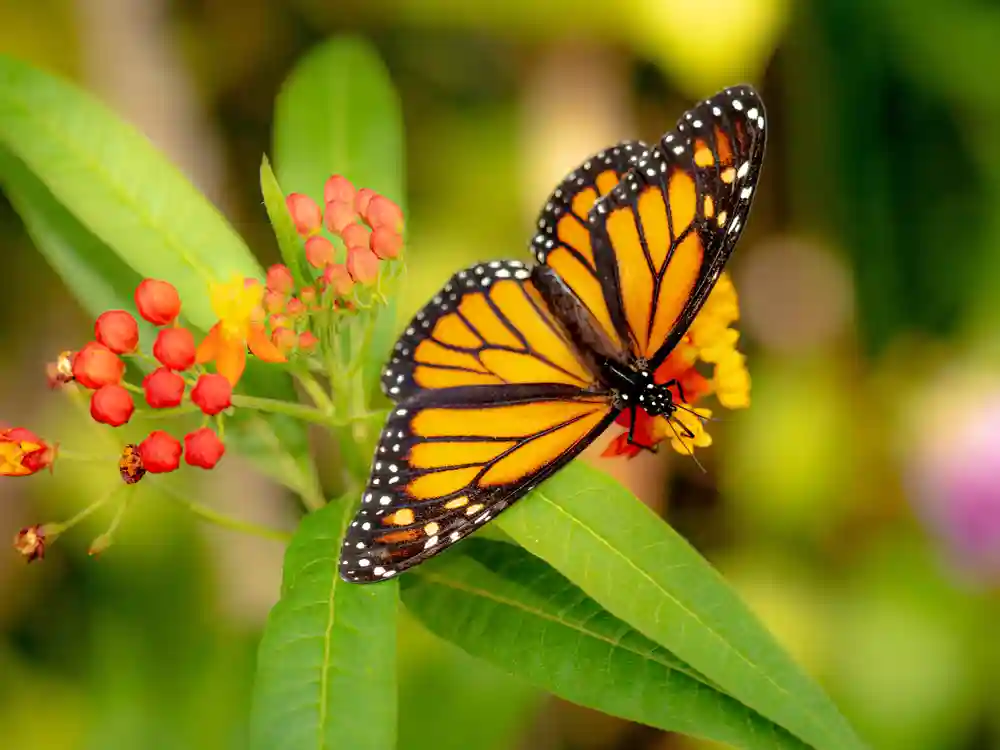 Danaus plexippusMonarch (Danaus plexippus)The monarch is a large orange butterfly with black-outlined wing veins and a black, white-spotted border, found across North America and now on severa
Show all 15 other brush-footed species names
- Dark Green Fritillary (Speyeria aglaja)
- Grayling (Hipparchia semele)
- Hedge Brown (Pyronia tithonus)
- Marsh Fritillary (Euphydryas aurinia)
- Meadow Brown (Maniola jurtina)
- Pearl-bordered Fritillary (Boloria euphrosyne)
- Ringlet (Aphantopus hyperantus)
- Silver-washed Fritillary (Argynnis paphia)
- Small Heath (Coenonympha pamphilus)
- Speckled Wood (Pararge aegeria)
- Common Ringlet (Coenonympha tullia)
- Wall Brown (Lasiommata megera)
- Map (Araschnia levana)
- Queen of Spain Fritillary (Issoria lathonia)
- American Lady (Vanessa virginiensis)
Gossamer-Winged (Lycaenidae)
 Polyommatus icarusCommon Blue (Polyommatus Icarus)The common blue is a small grassland butterfly of Europe, North Africa and temperate Asia in which the male is violet-blue above and the female mostlyCallophrys rubiGreen Hairstreak (Callophrys rubi)The only butterfly in Europe with plain green undersides, the green hairstreak spends its whole adult life with its wings shut, so the brown upperside
 Celastrina argiolusHolly Blue (Celastrina argiolus)The holly blue is the small silvery-blue butterfly that flies round the tops of hedges and ivy-covered walls in spring, well above the height of every
 Neozephyrus quercusPurple Hairstreak (Neozephyrus quercus)The purple hairstreak is a small silvery-grey butterfly of oak woodland across Europe, North Africa and western Asia, and it is identified in flight bCupido minimusSmall Blue (Cupido minimus)The small blue is Britain's smallest butterfly, a sooty brown insect barely an inch across that lives in tight colonies on chalk and limestone grassla
 Lycaena phlaeasCommon Copper (Lycaena phlaeas)The common copper (Lycaena phlaeas), known as the small copper in Europe and the American copper in North America, is a small, fast-flying butterfly o
- Brown Hairstreak (Thecla betulae)
- Short-tailed Blue (Cupido argiades)
- Geranium Bronze (Cacyreus marshalli)
Whites and Sulphurs (Pieridae)
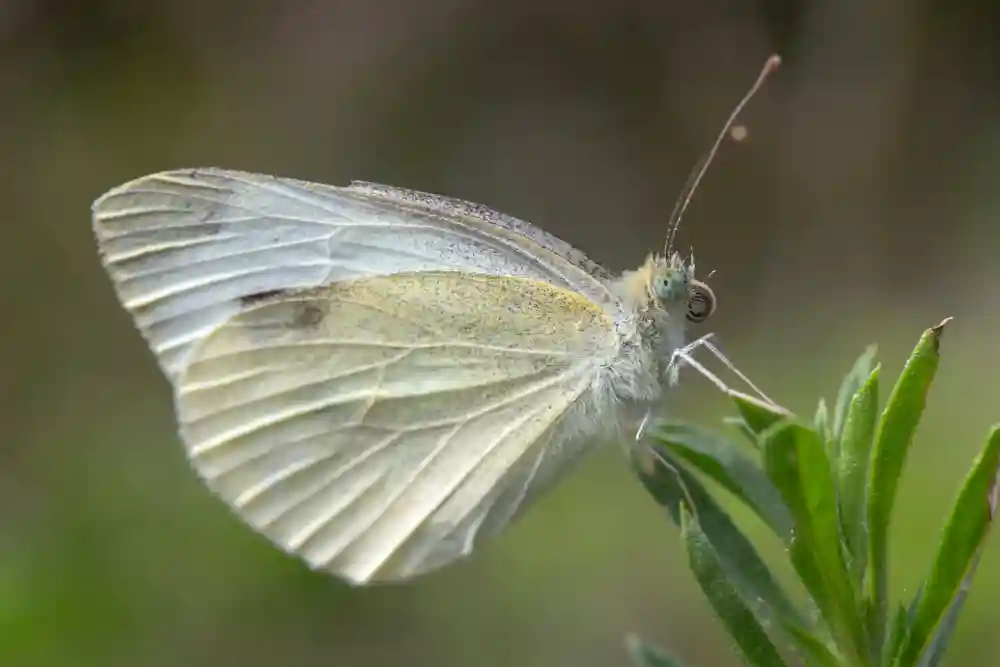 Pieris rapaeCabbage White (Pieris rapae)The cabbage white is probably the most-seen butterfly on the planet: a small, chalk-white insect with one or two black spots that drifts over allotmen
 Colias croceusClouded Yellow (Colias croceus)The clouded yellow (Colias croceus) is a fast, low-flying golden-orange butterfly of open grassland, breeding around the Mediterranean and North Afric
 Gonepteryx rhamniBrimstone (Gonepteryx rhamni)The brimstone is a large, leaf-shaped yellow butterfly of woodland edges, hedgerows and gardens across Europe, North Africa and temperate Asia, and th
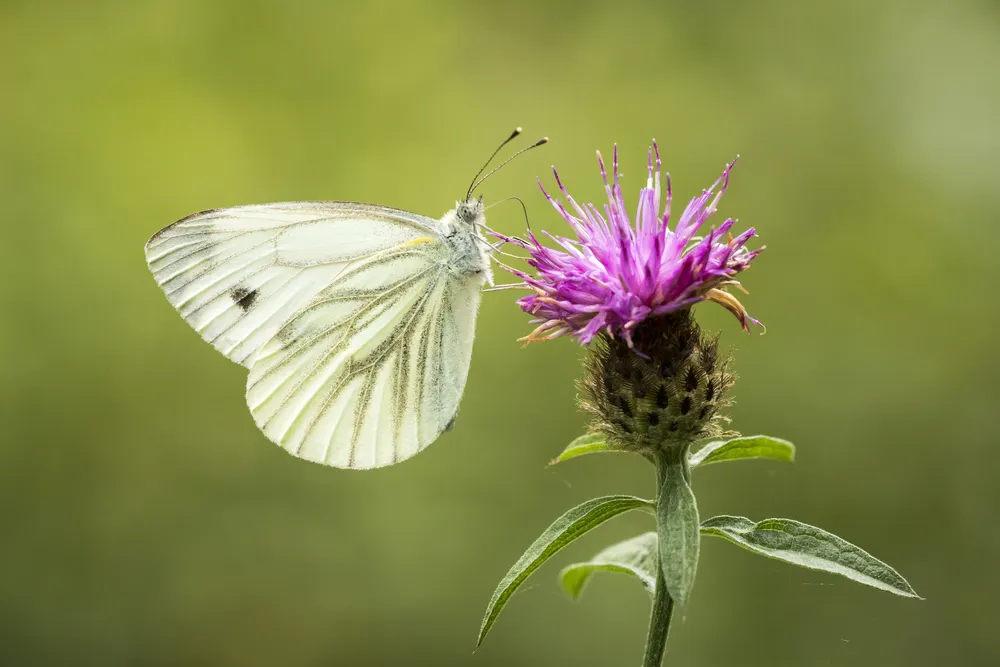 Pieris napiGreen-veined White (Pieris napi)The green-veined white (Pieris napi) is a medium-sized white butterfly of damp meadows, woodland rides, hedgerows and stream banks across Europe, Nort
 Anthocharis cardaminesOrange-tip (Anthocharis cardamines)The orange-tip is a small white butterfly of damp meadows, hedgerows, woodland rides and gardens across Europe and temperate Asia, and the male's defiPieris rapaeCabbage White (Pieris rapae)The cabbage white is probably the most-seen butterfly on the planet: a small, chalk-white insect with one or two black spots that drifts over allotmen
- Berger's Clouded Yellow (Colias alfacariensis)
- Pale Clouded Yellow (Colias hyale)
- Leptidea juvernica
- Wood White (Leptidea sinapis)
Swallowtail (Papilionidae)
Skipper (Hesperiidae)
- European Skipper (Thymelicus lineola)
- Small Skipper (Thymelicus sylvestris)
- Dingy Skipper (Erynnis tages)
Vagrants and rare visitors to Ireland
A surprising share of the Irish list consists of butterflies that turn up once in a while and cannot survive here. The Old World Swallowtail is a rare vagrant from the continent, recorded a handful of times on the south coast, with no breeding population in Ireland despite claims to the contrary. The Monarch crosses the Atlantic from North America on the tail of autumn storms and is found in Cork and Kerry in most decades, but with no milkweed it never breeds. The Mourning Cloak, known here as the Camberwell Beauty, arrives from Scandinavia in rare influx years.

The Queen of Spain Fritillary, the American Lady, the Pale and Berger's Clouded Yellows and the Map are all occasional strays, and the Geranium Bronze, a South African blue, has appeared on imported pelargoniums. The Essex Skipper, called the European Skipper in North America, was a genuine colonist, discovered in County Wexford in 2006 and now established; there is no Small Skipper in Ireland, so any small orange skipper in the south-east is the Essex, told by the black tips beneath its antennae.
Frequently asked questions about Irish butterflies
How many species of butterflies are there in Ireland?
Around 35 butterfly species are recorded in Ireland every year, counting the Republic and Northern Ireland together. About 32 are breeding residents and three, the Painted Lady, Red Admiral and Clouded Yellow, are regular migrants from the south. Another dozen or so, including the Monarch and Old World Swallowtail, are rare vagrants that do not breed here.
Why does Ireland have so few butterflies?
Ireland was cut off from Britain and mainland Europe soon after the last Ice Age, before most European butterflies had spread back north, so many species never arrived. Its cool, wet Atlantic climate also suits fewer species than the drier continent. Britain, connected to Europe for longer, has 59 regular species against Ireland's 35.
What is the most common butterfly in Ireland?
The Green-veined White is the most widespread butterfly in Ireland, found in damp lanes, field margins and gardens in every county from April to September. In summer the Meadow Brown, Ringlet and Speckled Wood are the most abundant, and the Small Tortoiseshell and Peacock are the most familiar garden butterflies.
Does Ireland have a national butterfly?
No, Ireland has not designated an official national butterfly. The Marsh Fritillary is usually treated as the country's flagship species because it is the only Irish butterfly protected under the EU Habitats Directive and because Ireland holds some of the most important remaining colonies in Europe, on wet grassland in the west and on the Burren.
Can you find Monarch butterflies in Ireland?
Only as a rare vagrant. Monarchs are carried across the Atlantic from North America by autumn storms and are recorded in Ireland every few years, almost always in September or October along the coasts of Cork, Kerry and Wexford. They cannot breed here because milkweed, the only food of the caterpillar, does not grow wild in Ireland.
Which fritillary butterflies live in Ireland?
Ireland has four resident fritillaries. The Silver-washed Fritillary flies in woodland in July and August, the Dark Green Fritillary on dunes and limestone grassland, the Marsh Fritillary on wet, scabious-rich grassland in June, and the Pearl-bordered Fritillary only on the Burren in May. The Queen of Spain Fritillary is a rare migrant from the continent.
What white butterflies are seen in Irish gardens?
Three whites are common in Irish gardens: the Large White, whose caterpillars feed in groups on cabbages and nasturtiums, the Small White, and the Green-veined White, told by the grey-green scaling along the veins of its underside. The Orange-tip, whose male has bright orange wingtips, visits in spring, and the Cryptic Wood White flies in rough grassland nearby.
Is the Old World Swallowtail found in Ireland?
Only as a rare vagrant. The Old World Swallowtail (Papilio machaon) reaches the south coast of Ireland from the continent perhaps once every few years and has never established a breeding population; older claims that it breeds in Ireland are mistaken. The British subspecies is confined to the Norfolk Broads, and Ireland has no resident swallowtail.
What is the largest butterfly in Ireland?
The Silver-washed Fritillary is the largest resident Irish butterfly, with a wingspan of up to about 75 mm, followed by the Peacock and the Dark Green Fritillary. Vagrant Monarchs and Old World Swallowtails are bigger but occur only rarely. The smallest Irish butterfly is the Small Blue, which can measure as little as 18 mm across.
When is the best time to see butterflies in Ireland?
July and the first half of August offer the most species and the largest numbers, especially on warm, still, sunny mornings on the Burren, the coastal dunes or a flower-rich meadow. Late April to May is best for the spring specialists such as the Orange-tip and Pearl-bordered Fritillary, and September brings Red Admirals and migrant Clouded Yellows.
Published November 6, 2023 · Last updated September 21, 2026