
Butterflies in Pakistan
Pakistan has around 400 butterfly species in six families, a fauna that mixes the tropical butterflies of the Indus plains, the desert species of Balochistan and Sindh and the mountain butterflies of the Himalaya, Karakoram and Hindu Kush, including more than a dozen Apollos. The Indian Purple Emperor is widely cited as the national butterfly, though no law has formally adopted it. In the plains the Plain Tiger, the pansies, the Lime Butterfly and the Common Mormon fly for most of the year, while the northern valleys have a short, rich season from June to August.

On this page
- Butterflies found in Pakistan
- Butterflies of Pakistan at a glance
- Signature Pakistani butterflies
- The Pakistani butterfly calendar
- Where to see butterflies in Pakistan
- Host plants and butterfly gardening in Pakistan
- Rare and threatened butterflies in Pakistan
- How to identify a butterfly in Pakistan
- Frequently asked questions
Butterflies of Pakistan at a glance
Pakistan runs from the Arabian Sea to K2, and its butterflies follow the climb. Around 400 species have been recorded, drawn from three different worlds: the Oriental butterflies of the Indus plains and the Salt Range, shared with India; the Palearctic and desert species of Balochistan and the western hills, shared with Iran and Afghanistan; and the high-mountain fauna of the Himalaya, Karakoram and Hindu Kush, where Apollos, mountain blues and satyrs fly above 3,000 metres.
All six families are present. The brush-footed butterflies supply the showy species, the pansies, tortoiseshells, admirals, sailers and the emperors of the Himalayan foothills. The gossamer-winged family is the largest, with more than seventy blues, coppers, hairstreaks and flashes on the list below. The swallowtails are the group Pakistan is known for, because the northern mountains hold one of the richest Apollo faunas on Earth. The whites and sulphurs include the Himalayan Colias and the desert Arabs, the skippers run to nearly forty species, and three punches of the genus Dodona represent the metalmarks.
Signature Pakistani butterflies
The Indian Purple Emperor (Mimathyma ambica) is the butterfly most often named as Pakistan's national species. The male is dark with a violet sheen that flashes at certain angles, like the European Purple Emperor it resembles; it lives in the moist Himalayan foothill forests of Murree, Swat and Azad Kashmir, keeps to the canopy and comes down to wet ground and animal droppings. The Common Nawab, a fast, tailed brush-foot of the same hills, feeds at sap and dung in the same way.
The Apollos are the glory of the north. Pakistan has more than a dozen species of Parnassius, white or cream butterflies with red and black spots that fly low over scree and alpine meadow in the Karakoram, Hindu Kush and Deosai. The Common Blue Apollo and Common Red Apollo are widespread above 2,500 metres, the Karakorum Banded Apollo, Regal Apollo and Ladak Banded Apollo live far higher, and the Desert Apollo (Hypermnestra helios) is a strange, small relative from the arid hills of Balochistan. The European Apollo itself does not reach Pakistan. Beside them fly the Old World Swallowtail of the mountain meadows and, lower down, the big black Common Mormon, the iridescent Common Peacock and Blue Peacock, the Common Rose and the Lime Butterfly of every citrus garden.

In the plains the everyday butterflies are the Plain Tiger, an orange milkweed butterfly with a white-spotted black tip, the Blue Pansy and its five relatives, the Painted Lady, the Common Castor, the Common Map of the foothills and the Great Eggfly, whose female mimics the Plain Tiger. The Comma, Red Admiral and the Indian Tortoiseshell link the northern valleys to the butterflies of Europe.

The Pakistani butterfly calendar
Pakistan has two butterfly calendars. In the plains of Sindh and Punjab the limiting factor is heat, not cold: butterflies fly almost all year, but the peaks come in March and April, when the pansies, Plain Tigers, blues and the Lime Butterfly emerge in numbers, and again from September to November after the monsoon, when the grasslands and gardens are at their richest. The Painted Lady passes north through the plains in spring and back in autumn, and the Plain Tiger and Common Emigrant make smaller movements; our guide to butterfly migration explains how these flights work.
In the northern mountains the season is short and intense. Nothing flies until the snow melts in April or May, the foothill species peak in May and June, and the high valleys of Chitral, Swat, Gilgit and Skardu are at their best from late June to August, when the Apollos, mountain blues, satyrs and Himalayan sulphurs are all on the wing at once. The tortoiseshells and the Comma hibernate as adults in the hills and are the first butterflies of the mountain spring.
Where to see butterflies in Pakistan
- Margalla Hills National Park, Islamabad — the easiest site in the country, with more than a hundred species including the Common Nawab, Common Peacock, Common Map and the punches; best in spring and after the monsoon.
- Murree and Ayubia National Park — moist Himalayan forest for the Indian Purple Emperor, the Sergeants and the hill tortoiseshells from May to July.
- Swat and Kalam — alpine meadows where the Common Blue and Red Apollos, the Himalayan Colias and the mountain blues fly in July.
- Chitral and the Hindu Kush valleys — the richest Apollo country in the world and the home of the Chitral Fritillary (Melitaea chitralensis), named after the district.
- Deosai Plains and the Karakoram — the Regal, Banded and Karakorum Apollos on scree and meadow above 3,500 metres in late July and August.
- Ziarat and the Balochistan hills — the Desert Apollo, the Arabs and the Persian and desert blues in spring.
The same Himalayan fauna continues eastward, described on our pages for Nepal and the rest of Asia under Butterflies of the World.
Host plants and butterfly gardening in Pakistan
A garden in Lahore, Karachi or Islamabad can support thirty butterfly species with a few native caterpillar host plants and some shade and water for the hot months.
- Citrus trees — lemon, lime and orange feed the Lime Butterfly and the Common Mormon; the young caterpillars look like bird droppings.
- Milkweeds and the wild Calotropis — the Plain Tiger lays on them, and the Great Eggfly's mimic females follow.
- Castor — the Common Castor and the Baron's relatives breed on it.
- Aristolochia vines — the Common Rose and Common Windmill depend on them.
- Cassia, senna and Bauhinia for the emigrants and grass yellows; Acacia and babul for the Babul Blues and the Common Silverline.
- Grasses left unmown for the grass darts, swifts and the Dark and Pale Grass Blues.
For nectar, lantana, Duranta, Ixora, marigolds and zinnias work year-round in the plains, and in the hills the wild thistles, Buddleja and monsoon flowers are enough on their own.
Rare and threatened butterflies in Pakistan
Pakistan's butterflies are poorly surveyed, and the country has no national red list for them, so most assessments rest on the global IUCN list, which covers only a few species. The most vulnerable are the high-mountain Apollos, several of which are restricted to single valleys of Chitral, Gilgit or Skardu. They suffer from overgrazing of alpine meadows, road building, warming summers that push the snowline upward and a long history of commercial collecting for the specimen trade.
The moist Himalayan forests of Murree, Swat and Azad Kashmir, home of the Indian Purple Emperor, the Nawabs and the Sergeants, are shrinking through logging, firewood cutting and hill-station development. In the plains, the riverine forests of the Indus and the scrub jungle of the Salt Range have largely been converted to farmland, and the remaining wetlands are under pressure from drainage.
On the other side, the Margalla Hills and Ayubia national parks protect good foothill habitat, and university surveys and butterfly photographers have produced the first reliable district lists in decades.
Butterflies found in Pakistan
191 species listed for Pakistan, grouped by family. Linked names have a full profile on this site with pictures of every life stage.
Brush-Footed (Nymphalidae)
Junonia orithyaBlue Pansy (Junonia orithya)The male blue pansy has hindwings of electric cobalt set with orange-ringed eyespots, and he spends the day sitting on a patch of bare sunlit earth ch Polygonia c-albumComma (Polygonia c-album)The comma (Polygonia c-album) is a medium-sized orange-and-brown butterfly of woodland edges, hedgerows and gardens across Europe, North Africa and te
 Cyrestis thyodamasCommon Map (Cyrestis thyodamas)Held flat against a leaf, the common map looks less like an insect than like a page torn from an atlas: a pale cream ground ruled across with dozens o
 Hypolimnas bolinaBlue Moon (Hypolimnas bolina)The blue moon, or great eggfly, is a black tropical butterfly whose white wing patches burn electric blue when the light strikes them at the right ang
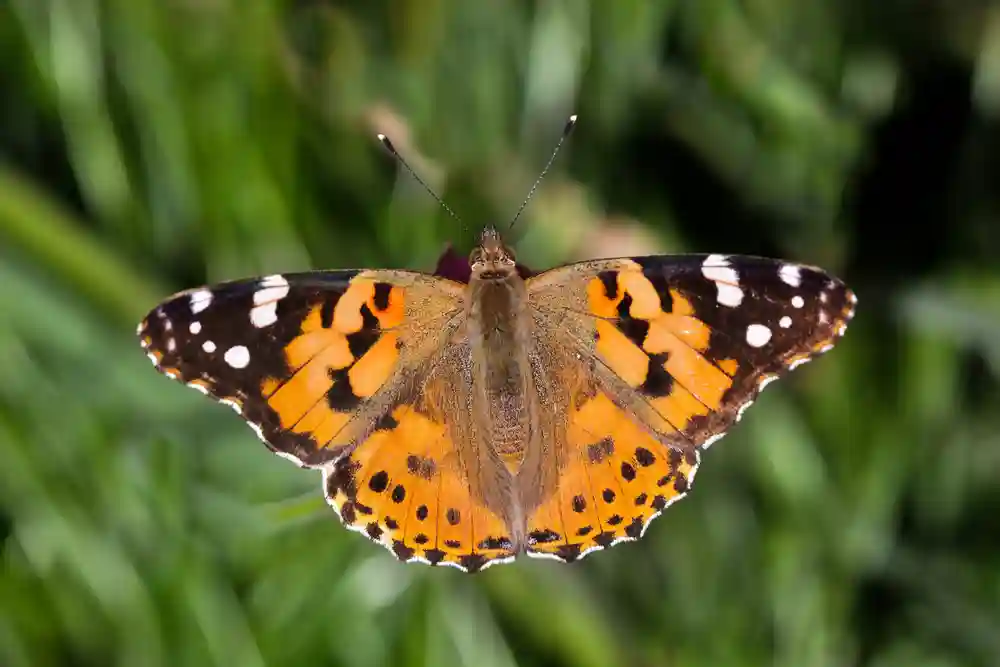 Vanessa carduiPainted Lady (Vanessa cardui)No other butterfly lives on so much of the planet.
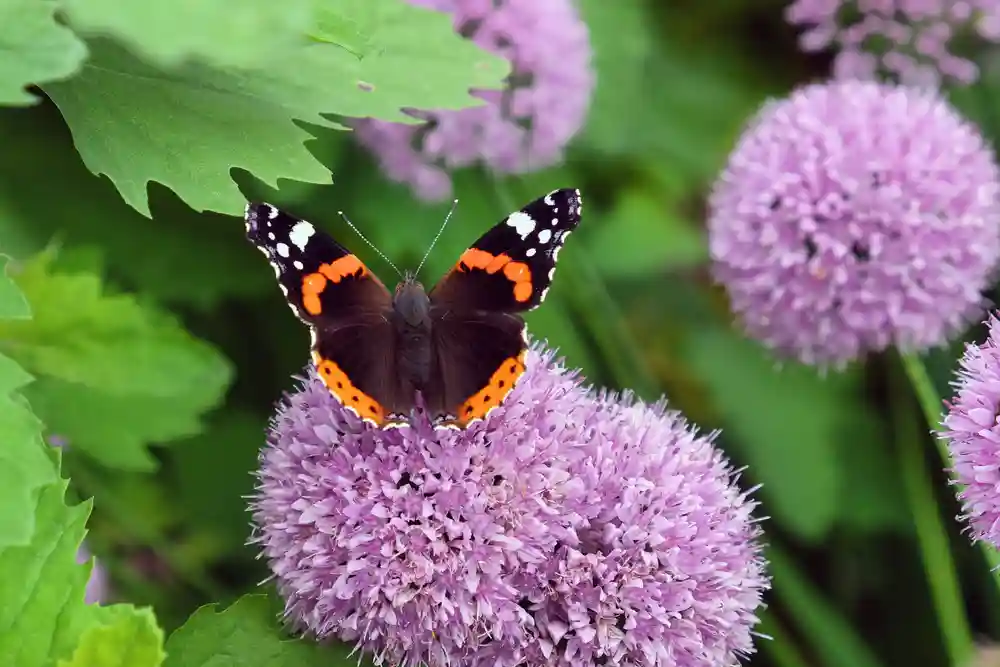 Vanessa atalantaRed Admiral (Vanessa atalanta)The red admiral (Vanessa atalanta) is a medium-sized blackish butterfly marked with one bright orange-red band across each forewing and a scatter of w
Show all 30 other brush-footed species names
- Baron (Euthalia aconthea)
- Blue Admiral (Kaniska canace)
- Chocolate Pansy (Junonia iphita)
- Clear Sailer (Neptis nata)
- Common Castor (Ariadne merione)
- Common Nawab (Polyura athamas)
- Compton Tortoiseshell (Nymphalis vaualbum)
- Danaid Eggfly (Hypolimnas misippus)
- Freak (Calinaga buddha)
- Gray Pansy (Junonia atlites)
- Himalayan Sergeant (Athyma opalina)
- Indian Purple Emperor (Mimathyma ambica)
- Indian Red Admiral (Vanessa indica)
- Indian Tortoiseshell (Aglais caschmirensis)
- Indian White Admiral (Limenitis trivena)
- Large Tortoiseshell (Nymphalis polychloros)
- Lemon Pansy (Junonia lemonias)
- Mountain Tortoiseshell (Aglais rizana)
- Pallas' Sailer (Neptis sappho)
- Peacock Pansy (Junonia almana)
- Plain Tiger (Danaus chrysippus)
- Scarce Siren (Hestina nicevillei)
- Southern Comma (Polygonia egea)
- Sullied Sailer (Neptis soma)
- Tawny Rockbrown (Pseudochazara mniszechii)
- Western Courtier (Sephisa dichroa)
- Yellow-legged Tortoiseshell (Nymphalis xanthomelas)
- Yellow Pansy (Junonia hierta)
- Melitaea chitralensis
- Chazara heydenreichi
Gossamer-Winged (Lycaenidae)
 Polyommatus icarusCommon Blue (Polyommatus Icarus)The common blue is a small grassland butterfly of Europe, North Africa and temperate Asia in which the male is violet-blue above and the female mostly
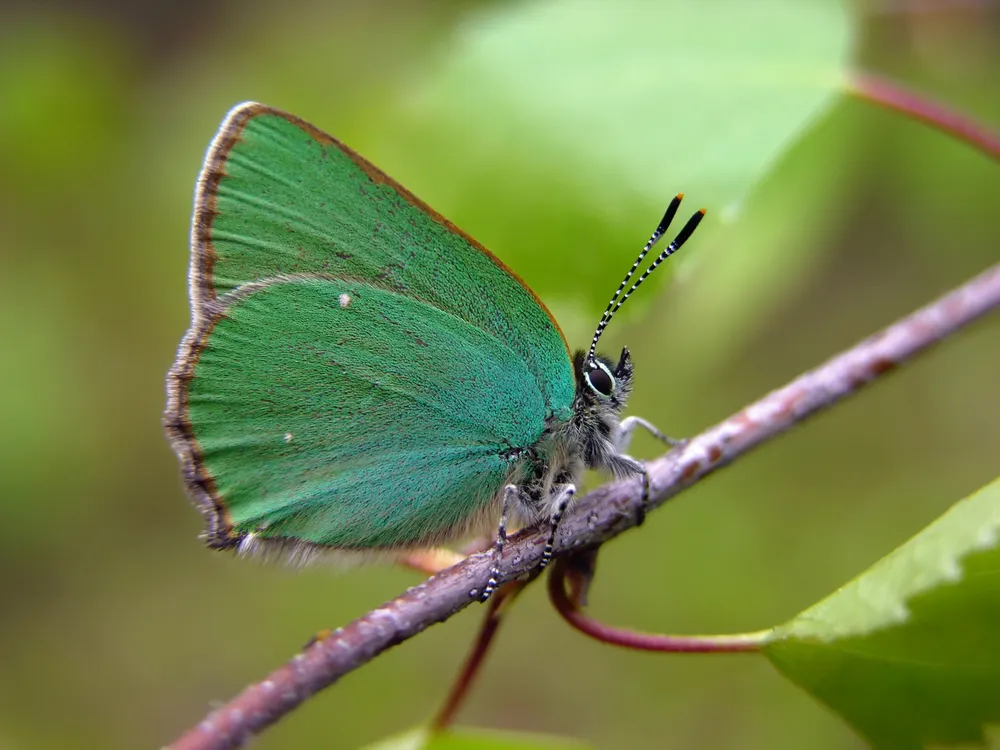 Callophrys rubiGreen Hairstreak (Callophrys rubi)The only butterfly in Europe with plain green undersides, the green hairstreak spends its whole adult life with its wings shut, so the brown upperside
 Celastrina argiolusHolly Blue (Celastrina argiolus)The holly blue is the small silvery-blue butterfly that flies round the tops of hedges and ivy-covered walls in spring, well above the height of every
 Lycaena phlaeasCommon Copper (Lycaena phlaeas)The common copper (Lycaena phlaeas), known as the small copper in Europe and the American copper in North America, is a small, fast-flying butterfly o
Show all 70 other gossamer-winged species names
- Acamas Blue (Cigaritis acamas)
- African Babul Blue (Azanus jesous)
- Azure Mountain Blue (Agriades asiatica)
- Bright Babul Blue (Azanus ubaldus)
- Brown Argus (Aricia agestis)
- Caucasian Vernal Copper (Tomares callimachus)
- Common Cerulean (Jamides celeno)
- Common Flash (Rapala nissa)
- Common Guava Blue (Virachola isocrates)
- Common Hedge Blue (Acytolepis puspa)
- Common Pierrot (Castalius rosimon)
- Common Red Flash (Rapala iarbus)
- Common Shot Silverline (Cigaritis ictis)
- Common Silverline (Cigaritis vulcanus)
- Dark Grass Blue (Zizeeria karsandra)
- Dark Himalayan Oakblue (Amblypodia rama)
- Dull Babul Blue (Azanus uranus)
- Dusky Green Underwing (Pamiria omphisa)
- Dusky Hedge Blue (Oreolyce vardhana)
- Eastern Baton Blue (Pseudophilotes vicrama)
- Eros Blue (Polyommatus eros)
- Forget-me-not (Catochrysops strabo)
- Geranium Argus (Eumedonia eumedon)
- Gram Blue (Euchrysops cnejus)
- Grass Jewel (Freyeria trochylus)
- Green Copper (Lycaena kasyapa)
- Green-underside Blue (Glaucopsyche alexis)
- Himalayan Pierrot (Tarucus venosus)
- Indian Red Flash (Baspa melampus)
- Jaloka Mountain Blue (Agriades jaloka)
- King Cerulean (Jamides bochus)
- Large Hedge Blue (Celastrina ladonides)
- Large Jewel Blue (Plebejidea loewii)
- Lesser Grass-blue (Zizina otis)
- Lime Blue (Chilades lajus)
- Long-tailed Blue (Lampides boeticus)
- Long-tailed Line-blue (Prosotas nora)
- Mediterranean Pierrot (Tarucus rosacea)
- Pale Grass Blue (Pseudozizeeria maha)
- Pale Himalayan Oakblue (Arhopala dodonaea)
- Peacock Royal (Tajuria cippus)
- Persian Grass Blue (Lachides galba)
- Persian Odd-spot Blue (Turanana cytis)
- Plains Cupid (Luthrodes pandava)
- Plumbago Blue (Leptotes plinius)
- Powdery Green Sapphire (Heliophorus tamu)
- Purple Line-blue (Prosotas dubiosa)
- Scarce Shot Silverline (Cigaritis elima)
- Silver Hairstreak (Chrysozephyrus syla)
- Slate Flash (Rapala manea)
- Small Cupid (Luthrodes contracta)
- Small Green Underwing (Pamiria metallica)
- Small Jewel Blue (Plebejus christophe)
- Sorrel Sapphire (Heliophorus sena)
- Spotted Pierrot (Tarucus callinara)
- Striped Pierrot (Tarucus nara)
- Tailless Bushblue (Panchala ganesa)
- Tien Shan Blue (Agriades pheretiades)
- Walnut Blue (Chaetoprocta odata)
- Water Hairstreak (Euaspa milionia)
- Western Blue Sapphire (Heliophorus bakeri)
- White-bordered Copper (Lycaena pavana)
- White-line Hairstreak (Superflua sassanides)
- White-spotted Hairstreak (Thecla ziha)
- Wonderful Hairstreak (Thermozephyrus ataxus)
- Alpherakya devanica
- Alpherakya sarta
- Athamanthia phoenicura
- Tarucus balkanicus nigra
- Zizula hylax
Whites and Sulphurs (Pieridae)
Show all 15 whites and sulphurs species names
- Blue-spotted Arab (Colotis protractus)
- Butler's Dwarf (Baltia butleri)
- Common Wanderer (Pareronia hippia)
- Dusky Blackvein (Aporia nabellica)
- Fiery Clouded Yellow (Colias eogene)
- Kashmir White (Pieris deota)
- Lemon White (Euchloe lucilla)
- Marco Polo's Colias (Colias marcopolo)
- Pale Jezebel (Delias sanaca)
- Shaw's Dwarf (Baltia shawi)
- White Arab (Colotis vestalis)
- Colias alpherakii
- Colias leechi
- Colias wiskotti
- Euchloe daphalis
Metalmark (Riodinidae)
- Common Punch (Dodona durga)
- Lesser Punch (Dodona dipoea)
- Tailed Punch (Dodona eugenes)
Swallowtail (Papilionidae)

Show all 25 other swallowtail species names
- Alexandra's Swallowtail (Papilio alexanor)
- Banded Apollo (Parnassius delphius)
- Blue Peacock (Papilio arcturus)
- Blue Triangle (Graphium sarpedon)
- Chequered Swallowtail (Papilio demoleus)
- Common Blue Apollo (Parnassius hardwickii)
- Common Mime (Papilio clytia)
- Common Mormon (Papilio polytes)
- Common Peacock (Papilio polyctor)
- Common Red Apollo (Parnassius epaphus)
- Common Rose (Pachliopta aristolochiae)
- Common Windmill (Atrophaneura polyeuctes)
- Desert Apollo (Hypermnestra helios)
- Glassy Bluebottle (Graphium cloanthus)
- Karakorum Banded Apollo (Parnassius staudingeri)
- Keeled Apollo (Parnassius jacquemontii)
- Ladak Banded Apollo (Parnassius stoliczkanus)
- Regal Apollo (Parnassius charltonius)
- Varnished Apollo (Parnassius acco)
- Parnassius actius
- Parnassius boedromius
- Parnassius inopinatus
- Parnassius loxias
- Parnassius simo
- Parnassius stenosemus
Skipper (Hesperiidae)
Show all 37 skipper species names
- Alida Angle (Abaratha alida)
- Common Banded Awl (Hasora chromus)
- Common Grass Dart (Taractrocera maevius)
- Common Straight Swift (Parnara guttata)
- Dark Palm Dart (Telicota bambusae)
- Dingy Swift (Gegenes nostrodamus)
- Himalayan Grass Dart (Taractrocera danna)
- Himalayan Spotted Flat (Celaenorrhinus munda)
- Himalayan Swift (Polytremis discreta)
- Indian Ace (Halpe homolea)
- Indian Grizzled Skipper (Spialia galba)
- Indian Palm Bob (Suastus gremius)
- Mallow Skipper (Carcharodus alceae)
- Marbled Flat (Lobocla liliana)
- Marbled Skipper (Gomalia elma)
- Orangetail Awl (Bibasis sena)
- Pale Small-branded Swift (Pelopidas thrax)
- Persian Skipper (Spialia phlomidis)
- Pygmy Skipper (Gegenes pumilio)
- Red-underwing Skipper (Spialia sertorius)
- Similar Awlking (Choaspes xanthopogon)
- Small Branded Swift (Pelopidas mathias)
- Spotted Angle (Caprona agama)
- Spotted Demon (Notocrypta feisthamelii)
- Spotted Small Flat (Sarangesa purendra)
- Veined Dart (Actinor radians)
- Veined Scrub Hopper (Aeromachus stigmata)
- Yellow Spot Swift (Polytremis eltola)
- Badamia exclamationis
- Celaenorrhinus leucocera
- Eogenes alcides
- Pelopidas agna
- Potanthus dara
- Pseudoborbo bevani
- Pyrgus cashmirensis
- Spialia geron
- Telicota colon
How to identify a butterfly in Pakistan
Start with the region. In the plains a large black swallowtail with white spots is a Common Mormon, a yellow-and-black one with no tails is the Lime Butterfly, and a black one with red body and spots is the Common Rose. A bright butterfly with eyespots basking on bare ground is a pansy, and its ground colour, blue, lemon, grey, chocolate or peacock, names the species. Orange with black-and-white wingtips is the Plain Tiger, and the Great Eggfly female copies it.
In the mountains a white or cream butterfly with red and black spots flying low over scree is an Apollo, and altitude and location narrow it down. The tortoiseshells, Comma and Red Admiral of the northern valleys are the same butterflies as in Europe, and the Common Blue, Small Copper and Holly Blue fly in the hills as they do there. Whites with yellow or orange are Himalayan Colias, and a white with an orange tip in desert country is one of the Arabs.
Frequently asked questions about Pakistani butterflies
What is the national butterfly of Pakistan?
The Indian Purple Emperor (Mimathyma ambica) is widely cited as the national butterfly of Pakistan, although no law or government notification has formally adopted it. It is a brush-footed butterfly of the moist Himalayan foothill forests around Murree, Swat and Azad Kashmir, and the male shows a violet sheen when the light catches its wings.
How many butterfly species are there in Pakistan?
Around 400 butterfly species have been recorded in Pakistan, across all six families. The number is high because the country stretches from tropical plains and desert to the Himalaya, Karakoram and Hindu Kush, and it is probably an undercount, since many northern valleys have never been properly surveyed.
Which brush-footed butterflies are common in Pakistan?
The Plain Tiger, the Painted Lady, the Blue, Lemon, Peacock and Chocolate Pansies, the Common Castor and the Great Eggfly are the most common brush-footed butterflies in the plains. In the hills the Indian Tortoiseshell, Indian Red Admiral, Comma, Common Map, Common Nawab and Indian Purple Emperor take over.
Which blues and hairstreaks live in Pakistan?
More than seventy gossamer-winged butterflies are recorded in Pakistan. The plains have the Common Pierrot, Common Cerulean, the Babul Blues, Grass Blues, Gram Blue and Common Guava Blue; the hills have the Common Blue, Holly Blue, Small Copper and Green Hairstreak familiar from Europe, plus a set of mountain blues, sapphires and oakblues found only in the Himalaya.
How many kinds of pansy butterfly are found in Pakistan?
Six pansies of the genus Junonia occur in Pakistan: the Blue Pansy, Lemon Pansy, Yellow Pansy, Peacock Pansy, Grey Pansy and Chocolate Pansy. All bask open-winged on bare ground and carry eyespots on the wings. The Blue and Lemon Pansies are the commonest and fly in gardens and wasteland across the plains for most of the year.
Which admiral butterflies are native to Pakistan?
Pakistan has the Indian Red Admiral (Vanessa indica), the European Red Admiral (Vanessa atalanta), the Blue Admiral (Kaniska canace) and the Indian White Admiral (Limenitis trivena). All are butterflies of the northern hills and Himalayan valleys rather than the plains, and the two red admirals are often seen together at flowers and sap in the Murree hills.
Are tortoiseshell butterflies found in Pakistan?
Yes, four tortoiseshells live in the northern mountains of Pakistan: the Indian Tortoiseshell, the Mountain Tortoiseshell, the Large Tortoiseshell and the Yellow-legged Tortoiseshell, with the Compton Tortoiseshell as a rarity. They hibernate as adults and are among the first butterflies to fly in the Himalayan spring, often appearing before the snow has fully melted.
Which butterfly is named after a region of Pakistan?
The Chitral Fritillary (Melitaea chitralensis) is named after the Chitral district of Khyber Pakhtunkhwa, where it was first described. It is a small orange fritillary of the dry Hindu Kush valleys. Several Apollos also carry Pakistani place names, including the Karakorum Banded Apollo and the Ladak Banded Apollo of the high Karakoram.
When is the best time to see butterflies in Pakistan?
In the plains, March to April and September to November are best, avoiding the extreme summer heat. In the northern mountains the season runs from late June to August, when the Apollos, mountain blues and Himalayan sulphurs fly together in the valleys of Swat, Chitral, Gilgit and Skardu. The foothills around Islamabad peak in May and after the monsoon.
What is the largest butterfly in Pakistan?
The Common Mormon and the Blue Peacock are the largest butterflies regularly seen in Pakistan, both swallowtails with wingspans of around 12 centimetres. The Common Mormon is a black butterfly with white spots that breeds on citrus across the plains, while the Blue Peacock is an iridescent green-and-blue species of the Himalayan forests.
Published November 15, 2023 · Last updated September 21, 2026