
Butterflies in Korea
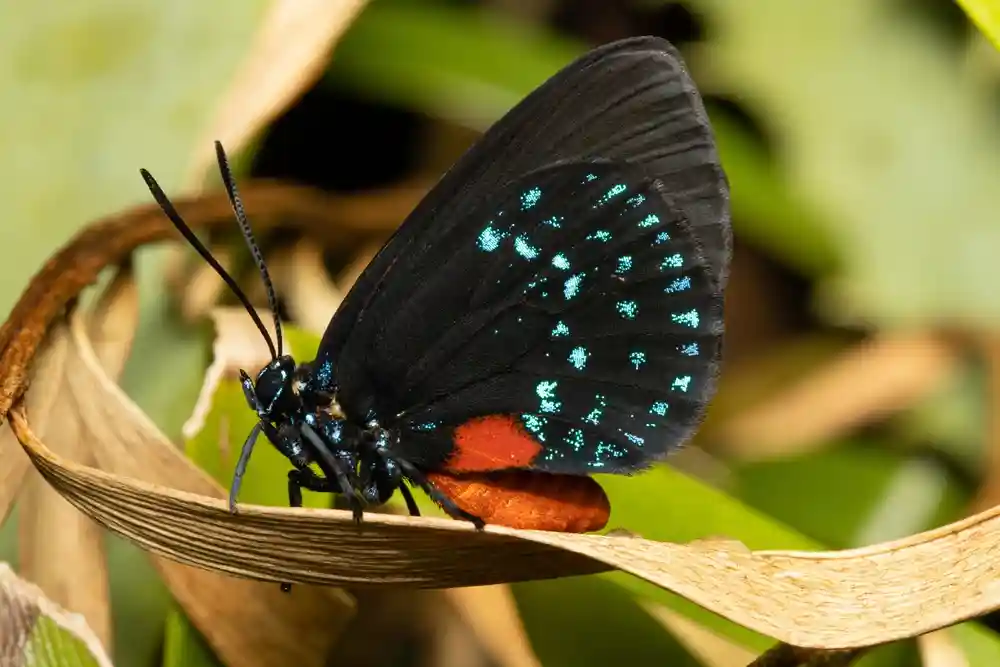
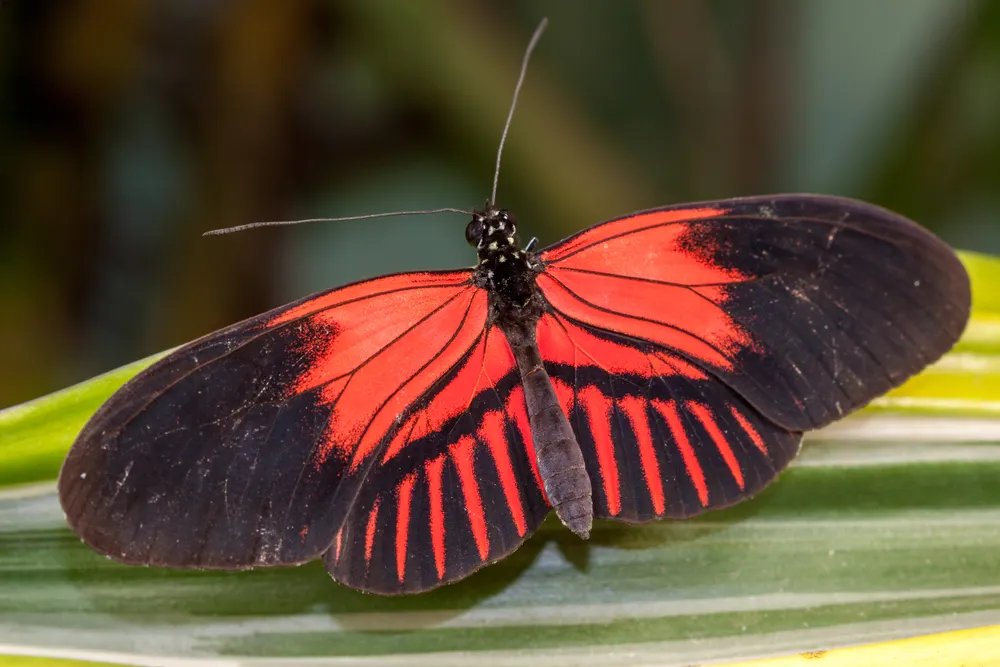
Close to 300 butterflies live in the Korean peninsula, i.e., the region consisting of both North and South Korea. Notable species include the Peacock Butterfly, the Small Copper, and the Small Tortoiseshell.

Butterflies in Korea
List of Different Butterfly Species of Korea
Brush-Footed (Nymphalidae)
- Asian Comma (Polygonia c-aureum)
- Assmann’s Fritillary (Melitaea britomartis)
- Blue Pansy (Junonia orithya)
- Chestnut Heath (Coenonympha glycerion)
- Chestnut Tiger (Parantica sita)
- Chinese Bushbrown (Mycalesis gotama)
- Chocolate Tiger (Parantica melaneus)
- Comma (Polygonia c-album)
- Common Evening Brown (Melanitis leda)
- Common Five-ring (Ypthima baldus)
- Common Mapwing (Cyrestis thyodamas)
- Common Tiger (Danaus genutia)
- Constable (Dichorragia nesimachus)
- Danaid Eggfly (Hypolimnas misippus)
- Dark Evening Brown (Melanitis phedima)
- Dark Green Fritillary (Speyeria aglaja)
- Dryad (Minois dryas)
- European Nettle-tree Butterfly (Libythea celtis)
- False Heath Fritillary (Melitaea diamina)
- False Ringlet (Coenonympha oedippus)
- Freyer’s Purple Emperor (Apatura metis)
- Great Eggfly (Hypolimnas bolina)
- Hungarian Glider (Neptis rivularis)
- Indian Fritillary (Argynnis hyperbius)
- Indian Red Admiral (Vanessa indica)
- Japanese Emperor (Sasakia charonda)
- Jutta Arctic (Oeneis jutta)
- Lapland Ringlet (Erebia embla)
- Large Silverstripe (Argynnis childreni)
- Lesser Marbled Fritillary (Brenthis ino)
- Lesser Purple Emperor (Apatura ilia)
- Map (Araschnia levana)
- Marbled Fritillary (Brenthis daphne)
- Arran Brown (Erebia ligea)
- Mourning Cloak (Nymphalis antiopa)
- Niobe Fritillary (Fabriciana niobe)
- Painted Lady (Vanessa cardui)
- Pallas’ Fritillary (Argynnis laodice)
- Pallas’ Sailer (Neptis sappho)
- Peacock Butterfly (Aglais io)
- Peacock Pansy (Junonia almana)
- Pearl-bordered Fritillary (Boloria euphrosyne)
- Plain Tiger (Danaus chrysippus)
- Poplar Admiral (Limenitis populi)
- Purple Emperor (Apatura iris)
- Red Ring Skirt (Hestina assimilis)
- Ringlet (Aphantopus hyperantus)
- Ross’s Alpine (Erebia rossii)
- Scarce Heath (Coenonympha hero)
- Silver-washed Fritillary (Argynnis paphia)
- Small Pearl-Bordered Fritillary (Boloria selene)
- Small Tortoiseshell (Aglais urticae)
- Striated Ringlet (Ypthima multistriata)
- Thor’s Fritillary (Boloria thore)
- Titania’s Fritillary (Boloria titania)
- White Admiral (Limenitis camilla)
- Woodland Brown (Lopinga achine)
- Yellow-legged Tortoiseshell (Nymphalis xanthomelas)
- Argynnis ruslana
- Argynnis sagana
- Fabriciana nerippe
- Hestina japonica
- Lethe marginalis
- Melanargia epimede
- Melitaea protomedia
- Melitaea scotosia
- Mycalesis francisca
- Neptis alwina
Gossamer-Winged (Lycaenidae)
- Albocerulean (Udara albocaerulea)
- Alcon Blue (Phengaris alcon)
- Amanda’s Blue (Polyommatus amandus)
- Angled Sunbeam (Curetis acuta)
- Black Hairstreak (Satyrium pruni)
- Brown Hairstreak (Thecla betulae)
- Bush Clover (Rapala caerulea)
- Cranberry Blue (Agriades optilete)
- European Common Blue (Polyommatus icarus)
- Fischer’s Blue (Tongeia fischeri)
- Forest Pierrot (Taraka hamada)
- Geranium Argus (Eumedonia eumedon)
- Greater Large Blue (Phengaris arionides)
- Holly Blue (Celastrina argiolus)
- Japanese Flash (Rapala arata)
- Japanese Oakblue (Arhopala japonica)
- King Cerulean (Jamides bochus)
- Large copper (Lycaena dispar)
- Lesser Grass-blue (Zizina otis)
- Long-tailed Blue (Lampides boeticus)
- Mazarine Blue (Cyaniris semiargus)
- Northern Brown Argus (Aricia artaxerxes)
- Orange Hairstreak (Shirozua jonasi)
- Orion Blue (Scolitantides orion)
- Pale Grass Blue (Pseudozizeeria maha)
- Pale Hedge Blue (Udara dilectus)
- Plains Cupid (Luthrodes pandava)
- Powdered Oakblue (Arhopala bazalus)
- Purple-edged Copper (Lycaena hippothoe)
- Reverdin’s Blue (Plebejus argyrognomon)
- Scarce Copper (Lycaena virgaureae)
- Scarce Large Blue (Phengaris teleius)
- Short-tailed Blue (Cupido argiades)
- Silver-studded Blue (Plebejus argus)
- Small Blue (Cupido minimus)
- Small Copper (Lycaena phlaeas)
- Violet Copper (Lycaena helle)
- White-letter Hairstreak (Satyrium w-album)
- Wonderful Hairstreak (Thermozephyrus ataxus)
- Ahlbergia frivaldszkyi
- Antigius attilia
- Antigius butleri
- Araragi enthea
- Aricia chinensis
- Artopoetes pryeri
- Celastrina oreas
- Chrysozephyrus brillantinus
- Chrysozephyrus smaragdinus
- Coreana raphaelis
- Favonius orientalis
- Favonius saphirinus
- Favonius taxila
- Glaucopsyche lycormas
- Japonica lutea
- Japonica saepestriata
- Niphanda fusca
- Protantigius superans
- Satyrium herzi
- Satyrium latior
- Satyrium prunoides
- Thecla betulina
- Ussuriana michaelis
- Wagimo signata
Whites and Sulphurs (Pieridae)
- Black-veined White (Aporia crataegi)
- Booth’s Sulphur (Colias tyche)
- Common Grass Yellow (Eurema hecabe)
- Dark Clouded Yellow (Colias fieldii)
- Eastern Bath White (Pontia edusa)
- Eastern Pale Clouded Yellow (Colias erate)
- Fenton’s Wood White (Leptidea morsei)
- Gray-veined White (Pieris melete)
- Indian Cabbage White (Pieris canidia)
- Lemon Migrant (Catopsilia pomona)
- Lesser Bath White (Pontia chloridice)
- Lesser Brimstone (Gonepteryx mahaguru)
- Lined Grass-yellow (Eurema laeta)
- Moorland Clouded Yellow (Colias palaeno)
- No-brand Grass-yellow (Eurema brigitta)
- Small White (Pieris rapae)
- Yellow Tip (Anthocharis scolymus)
- Aporia hippia
- Colias heos
- Gonepteryx maxima
- Leptidea amurensis
Swallowtail (Papilionidae)
- Alpine Black Swallowtail (Papilio maackii)
- Asian Swallowtail (Papilio xuthus)
- Blue Triangle (Graphium sarpedon)
- Chinese Windmill (Atrophaneura alcinous)
- Common Peacock (Papilio bianor)
- Dragon Swallowtail (Sericinus montela)
- Eversmann’s Parnassian (Parnassius eversmanni)
- Great Mormon (Papilio memnon)
- Long-tailed Spangle (Papilio macilentus)
- Old World Swallowtail (Papilio machaon)
- Red Helen (Papilio helenus)
- Spangle Swallowtail (Papilio protenor)
- Luehdorfia puziloi
- Parnassius bremeri
- Parnassius nomion
- Parnassius stubbendorfii
Skipper (Hesperiidae)
- Chequered Skipper (Carterocephalus palaemon)
- Common Straight Swift (Parnara guttatus)
- European Skipper (Thymelicus lineola)
- Grizzled Skipper (Pyrgus malvae)
- Hungaria Skipper (Spialia orbifer)
- Indian Awlking (Choaspes benjaminii)
- Large Chequered Skipper (Heteropterus morpheus)
- Large Grizzled Skipper (Pyrgus alveus)
- Large Skipper (Ochlodes sylvanus)
- Northern Chequered Skipper (Carterocephalus silvicola)
- Small Branded Swift (Pelopidas mathias)
- Aeromachus inachus
- Bibasis aquilina
- Carterocephalus argyrostigma
- Carterocephalus dieckmanni
- Daimio tethys
- Erynnis montanus
- Erynnis popoviana
- Hesperia florinda
- Isoteinon lamprospilus
- Leptalina unicolor
- Muschampia gigas
- Ochlodes ochracea
- Ochlodes subhyalin
- Ochlodes venata
- Pelopidas jansonis
- Pelopidas sinensis
- Polytremis pellucida
- Polytremis zina
- Potanthus flava
- Pyrgus maculatus
- Pyrgus speyeri
- Satarupa nymphalis
- Thymelicus leonina
- Thymelicus sylvatica