
Butterflies in Andorra
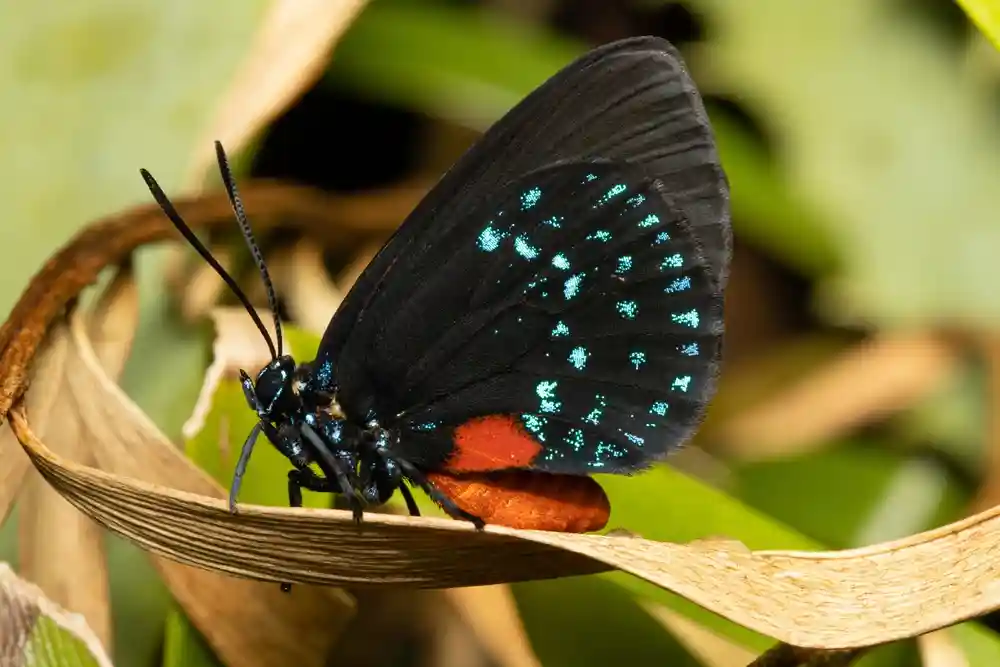
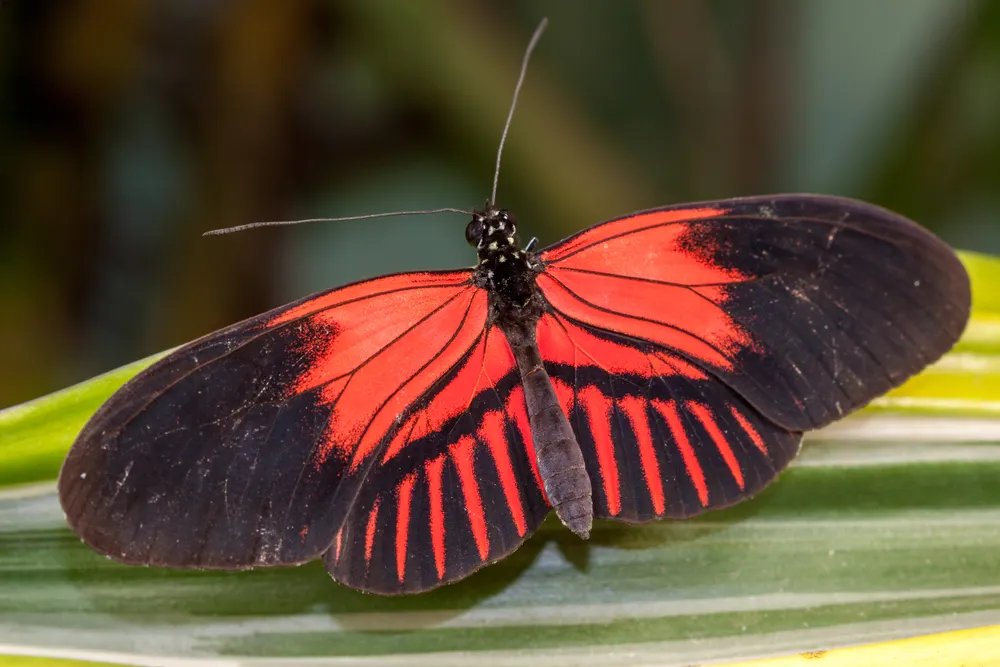
Andorra boasts a rugged beauty with its mountain ranges, lush valleys, and green forests. Over 100 species of butterflies are recorded here yearly, including famous ones like the mourning cloak, cardinal, and swallowtails. The eastern regions of the Pyrenees Mountains often attract enthusiasts to study butterflies and the effects of climate change on their populations.

Butterflies in Andorra
List of Different Butterfly Species of Andorra
Brush-Footed (Nymphalidae)
- Peacock Butterfly (Aglais io)
- Small Tortoiseshell (Aglais urticae)
- Arethusan Skipper (Arethusana arethusa)
- Silver-washed Fritillary (Argynnis paphia)
- Cardinal (Argynnis pandora)
- Red Admiral (Vanessa atalanta)
- Painted Lady (Vanessa cardui)
- Boreal Fritillary (Boloria eunomia)
- Scotch Argus (Boloria napaea)
- Shepherd’s Fritillary (Boloria pales)
- Small Pearl-bordered Fritillary (Boloria selene)
- Mourning Cloak (Nymphalis antiopa)
- Comma Butterfly (Polygonia c-album)
- False Grayling (Pyronia bathseba)
- Gatekeeper (Pyronia tithonus)
- Marbled Fritillary (Brenthis daphne)
- Lesser Marbled Frillitary (Brenthis ino)
- Circadian Fritillary (Brintesia circe)
- False Heath Fritillary (Coenonympha arcania)
- Dusky Heath (Coenonympha dorus)
- Common Brassy Ringlet (Erebia cassioides)
- Mountain Ringlet (Erebia epiphron)
- Large Ringlet (Erebia euryale)
- Gavarnie Ringlet (Erebia gorgone)
- Spanish Brassy Ringlet (Erebia hispania)
- Manto’s Grayling (Erebia manto)
- Meolan’s Grayling (Erebia meolans)
- Bright-eyed Ringlet (Erebia oeme)
- Dewy Grayling (Erebia pandrose)
- Pyrenees Brassy Ringlet (Erebia rondoui)
- High Brown Fritillary (Fabriciana adippe)
- Woodland Grayling (Hipparchia fagi)
- Rock Grayling (Hipparchia semele)
- Queen of Spain Fritillary (Issoria lathonia)
- Large Wall Brown (Lasiommata maera)
- Wall Brown (Lasiommata megera)
- White Admiral (Limenitis camilla)
- False White Admiral (Limenitis reducta)
- Meadow Brown (Maniola jurtina)
- Meadow Fritillary (Melanargia lachesis)
- Heath Fritillary (Melitaea athalia)
- Glanville Fritillary (Melitaea cinxia)
- Provençal Fritillary (Melitaea deione)
- Spotted Fritillary (Melitaea didyma)
- Iberian Marbled White (Melitaea parthenoides)
- Knapweed Fritillary (Melitaea phoebe)
- Lesser Spotted Fritillary (Melitaea trivia)
- Southern Gatekeeper (Satyrus actaea)
- Dark Green Frillitary (Speyeria aglaja)
Gossamer-Winged (Lycaenidae)
- Brown Argus (Aricia agestis)
- Southern Brown Argus (Aricia cramera)
- Silvery Argas (Aricia nicias)
- Green Hairstreak (Callophrys rubi)
- Small Blue (Cupido minimus)
- Spanish Purple Hairstreak (Laeosopis roboris)
- Long-tailed Blue (Lampides boeticus)
- Lang’s Short-tailed Blue (Leptotes pirithous)
- Purple-shot Copper (Lycaena alciphron)
- Purple-edged Copper (Lycaena hippothoe)
- Small Copper (Lycaena phlaeas)
- Sooty Copper (Lycaena tityrus)
- Scarce Copper (Lycaena virgaureae)
- Adonis Blue (Lysandra bellargus)
- Chalkhill Blue (Lysandra coridon)
- Provence Chalkhill Blue (Lysandra hispana)
- Large Blue (Phengaris arion)
- Silver-studded Blue (Plebejus argus)
- Idas Blue (Plebejus idas)
- Damon Blue (Polyommatus damon)
- Meleager’s Blue (Polyommatus daphnis)
- Amanda’s Blue (Polyommatus amandus)
- Dorylas Blue (Polyommatus dorylas)
- Holly Blue (Polyommatus eros)
- Escher’s Blue (Polyommatus escheri)
- Common Blue (Polyommatus icarus)
- Blue Spot Hairstreak (Satyrium spini)
Whites and Sulphurs (Pieridae)
- Orange Tip (Anthocharis cardamines)
- Provance Orange Tip (Anthocharis euphenoides)
- Cabbage White (Pieris brassicae)
- Black-veined White (Aporia crataegi)
- Common Brimstone (Gonepteryx rhamni)
- Wood White (Leptidea sinapis)
- Green-veined White (Pieris napi)
- Small White (Pieris rapae)
- Peak White (Pontia callidice)
- Clouded Yellow (Colias croceus)
- Pale Clouded Yellow (Colias phicomone)
Swallowtail (Papilionidae)
- Old World Swallowtail (Papilio machaon)
- Scarce Swallowtail (Iphiclides podalirius)
- Apollo (Parnassius apollo)
- Clouded Apollo (Parnassius mnemosyne)
Skipper (Hesperiidae)
- Mallow Skipper (Carcharodus alceae)
- Tufted Skipper (Carcharodus floccifera)
- Dingy Skipper (Erynnis tages)
- Silver-spotted Skipper (Hesperia comma)
- Large Grizzled Skipper (Pyrgus alveus)
- Dusky Grizzled Skipper (Pyrgus cacaliae)
- Cinquefoil Skipper (Pyrgus cirsii)
- Grizzled Skipper (Pyrgus malvae)
- Olive Skipper (Pyrgus serratulae)
- Lulworth Skipper (Thymelicus acteon)
- European Skipper (Thymelicus lineola)
- Small Skipper (Thymelicus sylvestris)
Like in most other countries, climate change and global warming threaten the butterflies in Andorra. Lepidopterists and enthusiasts take an active interest in exploring and protecting the butterfly habitats and population in the country through the Andorran Butterfly Monitoring Scheme that started in 2004.