
Butterflies in Bulgaria
The unique geographic location combined with an extremely diverse habitat makes Bulgaria a hotspot for butterflies. It is because though the country is located in a small area on the Balkan Peninsula, it has a largely varied terrain. It has around 222 species of butterflies, half of all European butterfly species. Of them, the False Ringlet is extirpated, and no recent sightings of the Danube Clouded Yellow and the Damon Blue in the country.

Butterflies in Bulgaria
List of Different Butterfly Species of Bulgaria
Brush-Footed (Nymphalidae)
- Balkan Fritillary (Boloria graeca)
- Twin-spot Fritillary (Brenthis hecate)
- Woodland Ringlet (Erebia medusa)
- Bright Eyed Ringlet (Erebia oeme)
- Dusky Meadow Brown (Hyponephele lycaon)
- Lesser Spotted Frillitary (Melitaea trivia)
- Freyer’s Grayling (Hipparchia fatua)
- Nickerl’s Fritillary (Melitaea aurelia)
- Purple Emperor (Apatura iris)
- Chestnut Heath (Coenonympha glycerion)
- Eastern Large Heath (Coenonympha rhodopensis)
- Ottoman Brassy Ringlet (Erebia ottomana)
- Niobe Fritillary (Fabriciana niobe)
- Dils’ Grayling (Pseudochazara orestes)
- Peacock Butterfly (Aglais io)
- Small Tortoiseshell (Aglais urticae)
- Lesser Purple Emperor (Apatura ilia)
- Freyer’s Purple Emperor (Apatura metis)
- Ringlet (Aphantopus hyperantus)
- False Ringlet (Arethusana arethusa)
- Cardinal (Argynnis pandora)
- Silver-washed Fritillary (Argynnis paphia)
- Violet Frillitary (Boloria dia)
- Pearl-bordered Fritillary (Boloria euphrosyne)
- Pales Fritillary (Boloria pales)
- Marbled Fritillary (Brenthis daphne)
- Lesser Marbled Fritillary (Brenthis ino)
- Dark Rock Brown (Chazara briseis)
- Russian Heath (Coenonympha leander)
- Small Heath (Coenonympha pamphilus)
- Scotch Argus (Erebia aethiops)
- Alpine Heath (Erebia euryale)
- Silky Ringlet (Erebia gorge)
- Meadow Ringlet (Erebia ligea)
- Black Ringlet (Erebia melas)
- Dewy Ringlet (Erebia pandrose)
- Shepherd’s Fritillary (Erebia pronoe)
- Marsh Fritillary (Euphydryas aurinia)
- High Brown Fritillary (Fabriciana adippe)
- Niobe Fritillary (Fabriciana niobe)
- Woodland Grayling (Hipparchia fagi)
- Rock Grayling (Hipparchia semele)
- Tree Grayling (Hipparchia statilinus)
- Oriental Meadow Brown (Hipparchia syriaca)
- Southern Marbled Skipper (Hyponephele lupinus)
- Queen of Spain Fritillary (Issoria lathonia)
- Southern White Admiral (Kirinia climene)
- Roxelana’s Grayling (Kirinia roxelana)
- Large Wall Brown (Lasiommata maera)
- Wall Brown (Lasiommata megera)
- European Nettle-tree Butterfly (Libythea celtis)
- Meadow Brown (Maniola jurtina)
- Marbled White (Melanargia galathea)
- Balkan Marbled White (Melanargia larissa)
- Heath Fritillary (Melitaea athalia)
- Glanville Fritillary (Melitaea cinxia)
- Spotted Fritillary (Melitaea didyma)
- Phoebe Fritillary (Melitaea phoebe)
- Hungarian Glider (Neptis rivularis)
- Camberwell Beauty (Nymphalis antiopa)
- Large Tortoiseshell (Nymphalis polychloros)
- Yellow-legged Tortoiseshell (Nymphalis xanthomelas)
- Speckled Wood (Pararge aegeria)
- Comma (Polygonia c-album)
- Southern Comma (Polygonia egea)
- Dusky Meadow Brown (Pseudochazara anthelea)
- Hedge Brown (Pyronia tithonus)
- Great Sooty Satyr (Satyrus ferula)
- Dark Green Fritillary (Speyeria aglaja)
- Red Admiral (Vanessa atalanta)
- Painted Lady (Vanessa cardui)
- False Grayling (Arethusana arethusa)
- Silver-washed Fritillary (Argynnis paphia)
- Pearly Heath (Coenonympha arcania)
- White Admiral (Limenitis camilla)
- False Heath Fritillary (Melitaea diamina)
- Eastern Knapweed Fritillary (Melitaea telona)
- Dryad (Minois dryas)
- Small-eyed Sailor (Hamadryas laodamia)
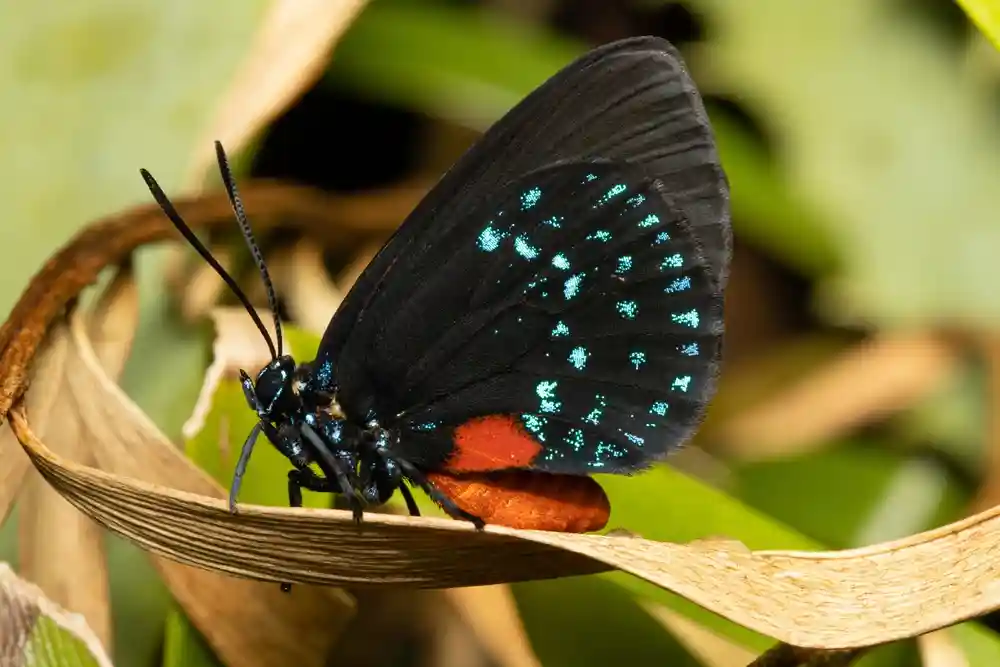
- Starry Night Cracker (Hamadryas laodamia)
- Map (Araschnia levana)
- Small Pearl-Bordered Fritillary (Boloria selene)
- Ocellate Bog Fritillary (Boloria eunomia)
- Brintesia Circe (Brintesia circe)
- False Ringlet (Coenonympha oedippus)
- Almond Ringlet (Erebia alberganus)
- Common Brassy Ringlet (Erebia cassioides)
- Bulgarian Ringlet (Erebia orientalis)
- Nichol’s Ringlet (Erebia rhodopensis)
- Cynthia’s Fritillary (Euphydryas cynthia)
- Scarce Fritillary (Euphydryas maturna)
- High Brown Fritillary (Fabriciana adippe)
- Balkan Grayling (Hipparchia senthes)
- Delattin’s Grayling (Hipparchia volgensis)
- Northern Wall Brown (Lasiommata petropolitana)
- Poplar Admiral (Limenitis populi)
- Southern White Admiral (Limenitis reducta)
- Woodland Brown (Lopinga achine)
- Freyer’s Fritillary (Melitaea arduinna)
- Assmann’S Fritillary (Melitaea britomartis)
- Pallas’ Sailer (Neptis sappho)
Gossamer-Winged (Lycaenidae)
- Mazarine Blue (Cyaniris semiargus)
- Lycaena candens
- Scarce Copper (Lycaena virgaureae)
- Alcon Blue (Phengaris alcon)
- Large Blue (Phengaris arion)
- Amanda’s Blue (Polyommatus amandus)
- Meleager’s Blue (Polyommatus daphnis)
- Blue-spot Hairstreak (Satyrium spini)
- Lesser Fiery Copper (Lycaena thersamon)
- False Eros Blue (Polyommatus eroides)
- Brown Argus (Aricia agestis)
- Blue Argus (Aricia anteros)
- Northern Brown Argus (Aricia artaxerxes)
- Green Hairstreak (Callophrys rubi)
- Holly Blue (Celastrina argiolus)
- Provençal Short-tailed Blue (Cupido alcetas)
- Short-tailed Blue (Cupido argiades)
- Eastern Short-tailed Blue (Cupido decolorata)
- Small Blue (Cupido minimus)
- Osiris Blue (Cupido osiris)
- Purple Hairstreak (Favonius quercus)
- Green-underside Blue (Glaucopsyche alexis)
- Iolas Blue (Iolana iolas)
- Long-tailed Blue (Lampides boeticus)
- Lang’s Short-tailed Blue (Leptotes pirithous)
- Purple-shot Copper (Lycaena alciphron)
- Small Copper (Lycaena phlaeas)
- Sooty Copper (Lycaena tityrus)
- Adonis Blue (Lysandra bellargus)
- Chalkhill Blue (Lysandra coridon)
- Silver-studded Blue (Plebejus argus)
- Reverdin’s Blue (Plebejus argyrognomon)
- Idas Blue (Plebejus idas)
- Dorylas Blue (Polyommatus dorylas)
- Eros Blue (Polyommatus eros)
- Escher’s Blue (Polyommatus escheri)
- European Common Blue (Polyommatus icarus)
- Ripart’s Anomalous Blue (Polyommatus ripartii)
- Glandon Blue (Satyrium acaciae)
- Ilex Hairstreak (Satyrium ilicis)
- White-letter Hairstreak (Satyrium w-album)
- Orion Blue (Scolitantides orion)
- Balkan Pierrot (Tarucus balkanica)
- Brown Hairstreak (Thecla betulae)
- Dark Grass Blue (Zizeeria karsandra)
- Germanium Argus (Eumedonia eumedon)
- Dusky Large Blue (Phengaris nausithous)
- Chapman’s Blue (Polyommatus thersites)
- Bronze Line-blue (Ionolyce helicon)
- Long-tailed Pea-blue (Lampides boeticus)
- Balkan Blue (Agriades dardanus)
- Large copper (Lycaena dispar)
- Violet copper (Lycaena helle)
- Grecian copper (Lycaena ottomanus)
- Anomalous Blue (Polyommatus admetus)
- Grecian Anomalous Blue (Polyommatus aroaniensis)
- Higgins’s Anomalous Blue (Polyommatus nephohiptamenos)
- Kolev’s Anomalous Blue (Polyommatus orphicus)
- Eastern Baton Blue (Pseudophilotes vicrama)
- Black Hairstreak (Satyrium pruni)
- Balkan Pierrot (Tarucus balkanicus)
Whites and Sulphurs (Pieridae)
- Orange Tip (Anthocharis cardamines)
- Green-underside White (Anthocharis gruneri)
- Black-veined White (Aporia crataegi)
- Clouded Yellow (Colias croceus)
- Pale Clouded Yellow (Colias hyale)
- Eastern Dappled White (Euchloe ausonia)
- False Barred Sulphur (Eurema elathea)
- Common Grass Yellow (Eurema hecabe)
- Powdered Brimstone (Gonepteryx farinosa)
- Common Brimstone (Gonepteryx rhamni)
- Eastern Wood White (Leptidea duponcheli)
- Wood White (Leptidea sinapis)
- Cabbage White (Pieris brassicae)
- Persian White (Pieris ergane)
- Krüper’s Small White (Pieris krueperi)
- Green-veined White (Pieris napi)
- Lesser Bath White (Pontia chloridice)
- Eastern Bath White (Pontia edusa)
- Berger’s Clouded Yellow (Colias alfacariensis)
- Small Cabbage White (Pieris rapae)
- Balkan Clouded Yellow (Colias caucasica)
- Eastern Pale Clouded Yellow (Colias erate)
- Pale Clouded Yellow (Colias hyale)
- Danube Clouded Yellow (Colias myrmidone)
- Eastern Greenish Black-Tip (Euchloe penia)
- Réal’s Wood White (Leptidea reali)
- Southern Small White (Pieris mannii)
Metalmark (Riodinidae)
- Duke of Burgundy (Hamearis lucina)
Swallowtail (Papilionidae)
- Apollo (Parnassius apollo)
- Clouded Apollo (Parnassius mnemosyne)
- Eastern Festoon (Zerynthia cerisy)
- Scarce Swallowtail (Iphiclides podalirius)
- Old World Swallowtail (Papilio machaon)
- Southern Festoon (Zerynthia polyxena)
Skipper (Hesperiidae)
- Large Grizzled Skipper (Pyrgus alveus)
- Oberthür’s Grizzled Skipper (Pyrgus armoricanus)
- Sandy-grizzled Skipper (Pyrgus cinarae)
- Hungarian Skipper (Spialia orbifer)
- Chequered Skipper (Carterocephalus palaemon)
- Marbled Skipper (Carcharodus lavatherae)
- Oriental Skipper (Carcharodus orientalis)
- Inky Skipper (Erynnis marloyi)
- Dingy Skipper (Erynnis tages)
- Dingy Swift (Gegenes nostrodamus)
- Silver-spotted Skipper (Hesperia comma)
- Large Skipper (Ochlodes sylvanus)
- Dusky Grizzled Skipper (Pyrgus cacaliae)
- Safflower Skipper (Pyrgus carthami)
- Grizzled Skipper (Pyrgus malvae)
- Olive Skipper (Pyrgus serratulae)
- Yellow-banded Skipper (Pyrgus sidae)
- Persian Skipper (Spialia phlomidis)
- Lulworth Skipper (Thymelicus acteon)
- European Skipper (Thymelicus lineola)
- Small Skipper (Thymelicus sylvestris)
- Tessellated Skipper (Muschampia tessellum)
- Large Chequered Skipper (Heteropterus morpheus)
- Spinose Skipper (Muschampia cribrellum)
- Tufted Marbled Skipper (Carcharodus flocciferus)
Lomovete, with its gorges deeply cutting the valley of the Rusenski Lom River and its tributaries, is an excellent place to view and photograph many of the native species of butterflies. The Bulgarian Black Sea Coast and the country’s mountainous southwest are also the habitats of many butterflies, some of which are restricted to the region.
FAQ
1. When is the best time to see butterflies in Bulgaria?The butterfly season in Bulgaria starts in May and extends till August. So that is the best time to see the colorful insects here.