
Butterflies in Greece
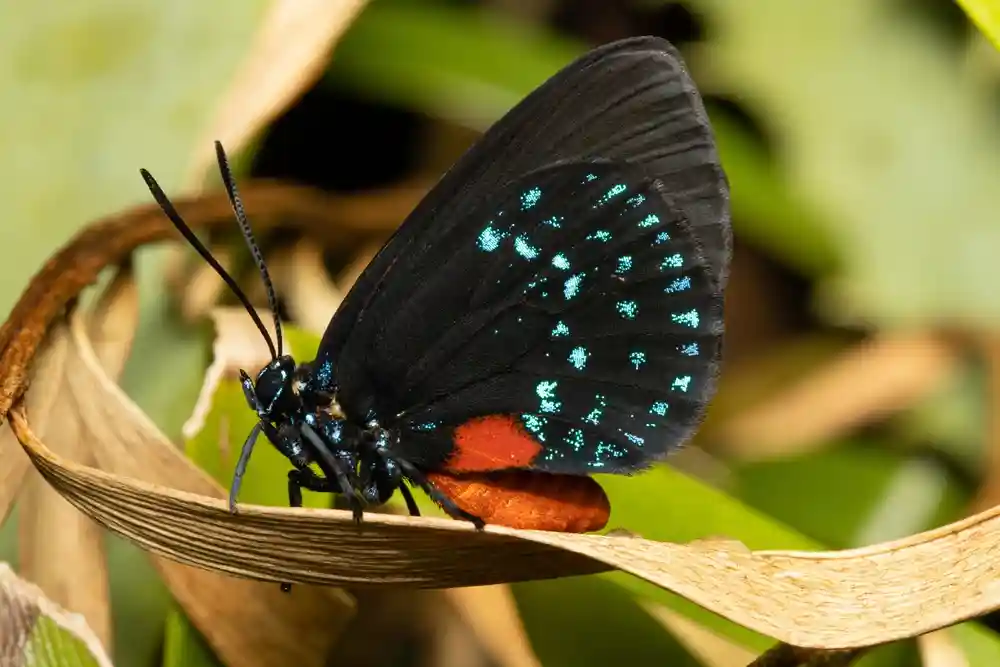
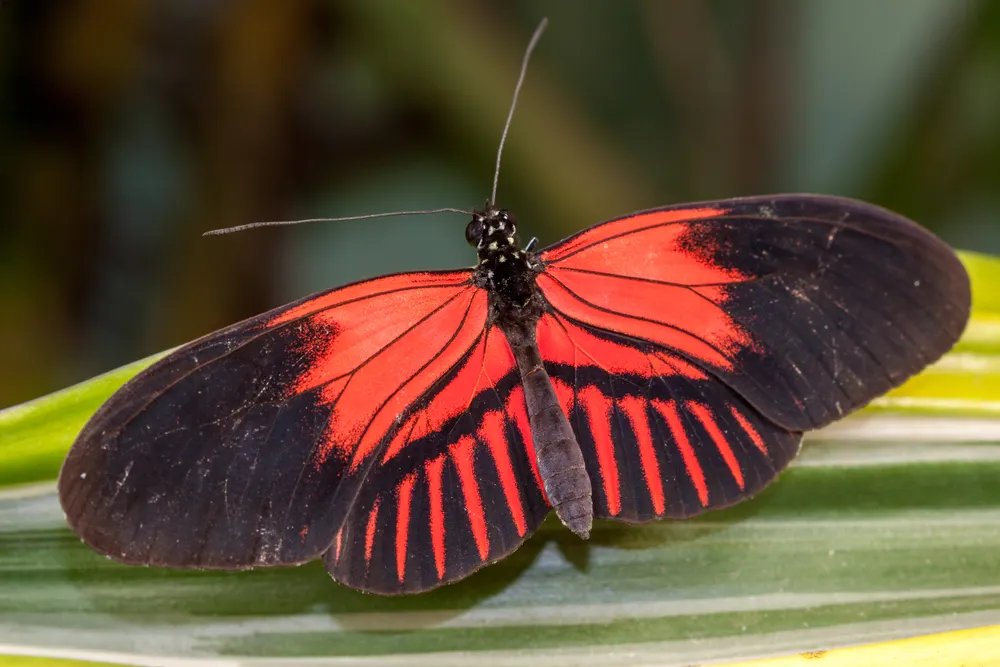
Greece is home to several species of butterflies like the Two-tailed Pasha, the Clouded Yellow, and the Southern White Admiral.

Butterflies in Greece
List of Different Butterfly Species of Greece
Brush-Footed (Nymphalidae)
- African Ringlet (Ypthima asterope)
- Balkan Fritillary (Boloria graeca)
- Balkan Grayling (Hipparchia senthes)
- Balkan Marbled White (Melanargia larissa)
- Black Ringlet (Erebia melas)
- Bright Eyed Ringlet (Erebia oeme)
- Buff Asian Grayling (Pseudochazara amymone)
- Cardinal (Argynnis pandora)
- Chestnut Heath (Coenonympha glycerion)
- Comma (Polygonia c-album)
- Common Brassy Ringlet (Erebia cassioides)
- Dark Green Fritillary (Speyeria aglaja)
- Dark Rock Brown (Chazara briseis)
- Delattin’s Grayling (Hipparchia volgensis)
- Dils’ Grayling (Pseudochazara orestes)
- Dryad (Minois dryas)
- Dusky Meadow Brown (Hyponephele lycaon)
- Eastern Large Heath (Coenonympha rhodopensis)
- Esper’s Marbled White (Melanargia russiae)
- European Nettle-tree Butterfly (Libythea celtis)
- False Grayling (Arethusana arethusa)
- Freyer’s Fritillary (Melitaea arduinna)
- Freyer’s Grayling (Hipparchia fatua)
- Freyer’s Purple Emperor (Apatura metis)
- Geyer’s Skipper (Pseudochazara geyeri)
- Glanville Fritillary (Melitaea cinxia)
- Great Banded Grayling (Brintesia circe)
- Great Sooty Satyr (Satyrus ferula)
- Heath Fritillary (Melitaea athalia)
- Hedge Brown (Pyronia tithonus)
- High Brown Fritillary (Fabriciana adippe)
- Hungarian Glider (Neptis rivularis)
- Iranian Argus (Kirinia climene)
- Large Ringlet (Erebia euryale)
- Large Tortoiseshell (Nymphalis polychloros)
- Large Wall Brown (Lasiommata maera)
- Lesser Purple Emperor (Apatura ilia)
- Lesser Spotted Frillitary (Melitaea trivia)
- Macedonian Grayling (Pseudochazara cingovskii)
- Map (Araschnia levana)
- Marbled Fritillary (Brenthis daphne)
- Marbled White (Melanargia galathea)
- Marsh Fritillary (Euphydryas aurinia)
- Meadow Brown (Maniola jurtina)
- Meadow Ringlet (Erebia ligea)
- Mourning Cloak (Nymphalis antiopa)
- Nichol’s Ringlet (Erebia rhodopensis)
- Nickerl’s Fritillary (Melitaea aurelia)
- Niobe Fritillary (Fabriciana niobe)
- Northern Wall Brown (Lasiommata petropolitana)
- Oriental Heath Fritillary (Coenonympha orientalis)
- Hipparchia syriaca
- Ottoman Brassy Ringlet (Erebia ottomana)
- Painted Lady (Vanessa cardui)
- Pallas’ Sailer (Neptis sappho)
- Peacock Butterfly (Aglais io)
- Pearl-bordered Fritillary (Boloria euphrosyne)
- Pearly Heath (Coenonympha arcania)
- Phoebe Fritillary (Melitaea phoebe)
- Plain Tiger (Danaus chrysippus)
- Poplar Admiral (Limenitis populi)
- Purple Emperor (Apatura iris)
- Queen of Spain Fritillary (Issoria lathonia)
- Red Admiral (Vanessa atalanta)
- Ringlet (Aphantopus hyperantus)
- Roxelana’s Grayling (Kirinia roxelana)
- Russian Heath (Coenonympha leander)
- Scotch Argus (Erebia aethiops)
- Silver-washed Fritillary (Argynnis paphia)
- Small Heath (Coenonympha pamphilus)
- Small Mountain Ringlet (Erebia epiphron)
- Small Tortoiseshell (Aglais urticae)
- Southern Comma (Polygonia egea)
- Southern Gatekeeper (Pyronia cecilia)
- Southern Marbled Skipper (Hyponephele lupinus)
- Southern White Admiral (Limenitis reducta)
- Speckled Wood (Pararge aegeria)
- Spotted Fritillary (Melitaea didyma)
- Tree Grayling (Hipparchia statilinus)
- Turkish Meadow Brown (Maniola telmessia)
- Twin-spot Fritillary (Brenthis hecate)
- Two-tailed Pasha (Charaxes jasius)
- Violet Frillitary (Boloria dia)
- Wall Brown (Lasiommata megera)
- White Admiral (Limenitis camilla)
- Woodland Grayling (Hipparchia fagi)
- Woodland Ringlet (Erebia medusa)
- Yellow-legged Tortoiseshell (Nymphalis xanthomelas)
- Coenonympha thyrsis
- Hipparchia christenseni
- Hipparchia cretica
- Hipparchia mersina
- Hipparchia pellucida
- Maniola chia
- Maniola halicarnassus
- Maniola megala
- Proterebia afra
- Pseudochazara anthelea
- Pseudochazara graeca
Gossamer-Winged (Lycaenidae)
- Adonis Blue (Lysandra bellargus)
- Alcon Blue (Phengaris alcon)
- Amanda’s Blue (Polyommatus amandus)
- Anomalous Blue (Polyommatus admetus)
- Balkan Blue (Agriades dardanus)
- Bavius Blue (Pseudophilotes bavius)
- Black Hairstreak (Satyrium pruni)
- Blue Argus (Aricia anteros)
- Blue-spot Hairstreak (Satyrium spini)
- Brown Argus (Aricia agestis)
- Brown Hairstreak (Thecla betulae)
- Chalkhill Blue (Lysandra coridon)
- Chapman’s Blue (Polyommatus thersites)
- Damon Blue (Polyommatus damon)
- Dark Grass Blue (Zizeeria karsandra)
- Dorylas Blue (Polyommatus dorylas)
- Eastern Baton Blue (Pseudophilotes vicrama)
- Eastern Brown Argus (Kretania eurypilus)
- Eastern Short-tailed Blue (Cupido decolorata)
- Eros Blue (Polyommatus eros)
- Escher’s Blue (Polyommatus escheri)
- European Common Blue (Polyommatus icarus)
- Geranium Argus (Eumedonia eumedon)
- Golden Copper (Lycaena thetis)
- Grass Jewel (Freyeria trochylus)
- Grecian Anomalous Blue (Polyommatus aroaniensis)
- Grecian Copper (Lycaena ottomanus)
- Green Hairstreak (Callophrys rubi)
- Green-underside Blue (Glaucopsyche alexis)
- Higgins’s Anomalous Blue (Polyommatus nephohiptamenos)
- Holly Blue (Celastrina argiolus)
- Idas Blue (Plebejus idas)
- Ilex Hairstreak (Satyrium ilicis)
- Iolas Blue (Iolana iolas)
- Kolev’s Anomalous Blue (Polyommatus orphicus)
- Lang’s Short-tailed Blue (Leptotes pirithous)
- Large Blue (Phengaris arion)
- Large copper (Lycaena dispar)
- Large Jewel Blue (Plebejidea loewii)
- Lesser Fiery Copper (Lycaena thersamon)
- Little Tiger Pierrot (Tarucus balkanica)
- Long-tailed Blue (Lampides boeticus)
- Mazarine Blue (Cyaniris semiargus)
- Meleager’s Blue (Polyommatus daphnis)
- Northern Brown Argus (Aricia artaxerxes)
- Odd-spot Blue (Turanana panagea)
- Orange Banded Hairstreak (Satyrium ledereri)
- Orion Blue (Scolitantides orion)
- Osiris Blue (Cupido osiris)
- Provençal Short-tailed Blue (Cupido alcetas)
- Purple Hairstreak (Favonius quercus)
- Purple-shot Copper (Lycaena alciphron)
- Reverdin’s Blue (Plebejus argyrognomon)
- Ripart’s Anomalous Blue (Polyommatus ripartii)
- Scarce Copper (Lycaena virgaureae)
- Short-tailed Blue (Cupido argiades)
- Silver-studded Blue (Plebejus argus)
- Sloe Hairstreak (Satyrium acaciae)
- Small Blue (Cupido minimus)
- Small Copper (Lycaena phlaeas)
- Sooty Copper (Lycaena tityrus)
- White-letter Hairstreak (Satyrium w-album)
- Kretania psylorita
- Kretania sephirus
- Lycaena candens
- Neolysandra coelestina
- Polyommatus andronicus
- Polyommatus iphigenia
- Polyommatus timfristos
- Turanana taygetica
Whites and Sulphurs (Pieridae)
- Balkan Clouded Yellow (Colias caucasica)
- Berger’s Clouded Yellow (Colias alfacariensis)
- Black-veined White (Aporia crataegi)
- Cabbage White (Pieris brassicae)
- Cleopatra (Gonepteryx cleopatra)
- Clouded Yellow (Colias croceus)
- Common Brimstone (Gonepteryx rhamni)
- Eastern Bath White (Pontia edusa)
- Eastern Dappled White (Euchloe ausonia)
- Eastern Greenish Black-tip (Euchloe penia)
- Eastern Pale Clouded Yellow (Colias erate)
- Eastern Wood White (Leptidea duponcheli)
- Greek Clouded Butterfly (Colias aurorina)
- Green-underside White (Anthocharis gruneri)
- Green-veined White (Pieris napi)
- Krüper’s Small White (Pieris krueperi)
- Lesser Bath White (Pontia chloridice)
- Orange Tip (Anthocharis cardamines)
- Persian White (Pieris ergane)
- Powdered Brimstone (Gonepteryx farinosa)
- Small White (Pieris rapae)
- Southern Small White (Pieris mannii)
- Wood White (Leptidea sinapis)
- Eastern Orange Tip (Anthocharis damone)
- Pieris balcana
Metalmark (Riodinidae)
- Duke of Burgundy (Hamearis lucina)
Swallowtail (Papilionidae)
- Alexandra’s Swallowtail (Papilio alexanor)
- Apollo (Parnassius apollo)
- Clouded Apollo (Parnassius mnemosyne)
- Eastern Festoon (Zerynthia cerisy)
- Old World Swallowtail (Papilio machaon)
- Scarce Swallowtail (Iphiclides podalirius)
- Southern Festoon (Zerynthia polyxena)
- False Apollo (Archon apollinus)
- Zerynthia cretica
Skipper (Hesperiidae)
- Mallow Skipper (Carcharodus alceae)
- Tufted Skipper (Carcharodus floccifera)
- Marbled Skipper (Carcharodus lavatherae)
- Oriental Skipper (Carcharodus orientalis)
- Stauder’s Clouded Yellow (Carcharodus stauderi)
- Chequered Skipper (Carterocephalus palaemon)
- Inky Skipper (Erynnis marloyi)
- Dingy Skipper (Erynnis tages)
- Dingy Swift (Gegenes nostrodamus)
- Pygmy Skipper (Gegenes pumilio)
- Silver-spotted Skipper (Hesperia comma)
- Sage Skipper (Muschampia proto)
- Tessellated Skipper (Muschampia tessellum)
- Large Skipper (Ochlodes sylvanus)
- Pale Small-branded Swift (Pelopidas thrax)
- Large Grizzled Skipper (Pyrgus alveus)
- Oberthür’s Grizzled Skipper (Pyrgus armoricanus)
- Safflower Skipper (Pyrgus carthami)
- Sandy-grizzled Skipper (Pyrgus cinarae)
- Grizzled Skipper (Pyrgus malvae)
- Olive Skipper (Pyrgus serratulae)
- Yellow-banded Skipper (Pyrgus sidae)
- Hungaria Skipper (Spialia orbifer)
- Persian Skipper (Spialia phlomidis)
- Lulworth Skipper (Thymelicus acteon)
- Levantine Skipper (Thymelicus hyrax)
- European Skipper (Thymelicus lineola)
- Small Skipper (Thymelicus sylvestris)
The most notable place to see butterflies in Greece is the Petaloudes Valley, located on the island of Paros.