
Butterflies in Turkey
Turkey has around 400 butterfly species, the richest fauna in the Western Palearctic and more than any country in Europe, including roughly 45 species found nowhere else. The mix reflects its position between three continents: European woodland butterflies such as the Peacock and Purple Emperor in the north, Mediterranean species like the Two-tailed Pasha and Eastern Festoon on the coasts, Middle Eastern desert butterflies in the south-east, and a huge radiation of blues, graylings and fritillaries on the Anatolian steppe and its mountains.

On this page
Butterflies of Turkey at a glance
Turkey is the butterfly capital of the Western Palearctic. Around 400 species have been recorded, against roughly 230 in Spain and 60 in Britain, and the list still grows as the eastern provinces are surveyed. The country straddles the boundary between Europe and Asia, and its butterflies come from every direction: temperate European species along the Black Sea, Mediterranean species on the Aegean and Lycian coasts, Irano-Turanian steppe species across the central plateau, and a handful of tropical Asian and African butterflies in the far south-east.
The brush-footed butterflies and the blues, coppers and hairstreaks each contribute around a third of the total, and it is the blues that make Turkey special. The genus Polyommatus alone has dozens of species here, many of them "anomalous blues" with brown males that are separated only by range and microscopic detail, and most of the country's roughly 45 endemic butterflies belong to this group. The remainder are the whites and sulphurs, the swallowtails and festoons, the skippers and a single metalmark, the Duke of Burgundy.
Signature Turkish butterflies
The swallowtail family is the showpiece. The Old World Swallowtail flies from sea level to the high pastures, the Scarce Swallowtail glides around orchards of wild pear and blackthorn, and the rarer Southern Swallowtail (Papilio alexanor) patrols rocky gorges in the Taurus. Three festoons, the Eastern Festoon, Southern Festoon and the False Apollo, emerge in early spring wherever their host plant, birthwort, grows, and the Apollo and Clouded Apollo sail over mountain meadows in summer.

Among the brush-foots the garden species of Europe are all here, the Peacock, Small Tortoiseshell, Red Admiral, Comma and the migrant Painted Lady, alongside butterflies that stop at Turkey's borders. The Two-tailed Pasha, the largest butterfly in the country, defends its territory from hilltop strawberry trees along the Mediterranean; Freyer's Purple Emperor and the Cardinal fly in the north; and the Anatolian Witch, Orange Hermit and Dark Rock Brown belong to Chazara, a genus of pale, steppe-loving graylings that reaches its peak in Anatolia. On the southern coast the Plain Tiger, an African milkweed butterfly, breeds around Antalya and Hatay, and the tropical Blue Pansy has established itself in the far south-east.

The blues are where Turkish butterfly watchers spend their time. The Adonis Blue and Common Blue are the familiar starting points, the Large Blue and its relatives live inside ant nests as caterpillars, and endemics such as the Turkish Blue (Polyommatus turcicus), Nina's Blue and Valley Zap Blue occur on a few limestone slopes each. Coppers are equally rich, from the Large and Grecian Coppers to the Caucasian Vernal Copper of the eastern steppe.

The Turkish butterfly calendar
The season opens on the Mediterranean and Aegean coasts in late February and March, when the overwintered Brimstones, Large Tortoiseshells and Peacocks appear together with the first festoons and the Green-underside Blue. April and May bring the Orange Tip, the dappled whites and the spring coppers, and the Painted Lady arrives from the Middle East, sometimes by the millions in a good year, on its way to Europe.
June and July are the peak almost everywhere: the fritillaries, marbled whites and graylings fill the steppe, and dozens of blues gather in the hundreds at damp patches on mountain tracks. The high pastures of the Taurus, Kaçkar and eastern Anatolia lag a month behind, with the Apollo, the Erebia ringlets and the mountain blues at their best from late July into August. On the Mediterranean coast a second, smaller flight of many species follows the autumn rains, and Clouded Yellows and Long-tailed Blues can still be seen in December. For the general pattern see our guide to the butterfly season.
Where to see butterflies in Turkey
Turkey's best butterfly sites are its mountains, and most are easy to reach from provincial towns. A wet meadow or a stream crossing on a dirt track in June will often produce forty or fifty species in a morning.
- Kaçkar Mountains and the Black Sea ranges — lush alpine meadows above Ayder and Barhal for Apollos, ringlets, fritillaries and the Caucasian element of the fauna.
- Taurus Mountains — the Aladağlar and the country around Niğde and Adana for steppe blues, graylings and the Southern Swallowtail.
- Eastern Anatolia — the steppe around Erzurum, Kars and Lake Van, the richest area in the country for endemic Polyommatus blues and the Orange Hermit.
- Mount Ida (Kazdağı) and the Aegean hills — Mediterranean species such as the Two-tailed Pasha, Cleopatra and Eastern Festoon from March.
- Bolu and Abant, north-west — old beech and fir forest with Purple Emperors, White Admirals and the Woodland Brown a few hours from Istanbul.
The Aegean fauna is shared with neighbouring Greece, while the eastern steppe species continue into Iran and the Caucasus.
Host plants and butterfly gardening in Turkey
A garden in Turkey can be very productive because so many caterpillar host plants are common wild plants or crops.
- Fennel, dill and rue — the Old World Swallowtail lays on all three, and a herb bed on a balcony in Izmir or Antalya will host caterpillars.
- Birthwort (Aristolochia) — the only food of the Eastern and Southern Festoons; leave wild patches alone in spring.
- Nettle — Peacock, Small Tortoiseshell, Red Admiral, Comma and the Map.
- Sainfoin, milk-vetch and bird's-foot trefoil — the legumes that feed most of the blues, from the Common and Adonis Blues to the endemic anomalous blues.
- Cabbage, rocket and garlic mustard — the whites and the Orange Tip.
- Strawberry tree (Arbutus) — the Two-tailed Pasha, whose caterpillar has four horns.
For nectar, thyme, lavender, oregano, scabious and knapweed cover the summer, buddleia and Lantana the autumn, and a wet patch of bare soil will attract more blues than any flower.
Conservation and threatened species
Turkey's first national Red Book of butterflies, published in 2011, assessed nearly 400 species and found that a substantial share of the endemics are threatened, several of them known from a single valley. The main pressures are overgrazing of the steppe, dam building in the eastern river valleys, the conversion of mountain meadows to irrigated cropland, coastal tourism development, and the collection of Apollos and rare blues for the trade. Species such as the Large Copper, Apollo and Dusky Large Blue are protected under the Bern Convention, and butterfly "prime areas" have been identified across Anatolia, but formal reserve protection covers only a small fraction of them.
Climate change is pushing lowland species uphill while the summit species of the Kaçkar and Taurus have nowhere to go. The Painted Lady's spring passage and the Plain Tiger's spread along the south coast show the other side of the same trend: Turkey is where much of Europe's future butterfly fauna is already living. Our guide to butterfly migration explains the routes these species follow.
Butterflies found in Turkey
240 species listed for Turkey, grouped by family. Linked names have a full profile on this site with pictures of every life stage.
Brush-Footed (Nymphalidae)
 Junonia orithyaBlue Pansy (Junonia orithya)The male blue pansy has hindwings of electric cobalt set with orange-ringed eyespots, and he spends the day sitting on a patch of bare sunlit earth ch
 Polygonia c-albumComma (Polygonia c-album)The comma (Polygonia c-album) is a medium-sized orange-and-brown butterfly of woodland edges, hedgerows and gardens across Europe, North Africa and te
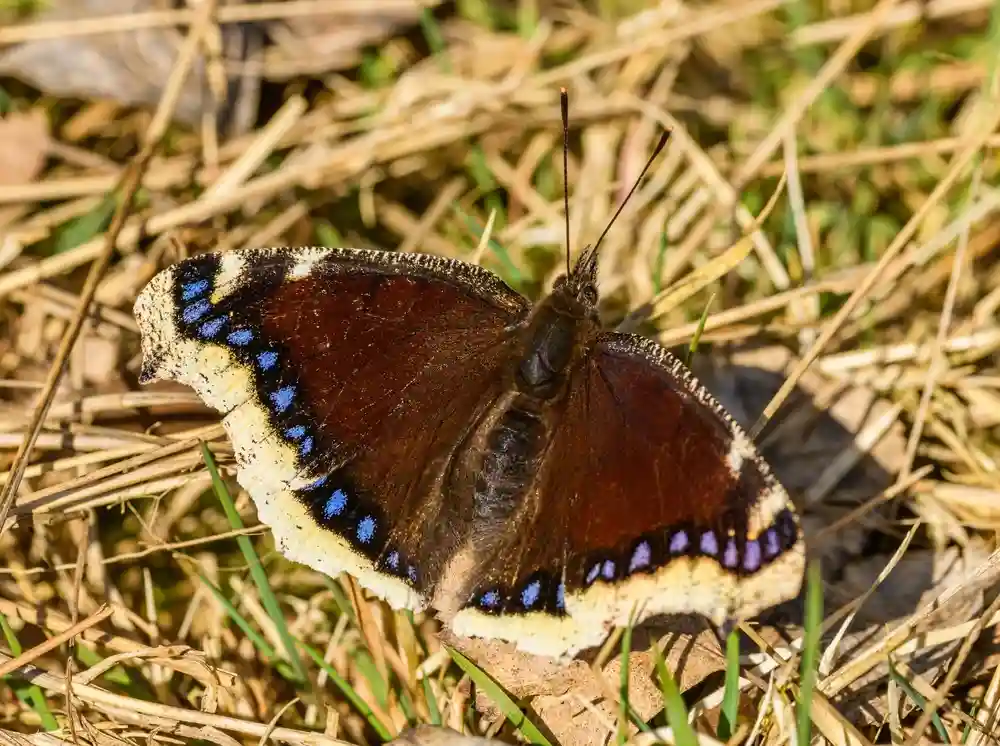 Nymphalis antiopaMourning Cloak (Nymphalis antiopa)The mourning cloak (Nymphalis antiopa) is a large dark butterfly of woodland, riverbank and suburb across North America and temperate Eurasia, and not
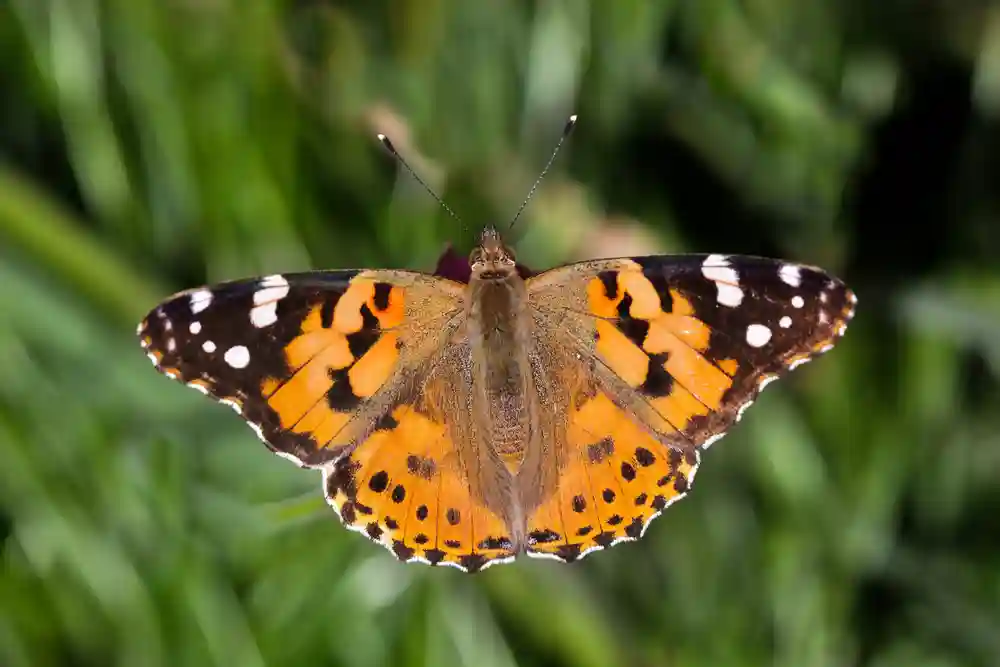 Vanessa carduiPainted Lady (Vanessa cardui)No other butterfly lives on so much of the planet.Aglais ioPeacock (Aglais io)Four huge eyespots on a rust-red ground make the peacock one of the most recognisable butterflies in Europe.
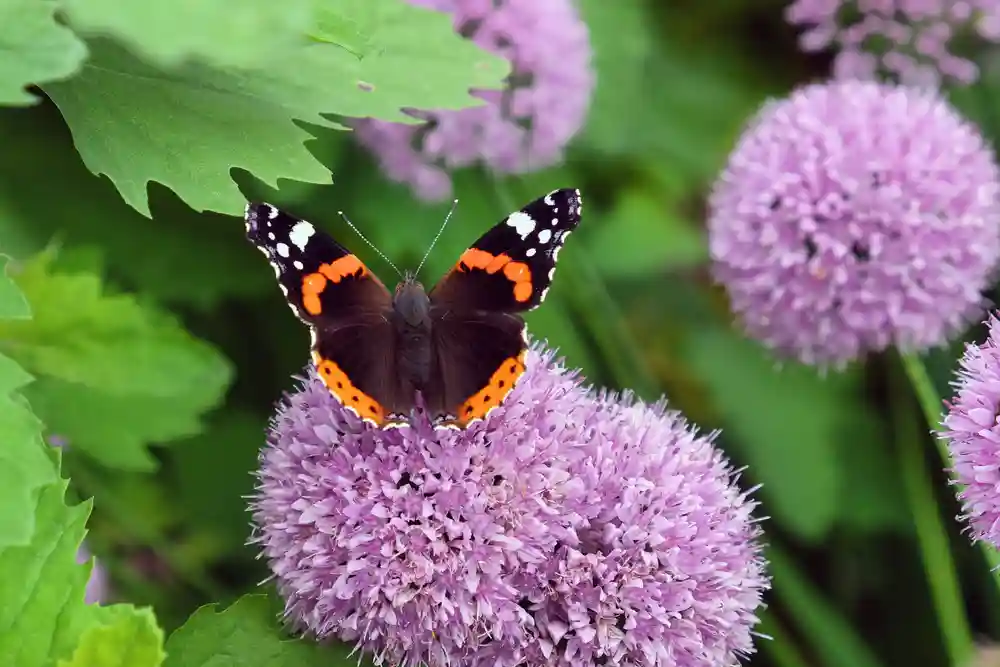 Vanessa atalantaRed Admiral (Vanessa atalanta)The red admiral (Vanessa atalanta) is a medium-sized blackish butterfly marked with one bright orange-red band across each forewing and a scatter of w
 Aglais urticaeSmall Tortoiseshell (Aglais urticae)Orange-red with a black-and-yellow chequered front edge and a rim of blue crescents, the small tortoiseshell is the butterfly that turns up on a garde
Show all 82 other brush-footed species names
- African Ringlet (Ypthima asterope)
- Anatolian Witch (Chazara egina)
- Assmann's Fritillary (Melitaea britomartis)
- Balkan Fritillary (Boloria graeca)
- Balkan Marbled White (Melanargia larissa)
- Buff Asian Grayling (Pseudochazara mamurra)
- Cardinal (Argynnis pandora)
- Chestnut Heath (Coenonympha glycerion)
- Danaid Eggfly (Hypolimnas misippus)
- Dark Brown (Chazara persephone)
- Dark Green Fritillary (Speyeria aglaja)
- Dark Rock Brown (Chazara briseis)
- Delattin's Grayling (Hipparchia volgensis)
- Dryad (Minois dryas)
- Dusky Meadow Brown (Hyponephele lycaon)
- Eastern Knapweed Fritillary (Melitaea ornata)
- Esper's Marbled White (Melanargia russiae)
- European Nettle-tree Butterfly (Libythea celtis)
- False Grayling (Arethusana arethusa)
- False Heath Fritillary (Melitaea diamina)
- Freyer's Fritillary (Melitaea arduinna)
- Freyer's Grayling (Hipparchia fatua)
- Freyer's Purple Emperor (Apatura metis)
- Geyer's Skipper (Pseudochazara geyeri)
- Glanville Fritillary (Melitaea cinxia)
- Great Banded Grayling (Brintesia circe)
- Heath Fritillary (Melitaea athalia)
- Hedge Brown (Pyronia tithonus)
- High Brown Fritillary (Fabriciana adippe)
- Hungarian Glider (Neptis rivularis)
- Large Tortoiseshell (Nymphalis polychloros)
- Large Wall Brown (Lasiommata maera)
- Lesser Marbled Fritillary (Brenthis ino)
- Lesser Purple Emperor (Apatura ilia)
- Levantine Marbled White (Melanargia titea)
- Map (Araschnia levana)
- Marbled Fritillary (Brenthis daphne)
- Marbled White (Melanargia galathea)
- Marsh Fritillary (Euphydryas aurinia)
- Meadow Brown (Maniola jurtina)
- Meadow Ringlet (Erebia ligea)
- Nickerl's Fritillary (Melitaea aurelia)
- Niobe Fritillary (Fabriciana niobe)
- Northern Wall Brown (Lasiommata petropolitana)
- Orange Hermit (Chazara bischoffii)
- Oriental Meadow Brown (Hyponephele lupina)
- Ottoman Brassy Ringlet (Erebia ottomana)
- Pearly Heath (Coenonympha arcania)
- Phoebe Fritillary (Melitaea phoebe)
- Plain Tiger (Danaus chrysippus)
- Queen of Spain Fritillary (Issoria lathonia)
- Ringlet (Aphantopus hyperantus)
- Roxelana's Grayling (Kirinia roxelana)
- Russian Heath (Coenonympha leander)
- Saadi Heath (Coenonympha saadi)
- Scotch Argus (Erebia aethiops)
- Silver-washed Fritillary (Argynnis paphia)
- Small Heath (Coenonympha pamphilus)
- Southern Comma (Polygonia egea)
- Southern Gatekeeper (Pyronia cecilia)
- Southern Grayling (Hipparchia aristaeus)
- Southern White Admiral (Limenitis reducta)
- Speckled Wood (Pararge aegeria)
- Spotted Fritillary (Melitaea didyma)
- Tawny Rockbrown (Pseudochazara mniszechii)
- Thalonian Emperor (Thaleropis ionia)
- Tree Grayling (Hipparchia statilinus)
- Turkish Meadow Brown (Maniola telmessia)
- Twin-spot Fritillary (Brenthis hecate)
- Two-tailed Pasha (Charaxes jasius)
- Wall Brown (Lasiommata megera)
- White Admiral (Limenitis camilla)
- White-edged Rock Brown (Hipparchia parisatis)
- Woodland Grayling (Hipparchia fagi)
- Woodland Ringlet (Erebia medusa)
- Yellow-legged Tortoiseshell (Nymphalis xanthomelas)
- Hipparchia syriaca
- Hyponephele hasantahsin
- Hyponephele urartua
- Melitaea irka
- Melitaea mesopotamica
- Pseudochazara lydia
Gossamer-Winged (Lycaenidae)
Polyommatus bellargusAdonis Blue (Polyommatus bellargus)The Adonis blue is a small butterfly of warm chalk and limestone grassland in Europe and western Asia, where the male's brilliant sky-blue wings and b Polyommatus icarusCommon Blue (Polyommatus Icarus)The common blue is a small grassland butterfly of Europe, North Africa and temperate Asia in which the male is violet-blue above and the female mostly
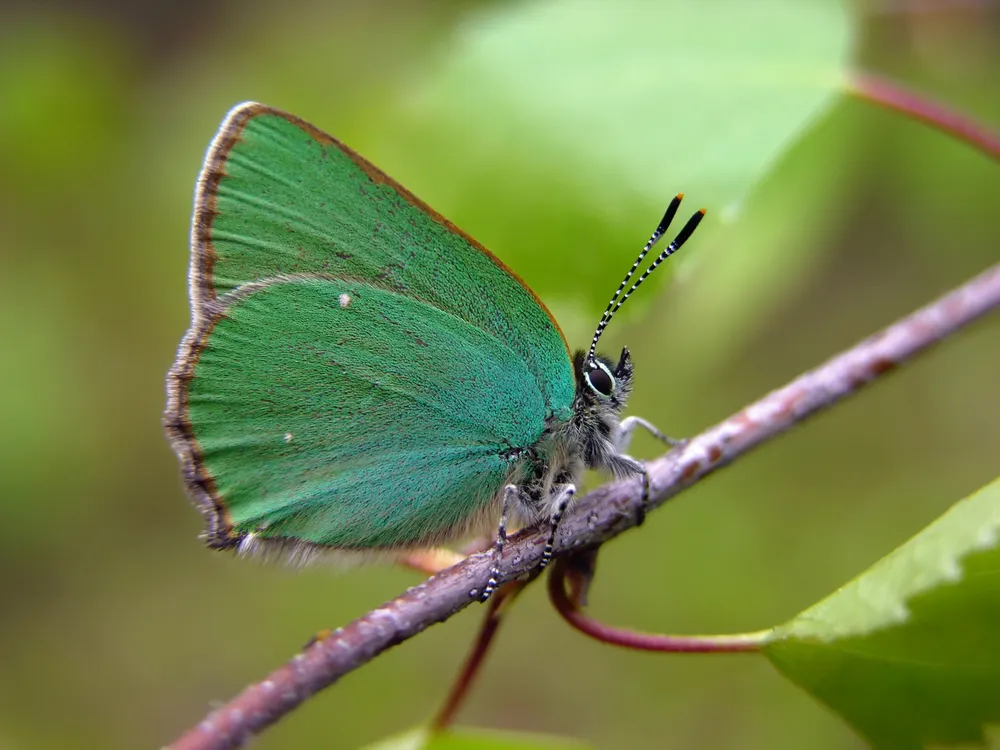 Callophrys rubiGreen Hairstreak (Callophrys rubi)The only butterfly in Europe with plain green undersides, the green hairstreak spends its whole adult life with its wings shut, so the brown upperside
 Celastrina argiolusHolly Blue (Celastrina argiolus)The holly blue is the small silvery-blue butterfly that flies round the tops of hedges and ivy-covered walls in spring, well above the height of every
 Phengaris arionLarge Blue (Phengaris arion)The large blue (Phengaris arion) is the biggest of Europe's blue butterflies, a bright blue insect with a row of bold black forewing spots that lives
 Polyommatus semiargusMazarine Blue (Polyommatus semiargus)A small, deep violet-blue butterfly of old hay meadows, the mazarine blue is best known for what it lacks: there is not a single orange mark on its pl
 Neozephyrus quercusPurple Hairstreak (Neozephyrus quercus)The purple hairstreak is a small silvery-grey butterfly of oak woodland across Europe, North Africa and western Asia, and it is identified in flight b
 Cupido minimusSmall Blue (Cupido minimus)The small blue is Britain's smallest butterfly, a sooty brown insect barely an inch across that lives in tight colonies on chalk and limestone grassla
 Lycaena phlaeasCommon Copper (Lycaena phlaeas)The common copper (Lycaena phlaeas), known as the small copper in Europe and the American copper in North America, is a small, fast-flying butterfly o
Show all 67 other gossamer-winged species names
- Acamas Blue (Cigaritis acamas)
- African Babul Blue (Azanus jesous)
- Alcon Blue (Phengaris alcon)
- Amanda's Blue (Polyommatus amandus)
- American Copper (Polyommatus turcicus)
- Anomalous Blue (Polyommatus admetus)
- Balkan Pierrot (Tarucus balkanicus)
- Bavius Blue (Pseudophilotes bavius)
- Blue Argus (Aricia anteros)
- Blue-spot Hairstreak (Satyrium spini)
- Brown Argus (Aricia agestis)
- Brown Hairstreak (Thecla betulae)
- Caucasian Vernal Copper (Tomares callimachus)
- Chalkhill Blue (Lysandra coridon)
- Chapman's Blue (Polyommatus thersites)
- Damon Blue (Polyommatus damon)
- Dark Grass Blue (Zizeeria karsandra)
- Dorylas Blue (Polyommatus dorylas)
- Dusky Large Blue (Phengaris nausithous)
- Eastern Baton Blue (Pseudophilotes vicrama)
- Eastern Brown Argus (Kretania eurypilus)
- Erivan Anomalous Blue (Polyommatus eriwanensis)
- Escher's Blue (Polyommatus escheri)
- False Chalkhill Blue (Lysandra corydonius)
- False Eros Blue (Polyommatus eroides)
- Geranium Argus (Eumedonia eumedon)
- Geranium Bronze (Cacyreus marshalli)
- Gerhard's Black Hairstreak (Satyrium abdominalis)
- Golden Copper (Lycaena thetis)
- Grass Jewel (Freyeria trochylus)
- Grecian Anomalous Blue (Polyommatus aroaniensis)
- Grecian Copper (Lycaena ottomanus)
- Greek Mazarine Blue (Cyaniris bellis)
- Green-underside Blue (Glaucopsyche alexis)
- Hyrcanian Hairstreak (Satyrium hyrcanicum)
- Idas Blue (Plebejus idas)
- Ilex Hairstreak (Satyrium ilicis)
- Lang's Short-tailed Blue (Leptotes pirithous)
- Large Copper (Lycaena dispar)
- Large Jewel Blue (Plebejidea loewii)
- Lesser Fiery Copper (Lycaena thersamon)
- Long-tailed Blue (Lampides boeticus)
- Meleager's Blue (Polyommatus daphnis)
- Mountain Alcon Blue (Phengaris rebeli)
- Nina's Blue (Polyommatus ninae)
- Northern Brown Argus (Aricia artaxerxes)
- Orange Banded Hairstreak (Satyrium ledereri)
- Orion Blue (Scolitantides orion)
- Osiris Blue (Cupido osiris)
- Persian Grass Blue (Luthrodes galba)
- Persian Odd-spot Blue (Turanana cytis)
- Pfeiffer's Green Hairstreak (Callophrys paulae)
- Provençal Short-tailed Blue (Cupido alcetas)
- Purple-shot Copper (Lycaena alciphron)
- Reverdin's Blue (Plebejus argyrognomon)
- Ripart's Anomalous Blue (Polyommatus ripartii)
- Romanoff's Hairstreak (Tomares romanovi)
- Scarce Copper (Lycaena virgaureae)
- Short-tailed Blue (Cupido argiades)
- Silver-studded Blue (Plebejus argus)
- Sloe Hairstreak (Satyrium acaciae)
- Sooty Copper (Lycaena tityrus)
- White-letter Hairstreak (Satyrium w-album)
- Anatolian False Argus (Aricia hyacinthus)
- Small Jewel Blue (Plebejus christophi)
- Anticarmon Blue (Polyommatus anticarmon)
- Valley Zap Blue (Polyommatus zapvadi)
Whites and Sulphurs (Pieridae)
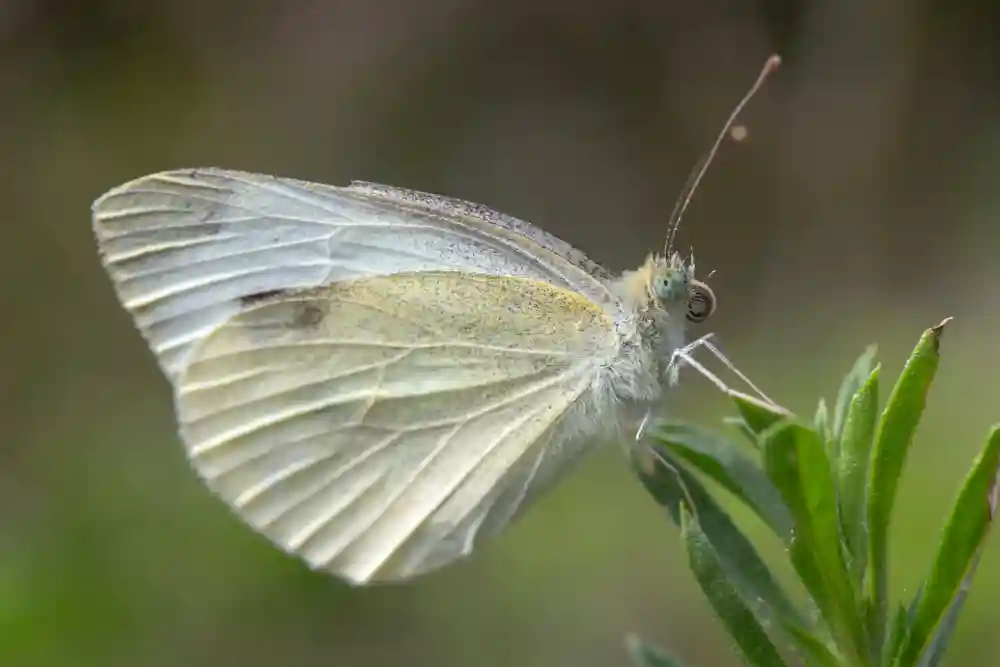 Pieris rapaeCabbage White (Pieris rapae)The cabbage white is probably the most-seen butterfly on the planet: a small, chalk-white insect with one or two black spots that drifts over allotmen
 Colias croceusClouded Yellow (Colias croceus)The clouded yellow (Colias croceus) is a fast, low-flying golden-orange butterfly of open grassland, breeding around the Mediterranean and North Afric
 Gonepteryx rhamniBrimstone (Gonepteryx rhamni)The brimstone is a large, leaf-shaped yellow butterfly of woodland edges, hedgerows and gardens across Europe, North Africa and temperate Asia, and th
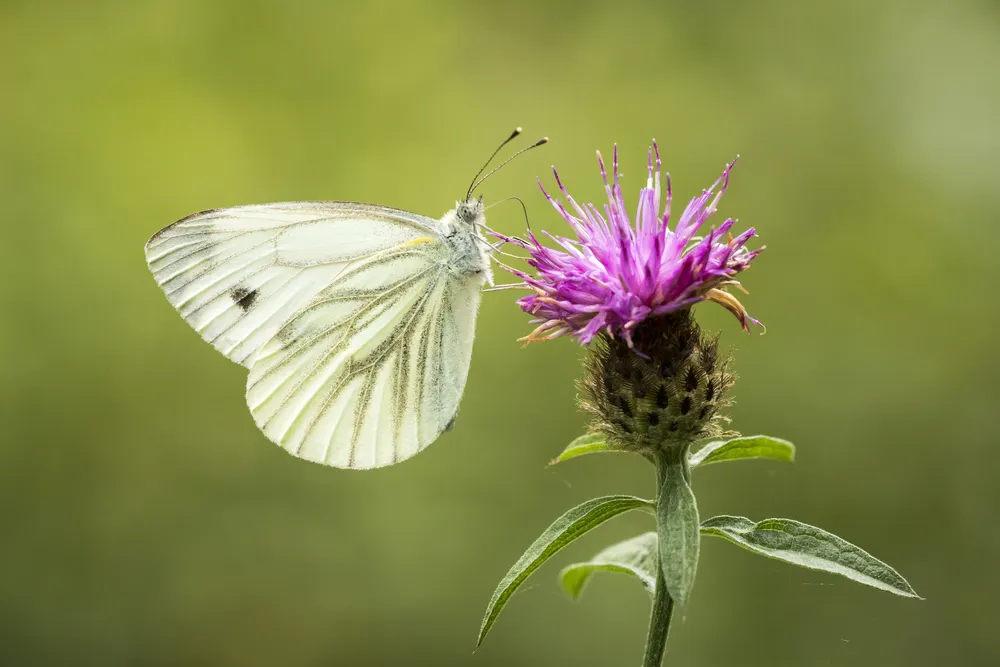 Pieris napiGreen-veined White (Pieris napi)The green-veined white (Pieris napi) is a medium-sized white butterfly of damp meadows, woodland rides, hedgerows and stream banks across Europe, Nort
 Anthocharis cardaminesOrange-tip (Anthocharis cardamines)The orange-tip is a small white butterfly of damp meadows, hedgerows, woodland rides and gardens across Europe and temperate Asia, and the male's defiPieris rapaeCabbage White (Pieris rapae)The cabbage white is probably the most-seen butterfly on the planet: a small, chalk-white insect with one or two black spots that drifts over allotmen
Show all 28 other whites and sulphurs species names
- Balkan Clouded Yellow (Colias caucasica)
- Bath White (Pontia daplidice)
- Berger's Clouded Yellow (Colias alfacariensis)
- Black-veined White (Aporia crataegi)
- Cleopatra (Gonepteryx cleopatra)
- Dark-veined White (Pieris bryoniae)
- Eastern Bath White (Pontia edusa)
- Eastern Dappled White (Euchloe ausonia)
- Eastern Greenish Black-tip (Euchloe penia)
- Eastern Orange Tip (Anthocharis damone)
- Eastern Pale Clouded Yellow (Colias erate)
- Eastern Wood White (Leptidea duponcheli)
- Fenton's Wood White (Leptidea morsei)
- Greek Clouded Butterfly (Colias aurorina)
- Green-striped White (Euchloe belemia)
- Green-underside White (Anthocharis gruneri)
- Krüper's Small White (Pieris krueperi)
- Large Salmon Arab (Colotis fausta)
- Lesser Bath White (Pontia chloridice)
- Pale Clouded Yellow (Colias hyale)
- Pale Grass Blue (Catopsilia florella)
- Peak White (Pontia callidice)
- Persian White (Pieris ergane)
- Pioneer White (Belenois aurota)
- Powdered Brimstone (Gonepteryx farinosa)
- Sooty Orange Tip (Zegris eupheme)
- Southern Small White (Pieris mannii)
- Wood White (Leptidea sinapis)
Metalmark (Riodinidae)
- Duke of Burgundy (Hamearis lucina)
Swallowtail (Papilionidae)
 Parnassius apolloApollo (Parnassius apollo)A large white mountain butterfly with black forewing spots and red, white-pupilled eyespots on the hindwings, the apollo is the emblem of European alpPapilio machaonOld World Swallowtail (Papilio machaon)The Old World swallowtail is a large yellow-and-black butterfly with a tail on each hindwing and a red eyespot above it, found right across Europe, No
 Iphiclides podaliriusScarce Swallowtail (Iphiclides podalirius)A cream-coloured swallowtail striped like a tiger and tailed like a sail, the scarce swallowtail is one of the great gliders of the European butterfly
- Alexandra's Swallowtail (Papilio alexanor)
- Chequered Swallowtail (Papilio demoleus)
- Clouded Apollo (Parnassius mnemosyne)
- Eastern Festoon (Allancastria cerisyi)
- False Apollo (Archon apollinus)
- Southern Festoon (Zerynthia polyxena)
Skipper (Hesperiidae)
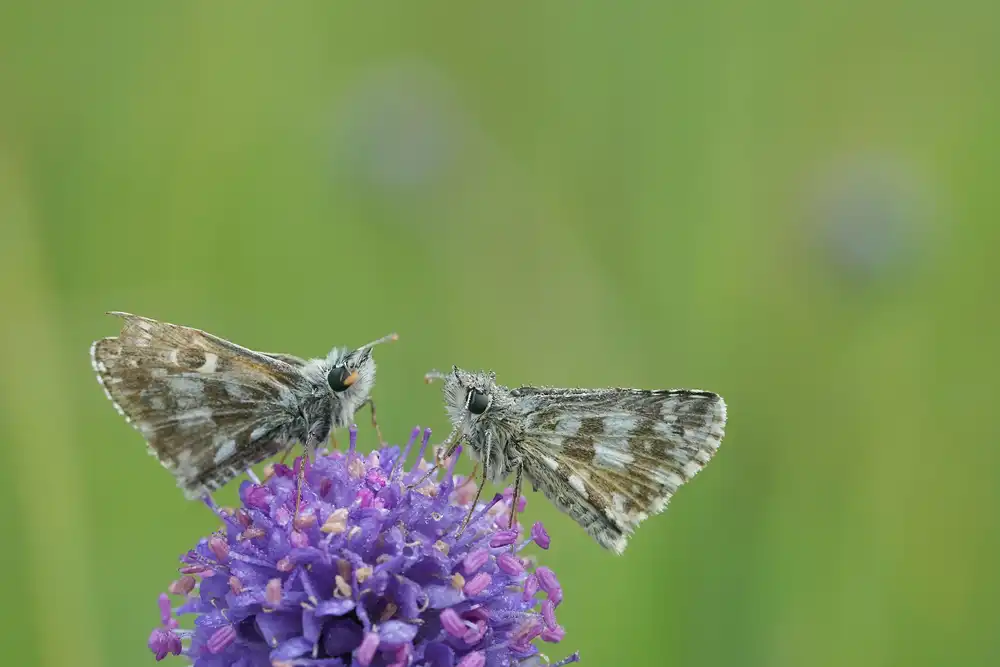
Show all 30 other skipper species names
- Aegean Skipper (Pyrgus melotis)
- Caucasian Skipper (Pyrgus jupei)
- Chequered Skipper (Carterocephalus palaemon)
- Cinquefoil Skipper (Pyrgus cirsii)
- Dingy Skipper (Erynnis tages)
- Dingy Swift (Gegenes nostrodamus)
- Hungaria Skipper (Spialia orbifer)
- Inky Skipper (Erynnis marloyi)
- Large Chequered Skipper (Heteropterus morpheus)
- Large Grizzled Skipper (Pyrgus alveus)
- Large Skipper (Ochlodes sylvanus)
- Levantine Skipper (Thymelicus hyrax)
- Lulworth Skipper (Thymelicus acteon)
- Mallow Skipper (Carcharodus alceae)
- Marbled Skipper (Carcharodus lavatherae)
- Oberthür's Grizzled Skipper (Pyrgus armoricanus)
- Olive Skipper (Pyrgus serratulae)
- Oriental Skipper (Carcharodus orientalis)
- Pale Small-branded Swift (Pelopidas thrax)
- Persian Skipper (Spialia phlomidis)
- Pygmy Skipper (Gegenes pumilio)
- Safflower Skipper (Pyrgus carthami)
- Sage Skipper (Muschampia proto)
- Sandy-grizzled Skipper (Pyrgus cinarae)
- Silver-spotted Skipper (Hesperia comma)
- Small Skipper (Thymelicus sylvestris)
- Stauder's Clouded Yellow (Carcharodus stauderi)
- Tessellated Skipper (Muschampia tessellum)
- Tufted Marbled Skipper (Carcharodus flocciferus)
- Yellow-banded Skipper (Pyrgus sidae)
How to identify butterflies in Turkey
Most Turkish butterflies can be named from a clear photograph of the underside, and the family is the first thing to settle. Swallowtails and festoons are large with scalloped or tailed hindwings; whites and sulphurs are white, yellow or orange; the browns, graylings and fritillaries are the brush-foots with eyespots or orange chequering; the blues and coppers are small with fine underside spotting; and the skippers are stout, moth-like and fast. The pages on Butterflies of the World cover the neighbouring countries with the same families.
The hard groups are the same for everyone. The graylings (Hipparchia, Pseudochazara, Chazara) rest with wings shut and are told by the underside marbling and the size of the forewing eyespots. The Melitaea fritillaries are separated by the underside hindwing bands, and the anomalous blues by the presence or absence of a pale streak on the underside hindwing and by locality, since many endemics never overlap. Record the date, the altitude and the province with every photograph; in Turkey, where a species was seen is often the most useful identification clue of all.
Frequently asked questions about Turkish butterflies
How many species of butterflies are found in Turkey?
Around 400 butterfly species have been recorded in Turkey, the largest total of any country in the Western Palearctic and more than any country in Europe. Roughly 45 of them are endemic, found only within Turkey, and most of those are blues of the genus Polyommatus living on the Anatolian steppe and its mountains.
Why does Turkey have so many butterflies?
Turkey lies where Europe, Asia and the Middle East meet, so butterflies from all three regions reach it, and its landscapes range from Mediterranean coast to 5,000 m peaks and semi-desert. Isolated mountain ranges on the Anatolian plateau also allowed many blues and graylings to evolve into separate species, which is why the country has so many endemics.
What is the most common family of butterflies in Turkey?
The brush-footed butterflies (Nymphalidae) and the blues, coppers and hairstreaks (Lycaenidae) are the two largest families in Turkey, each with well over a hundred species. The brush-foots include the fritillaries, graylings, browns and emperors, while the Lycaenidae contain most of the endemic species, particularly the Polyommatus blues.
Are there butterflies found only in Turkey?
Yes, roughly 45 butterfly species are endemic to Turkey. Most are blues of the genus Polyommatus, such as the Turkish Blue, Nina's Blue and the Valley Zap Blue, along with a few browns, graylings and fritillaries of eastern Anatolia. Several are known from only one or two mountain valleys and are considered threatened.
When is the best time to see butterflies in Turkey?
June and July are the peak months in most of Turkey, when the steppe, meadows and mountain tracks hold the most species. The Mediterranean coast starts in March with festoons and overwintered species, the high pastures of the Kaçkar and Taurus are best from late July to August, and a smaller autumn flight follows the first rains on the coast.
What is the largest butterfly in Turkey?
The Two-tailed Pasha is the largest butterfly in Turkey, with a wingspan of up to about 85 mm and a fast, powerful flight around strawberry trees on the Mediterranean and Aegean coasts. The Old World Swallowtail and the Scarce Swallowtail are almost as large and are far more widespread across the country.
What fritillary butterflies live in Turkey?
Turkey has more than twenty fritillaries. The larger ones include the Silver-washed, Dark Green, High Brown, Niobe and Cardinal, while the Melitaea group contains the Glanville, Heath, Spotted, Phoebe and several eastern species such as Freyer's Fritillary. The Marsh Fritillary and Queen of Spain Fritillary are also widespread in suitable habitat.
Can you find Marbled White butterflies in Turkey?
Yes, Turkey has several marbled whites of the genus Melanargia, which are black-and-white browns rather than true whites. The Marbled White itself is common in the north-west, the Balkan Marbled White and Levantine Marbled White cover most of Anatolia, and Esper's Marbled White flies on the steppe and dry grassland of the interior.
Do Monarch butterflies live in Turkey?
No, the Monarch is not established in Turkey. Its African relative the Plain Tiger does breed along the Mediterranean coast around Antalya and Hatay, feeding on milkweeds, and the closely related Danaid Eggfly is a rare migrant in the south. Both are the only milkweed butterflies regularly seen in the country.
Which Turkish butterflies are threatened?
The 2011 national Red Book found many of Turkey's endemic blues, graylings and browns to be threatened, some known from a single valley. Wider-ranging species of concern include the Apollo, Large Copper and Dusky Large Blue, all protected under the Bern Convention. Overgrazing, dam construction, irrigation of mountain meadows and tourism development are the main threats.
Published November 30, 2023 · Last updated September 21, 2026