
Butterflies in Canada
Canada has around 300 butterfly species, from the Carolinian woods of southern Ontario, where swallowtails, emperors and hairstreaks reach their northern limit, to the tundra of Nunavut, where alpines, arctics and fritillaries take two summers to grow up. The everyday butterflies are the Canadian Tiger Swallowtail, the Mourning Cloak, the Cabbage White and the sulphurs, while the Monarch, now listed as Endangered in Canada, gathers at Point Pelee every September before its flight to Mexico. There is no national butterfly, although Quebec chose the White Admiral as its insect emblem.

On this page
- Butterflies found in Canada
- Butterflies of Canada at a glance
- Signature Canadian butterflies
- The Canadian butterfly calendar
- Where to see butterflies in Canada
- Host plants and butterfly gardening in Canada
- Rare and threatened butterflies in Canada
- How to identify butterflies in Canada
- Frequently asked questions
Butterflies of Canada at a glance
Canada is the second-largest country on Earth but a cold one, and its butterfly list of roughly 300 species is modest for its size. Diversity is concentrated in two corners: the Carolinian zone of southern Ontario, where the Giant Swallowtail, Hackberry Emperor and Zebra Swallowtail reach the top of their range, and the dry valleys of southern British Columbia, with their western swallowtails, checkerspots and blues. Between them the prairies hold the skippers and fritillaries of native grassland, and the boreal forest and tundra that cover most of the country belong to a small, hardy set of species found nowhere else in the world outside Alaska and Siberia.
The brush-footed butterflies make up about a third of the fauna, with an exceptional run of fritillaries, commas and tortoiseshells, and the Arctic specialists: a dozen alpines (Erebia) and a dozen arctics (Oeneis). The blues, coppers and hairstreaks and the skippers are next, and the whites and sulphurs include more Colias sulphurs than any other country, several of them purely northern. The swallowtails number about fifteen, and the Mormon Metalmark of the BC and Saskatchewan badlands is the lone metalmark.
Signature Canadian butterflies
The Canadian Tiger Swallowtail is the butterfly most Canadians know, a yellow-and-black swallowtail that flies in a single June brood from Newfoundland to the Yukon, replacing the larger Eastern Tiger Swallowtail north of a line through southern Ontario. Its northern cousin, the Old World Swallowtail, is one of the few butterflies to fly on the tundra, and the Mourning Cloak is the first butterfly of spring almost everywhere, waking from hibernation to fly over the last snow in March.

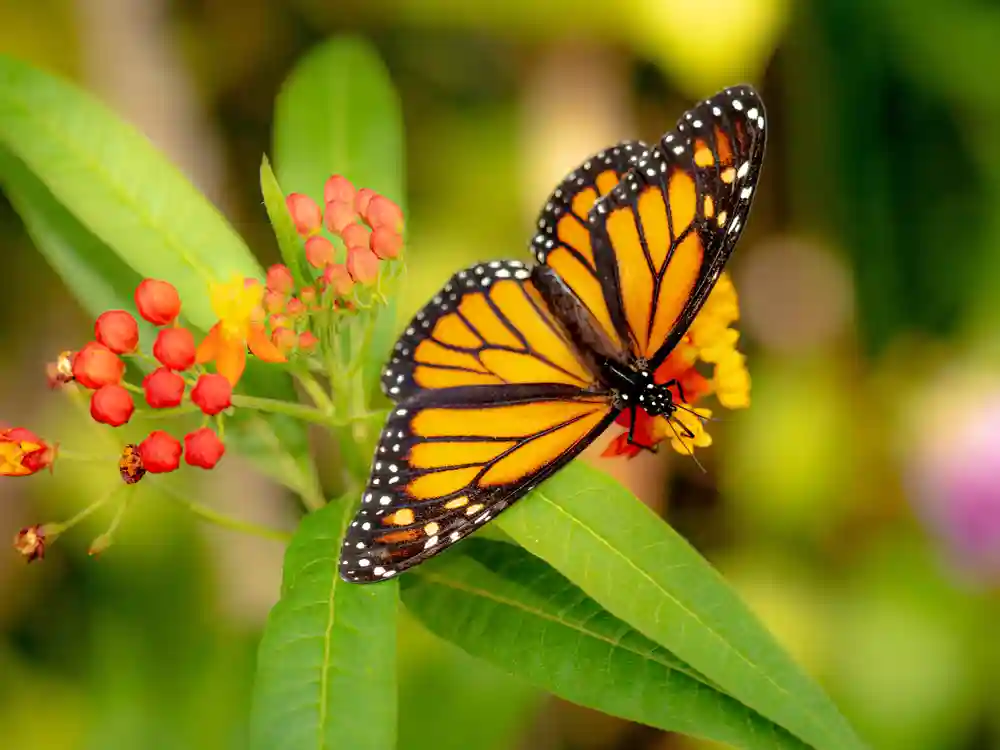
The Monarch is the national celebrity. Adults arrive in southern Canada in late May and June, breed on milkweed through the summer, and in September the last generation streams south along the Great Lakes shorelines, roosting in thousands at Point Pelee and Long Point before crossing Lake Erie on the way to Mexico. The White Admiral, chosen as Quebec's insect emblem by public vote in 1998, glides along every woodland road east of Manitoba, and the Compton and Milbert's Tortoiseshells, the commas and the Cabbage White round out the everyday list.
The north has its own celebrities. Polaris, Frigga and Freija Fritillaries, the Arctic Blue, the Hecla and Labrador Sulphurs and the alpines and arctics live on the tundra and take two summers to complete a life cycle, spending two winters frozen as caterpillars. They are the species Canada shares with Alaska and Siberia rather than with the lower 48 states.
The Canadian butterfly calendar
The season starts with the hibernators. Mourning Cloaks, Compton and Milbert's Tortoiseshells and the commas spend the winter as adults in woodpiles and bark crevices and fly on the first warm days of March and April, weeks before anything emerges from a chrysalis; our guide to where butterflies go in winter explains how they survive minus 30. May brings the spring specialists: the elfins on pine and blueberry, the Spring Azure, the Olympia Marble and the Silvery Blue on the prairie, and the Canadian Tiger Swallowtail in early June.
Late June to early August is the peak across the country, when the fritillaries, sulphurs, crescents, hairstreaks and grass skippers are all flying at once and a good Ontario meadow can produce forty species in a morning; on the tundra the whole season is squeezed into July. Late summer belongs to the immigrants that cannot survive a Canadian winter, the Painted Lady, Red Admiral, Common Buckeye and Fiery Skipper, which breed here in warm years and then vanish. September is Monarch month along the Great Lakes, described in our guide to butterfly migration, and by October only the hibernators remain, feeding on fallen apples before they settle down for the winter.
Where to see butterflies in Canada
Southern Ontario is the hub, but every province has a signature site.
- Point Pelee National Park, Ontario — the Monarch roosts of mid-September, plus Carolinian rarities such as the Giant Swallowtail and Hackberry Emperor in summer.
- Pinery Provincial Park and the Ojibway Prairie, Ontario — oak savanna and tallgrass prairie, home of the reintroduced Mottled Duskywing and the last Canadian records of the Karner Blue.
- Niagara Parks Butterfly Conservatory and the Cambridge Butterfly Conservatory — glasshouses with around 2,000 free-flying tropical butterflies all year, and the Montreal Insectarium's spring butterfly release.
- Manitoba Tall Grass Prairie Preserve — the Poweshiek Skipperling and Dakota Skipper in early July.
- Okanagan and Similkameen valleys, British Columbia — the richest butterfly region in the west, with Pale and Two-tailed Swallowtails, Mormon Metalmark and Behr's Hairstreak.
- Churchill, Manitoba, and the Dempster Highway, Yukon — Arctic fritillaries, alpines and arctics in July.
The Ontario fauna is shared almost entirely with Michigan and New York across the lakes.
Host plants and butterfly gardening in Canada
A Canadian butterfly garden must feed caterpillars as well as adults, and the best host plants are native and winter-hardy.
- Common and swamp milkweed — the Monarch; since its Endangered listing, milkweed has been planted in thousands of Canadian gardens and schoolyards.
- Willow, birch, aspen and cherry — Canadian Tiger Swallowtail, Mourning Cloak, White Admiral and Compton Tortoiseshell.
- Dill, parsley and Queen Anne's lace — Black and Old World Swallowtails.
- Nettles — Milbert's Tortoiseshell, Red Admiral, Eastern Comma and Question Mark.
- Violets — the Great Spangled, Aphrodite and Meadow Fritillaries.
- Clovers, vetches and wild lupine — the sulphurs, Eastern Tailed-Blue and Silvery Blue.
For nectar, lilac and dandelions carry the spring, milkweed, purple coneflower, bergamot and Joe-Pye weed the summer, and New England aster and goldenrod the crucial September weeks when Monarchs are fuelling for Mexico. Leave leaf litter and dead stems standing over winter, since that is where most Canadian butterflies spend it as eggs, caterpillars or chrysalises.
Rare and threatened butterflies in Canada
Canada has already lost butterflies. The Karner Blue, once found on the oak savannas of southern Ontario, was last seen at Port Franks in 1991 and is officially extirpated, despite the older claim that it can still be spotted; the Frosted Elfin went at the same time, and the Regal Fritillary disappeared from the Manitoba and Ontario prairies decades earlier. All three were victims of the ploughing and fire suppression that removed wild lupine and native grassland.

The federal Species at Risk Act now protects more than twenty butterflies. The Monarch was uplisted to Endangered in December 2023 after the collapse of its Mexican wintering colonies. The Poweshiek Skipperling survives in Canada on a single Manitoba preserve, the Dakota Skipper hangs on in Manitoba and Saskatchewan grassland, the Maritime Ringlet lives only in the salt marshes of Chaleur Bay, and in British Columbia Taylor's Checkerspot and Behr's Hairstreak are down to a few colonies. The Mottled Duskywing is the success story: captive-bred adults have been released at Pinery Provincial Park since 2021, the first butterfly reintroduction in Canadian history.

Butterflies found in Canada
299 species listed for Canada, grouped by family. Linked names have a full profile on this site with pictures of every life stage.
Brush-Footed (Nymphalidae)
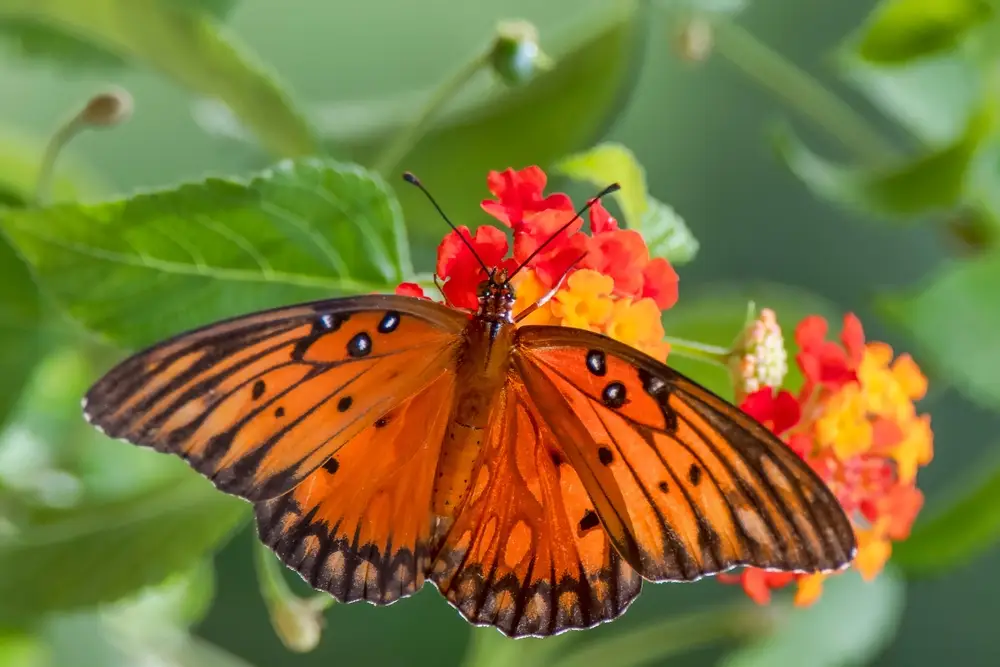 Agraulis vanillaeGulf Fritillary (Agraulis vanillae)The Gulf fritillary is a long-winged orange butterfly of the southern United States, Mexico, the Caribbean and tropical America, and its defining mark
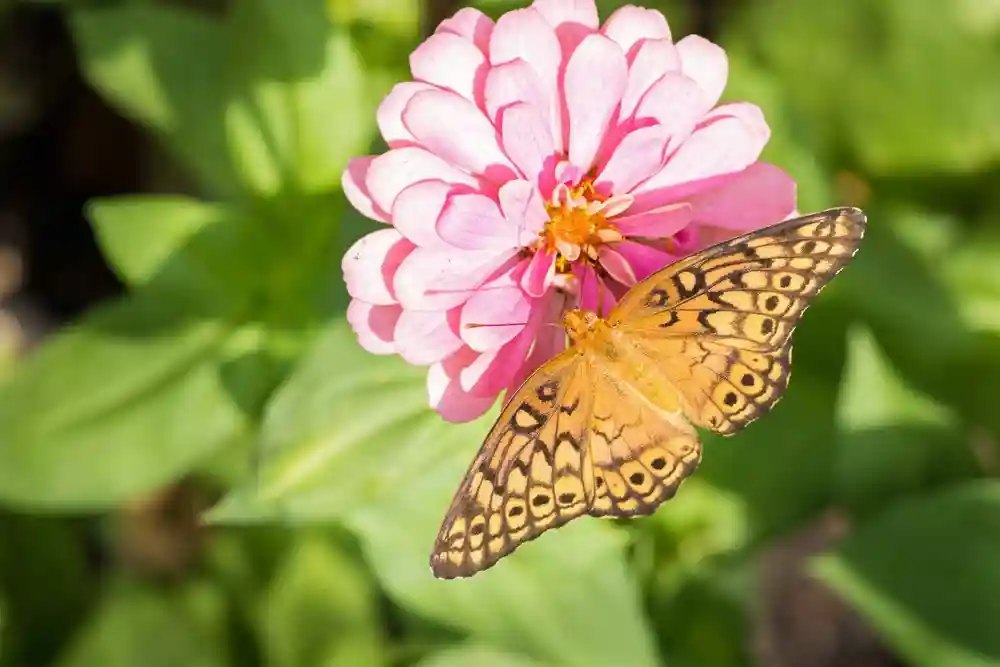 Euptoieta claudiaVariegated Fritillary (Euptoieta claudia)Half fritillary and half longwing, the variegated fritillary is the orange butterfly of American roadsides, pastures and vacant lots.
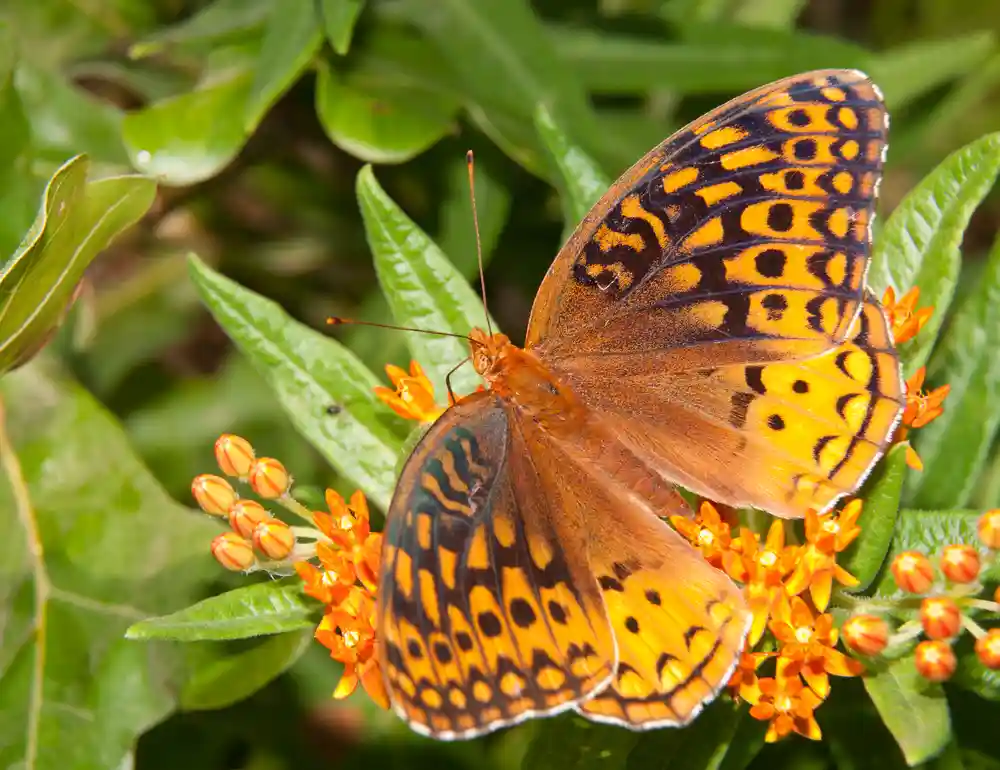 Speyeria cybeleGreat Spangled Fritillary (Speyeria cybele)A big orange butterfly of summer meadows, the great spangled fritillary is named for the sheet of silver spangles on the underside of its hindwings.
 Speyeria aphroditeAphrodite Fritillary (Speyeria aphrodite)The Aphrodite fritillary (Speyeria aphrodite) is a large orange-and-black butterfly of prairies, dry fields and open woodland across southern Canada a
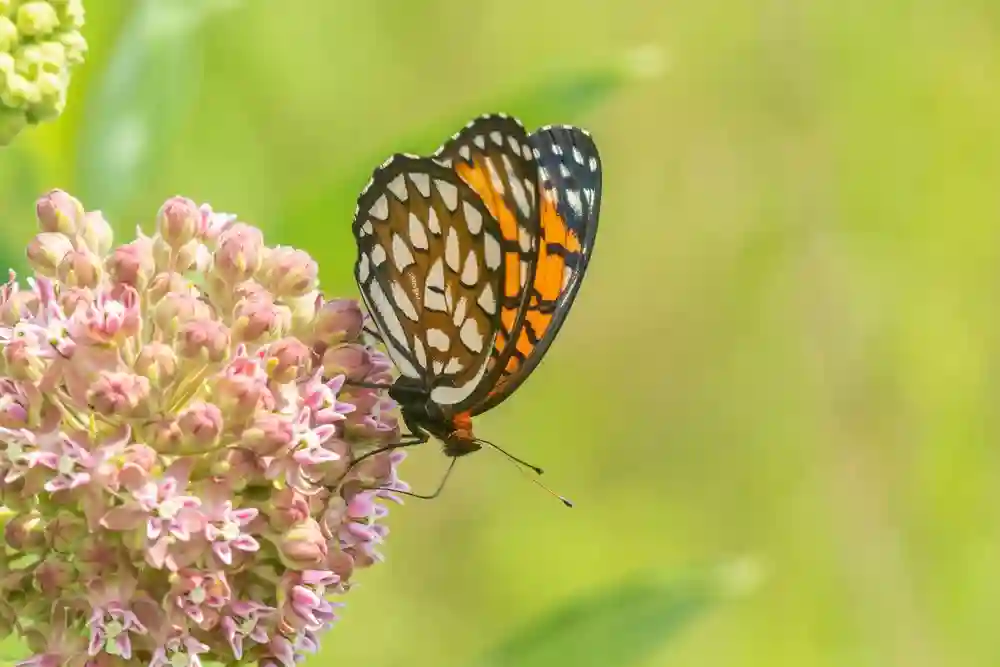 Speyeria idaliaRegal Fritillary (Speyeria idalia)Big, fast and unmistakable, the regal fritillary is the butterfly of the North American tallgrass prairie: orange forewings, near-black hindwings stud
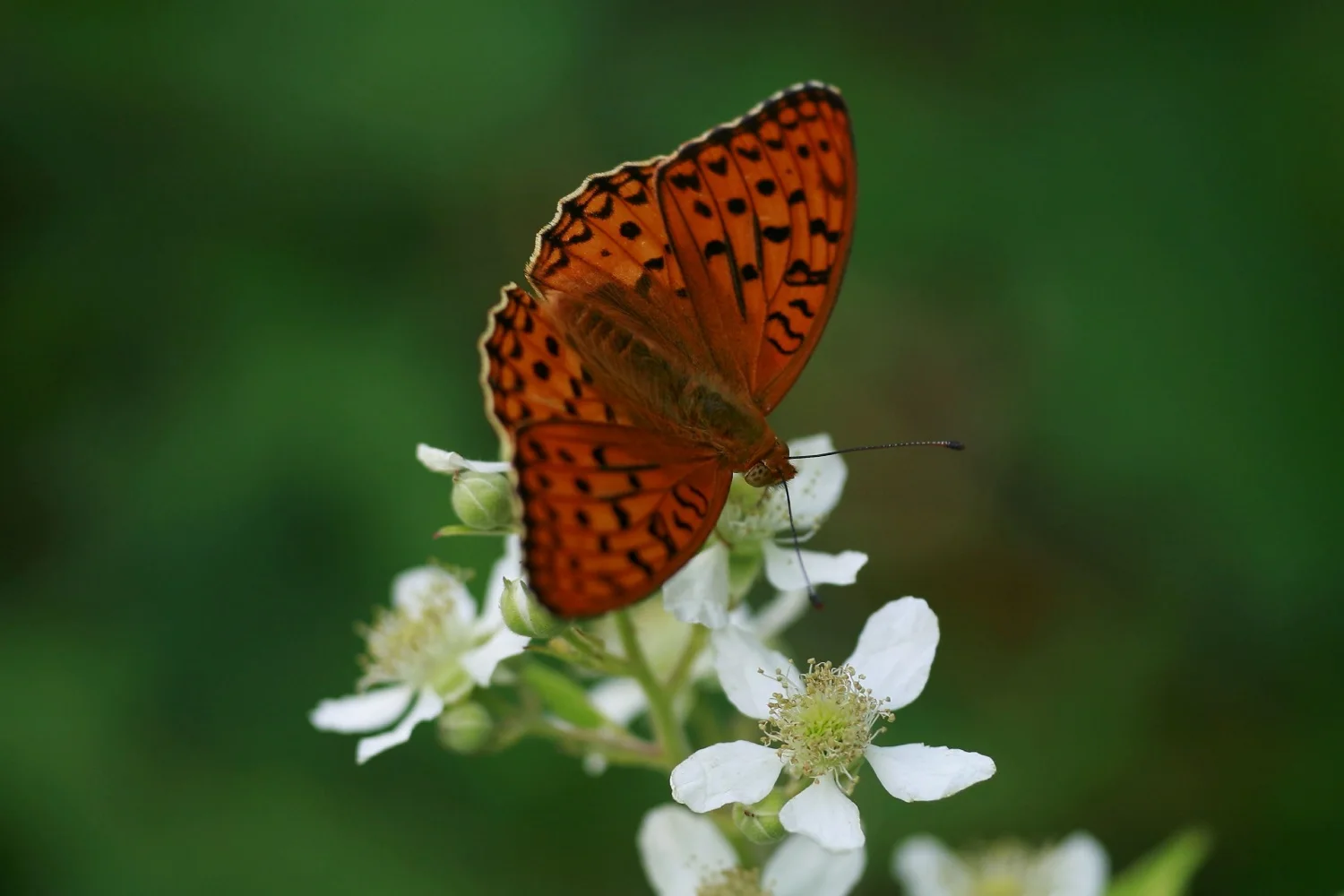 Boloria bellonaMeadow Fritillary (Boloria bellona)The meadow fritillary is a small orange-and-black butterfly of damp meadows and pastures across southern Canada and the northern United States, and th
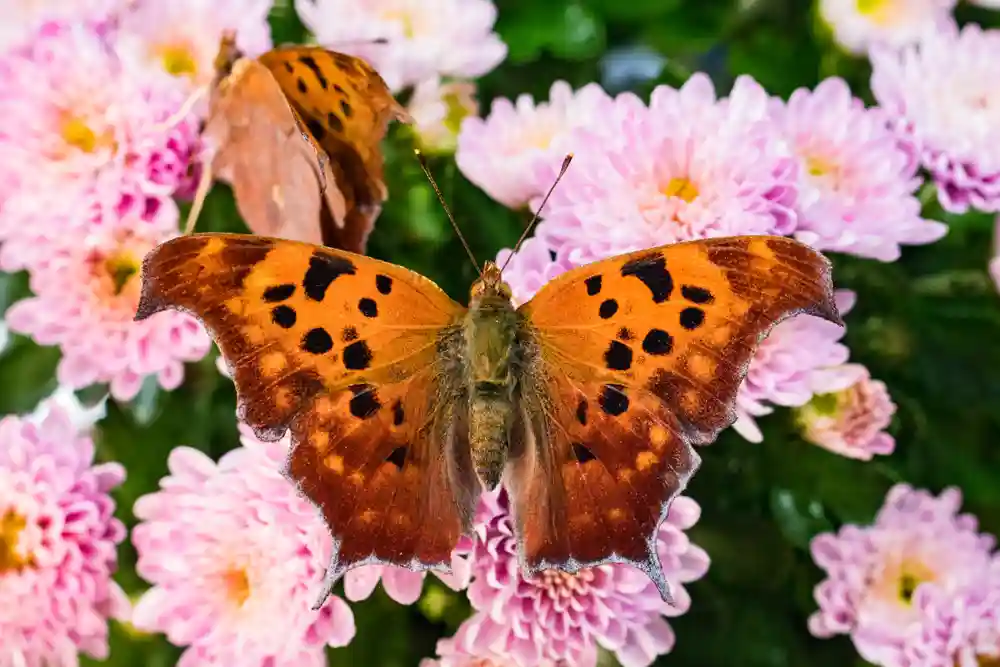 Polygonia interrogationisQuestion Mark (Polygonia interrogationis)The question mark is the largest of the North American anglewings, an orange-and-black woodland butterfly of the eastern United States, southeastern C
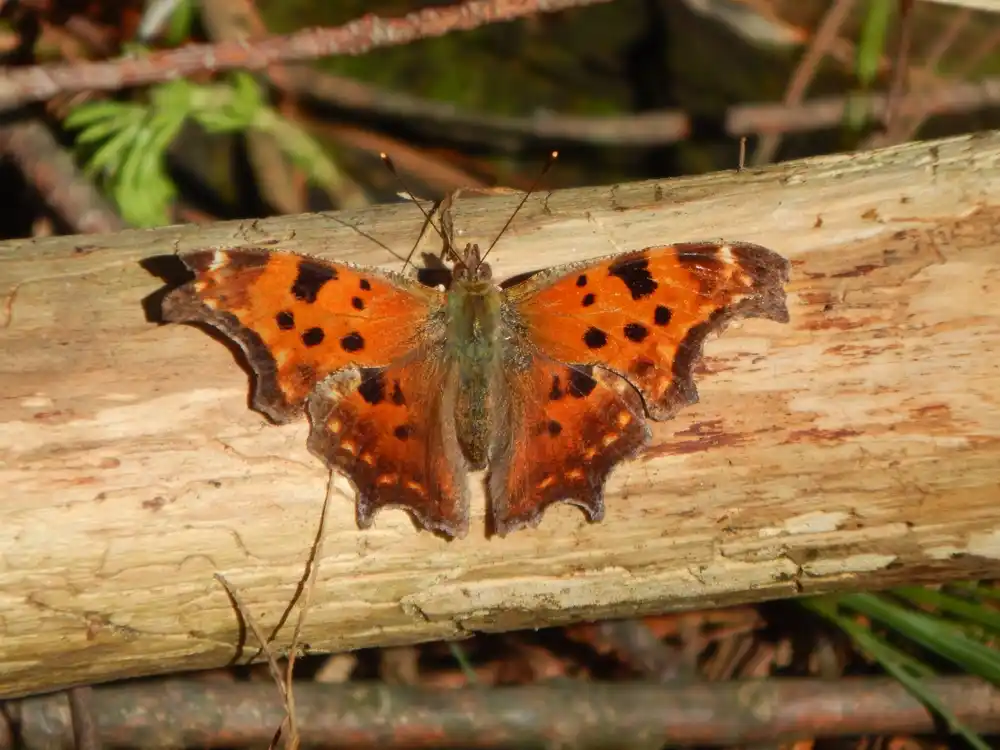 Polygonia commaEastern Comma (Polygonia comma)The eastern comma is an orange-and-black woodland butterfly of eastern North America with deeply ragged wing edges and a silvery comma-shaped mark on
 Nymphalis californicaCalifornia Tortoiseshell (Nymphalis californica)The California tortoiseshell (Nymphalis californica) is a fast, hook-winged orange butterfly of the brushfields and mountain forests of western North
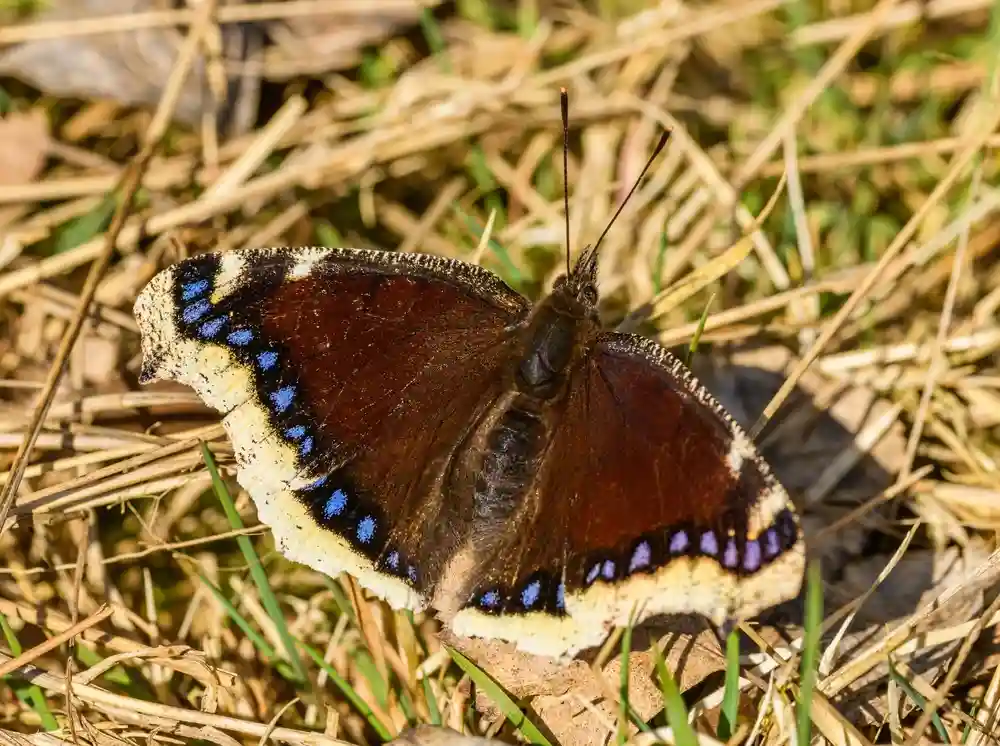 Nymphalis antiopaMourning Cloak (Nymphalis antiopa)The mourning cloak (Nymphalis antiopa) is a large dark butterfly of woodland, riverbank and suburb across North America and temperate Eurasia, and not
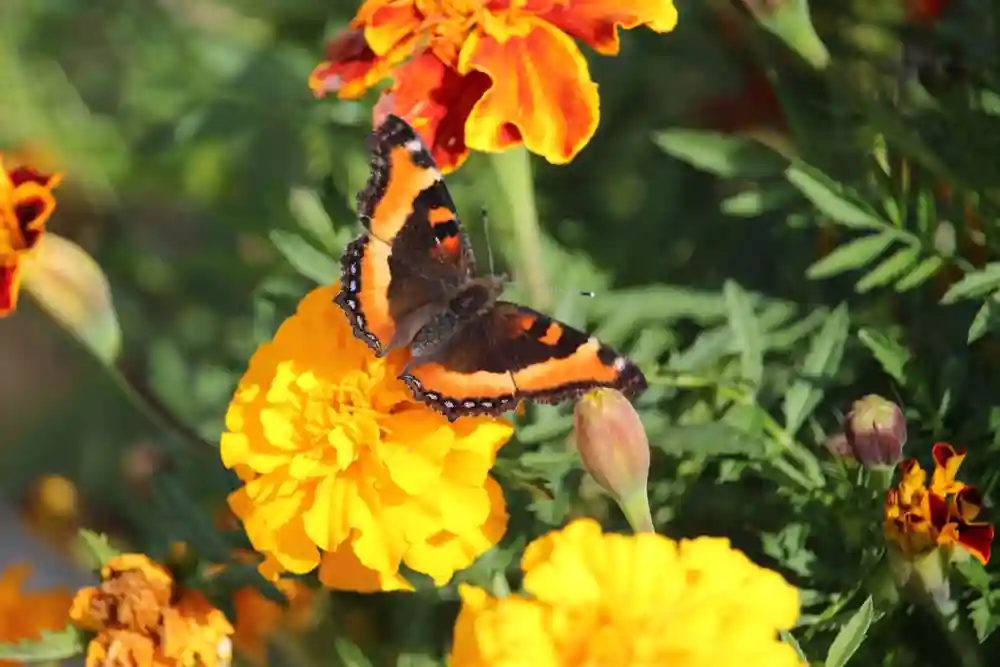 Aglais milbertiMilbert’s Tortoiseshell (Aglais milberti)Milbert’s tortoiseshell (Aglais milberti) is a medium-sized brush-footed butterfly of northern North America, from Alaska and Canada south through the
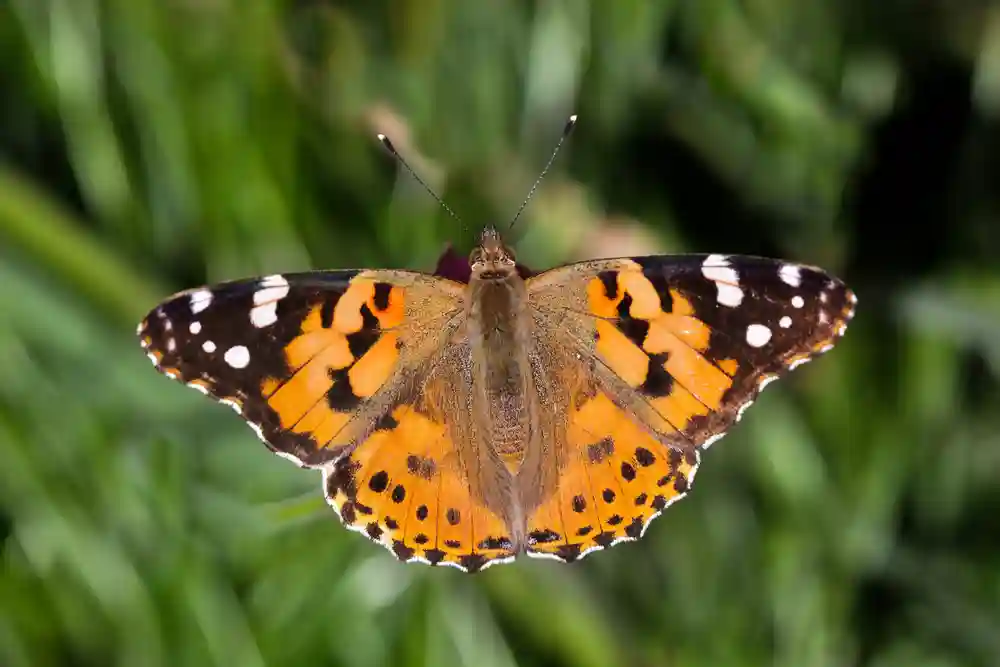 Vanessa carduiPainted Lady (Vanessa cardui)No other butterfly lives on so much of the planet.
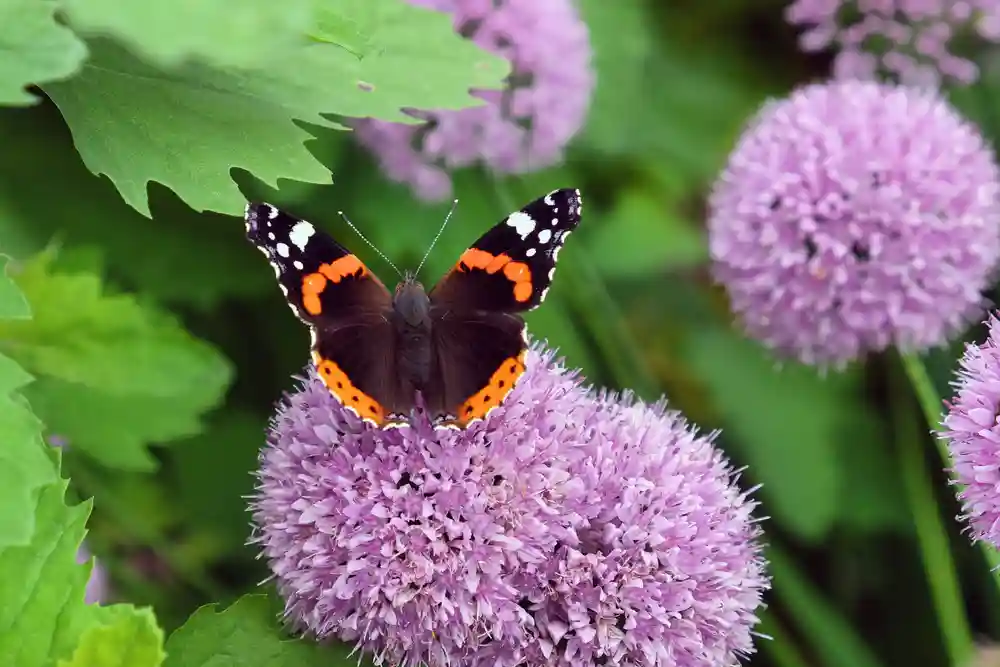 Vanessa atalantaRed Admiral (Vanessa atalanta)The red admiral (Vanessa atalanta) is a medium-sized blackish butterfly marked with one bright orange-red band across each forewing and a scatter of w
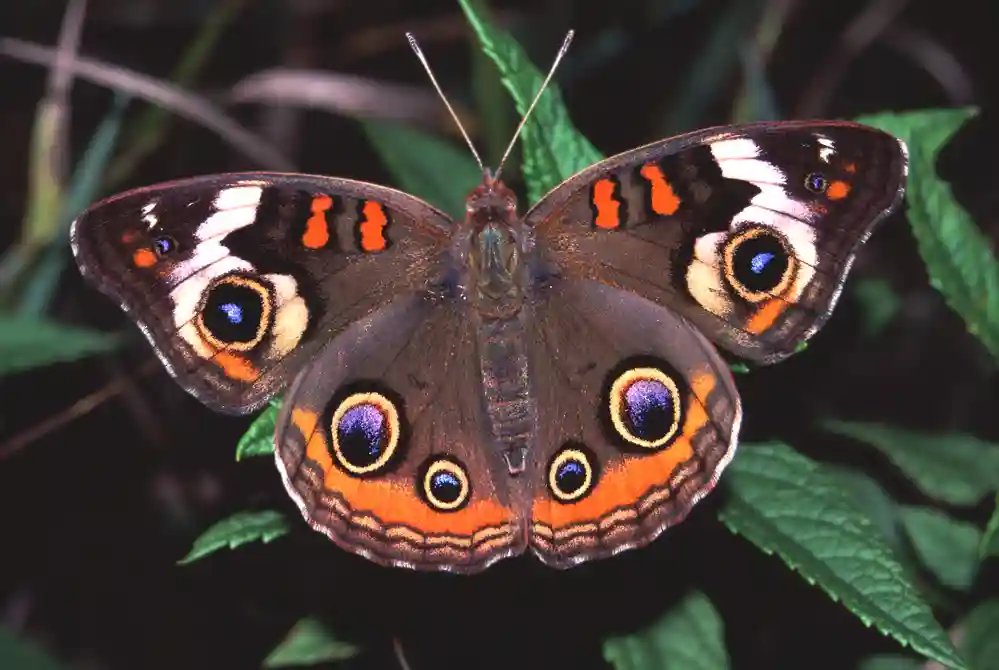 Junonia coeniaCommon Buckeye (Junonia coenia)Six large eyespots on a brown ground make the common buckeye one of the easiest North American butterflies to name and one of the hardest to approach.
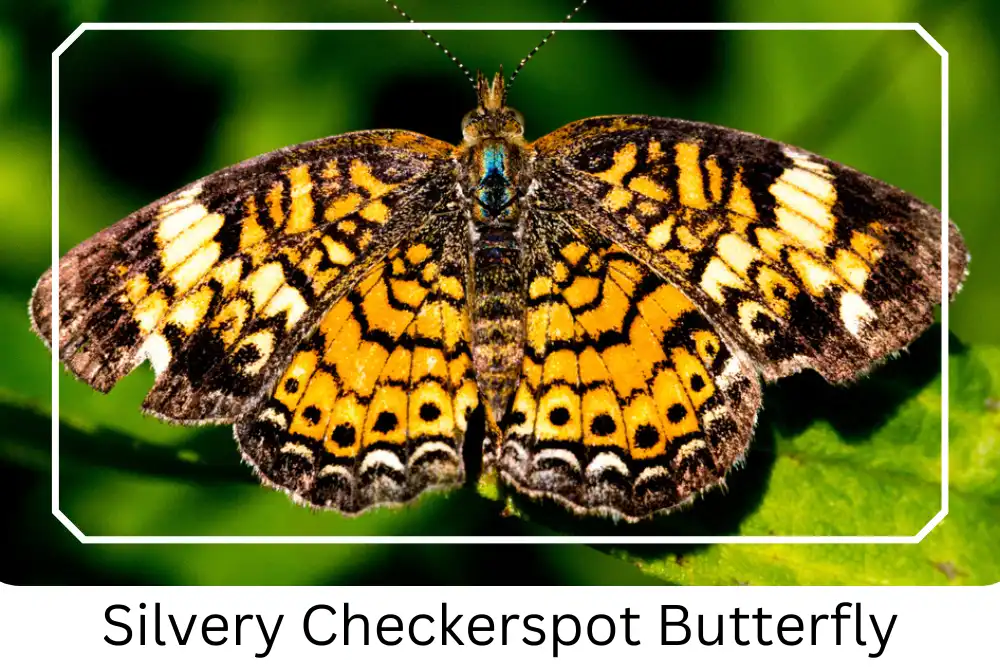 Chlosyne nycteisSilvery Checkerspot (Chlosyne nycteis)A medium-sized orange-and-black brush-foot of damp meadows and stream banks across eastern North America, the silvery checkerspot is named for the pal
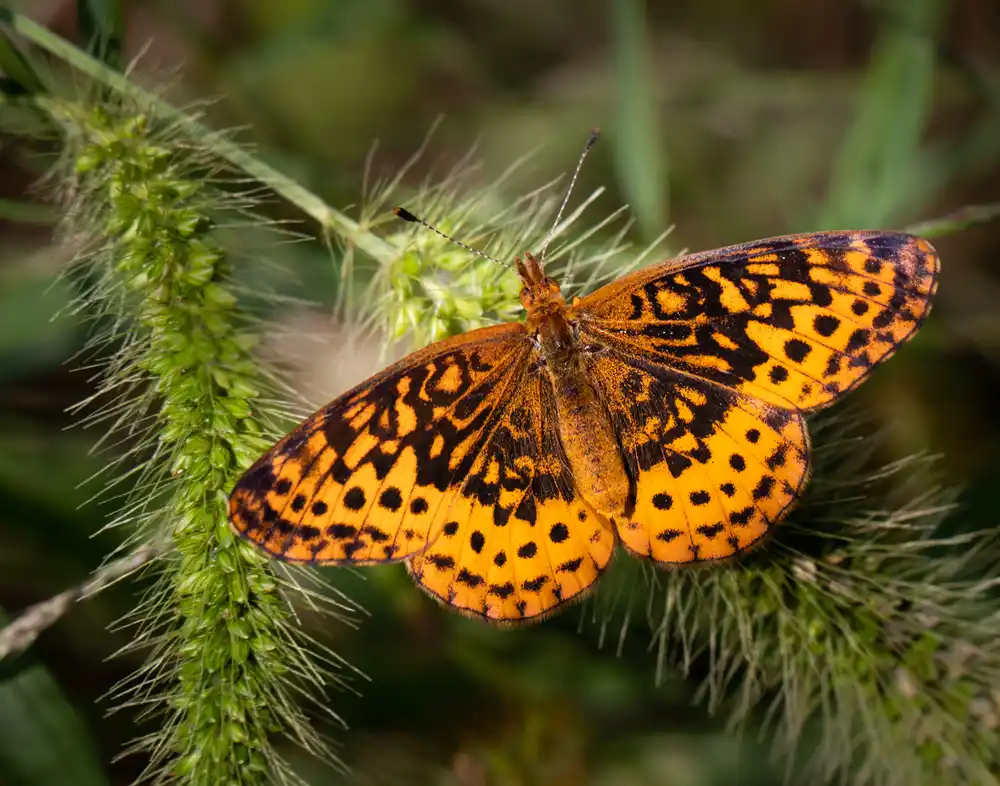 Phyciodes tharosPearl Crescent (Phyciodes tharos)Small, orange and endlessly busy, the pearl crescent is one of the butterflies most people in North America see without ever naming.
 Euphydryas edithaEdith’s Checkerspot (Euphydryas editha)Edith’s checkerspot (Euphydryas editha) is a small, boldly chequered black, red-orange and cream butterfly of western North America, found from Britis
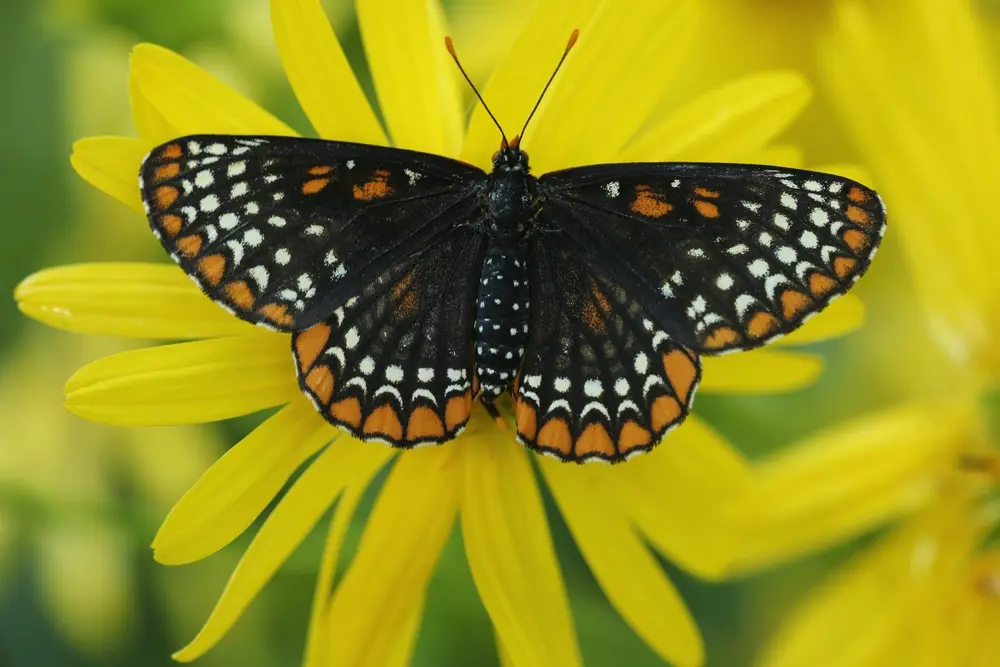 Euphydryas phaetonBaltimore Checkerspot (Euphydryas phaeton)Black wings tiled with cream squares and rimmed in brick orange, the Baltimore checkerspot is the state insect of Maryland and one of the most tightly
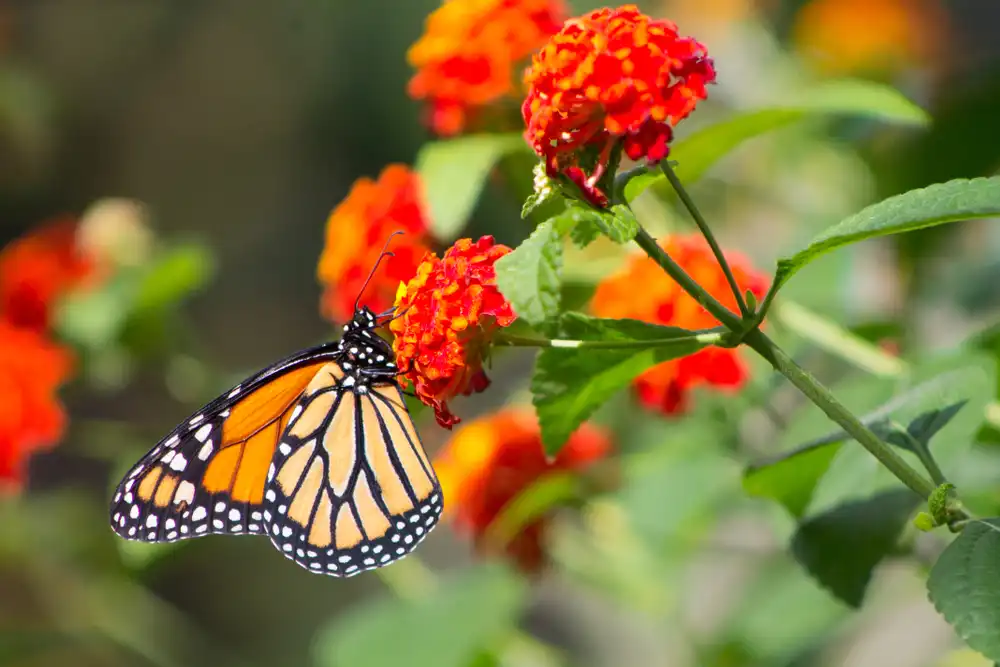 Limenitis archippusViceroy (Limenitis archippus)The viceroy (Limenitis archippus) is an orange-and-black North American butterfly that looks like a small monarch but carries one extra black line cur
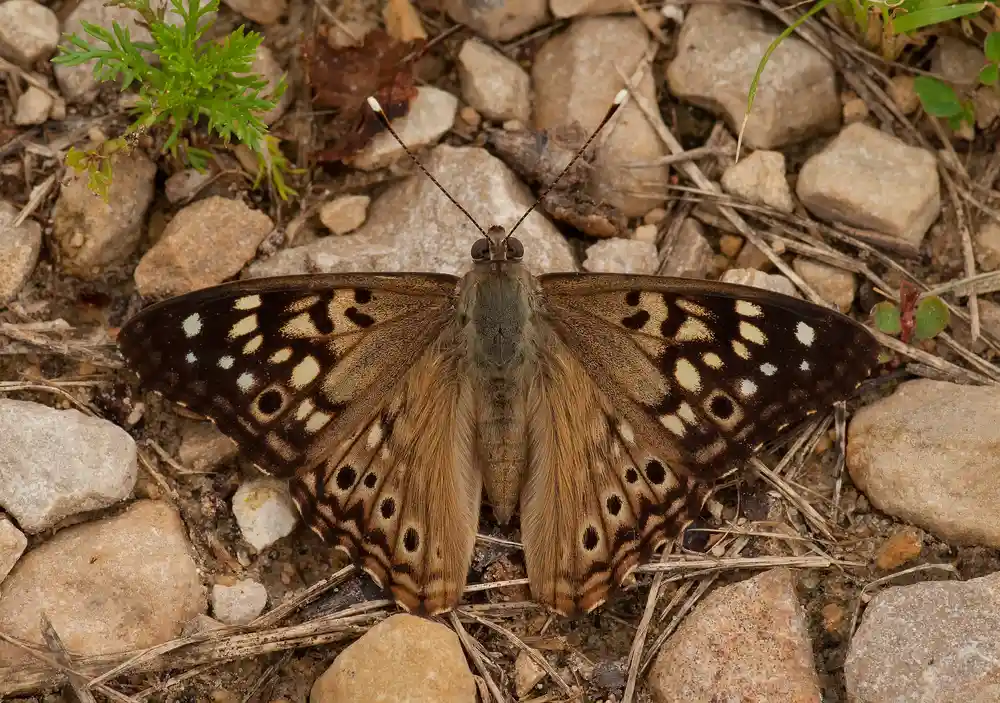 Asterocampa celtisHackberry Emperor (Asterocampa celtis)The hackberry emperor is a medium-sized tan and brown butterfly of eastern and central North America that never strays far from a hackberry tree, and Danaus plexippusMonarch (Danaus plexippus)The monarch is a large orange butterfly with black-outlined wing veins and a black, white-spotted border, found across North America and now on severa
Show all 80 other brush-footed species names
- American Snout (Libytheana carinenta)
- Mexican Fritillary (Euptoieta hegesia)
- Edwards' Fritillary (Speyeria edwardsii)
- Coronis Fritillary (Speyeria coronis)
- Zerene Fritillary (Speyeria zerene)
- Callippe Fritillary (Speyeria callippe)
- Atlantis Fritillary (Speyeria atlantis)
- Northwestern Fritillary (Speyeria hesperis)
- Hydaspe Fritillary (Speyeria hydaspe)
- Mormon Fritillary (Speyeria mormonia)
- Mountain Fritillary (Boloria napaea)
- Bog Fritillary (Boloria eunomia)
- Silver-bordered Fritillary (Boloria selene)
- Frigga Fritillary (Boloria frigga)
- Dingy Fritillary (Boloria improba)
- Pacific Fritillary (Boloria epithore)
- Polaris Fritillary (Boloria polaris)
- Freija Fritillary (Boloria freija)
- Beringian Fritillary (Boloria natazhati)
- Alberta Fritillary (Boloria alberta)
- Astarte Fritillary (Boloria astarte)
- Arctic Fritillary (Boloria chariclea)
- Satyr Comma (Polygonia satyrus)
- Green Comma (Polygonia faunus)
- Hoary Comma (Polygonia gracilis)
- Oreas Comma (Polygonia oreas)
- Grey Comma (Polygonia progne)
- Compton Tortoiseshell (Nymphalis vaualbum)
- American Lady (Vanessa virginiensis)
- West Coast Lady (Vanessa annabella)
- Gorgone Checkerspot (Chlosyne gorgone)
- Harris's Checkerspot (Chlosyne harrisii)
- Northern Checkerspot (Chlosyne palla)
- Sagebrush Checkerspot (Chlosyne acastus)
- Hoffmann's Checkerspot (Chlosyne hoffmanni)
- Northern Crescent (Phyciodes cocyta)
- Tawny Crescent (Phyciodes batesii)
- Pale Crescent (Phyciodes pallida)
- Field Crescent (Phyciodes pulchella)
- Mylitta Crescent (Phyciodes mylitta)
- Gillette's Checkerspot (Euphydryas gillettii)
- Variable Checkerspot (Euphydryas chalcedona)
- Weidemeyer's Admiral (Limenitis weidemeyerii)
- Lorquin's Admiral (Limenitis lorquini)
- Tawny Emperor (Asterocampa clyton)
- Northern Pearly-eye (Enodia anthedon)
- Eyed Brown (Satyrodes eurydice)
- Appalachian Brown (Satyrodes appalachia)
- Little Wood-satyr (Megisto cymela)
- Common Ringlet (Coenonympha tullia)
- Maritime Ringlet (Coenonympha nipisiquit)
- Common Wood-nymph (Cercyonis pegala)
- Great Basin Wood-nymph (Cercyonis sthenele)
- Small Wood-nymph (Cercyonis oetus)
- Vidler's Alpine (Erebia vidleri)
- Ross's Alpine (Erebia rossii)
- Disa Alpine (Erebia disa)
- Taiga Alpine (Erebia mancinus)
- Magdalena Alpine (Erebia magdalena)
- Mt. Mckinley Alpine (Erebia mackinleyensis)
- Banded Alpine (Erebia fasciata)
- Red-disked Alpine (Erebia discoidalis)
- Yellow-dotted Alpine (Erebia pawlowskii)
- Four-dotted Alpine (Erebia youngi)
- Scree Alpine (Erebia anyuica)
- Reddish Alpine (Erebia lafontainei)
- Common Alpine (Erebia epipsodea)
- Ridings' Satyr (Neominois ridingsii)
- Great Arctic (Oeneis nevadensis)
- Macoun's Arctic (Oeneis macounii)
- Chryxus Arctic (Oeneis chryxus)
- Uhler's Arctic (Oeneis uhleri)
- Alberta Arctic (Oeneis alberta)
- White-veined Arctic (Oeneis bore)
- Jutta Arctic (Oeneis jutta)
- Melissa Arctic (Oeneis melissa)
- Polixenes Arctic (Oeneis polixenes)
- Philip's Arctic (Oeneis rosovi)
- Sentinel Arctic (Oeneis alpina)
- White Admiral (Limenitis arthemis arthemis)
Gossamer-Winged (Lycaenidae)
 Lycaena phlaeasCommon Copper (Lycaena phlaeas)The common copper (Lycaena phlaeas), known as the small copper in Europe and the American copper in North America, is a small, fast-flying butterfly o
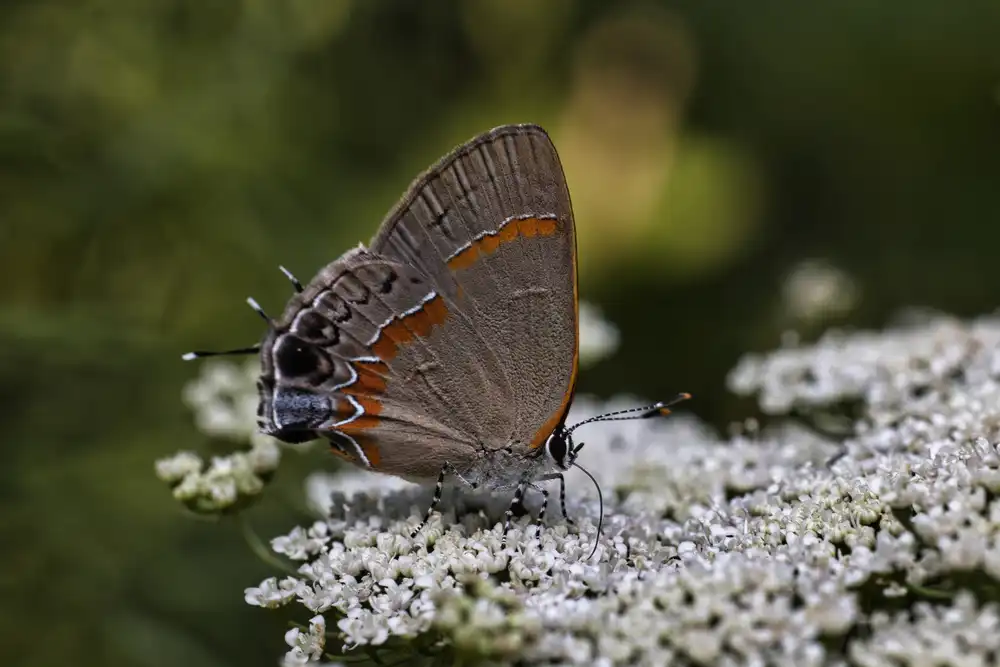 Calycopis cecropsRed-banded Hairstreak (Calycopis cecrops)The red-banded hairstreak is a small grey-brown butterfly of the southeastern United States, named for the broad white-and-red line that runs across t
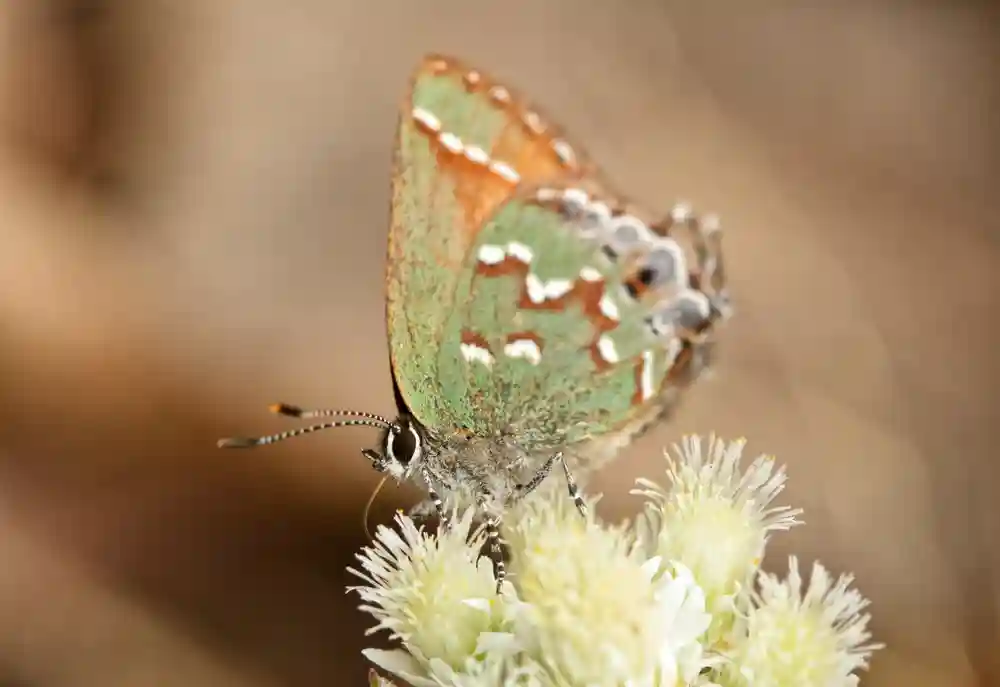 Callophrys gryneusJuniper Hairstreak (Callophrys gryneus)The juniper hairstreak (Callophrys gryneus) is a small North American butterfly, barely over an inch across, whose underside is a clear leaf green cro
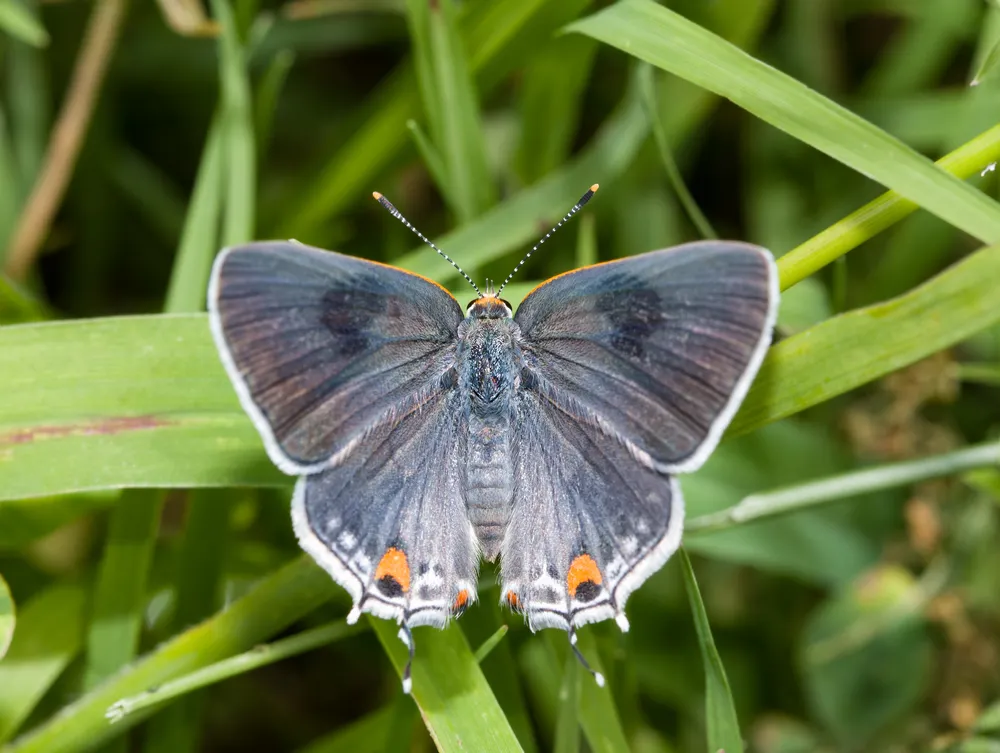 Strymon melinusGray Hairstreak (Strymon melinus)Small, slate-grey and almost impossible to avoid, the gray hairstreak is the most widespread hairstreak in North America and probably the least fussy
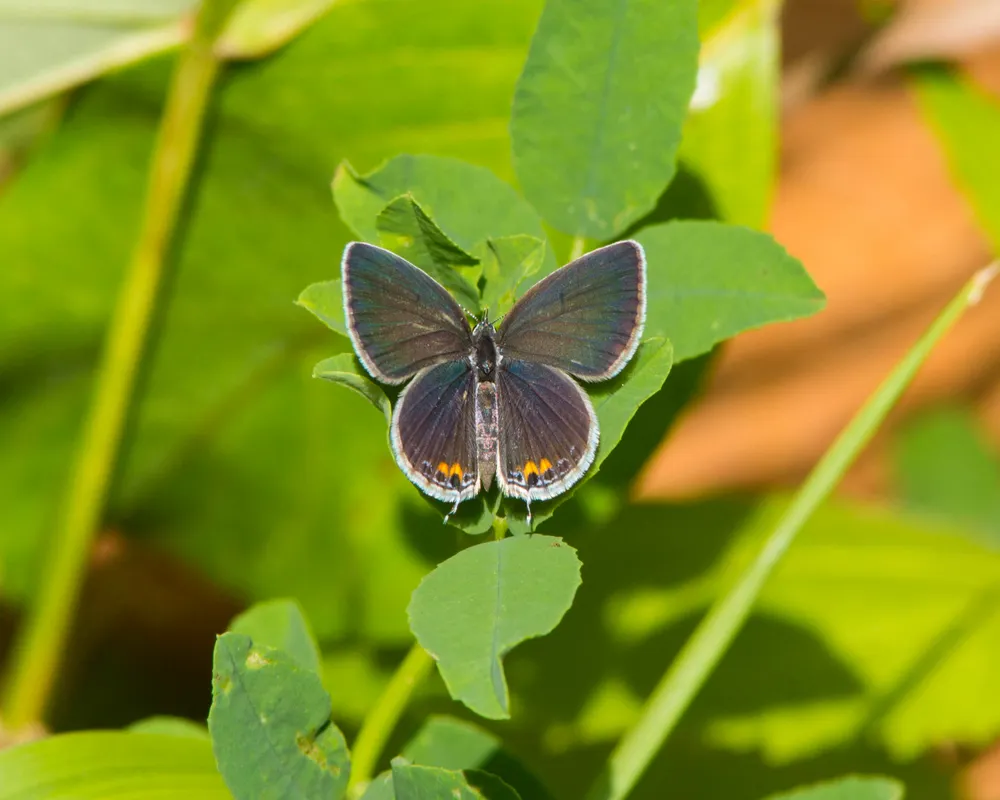 Cupido comyntasEastern Tailed Blue (Cupido comyntas)Barely an inch across and never far from a clover lawn, the eastern tailed blue is one of the most abundant butterflies in the eastern United States a
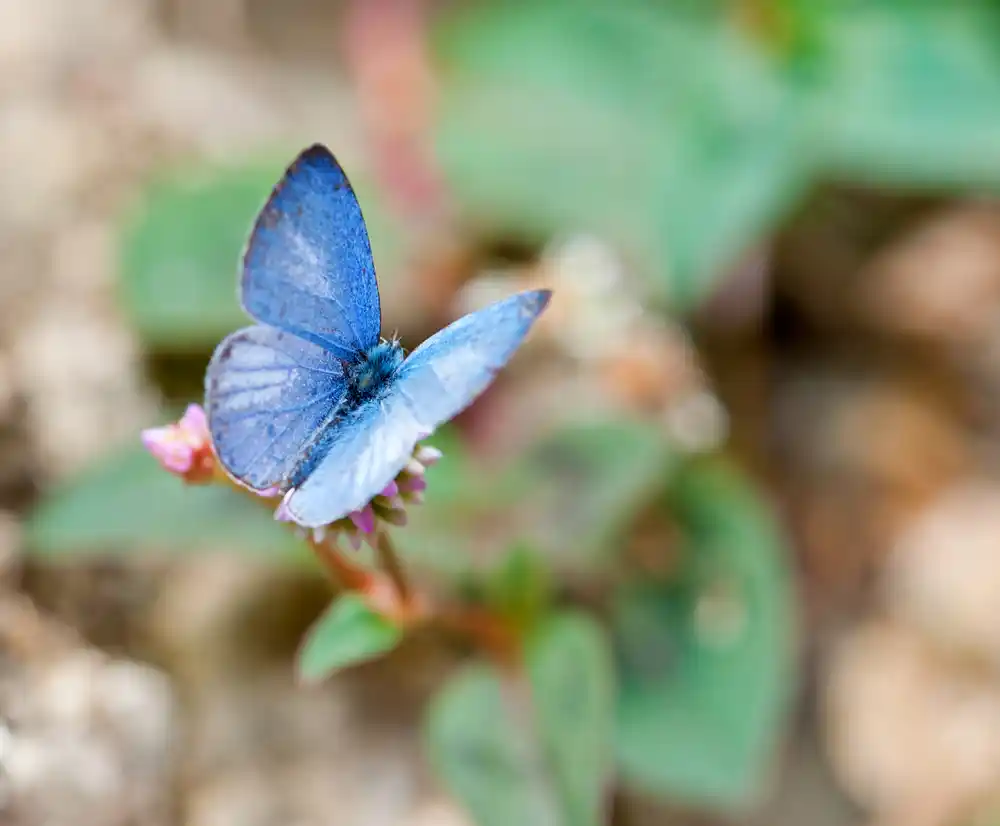 Celastrina ladonSpring Azure (Celastrina ladon)The spring azure is often the first butterfly of the year, a small violet-blue flake that appears along a woodland edge while the trees are still bare
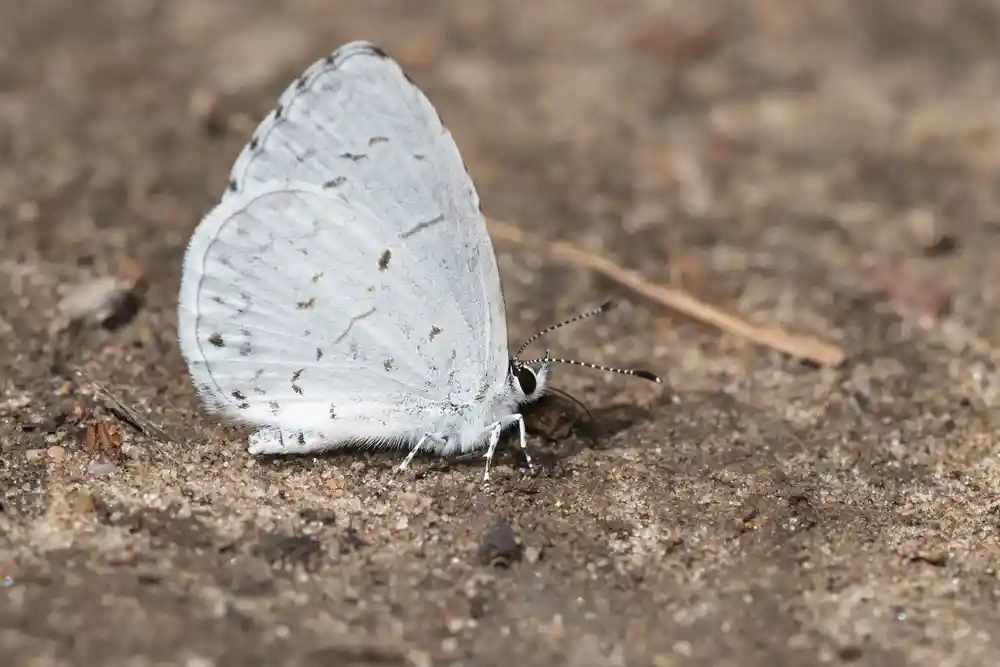 Celastrina neglectaSummer Azure (Celastrina neglecta)A pale, frosted blue butterfly barely an inch across, the summer azure is the one that flies when the spring azures have finished.
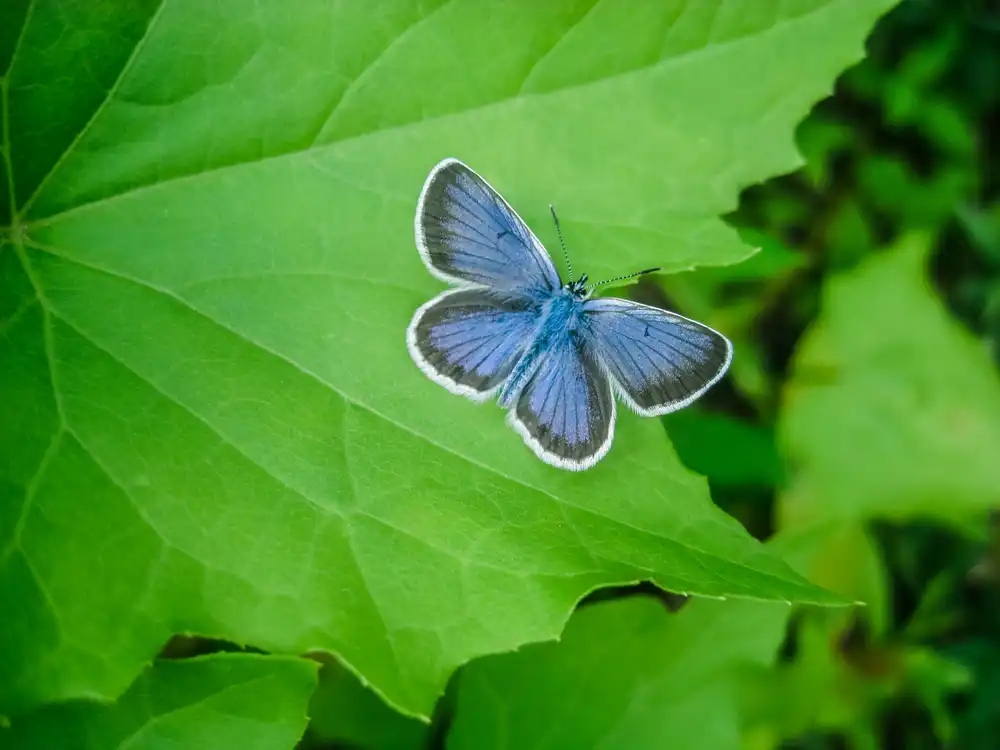 Glaucopsyche lygdamusSilvery Blue (Glaucopsyche lygdamus)One of the first blues on the wing each spring, the silvery blue flashes metallic silver-blue in flight and then settles to show a plain grey undersid
Show all 56 other gossamer-winged species names
- Harvester (Feniseca tarquinius)
- Lustrous Copper (Lycaena cuprea)
- Grey Copper (Lycaena dione)
- Bronze Copper (Lycaena hyllus)
- Ruddy Copper (Lycaena rubidus)
- Blue Copper (Lycaena heteronea)
- Bog Copper (Lycaena epixanthe)
- Dorcas Copper (Lycaena dorcas)
- Maritime Copper (Lycaena dospassosi)
- Purplish Copper (Lycaena helloides)
- Lilac-bordered Copper (Lycaena nivalis)
- Mariposa Copper (Lycaena mariposa)
- Behr's Hairstreak (Satyrium behrii)
- Sooty Hairstreak (Satyrium fuliginosum)
- Acadian Hairstreak (Satyrium acadicum)
- California Hairstreak (Satyrium californica)
- Sylvan Hairstreak (Satyrium sylvinum)
- Coral Hairstreak (Satyrium titus)
- Edwards' Hairstreak (Satyrium edwardsii)
- Banded Hairstreak (Satyrium calanus)
- Hickory Hairstreak (Satyrium caryaevorum)
- Striped Hairstreak (Satyrium liparops)
- Hedgerow Hairstreak (Satyrium saepium)
- Southern Hairstreak (Fixsenia favonius)
- Western Green Hairstreak (Callophrys affinis)
- Sheridan's Hairstreak (Callophrys sheridanii)
- Thicket Hairstreak (Callophrys spinetorum)
- Johnson's Hairstreak (Callophrys johnsoni)
- Rosner's Hairstreak (Callophrys rosneri)
- Barry's Hairstreak (Callophrys barryi)
- Brown Elfin (Callophrys augustinus)
- Moss's Elfin (Callophrys mossii)
- Hoary Elfin (Callophrys polios)
- Frosted Elfin (Callophrys irus)
- Henry's Elfin (Callophrys henrici)
- Bog Elfin (Callophrys lanoraieensis)
- Eastern Pine Elfin (Callophrys niphon)
- Western Pine Elfin (Callophrys eryphon)
- White Hairstreak (Parrhasius m-album)
- Early Hairstreak (Erora laeta)
- Marine Blue (Leptotes marina)
- Reakirt's Blue (Echinargus isola)
- Western Tailed-blue (Cupido amyntula)
- Lucia Azure (Celastrina lucia)
- Cherry Gall Azure (Celastrina serotina)
- Square-spotted Blue (Euphilotes battoides)
- Rocky Mountain Dotted Blue (Euphilotes ancilla)
- Arrowhead Blue (Glaucopsyche piasus)
- Northern Blue (Plebejus idas)
- Melissa Blue (Plebejus melissa)
- Boisduval's Blue (Icaricia icarioides)
- Lupine Blue (Icaricia lupini)
- Greenish Blue (Icaricia saepiolus)
- Shasta Blue (Icaricia shasta)
- Cranberry Blue (Agriades optilete)
- Arctic Blue (Agriades glandon)
Whites and Sulphurs (Pieridae)
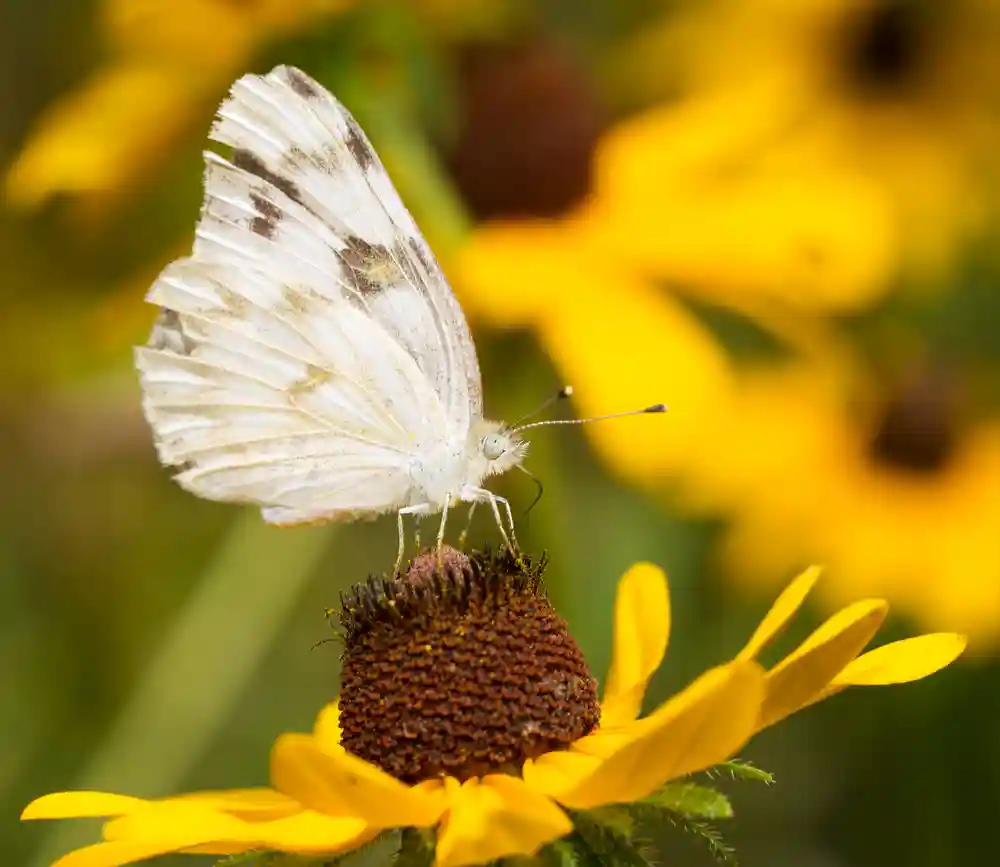 Pontia protodiceCheckered White (Pontia protodice)The checkered white is a medium-sized white butterfly of dry, open, disturbed ground across the United States and northern Mexico, recognised by the g
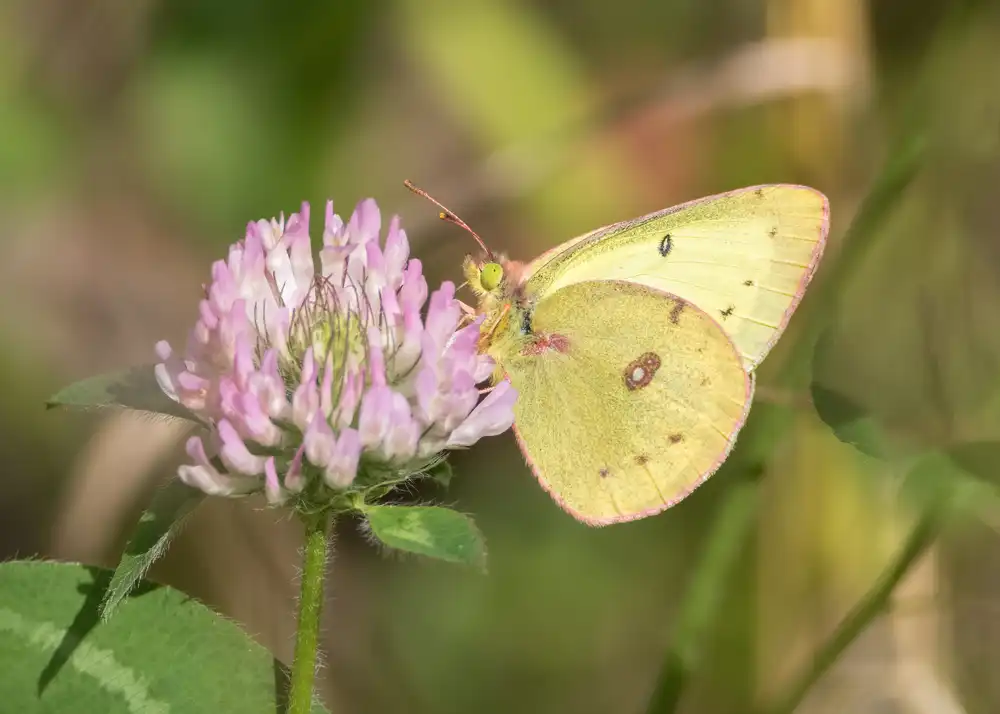 Colias philodiceClouded Sulphur (Colias philodice)The clouded sulphur is the plain yellow butterfly of North American roadsides, clover lawns and alfalfa fields, common from Alaska to the Gulf.
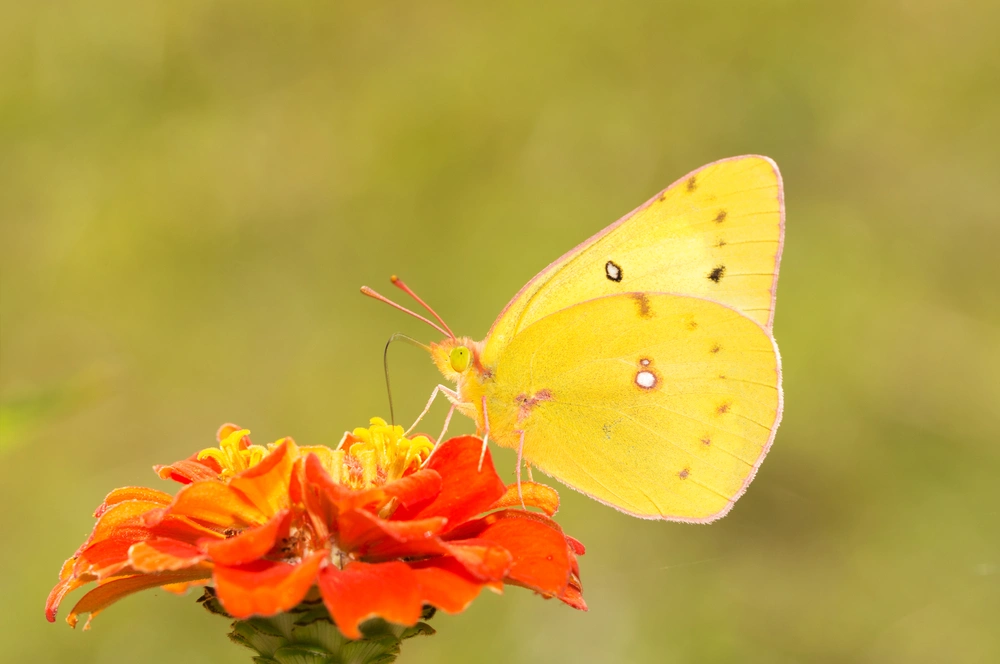 Colias eurythemeOrange Sulphur (Colias eurytheme)The orange sulphur is a medium-sized orange-and-black butterfly of open fields, roadsides and alfalfa farms across almost the whole of North America,
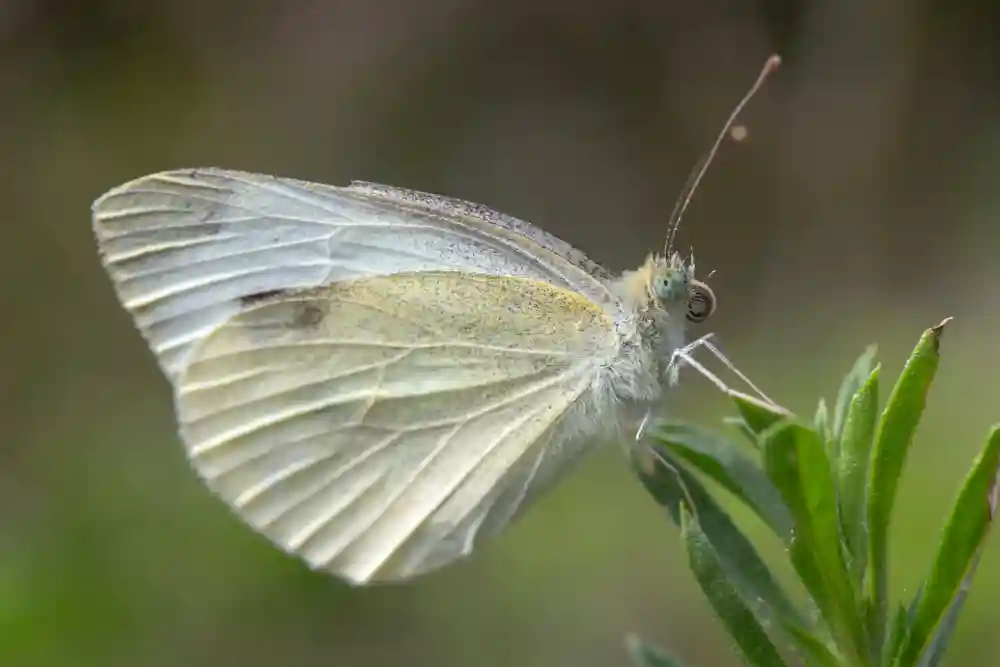 Pieris rapaeCabbage White (Pieris rapae)The cabbage white is probably the most-seen butterfly on the planet: a small, chalk-white insect with one or two black spots that drifts over allotmen
 Phoebis sennaeCloudless Sulphur (Phoebis sennae)The cloudless sulphur is a large, fast-flying lemon-yellow butterfly of the Americas, resident from Argentina north through the tropics to the souther
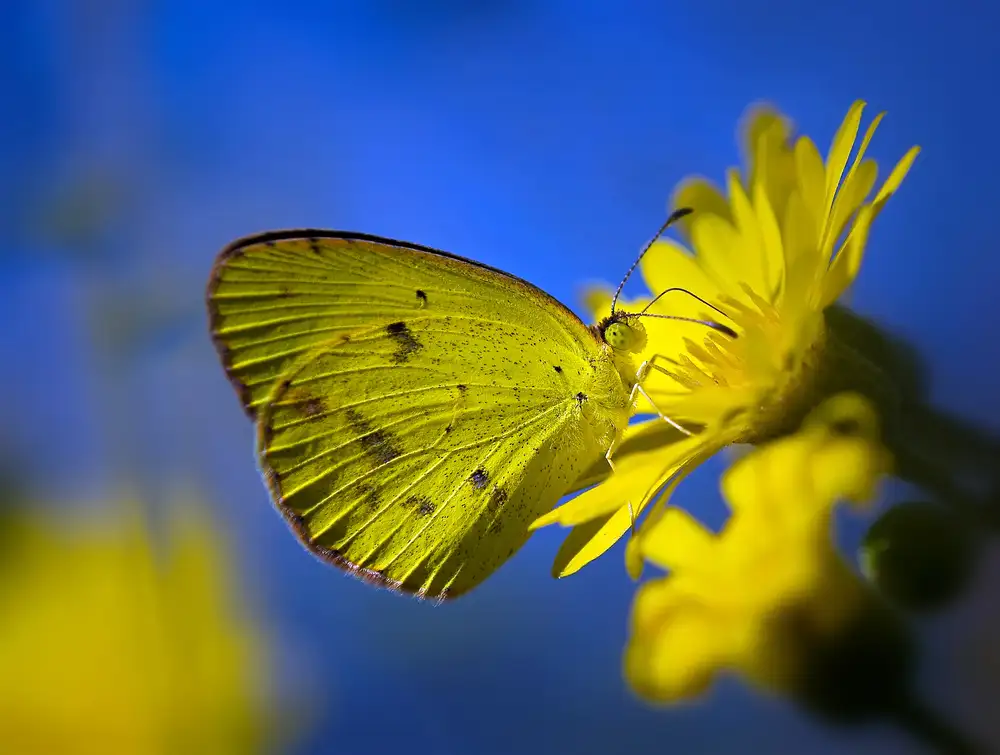 Eurema lisaLittle Yellow (Eurema lisa)A thumbnail-sized sulphur that flutters low over roadsides and fallow fields, the little yellow is one of the most numerous butterflies in eastern Nor
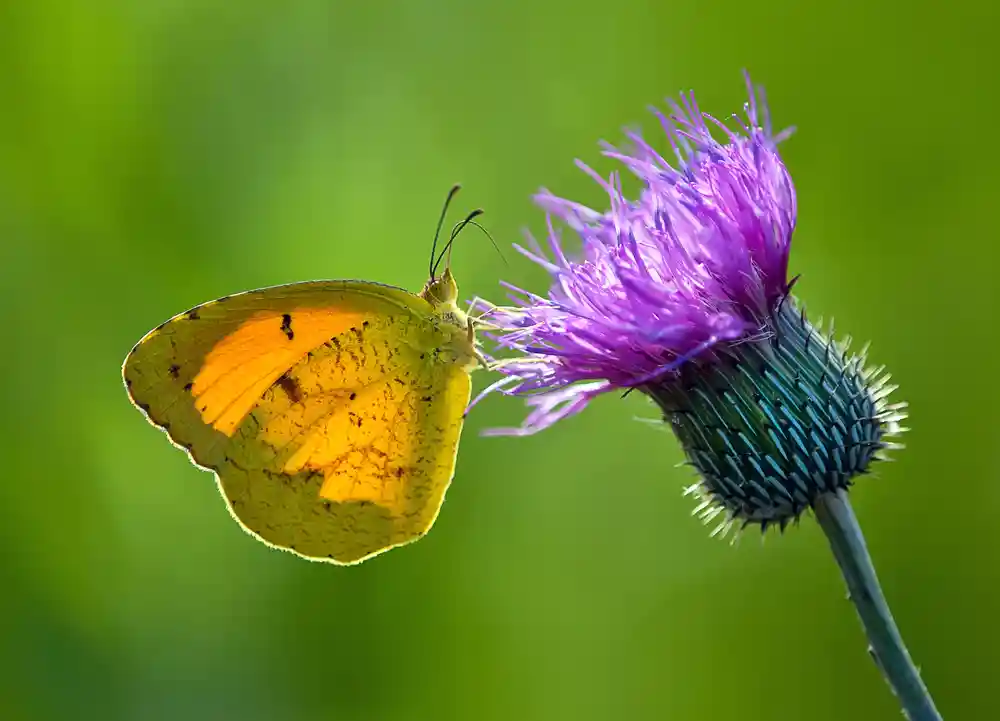 Eurema nicippeSleepy Orange (Eurema nicippe)The sleepy orange is a small, deep-orange sulphur of the southern United States, Mexico and Central America, easily known by the ragged black border t
Show all 35 other whites and sulphurs species names
- Pine White (Neophasia menapia)
- Becker's White (Pontia beckerii)
- Spring White (Pontia sisymbrii)
- Western White (Pontia occidentalis)
- Arctic White (Pieris angelika)
- Margined White (Pieris marginalis)
- Mustard White (Pieris oleracea)
- West Virginia White (Pieris virginiensis)
- Large Marble (Euchloe ausonides)
- Green Marble (Euchloe naina)
- Northern Marble (Euchloe creusa)
- Desert Marble (Euchloe lotta)
- Olympia Marble (Euchloe olympia)
- Pacific Orangetip (Anthocharis sara)
- Stella Orangetip (Anthocharis stella)
- Western Sulphur (Colias occidentalis)
- Queen Alexandra's Sulphur (Colias alexandra)
- Christina Sulphur (Colias christina)
- Mead's Sulphur (Colias meadii)
- Johansen's Sulphur (Colias johanseni)
- Hecla Sulphur (Colias hecla)
- Booth's Sulphur (Colias tyche)
- Canada Sulphur (Colias canadensis)
- Labrador Sulphur (Colias nastes)
- Giant Sulphur (Colias gigantea)
- Pelidne Sulphur (Colias pelidne)
- Pink-edged Sulphur (Colias interior)
- Heath Sulphur (Colias chippewa)
- Southern Dogface (Zerene cesonia)
- Mexican Yellow (Eurema mexicanum)
- Mexican Yellow (Eurema mexicanum)
- Great Southern White (Ascia monuste)
- Palaeno Sulphur (Colias palaeno)
- Orange-barred Sulphur (Phoebis philea)
- Dainty Sulphur (Nathalis iole)
Metalmark (Riodinidae)
- Mormon Metalmark (Apodemia mormo)
Swallowtail (Papilionidae)
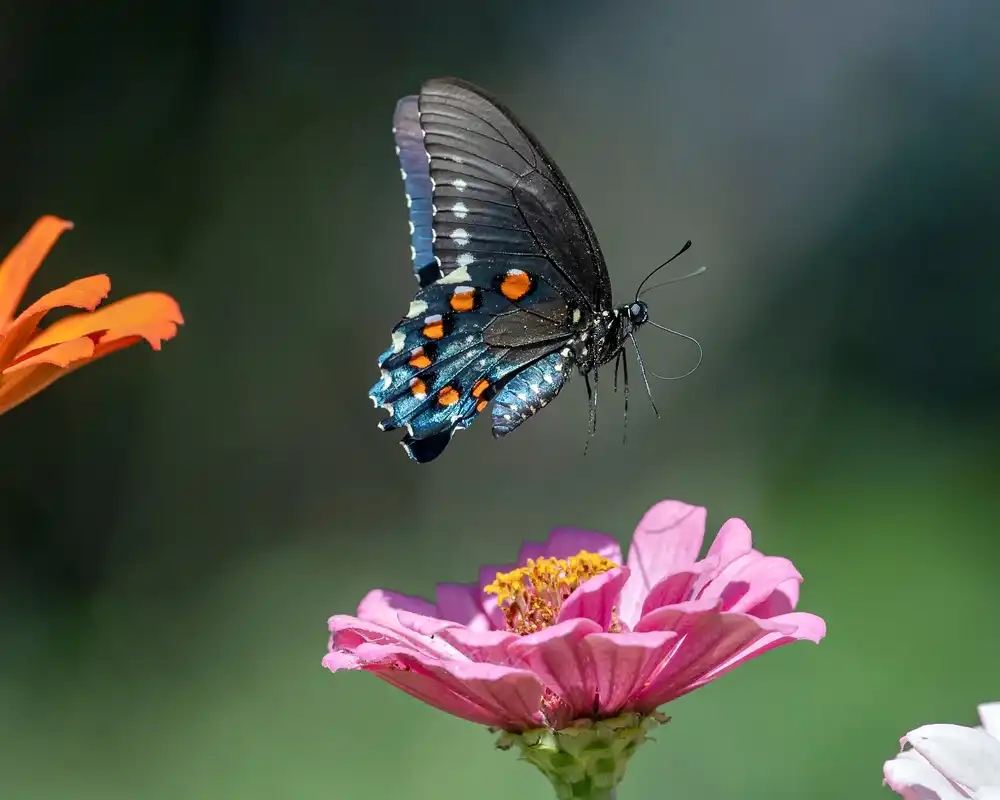 Battus philenorPipevine Swallowtail (Battus philenor)The pipevine swallowtail is a large black North American swallowtail with an iridescent blue to blue-green hindwing and a single curved row of seven o
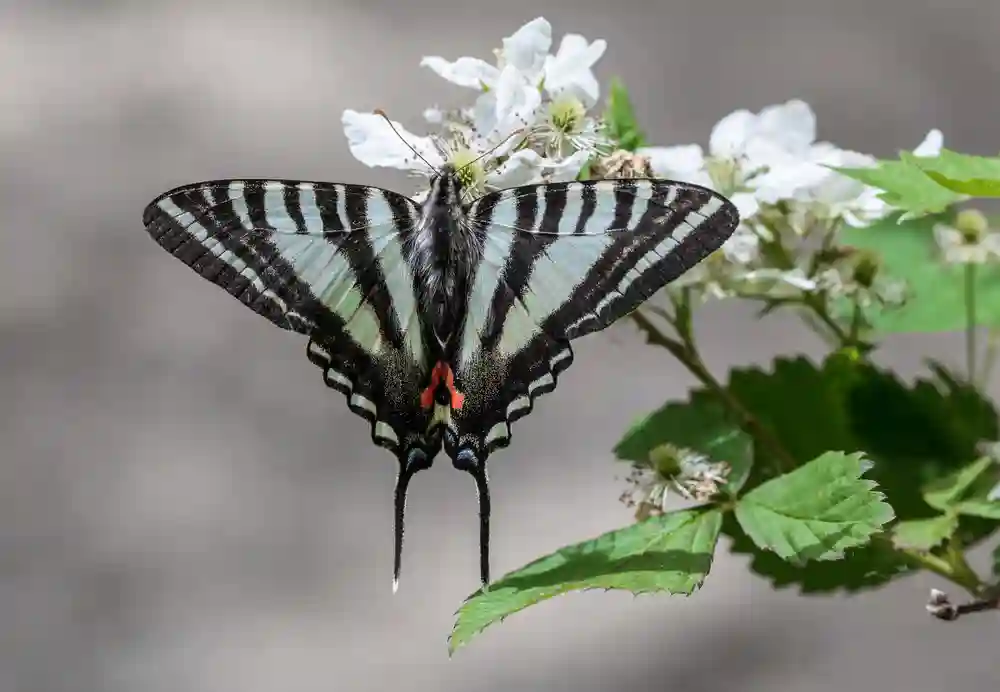 Protographium marcellusZebra Swallowtail (Protographium marcellus)The zebra swallowtail is a white-and-black striped butterfly of the eastern United States with the longest tails of any North American swallowtail, an
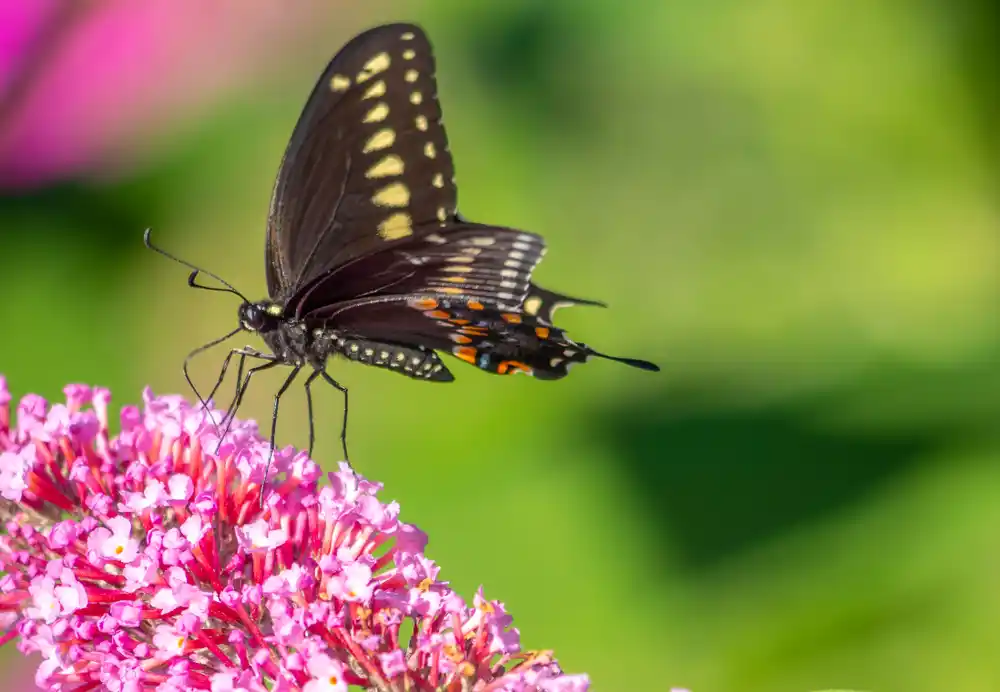 Papilio polyxenesBlack Swallowtail (Papilio polyxenes)The black swallowtail is a black, yellow-spotted butterfly of open country across most of North America, and its caterpillar is the familiar green-and
 Papilio machaonOld World Swallowtail (Papilio machaon)The Old World swallowtail is a large yellow-and-black butterfly with a tail on each hindwing and a red eyespot above it, found right across Europe, No
 Papilio zelicaonAnise Swallowtail (Papilio zelicaon)The yellow-and-black swallowtail of the American West, and a butterfly that moved to town.
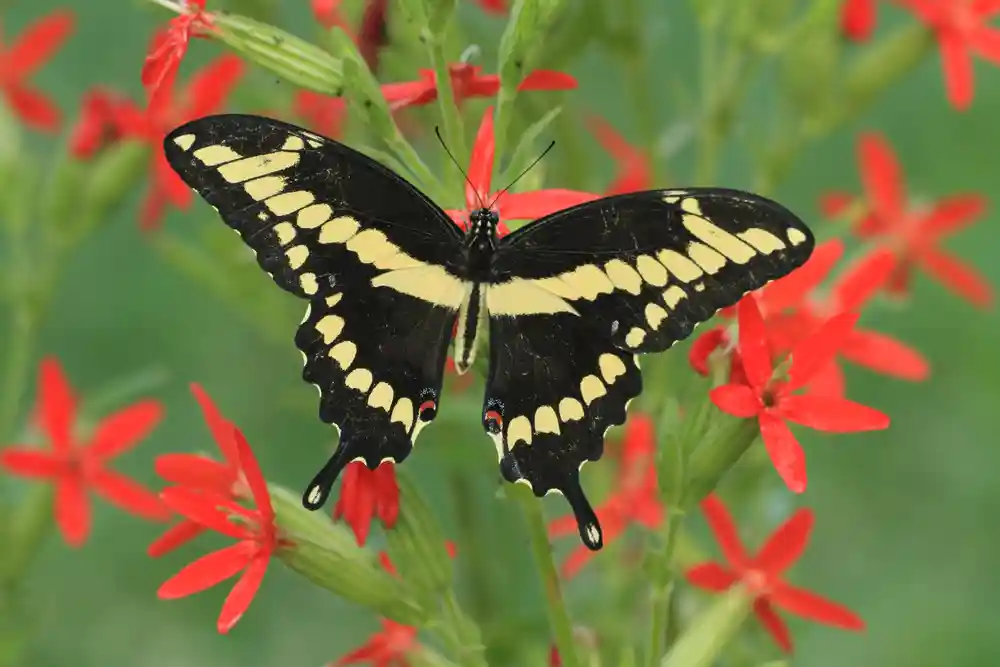 Papilio cresphontesGiant Swallowtail (Papilio cresphontes)The largest butterfly in the United States and Canada, the giant swallowtail sails over citrus groves and woodland edges on dark wings crossed by a ba
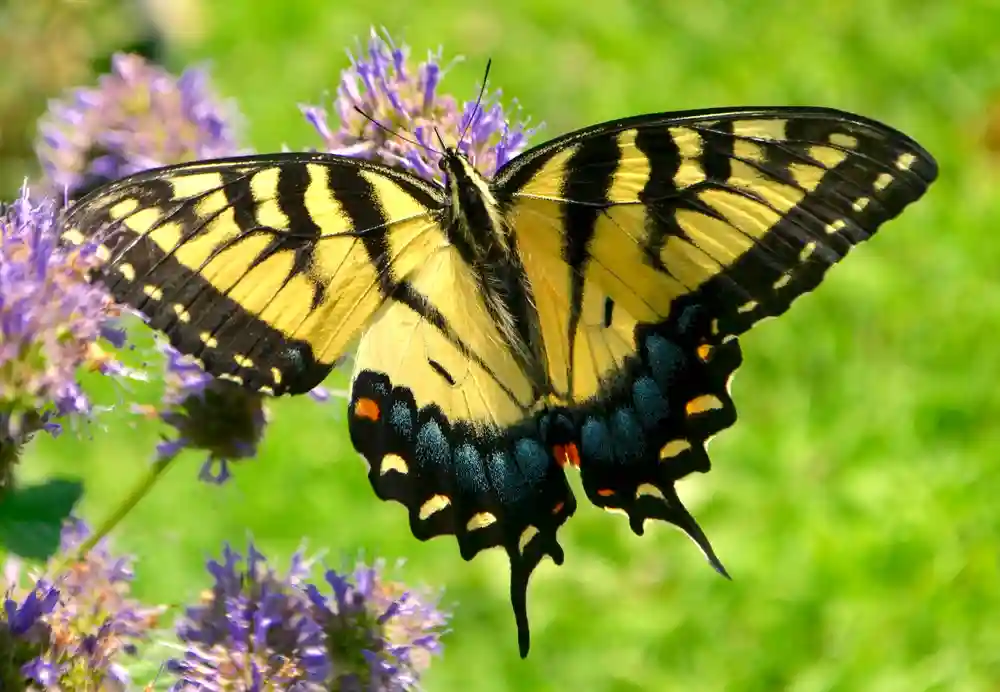 Papilio glaucusEastern Tiger Swallowtail (Papilio glaucus)The eastern tiger swallowtail is a large yellow butterfly with four black tiger stripes on each forewing and a tail on each hindwing, and it is the coPapilio canadensisCanadian Tiger Swallowtail (Papilio canadensis)The tiger swallowtail of the north woods, built for a short summer: one brood a year, a winter spent frozen inside a bark-colored chrysalis, and cater
 Papilio rutulusWestern Tiger Swallowtail (Papilio rutulus)The western tiger swallowtail is a large lemon-yellow butterfly with four black tiger stripes on each forewing and a single tail on each hindwing, and
 Papilio multicaudataTwo-tailed Swallowtail (Papilio multicaudata)The largest butterfly in most of the American West, the two-tailed swallowtail is a pale yellow tiger swallowtail with unusually thin black stripes an
 Papilio eurymedonPale Swallowtail (Papilio eurymedon)The pale swallowtail (Papilio eurymedon) is a large tailed butterfly of western North America, flying from British Columbia south to Baja California a
 Papilio troilusSpicebush Swallowtail (Papilio troilus)The spicebush swallowtail is a black swallowtail of eastern North American woodland edges and swamps, marked by a row of ivory spots along the forewin
Show all 7 other swallowtail species names
- Eversmann's Parnassian (Parnassius eversmanni)
- Clodius Parnassian (Parnassius clodius)
- Phoebus Parnassian (Parnassius phoebus)
- Rocky Mountain Parnassian (Parnassius smintheus)
- Short-tailed Swallowtail (Papilio brevicauda)
- Indra Swallowtail (Papilio indra)
- Eastern Giant Swallowtail (Heraclides Cresphontes)
Skipper (Hesperiidae)
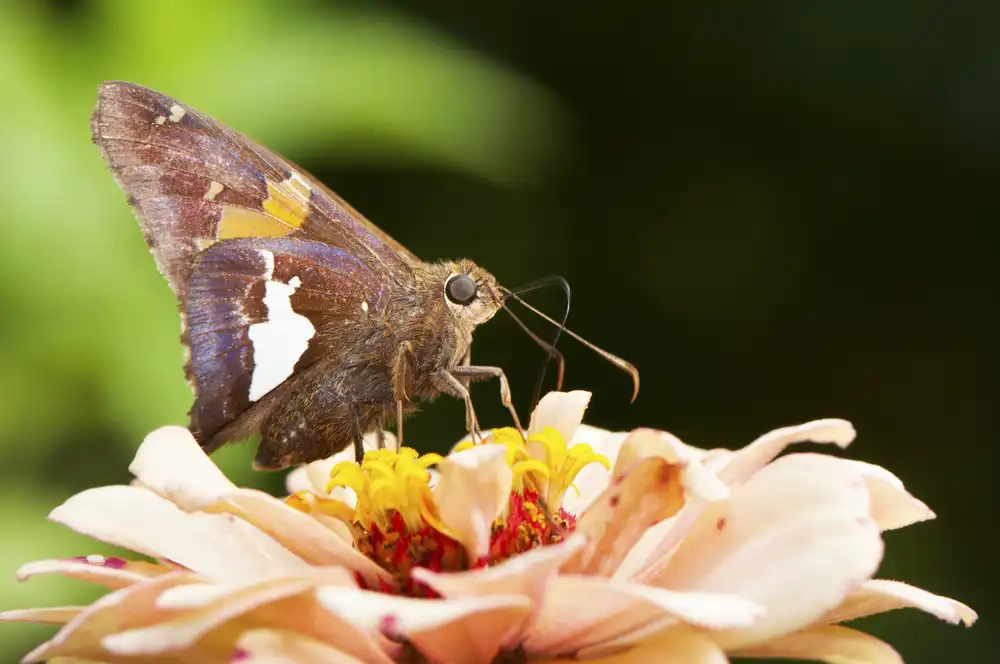 Epargyreus clarusSilver-spotted Skipper (Epargyreus clarus)The silver-spotted skipper is a large, chocolate-brown butterfly of gardens, field edges and woodland clearings across almost the whole of North Ameri
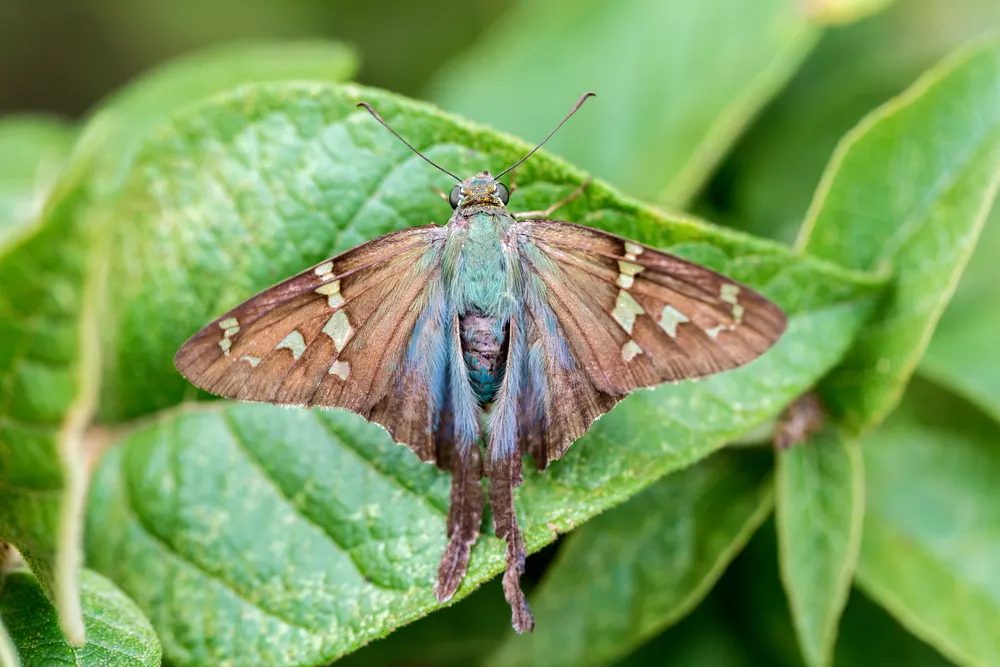 Urbanus proteusLong-tailed Skipper (Urbanus proteus)A stocky brown skipper with a shimmer of blue-green over its body and wing bases and two long tails trailing from the hindwings, the long-tailed skipp
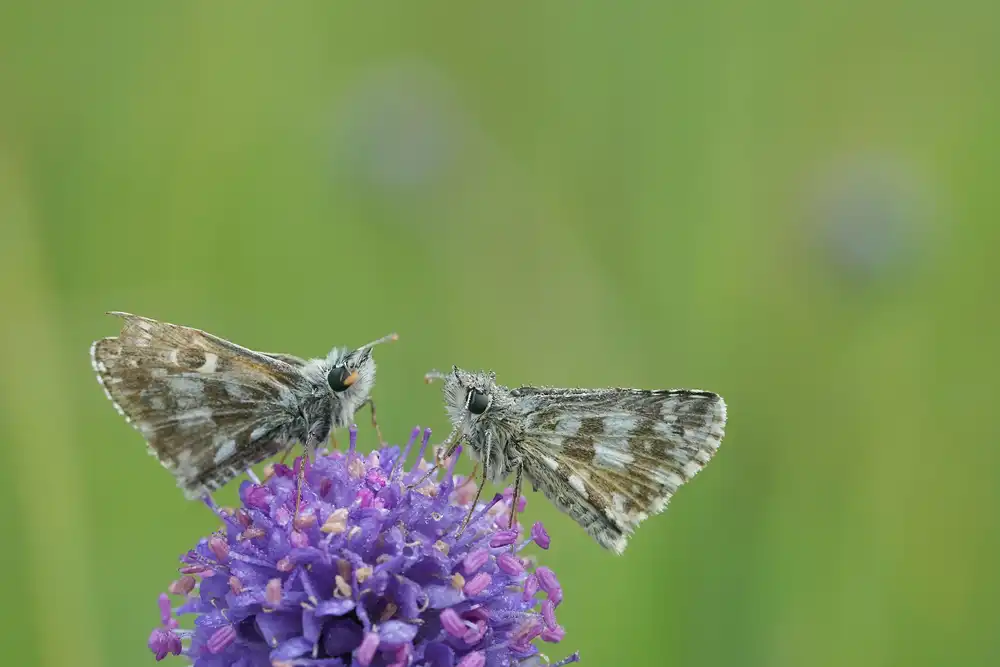 Pyrgus malvaeGrizzled Skipper (Pyrgus malvae)The grizzled skipper (Pyrgus malvae) is a very small black-and-white chequered butterfly of warm, sheltered grassland and woodland clearings across Eu
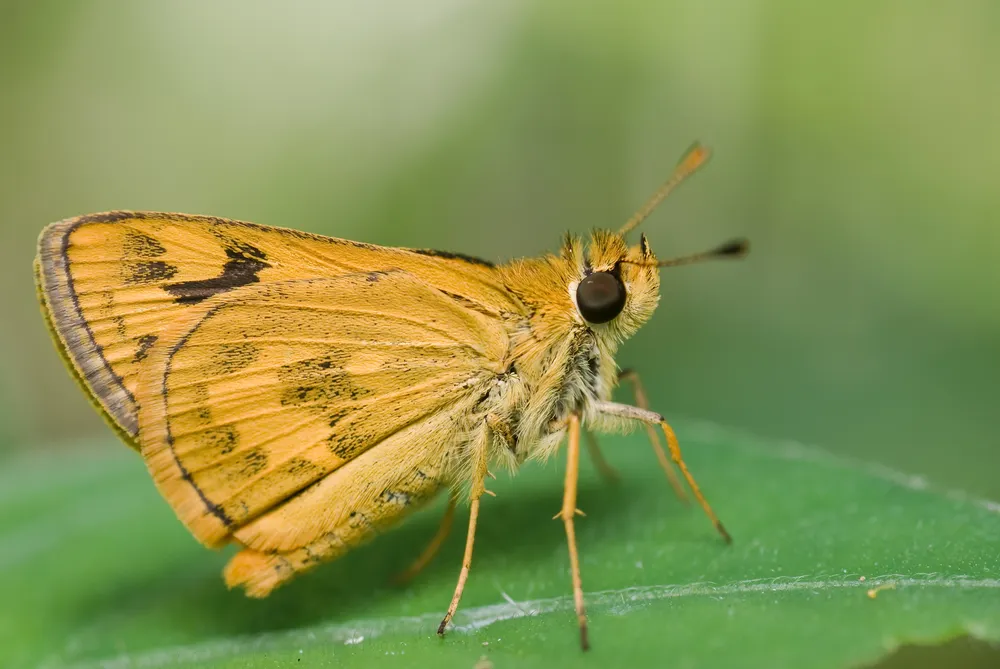 Hylephila phyleusFiery Skipper (Hylephila phyleus)A small orange rocket of a butterfly that sits on a flower with its forewings cocked up and its hindwings flat, the fiery skipper is one of the most fHesperia dacotaeDakota Skipper (Hesperia dacotae)The Dakota skipper (Hesperia dacotae) is a small tawny-orange grass skipper that survives only on remnant native prairie in Manitoba, Saskatchewan, th
Show all 67 other skipper species names
- Hoary Edge (Achalarus lyciades)
- Southern Cloudywing (Thorybes bathyllus)
- Northern Cloudywing (Thorybes pylades)
- Hayhurst's Scallopwing (Staphylus hayhurstii)
- Dreamy Duskywing (Erynnis icelus)
- Sleepy Duskywing (Erynnis brizo)
- Juvenal's Duskywing (Erynnis juvenalis)
- Propertius Duskywing (Erynnis propertius)
- Horace's Duskywing (Erynnis horatius)
- Mottled Duskywing (Erynnis martialis)
- Pacuvius Duskywing (Erynnis pacuvius)
- Zarucco Duskywing (Erynnis zarucco)
- Funereal Duskywing (Erynnis funeralis)
- Columbine Duskywing (Erynnis lucilius)
- Wild Indigo Duskywing (Erynnis baptisiae)
- Afranius Duskywing (Erynnis afranius)
- Persius Duskywing (Erynnis persius)
- Two-banded Checkered Skipper (Pyrgus ruralis)
- Small Checkered Skipper (Pyrgus scriptura)
- Common Checkered Skipper (Pyrgus communis)
- Common Sootywing (Pholisora catullus)
- Arctic Skipper (Carterocephalus palaemon)
- Clouded Skipper (Lerema accius)
- Least Skipper (Ancyloxypha numitor)
- Poweshiek Skipperling (Oarisma poweshiek)
- Garita Skipperling (Oarisma garita)
- European Skipper (Thymelicus lineola)
- Uncas Skipper (Hesperia uncas)
- Juba Skipper (Hesperia juba)
- Common Branded Skipper (Hesperia comma)
- Western Branded Skipper (Hesperia colorado)
- Plains Skipper (Hesperia assiniboia)
- Ottoe Skipper (Hesperia ottoe)
- Leonard's Skipper (Hesperia leonardus)
- Pahaska Skipper (Hesperia pahaska)
- Indian Skipper (Hesperia sassacus)
- Nevada Skipper (Hesperia nevada)
- Peck's Skipper (Polites peckius)
- Sandhill Skipper (Polites sabuleti)
- Draco Skipper (Polites draco)
- Tawny-edged Skipper (Polites themistocles)
- Crossline Skipper (Polites origenes)
- Long Dash Skipper (Polites mystic)
- Rhesus Skipper (Polites rhesus)
- Sonoran Skipper (Polites sonora)
- Whirlabout (Polites vibex)
- Northern Broken-dash (Wallengrenia egeremet)
- Little Glassywing (Pompeius verna)
- Sachem (Atalopedes campestris)
- Delaware Skipper (Anatrytone logan)
- Woodland Skipper (Ochlodes sylvanoides)
- Mulberry Wing (Poanes massasoit)
- Hobomok Skipper (Poanes hobomok)
- Zabulon Skipper (Poanes zabulon)
- Broad-winged Skipper (Poanes viator)
- Dion Skipper (Euphyes dion)
- Dukes' Skipper (Euphyes dukesi)
- Black Dash (Euphyes conspicua)
- Two-spotted Skipper (Euphyes bimacula)
- Dun Skipper (Euphyes vestris)
- Dusted Skipper (Atrytonopsis hianna)
- Simius Roadside Skipper (Amblyscirtes simius)
- Oslar's Roadside Skipper (Amblyscirtes oslari)
- Pepper and Salt Skipper (Amblyscirtes hegon)
- Common Roadside Skipper (Amblyscirtes vialis)
- Brazilian Skipper (Calpodes ethlius)
- Ocola Skipper (Panoquina ocola)
How to identify butterflies in Canada
Start with size and colour. A big yellow butterfly with black stripes is a tiger swallowtail, Canadian in most of the country and Eastern only in the far south; a large dark butterfly with a cream border is a Mourning Cloak; orange with black veins and a white-spotted border is a Monarch or, if it has an extra black line across the hindwing, a Viceroy. Orange butterflies with silver spots below are fritillaries, the largest being the Great Spangled and the small ones the Boloria of bogs and tundra.
The hard groups are the commas, the crescents, the Colias sulphurs and the grass skippers, all of which need a clear photograph of the underside and a note of the date and habitat. On the tundra almost everything is an alpine, an arctic or a small fritillary, and the location narrows the choice quickly. Use the chart above, compare the species cards below, and check the neighbouring faunas under Butterflies of the World.
Frequently asked questions about Canadian butterflies
How many species of butterfly are there in Canada?
Around 300 butterfly species have been recorded in Canada. Southern Ontario and southern British Columbia hold the most, while the boreal forest and tundra that cover most of the country support a smaller set of hardy alpines, arctics, fritillaries and sulphurs. A handful of southern species, such as the Gulf Fritillary, reach Canada only as rare strays.
What are the most common butterflies in Canada?
The Cabbage White, Clouded and Orange Sulphurs, Canadian Tiger Swallowtail, Mourning Cloak, Northern Crescent, White Admiral and European Skipper are the butterflies seen most often across Canada. In late summer the Monarch, Painted Lady and Red Admiral join them in gardens, and the Mourning Cloak is usually the first species on the wing in spring.
Does Canada have a national butterfly?
No, Canada has no official national butterfly. Quebec is the only province with an insect emblem, the White Admiral (Limenitis arthemis arthemis), chosen by public vote organised by the Montreal Insectarium in 1998. The Monarch and the Canadian Tiger Swallowtail are the species most often treated as unofficial national symbols.
Is the Karner Blue still found in Canada?
No. The Karner Blue is officially extirpated from Canada; the last wild butterflies were seen at Port Franks in southern Ontario in 1991. It depended on wild lupine growing in oak savanna, a habitat almost entirely lost to farming and fire suppression. Habitat restoration continues at Pinery Provincial Park and a reintroduction is being studied.
What is the rarest butterfly in Canada?
Several species are down to one or two sites. The Poweshiek Skipperling survives only on the Manitoba Tall Grass Prairie Preserve, the Maritime Ringlet only in the salt marshes of Chaleur Bay in New Brunswick and Quebec, and Taylor's Checkerspot and Behr's Hairstreak on a few colonies in British Columbia. All are listed as Endangered under the Species at Risk Act.
When is the best time to see butterflies in Canada?
Late June to early August brings the most species and the highest numbers across the country, with warm, calm, sunny mornings the best conditions. Mourning Cloaks and tortoiseshells fly from March, the Canadian Tiger Swallowtail peaks in June, and the Monarch migration along the Great Lakes shorelines is at its height in mid-September.
Where do Monarchs gather in Canada before migrating?
Monarchs concentrate along the north shores of Lakes Erie and Ontario in September, roosting by the thousand in trees at Point Pelee National Park, Long Point, Rondeau and Presqu'ile before crossing the lake on a north wind. Smaller staging areas occur along the St. Lawrence and in southern Manitoba. The Monarch has been listed as Endangered in Canada since 2023.
How many kinds of fritillary live in Canada?
Canada has about 25 fritillary species: a dozen large greater fritillaries (Speyeria) such as the Great Spangled, Aphrodite and Atlantis, and about thirteen lesser fritillaries (Boloria) such as the Silver-bordered, Meadow, Bog, Frigga and Polaris, most of them northern or Arctic. The Regal Fritillary once lived on the prairies but is now extirpated.
Which Canadian butterflies survive the winter as adults?
The Mourning Cloak, Compton Tortoiseshell, Milbert's Tortoiseshell, Eastern Comma, Green Comma, Grey Comma, Question Mark and Satyr Comma all hibernate as adults, tucked into woodpiles, hollow logs and bark crevices, and they fly again on the first warm days of March and April. Most other Canadian butterflies pass the winter as eggs, caterpillars or chrysalises.
Published October 30, 2023 · Last updated September 21, 2026