
Types of Butterflies in Kentucky
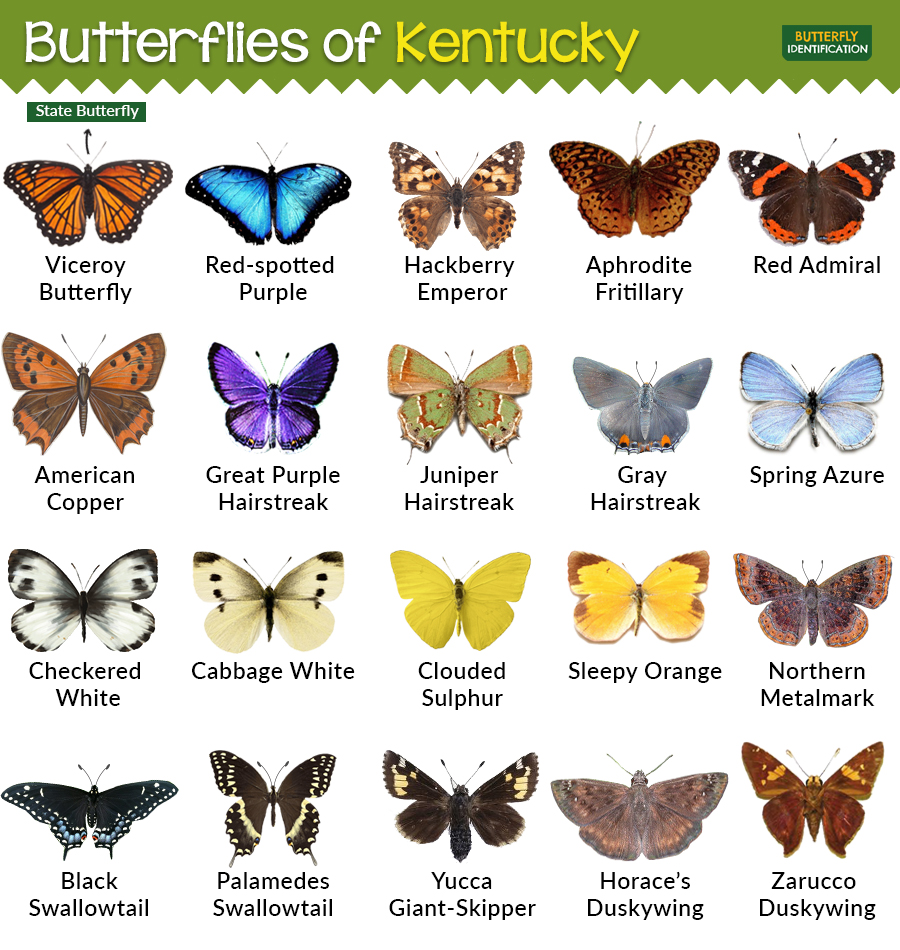
Kentucky has around 140 to 150 butterfly species recorded, spread from the Appalachian ridges of the Cumberland Plateau to the Mississippi bottomlands of the Jackson Purchase. The state butterfly is the Viceroy, the Monarch look-alike adopted in 1990, and the everyday butterflies of the Commonwealth are the Eastern Tiger Swallowtail, Red-spotted Purple, Pearl Crescent, Silver-spotted Skipper and the sulphurs of every clover field. Brush-footed butterflies and gossamer-wings dominate the list, and the eastern mountains still shelter the Diana Fritillary and the Appalachian Azure.
On this page
- Butterflies found in Kentucky
- Butterflies of Kentucky at a glance
- Signature Kentucky butterflies
- The Kentucky butterfly calendar
- Where to see butterflies in Kentucky
- Host plants and butterfly gardening in Kentucky
- Rare and threatened butterflies in Kentucky
- How to identify a butterfly in Kentucky
- Frequently asked questions
Butterflies of Kentucky at a glance
Kentucky is an eastern deciduous-forest state with a western fringe of prairie and river swamp, and its butterflies follow that geography. The Cumberland Plateau and the Pine and Cumberland Mountains in the east carry Appalachian specialists; the Bluegrass and the Pennyroyal in the middle are farmland, pasture and limestone glade country full of sulphurs, crescents and swallowtails; and the Jackson Purchase in the far west, bounded by the Mississippi, Ohio and Tennessee rivers, adds southern species such as the Goatweed Leafwing. Around 140 to 150 species have been recorded, a larger figure than the older claim of 59 true butterflies and 25 skippers, which counted only the common ones.
The brush-footed butterflies are the biggest family and include the state's fritillaries, admirals, emperors, anglewings and the Monarch. The hairstreaks, elfins, coppers and blues come next, small and numerous in the oak woods of spring. The skippers add the duskywings, cloudywings and grass skippers, alongside swallowtails, whites and sulphurs and two scarce metalmarks.
Not everything on the chart lives here. The White Peacock, Malachite, Polydamas Swallowtail, Palamedes Swallowtail and Yucca Giant-Skipper are Florida and Gulf-coast butterflies with, at best, a stray record or two in Kentucky, and the Marine Blue and Lyside Sulphur are rare wanderers from the south-west.
Signature Kentucky butterflies
The Viceroy has been Kentucky's state butterfly since 1990, chosen ahead of the Monarch because it breeds here on willows along every creek and farm pond rather than passing through. It copies the Monarch's orange-and-black livery closely, but is smaller, flies with quick flaps and glides, and carries a thin black line curving across the hindwing that the Monarch lacks.
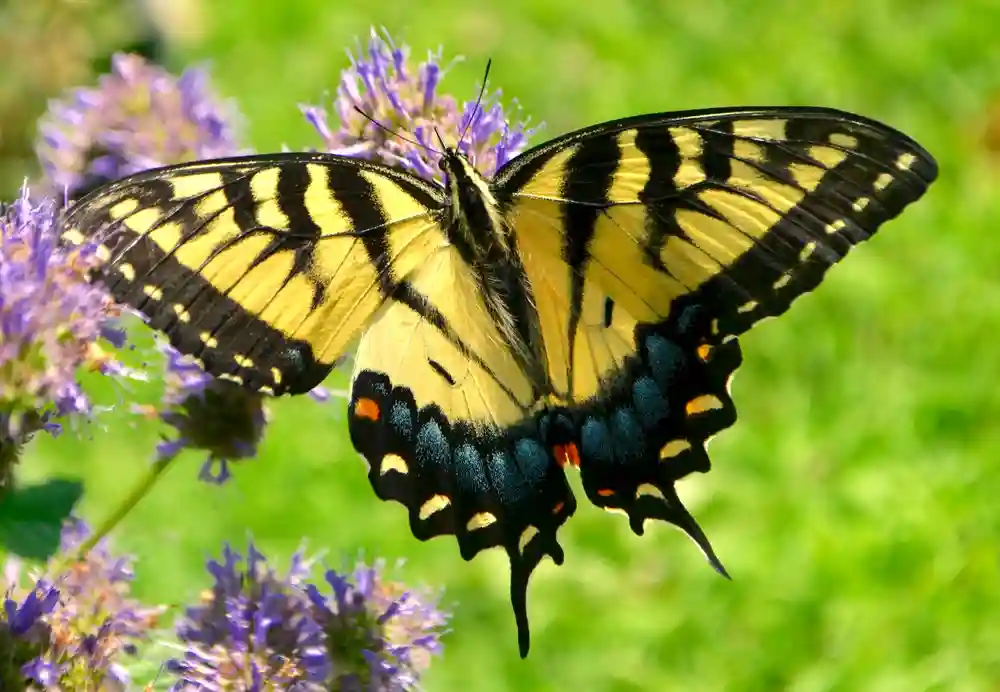
The Eastern Tiger Swallowtail is the big yellow butterfly of Kentucky gardens and river bluffs, and its dark female form mimics the Pipevine Swallowtail, which is common wherever Dutchman's pipe and Virginia snakeroot grow. The Zebra Swallowtail, striped in white and black with long tails, is abundant in April where pawpaw thickets line the streams, and the Spicebush Swallowtail and Black Swallowtail complete the common set.
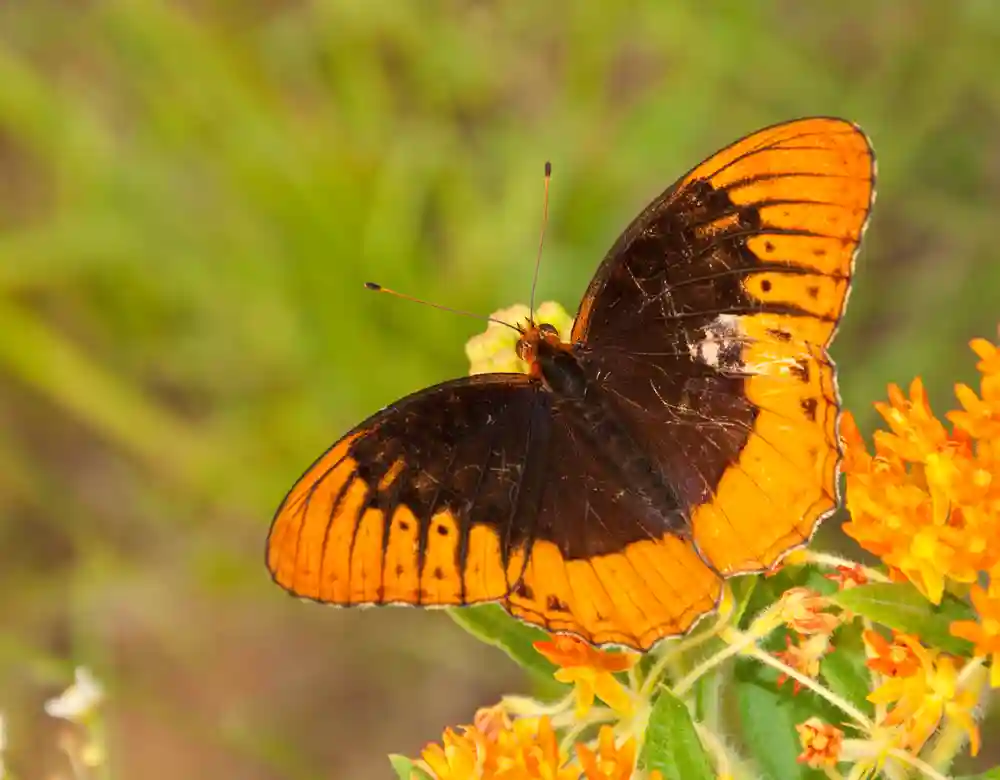
The eastern mountains are the reason Kentucky matters to butterfly watchers. The Diana Fritillary, whose huge orange males and blue-black females look like two different species, survives in the rich cove forests and roadside flowers of the Cumberland Plateau, while the Great Spangled Fritillary and Aphrodite Fritillary are the common large fritillaries on milkweed and thistle in June and July. Damp meadows carry the small Meadow Fritillary and, at the edges of wet pastures with turtlehead, the Baltimore Checkerspot.
Along woodland paths the Red-spotted Purple basks on gravel roads, the Hackberry Emperor lands on people, the Question Mark and Eastern Comma feed at sap runs, and the Pearl Crescent is everywhere there are asters.
The Kentucky butterfly calendar
The year begins with the hibernators. On the first mild days of February and March the Mourning Cloak, Question Mark and Eastern Comma emerge from hollow trees and woodpiles. April brings the spring specialists of the oak and pawpaw woods: the Falcate Orangetip, Olympia Marble, West Virginia White, the elfins, the Spring Azure and, in rich mountain forest, the Appalachian Azure that lays only on black cohosh.
May and June are the first peak, when the hairstreaks swarm on milkweed and the fritillaries emerge. After a quieter July the numbers climb again in August and September as the sulphurs, Buckeyes, Painted Ladies and the southern immigrants build up; the Cloudless Sulphur and Gulf Fritillary reach Kentucky most years by late summer. Monarchs drift south through the state from the middle of September into October, resting in tree lines at dusk, and the last Buckeyes and sulphurs linger into November. See our butterfly season guide for how weather shifts these dates.
Where to see butterflies in Kentucky
Kentucky's public lands cover every habitat the state has, and several are managed with pollinators in mind.
- Bernheim Arboretum and Research Forest, Clermont — restored prairie, meadows and forest edge south of Louisville, with dependable Monarchs, swallowtails and fritillaries all summer.
- Red River Gorge and the Daniel Boone National Forest — cliffs, coves and roadside flowers of the Cumberland Plateau, the place to look for the Diana Fritillary and Appalachian Azure.
- Land Between the Lakes — oak woods and the Elk and Bison Prairie in the west, with southern strays and big late-summer sulphur flights.
- Mammoth Cave National Park — sinkhole plains and ridge-top forest with swallowtails, emperors and Baltimore Checkerspots.
- Raven Run Nature Sanctuary, Lexington — Kentucky River palisades and meadows on the edge of the Bluegrass.
The fauna continues across the state lines, so it is worth comparing the pages for Tennessee, Ohio and West Virginia.
Host plants and butterfly gardening in Kentucky
Kentucky's rainfall and long growing season make butterfly gardening easy, provided the caterpillar host plants are there as well as the flowers.
- Willows — the Viceroy, and also the Mourning Cloak and Red-spotted Purple; a single black willow by a pond will raise all three.
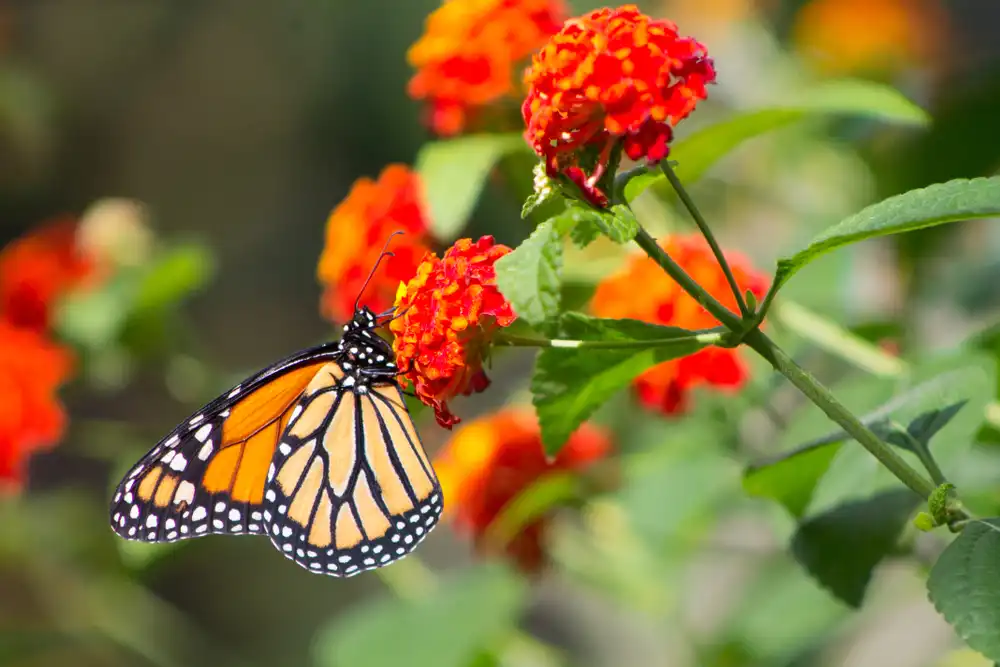
- Milkweeds — common, butterfly and swamp milkweed for the Monarch, which breeds here on its way north in spring and again in late summer.
- Pawpaw — the only food of the Zebra Swallowtail.
- Spicebush and sassafras — Spicebush Swallowtail; tulip poplar and wild cherry — Eastern Tiger Swallowtail; dill, parsley and golden Alexanders — Black Swallowtail.
- Violets — every fritillary from the Great Spangled to the Meadow Fritillary.
- Hackberry — Hackberry and Tawny Emperors, American Snout and Question Mark.
- Clover, alfalfa and partridge pea — the sulphurs and the Eastern Tailed-Blue.
- Asters — the Pearl Crescent, which also needs them for autumn nectar.
For nectar, plant butterfly milkweed, purple coneflower and bee balm for June, ironweed, Joe-pye weed and blazing star for August, and New England aster and goldenrod for the Monarch migration. Learn what the adults actually drink in our guide to what butterflies eat.
Rare and threatened butterflies in Kentucky
Kentucky has lost its prairie butterflies. The Regal Fritillary once flew on the barrens of the Pennyroyal and the Bluegrass savannas, but it has not been recorded reliably in the state for decades and is considered extirpated; it remains on the chart for historical reasons. The Appalachian Grizzled Skipper, a spring insect of shale barrens and cinquefoil, is critically imperilled across its range and known from only a few old Kentucky sites. The Swamp Metalmark survives in a handful of fens and wet meadows with swamp thistle, and the Diana Fritillary, Frosted Elfin, Silver-bordered Fritillary and Early Hairstreak are all listed as species of greatest conservation need in the state wildlife action plan.
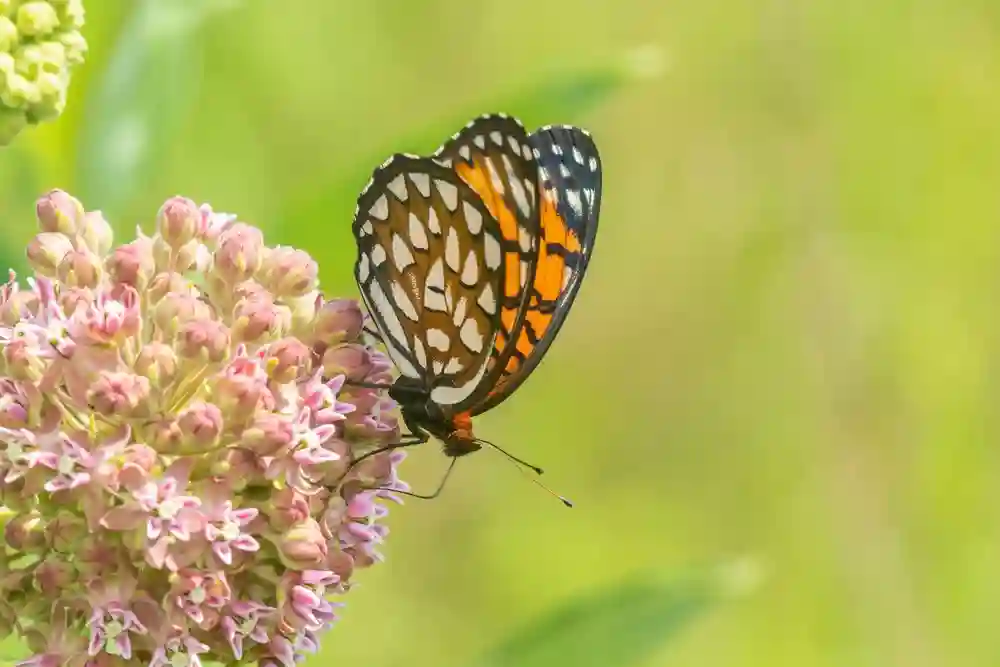
The Monarch is the wider concern, and the Kentucky Department of Fish and Wildlife Resources, the Transportation Cabinet and the state's Monarch conservation plan now encourage milkweed on roadsides, reclaimed mine land and farms. The Kentucky Lepidopterists' records, gathered since the 1960s, show that habitat loss, mowing and the ageing of open glades are the main pressures on the rarer species.
Butterflies found in Kentucky
111 species listed for Kentucky, grouped by family. Linked names have a full profile on this site with pictures of every life stage.
Brush-Footed (Nymphalidae)
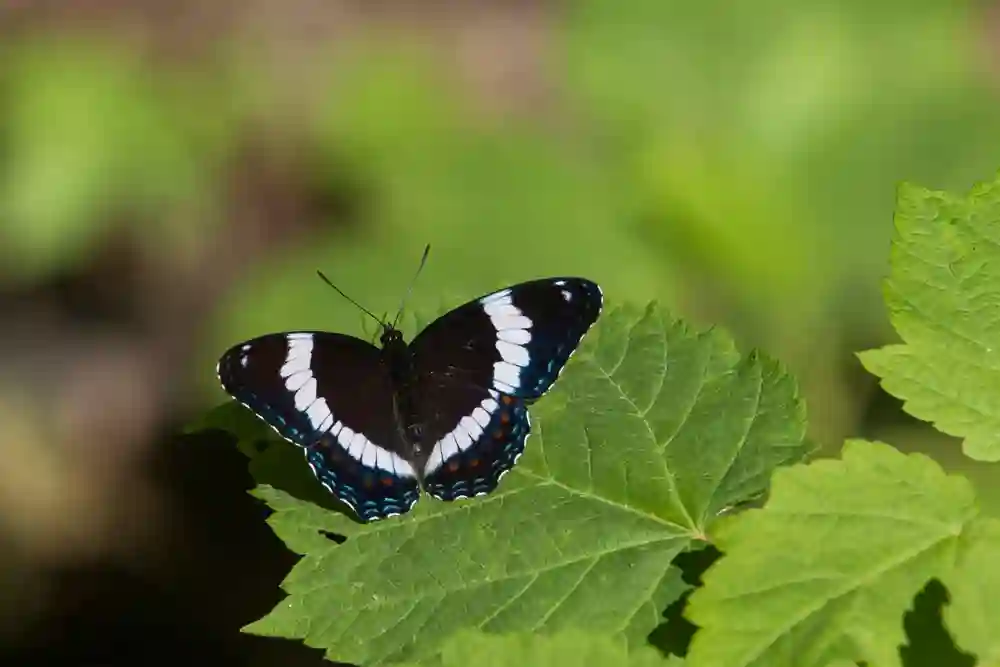 Limenitis arthemisRed Spotted Purple (Limenitis arthemis)The red-spotted purple is a large, tailless North American brush-footed butterfly whose upperside shines iridescent blue-black, a pattern copied from Limenitis archippusViceroy (Limenitis archippus)The viceroy (Limenitis archippus) is an orange-and-black North American butterfly that looks like a small monarch but carries one extra black line cur
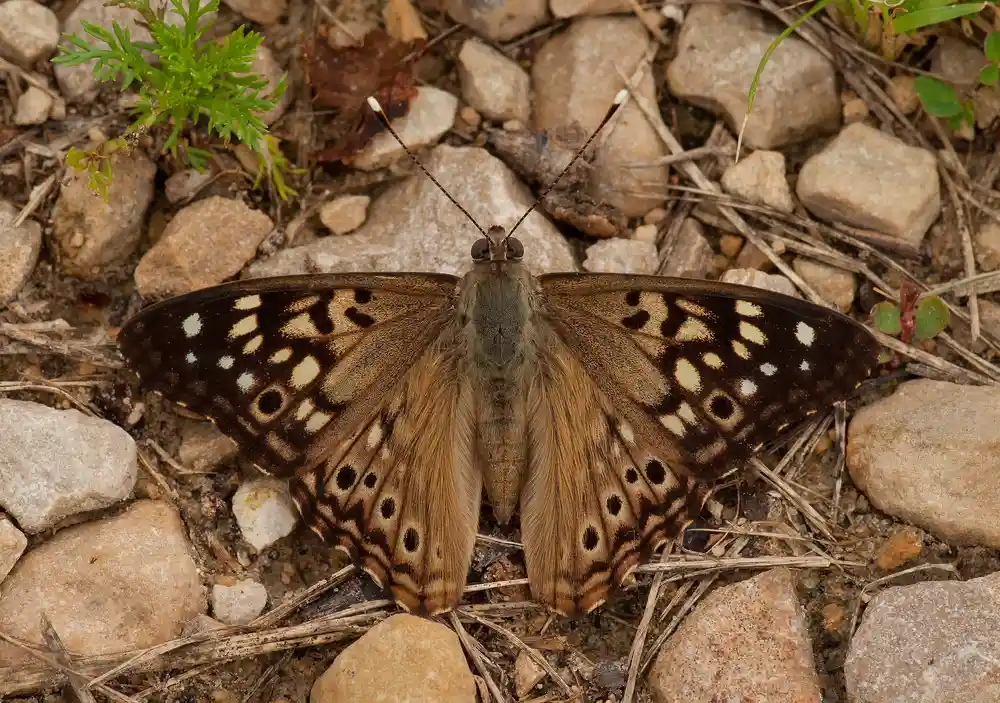 Asterocampa celtisHackberry Emperor (Asterocampa celtis)The hackberry emperor is a medium-sized tan and brown butterfly of eastern and central North America that never strays far from a hackberry tree, and
  Speyeria aphroditeAphrodite Fritillary (Speyeria aphrodite)The Aphrodite fritillary (Speyeria aphrodite) is a large orange-and-black butterfly of prairies, dry fields and open woodland across southern Canada aSpeyeria dianaDiana Fritillary (Speyeria diana)The Diana fritillary is a large woodland butterfly of the southern Appalachians and the Ozarks in which the two sexes look like different species: the
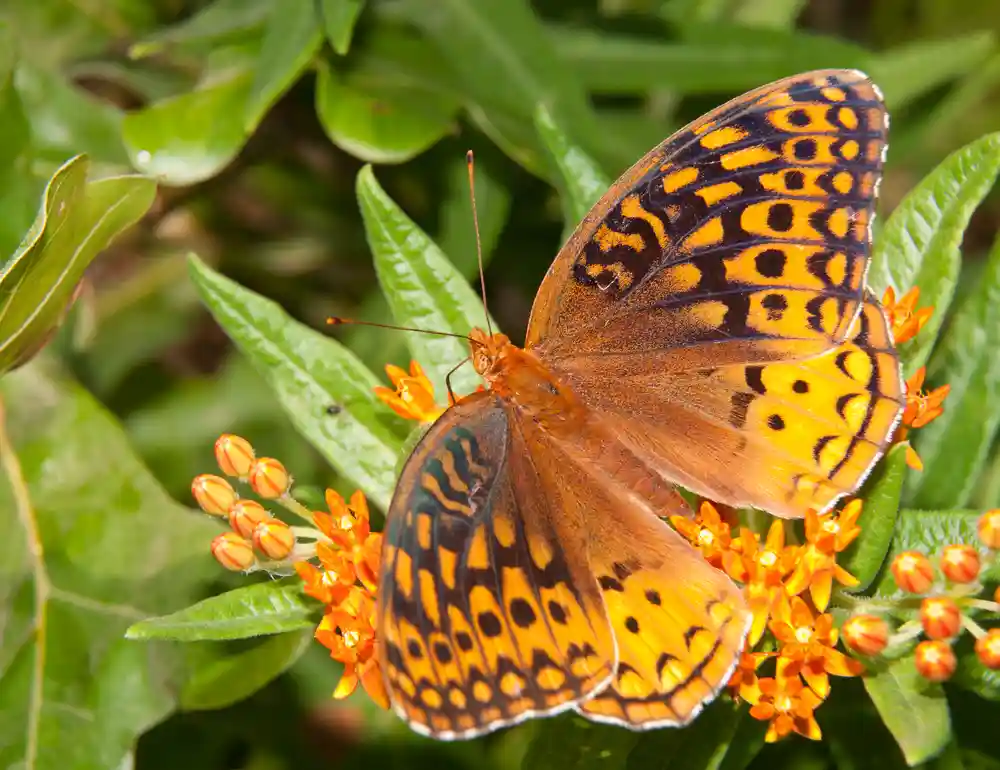 Speyeria cybeleGreat Spangled Fritillary (Speyeria cybele)A big orange butterfly of summer meadows, the great spangled fritillary is named for the sheet of silver spangles on the underside of its hindwings.Speyeria idaliaRegal Fritillary (Speyeria idalia)Big, fast and unmistakable, the regal fritillary is the butterfly of the North American tallgrass prairie: orange forewings, near-black hindwings stud
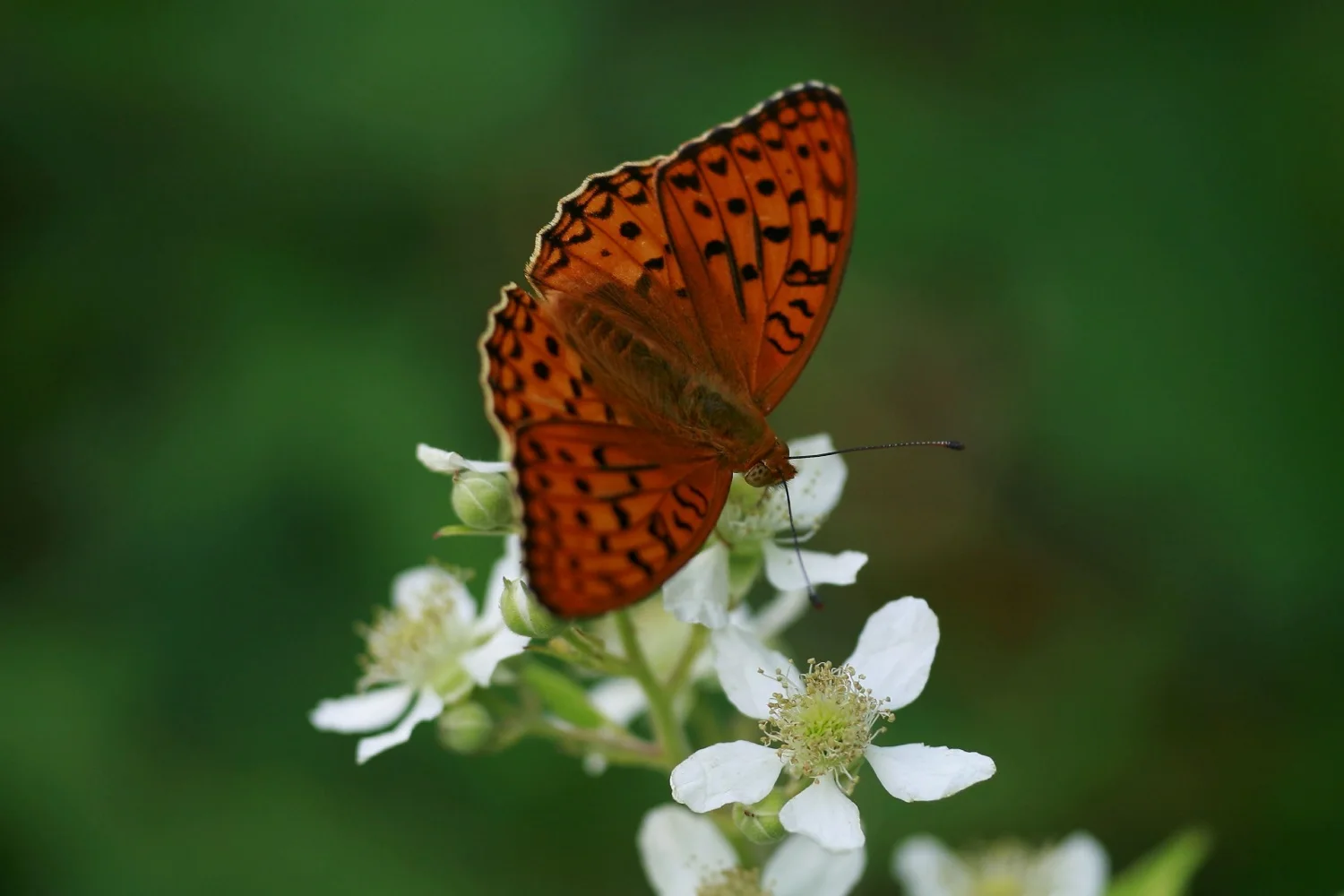 Boloria bellonaMeadow Fritillary (Boloria bellona)The meadow fritillary is a small orange-and-black butterfly of damp meadows and pastures across southern Canada and the northern United States, and th
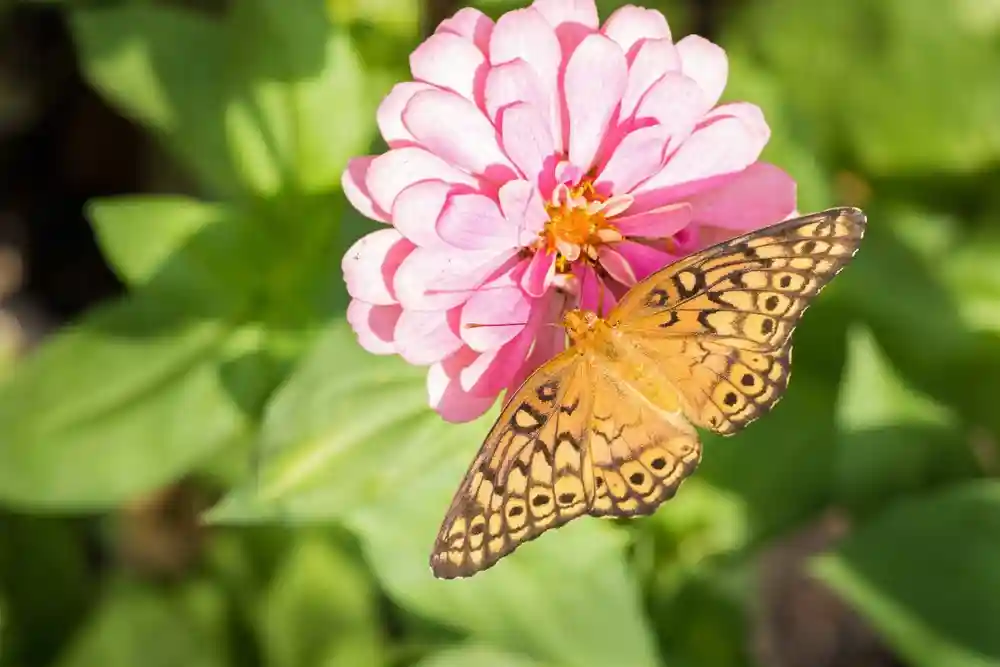 Euptoieta claudiaVariegated Fritillary (Euptoieta claudia)Half fritillary and half longwing, the variegated fritillary is the orange butterfly of American roadsides, pastures and vacant lots.
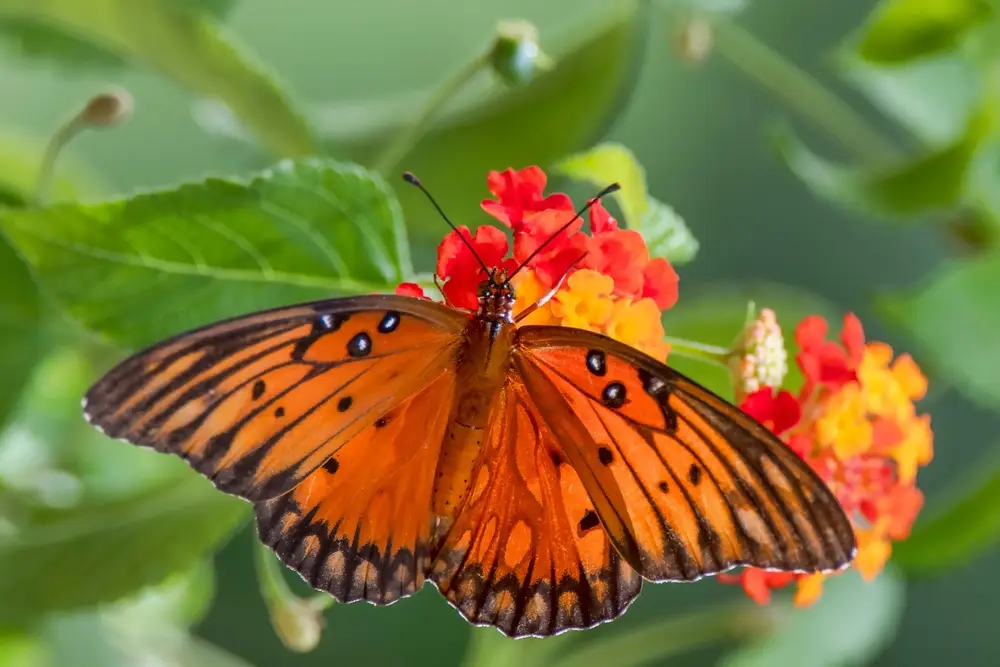 Agraulis vanillaeGulf Fritillary (Agraulis vanillae)The Gulf fritillary is a long-winged orange butterfly of the southern United States, Mexico, the Caribbean and tropical America, and its defining mark
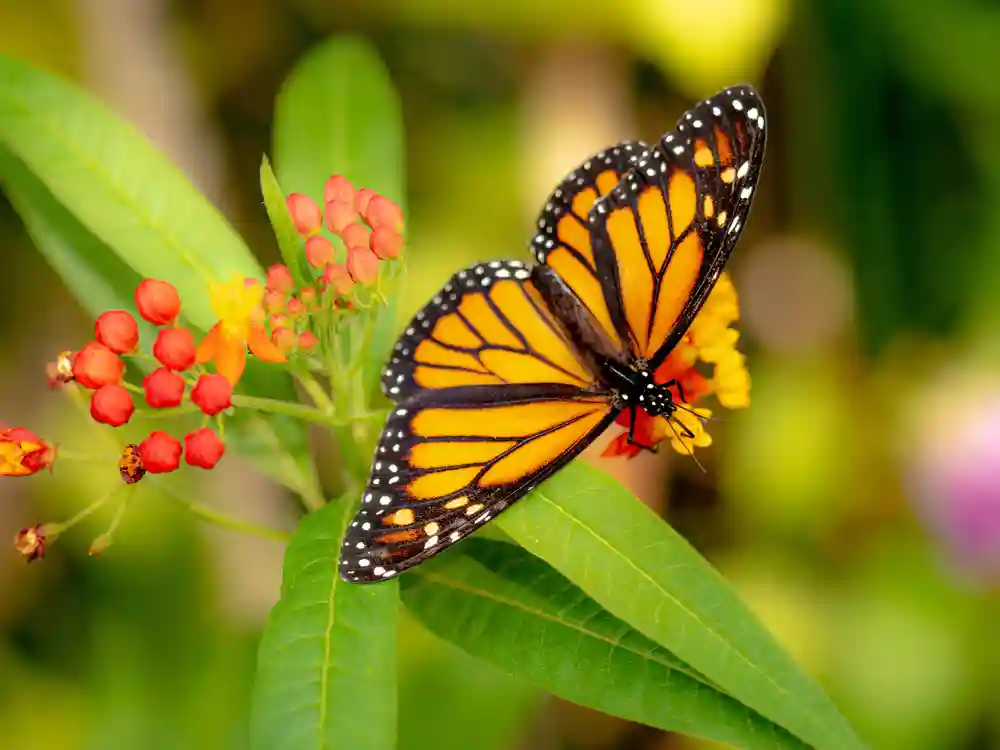 Danaus plexippusMonarch (Danaus plexippus)The monarch is a large orange butterfly with black-outlined wing veins and a black, white-spotted border, found across North America and now on severa
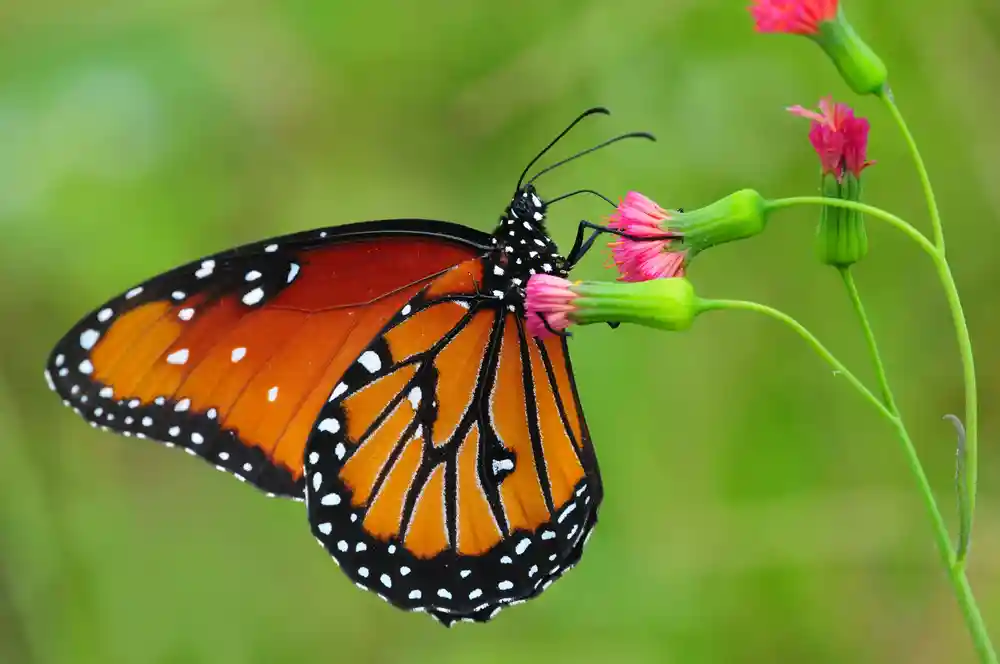 Danaus gilippusQueen (Danaus gilippus)A warm chestnut-brown milkweed butterfly of the southern states and the tropics, the queen is the monarch's smaller, darker cousin.
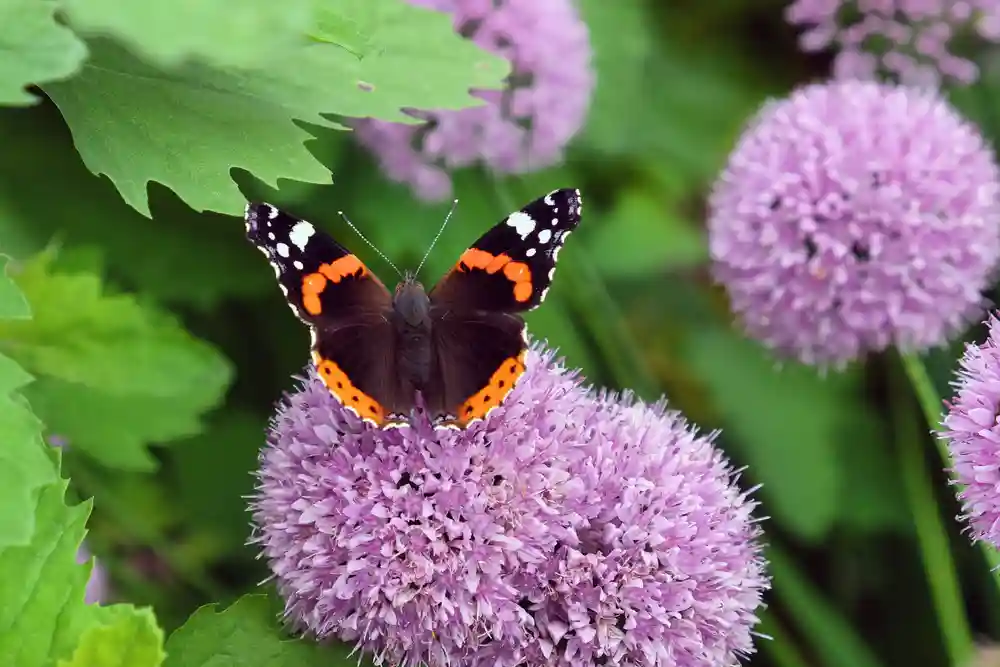 Vanessa atalantaRed Admiral (Vanessa atalanta)The red admiral (Vanessa atalanta) is a medium-sized blackish butterfly marked with one bright orange-red band across each forewing and a scatter of w
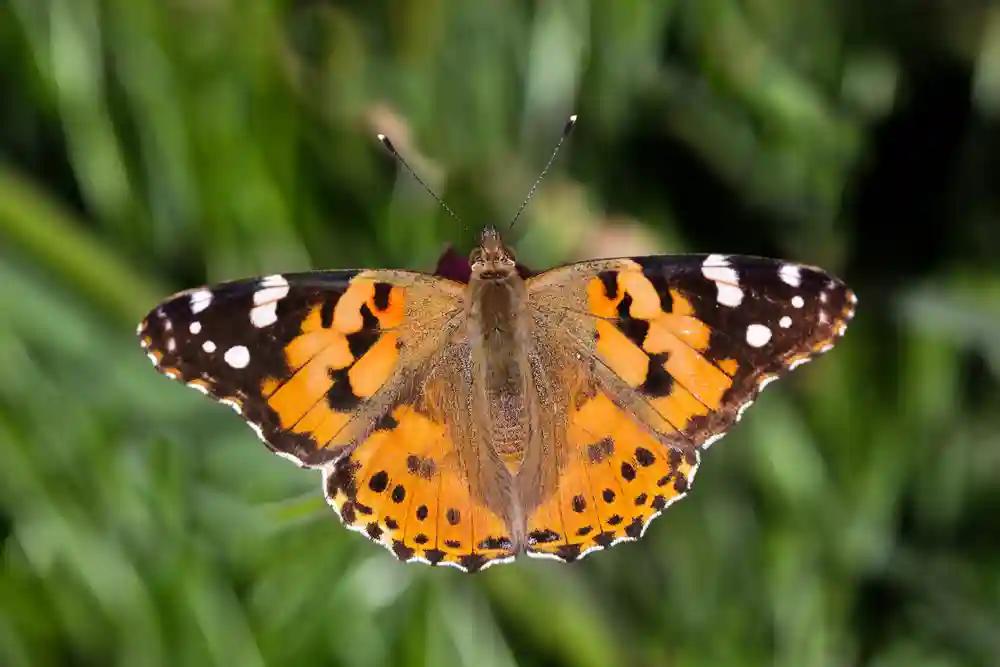 Vanessa carduiPainted Lady (Vanessa cardui)No other butterfly lives on so much of the planet.
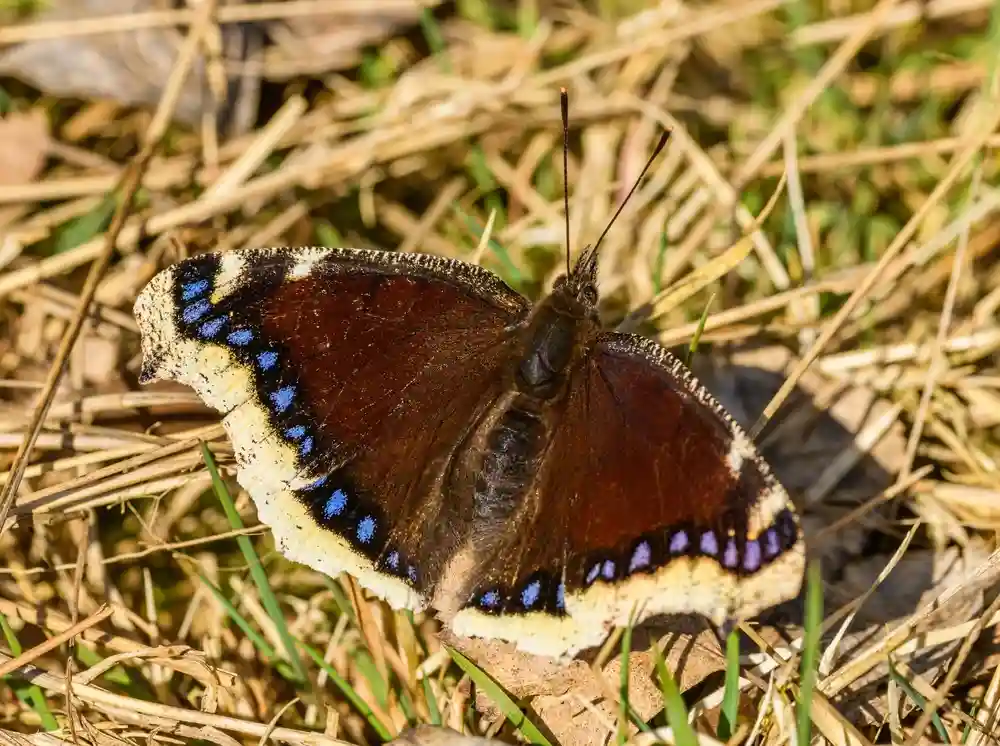 Nymphalis antiopaMourning Cloak (Nymphalis antiopa)The mourning cloak (Nymphalis antiopa) is a large dark butterfly of woodland, riverbank and suburb across North America and temperate Eurasia, and not
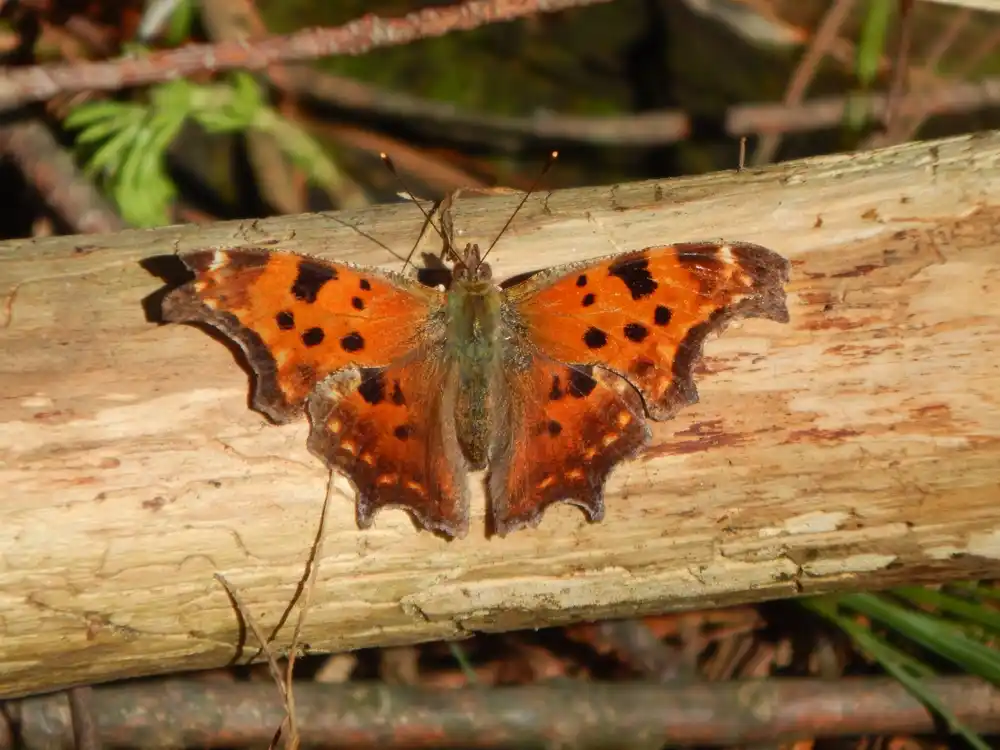 Polygonia commaEastern Comma (Polygonia comma)The eastern comma is an orange-and-black woodland butterfly of eastern North America with deeply ragged wing edges and a silvery comma-shaped mark on
 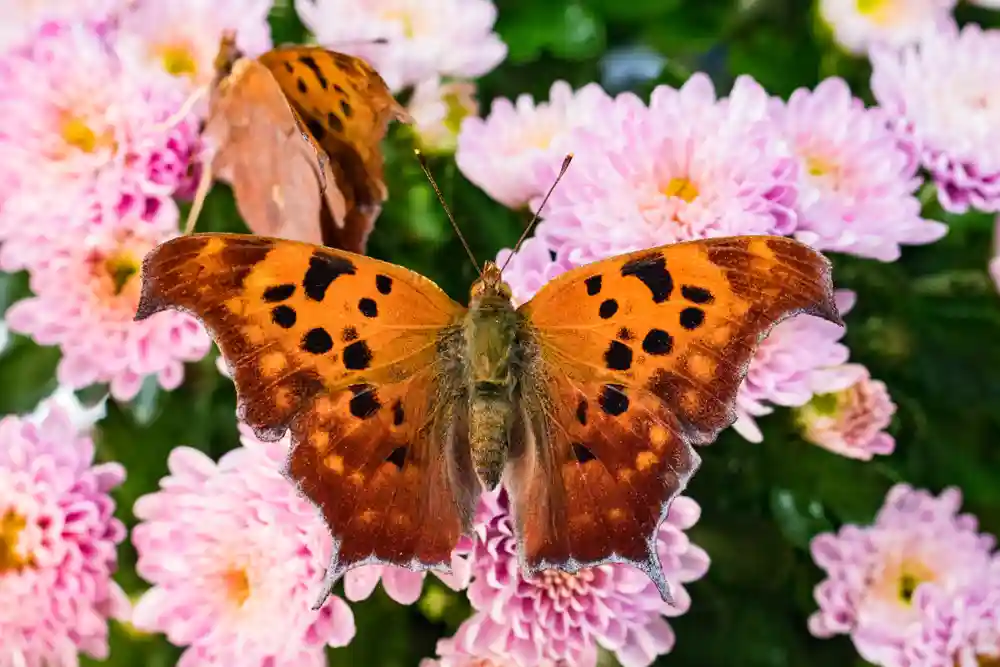 Polygonia interrogationisQuestion Mark (Polygonia interrogationis)The question mark is the largest of the North American anglewings, an orange-and-black woodland butterfly of the eastern United States, southeastern C
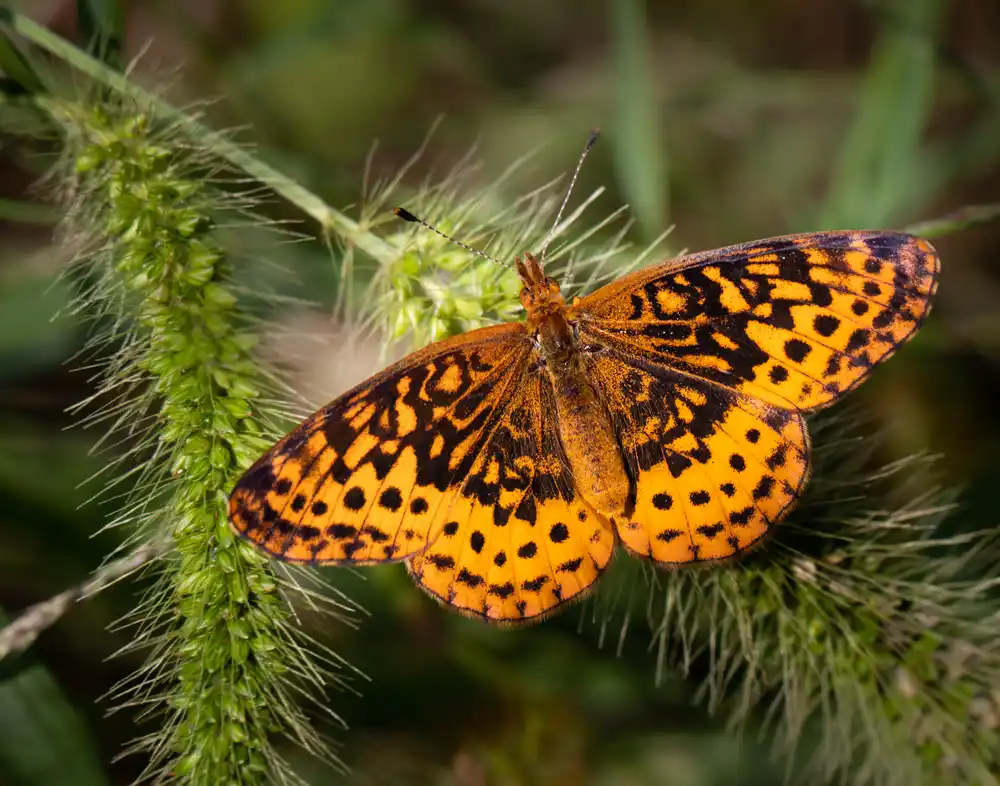 Phyciodes tharosPearl Crescent (Phyciodes tharos)Small, orange and endlessly busy, the pearl crescent is one of the butterflies most people in North America see without ever naming.
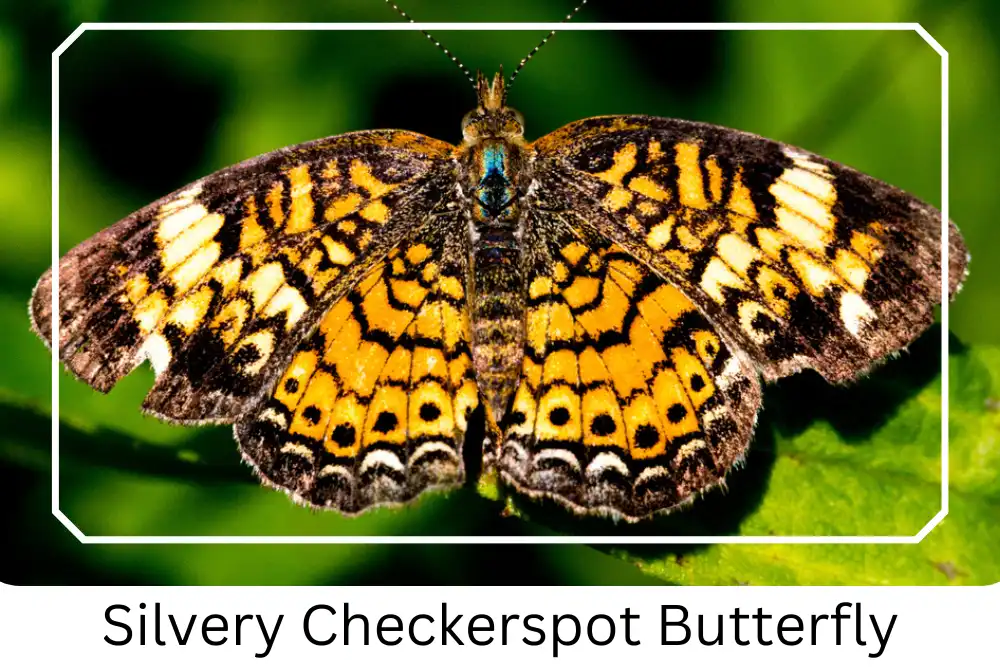 Chlosyne nycteisSilvery Checkerspot (Chlosyne nycteis)A medium-sized orange-and-black brush-foot of damp meadows and stream banks across eastern North America, the silvery checkerspot is named for the pal
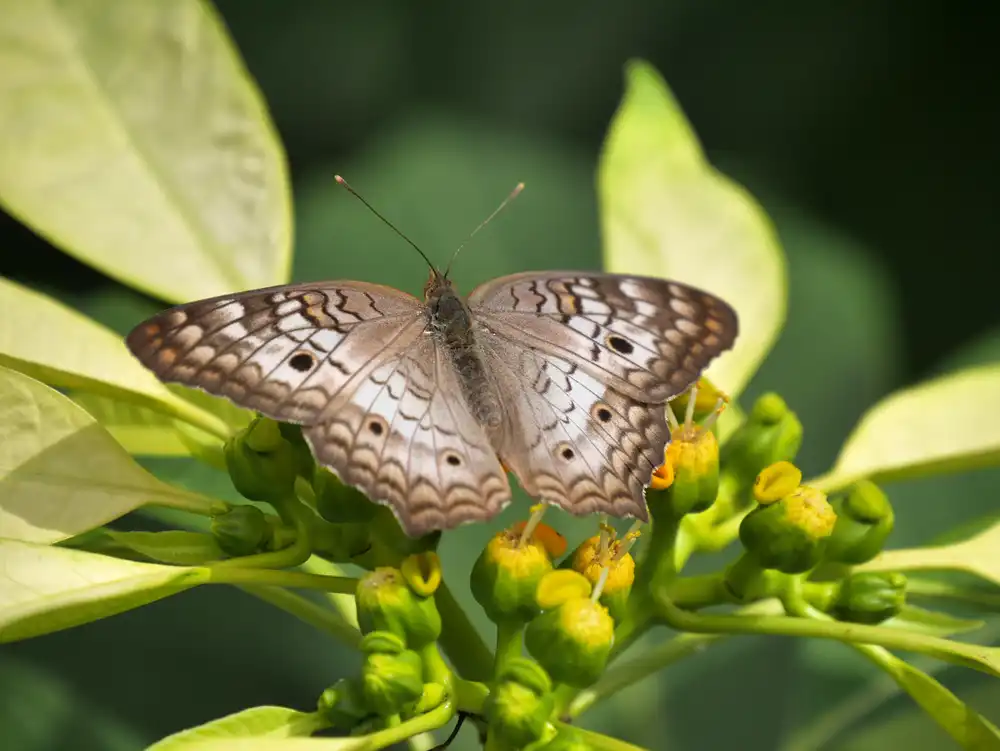 Anartia jatrophaeWhite Peacock (Anartia jatrophae)A pale, pearly butterfly of ditches, pond margins and wet weedy fields from Florida and Texas to Argentina.
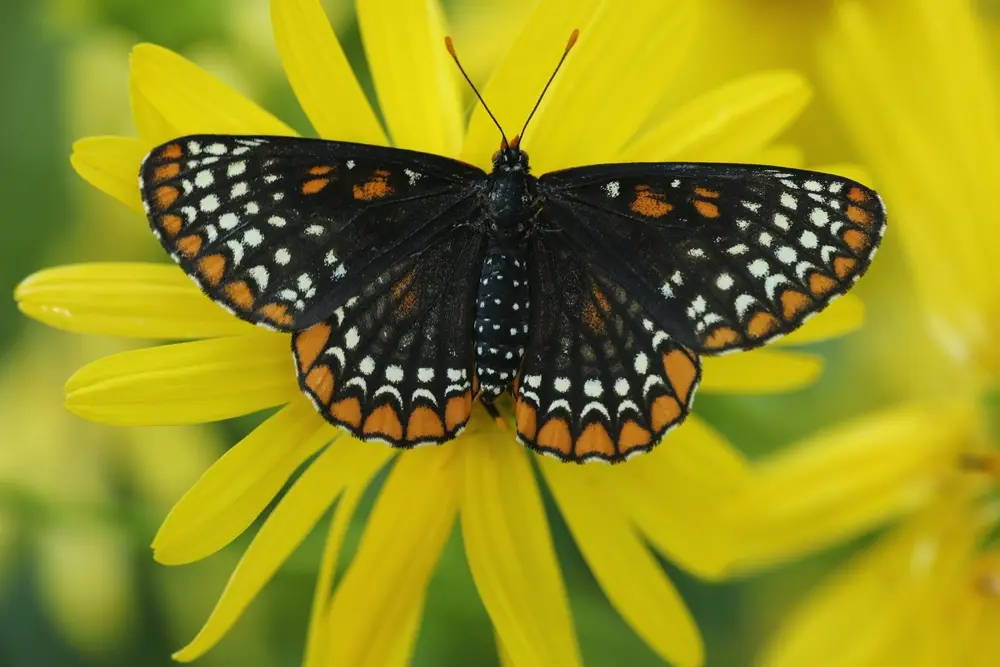 Euphydryas phaetonBaltimore Checkerspot (Euphydryas phaeton)Black wings tiled with cream squares and rimmed in brick orange, the Baltimore checkerspot is the state insect of Maryland and one of the most tightly
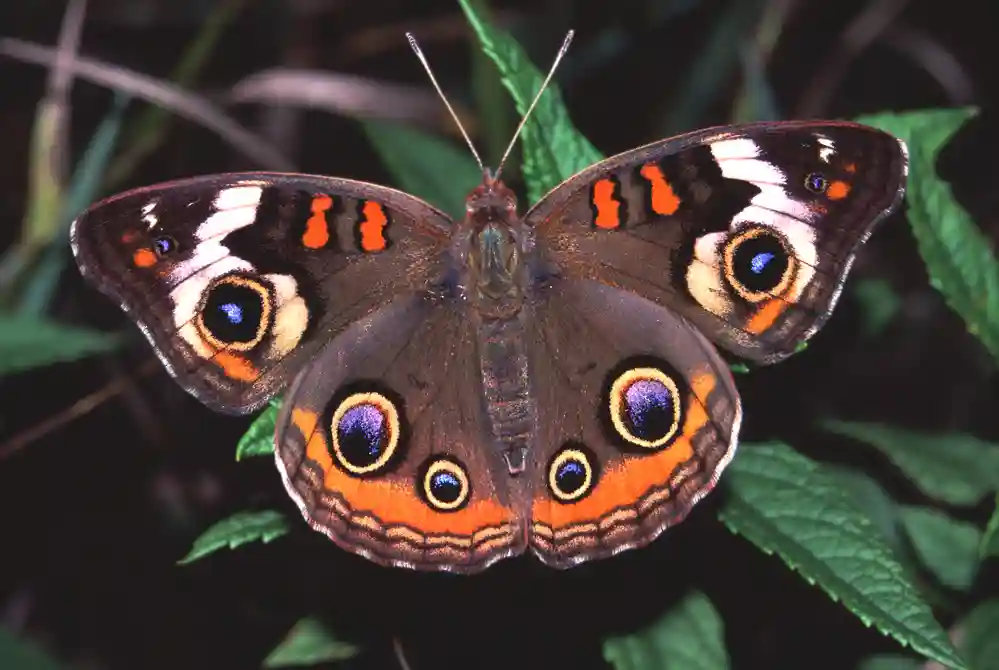 Junonia coeniaCommon Buckeye (Junonia coenia)Six large eyespots on a brown ground make the common buckeye one of the easiest North American butterflies to name and one of the hardest to approach.
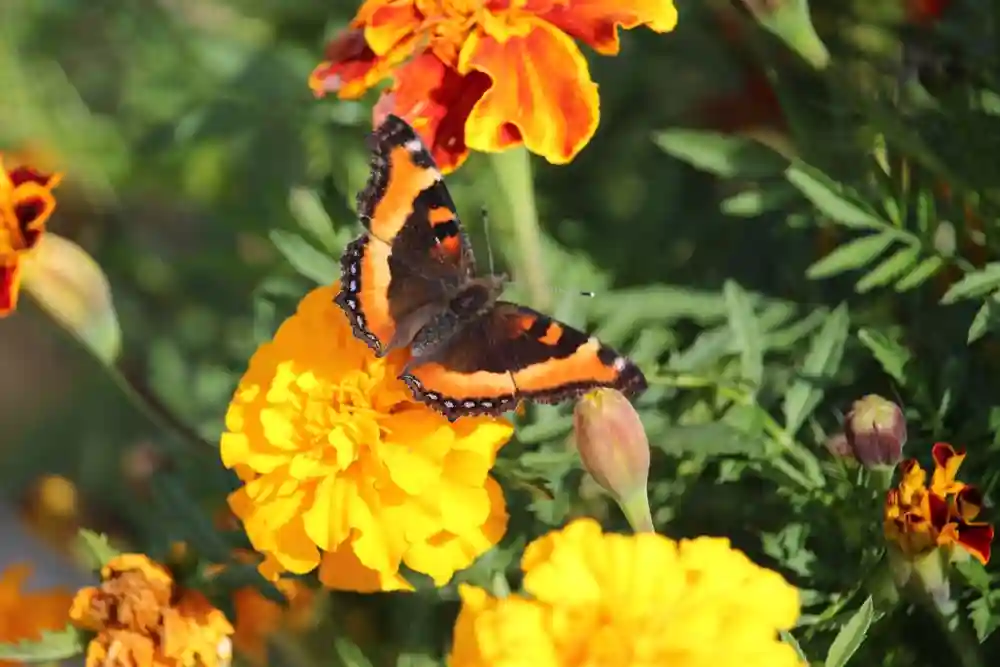 Aglais milbertiMilbert’s Tortoiseshell (Aglais milberti)Milbert’s tortoiseshell (Aglais milberti) is a medium-sized brush-footed butterfly of northern North America, from Alaska and Canada south through the
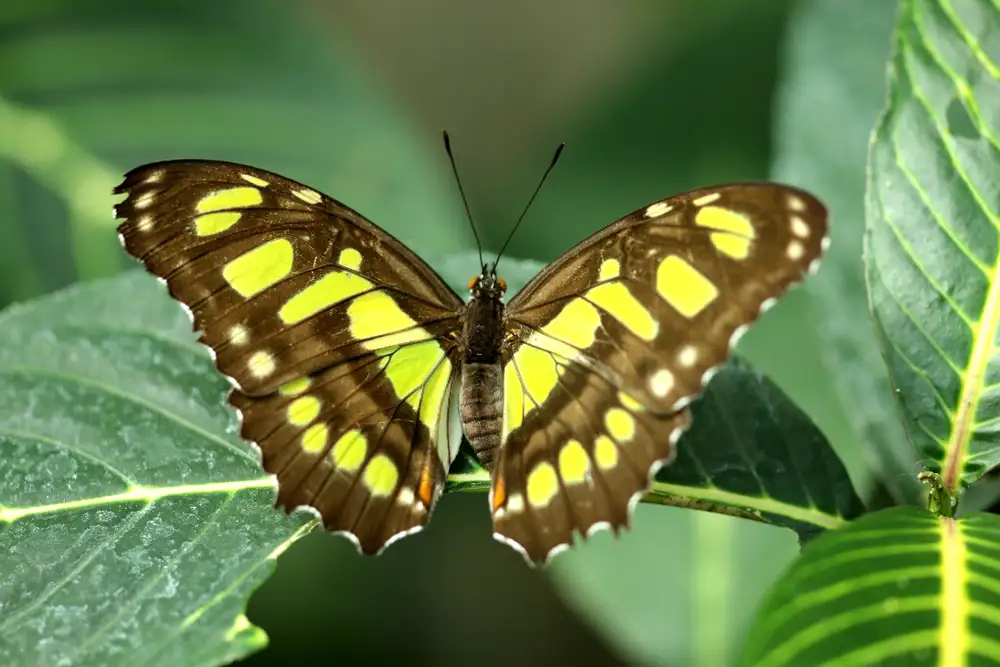 Siproeta stelenesMalachite (Siproeta stelenes)Panels of translucent apple green set in blackish brown give the malachite its name and make it one of the most recognisable butterflies of the Americ
Show all 12 other brush-footed species names
- White Admiral (Limenitis arthemis arthemis)
- Astyanax' Red-spotted Purple (Limenitis arthemis astyanax)
- Tawny Emperor (Asterocampa clyton)
- Goatweed Leafwing (Anaea andria)
- Silver-bordered Fritillary (Boloria selene)
- American Snout (Libytheana carinenta)
- American Lady (Vanessa virginiensis)
- Compton Tortoiseshell (Nymphalis vaualbum)
- Gray Comma (Polygonia progne)
- Green Comma (Polygonia faunus)
- Tawny Crescent (Phyciodes batesii)
- Gorgone Checkerspot (Chlosyne gorgone)
Gossamer-Winged (Lycaenidae)
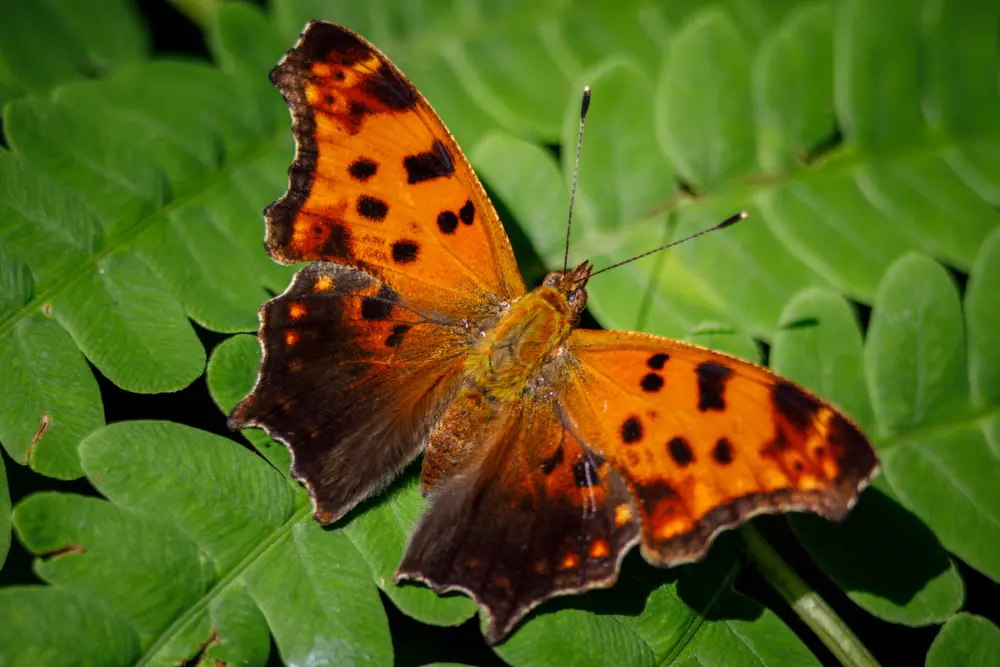 Lycaena phlaeasAmerican Copper (Lycaena phlaeas)The American copper is a small, fiercely territorial butterfly of open sunny ground across the northern hemisphere, known in Britain as the small copp
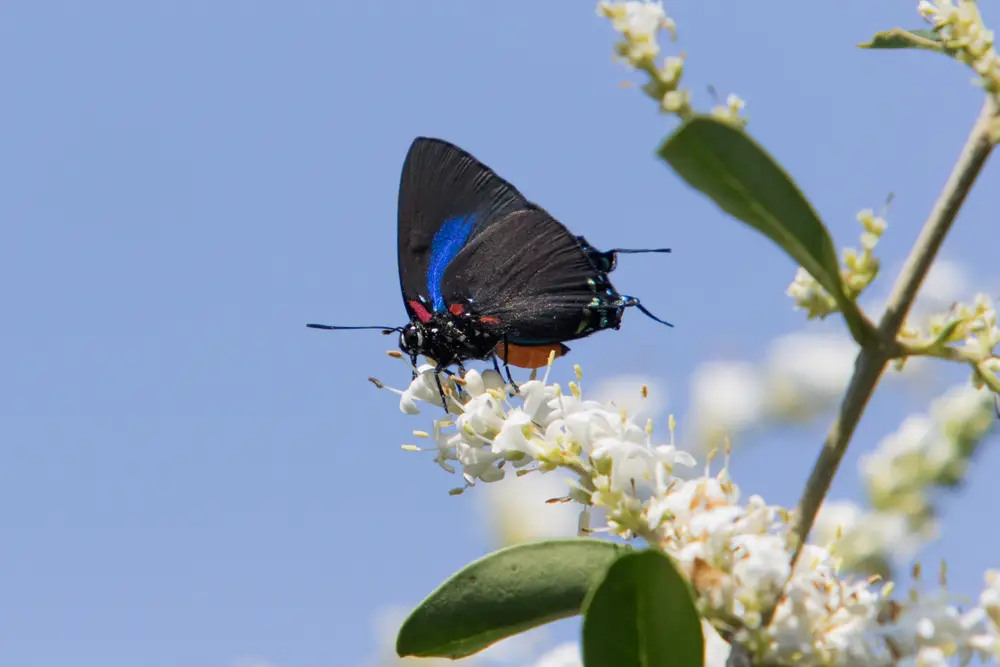 Atlides halesusGreat Purple Hairstreak (Atlides halesus)The great purple hairstreak (Atlides halesus) is the largest hairstreak in the United States, a tailed gossamer-wing of the southern states and Mexico
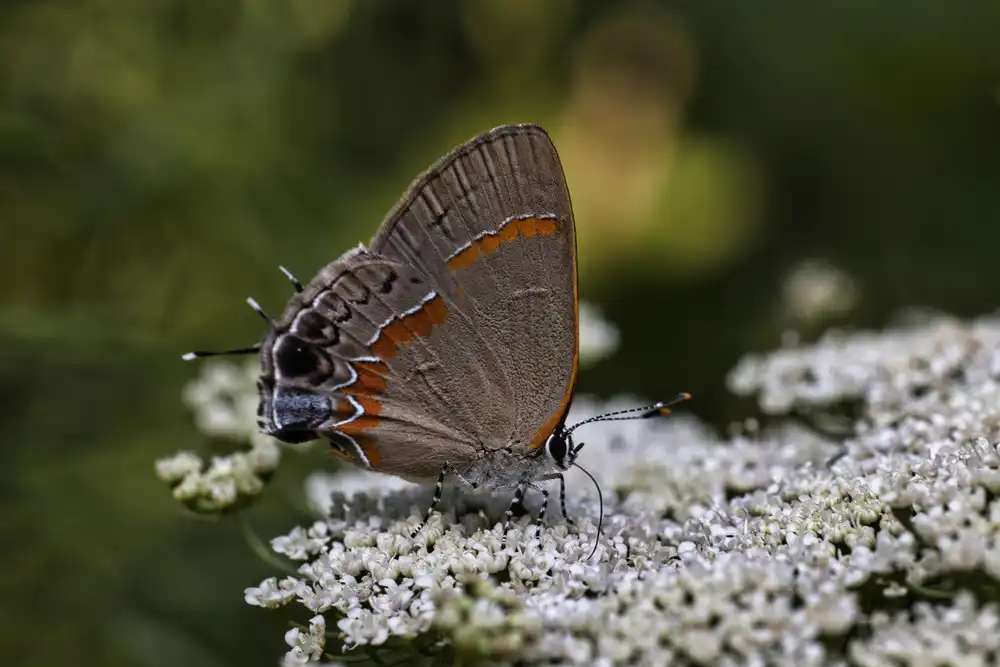 Calycopis cecropsRed-banded Hairstreak (Calycopis cecrops)The red-banded hairstreak is a small grey-brown butterfly of the southeastern United States, named for the broad white-and-red line that runs across t
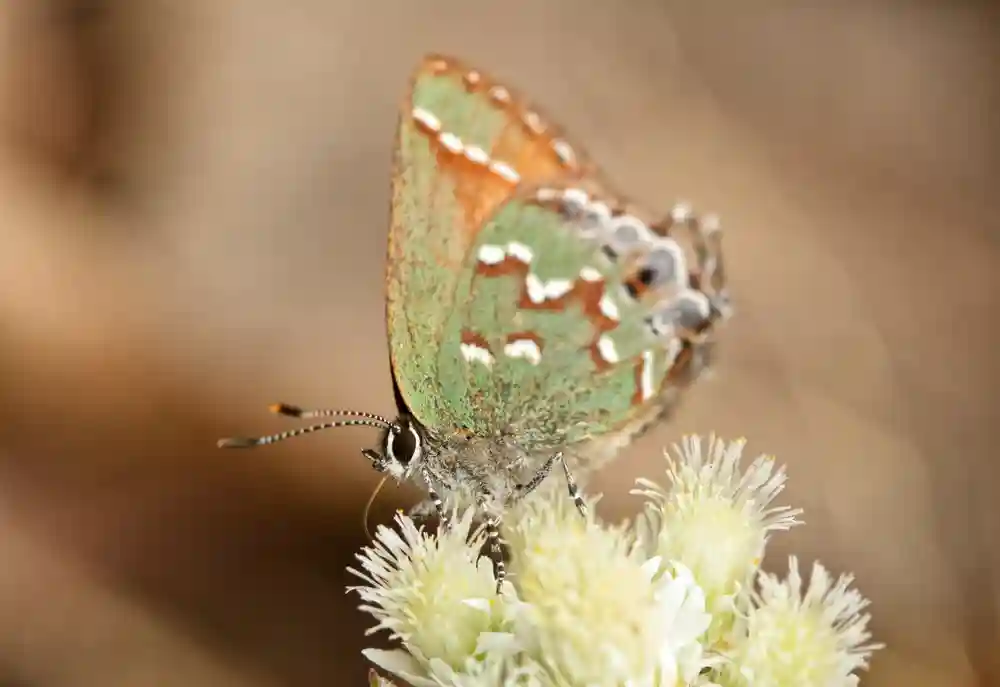 Callophrys gryneusJuniper Hairstreak (Callophrys gryneus)The juniper hairstreak (Callophrys gryneus) is a small North American butterfly, barely over an inch across, whose underside is a clear leaf green cro
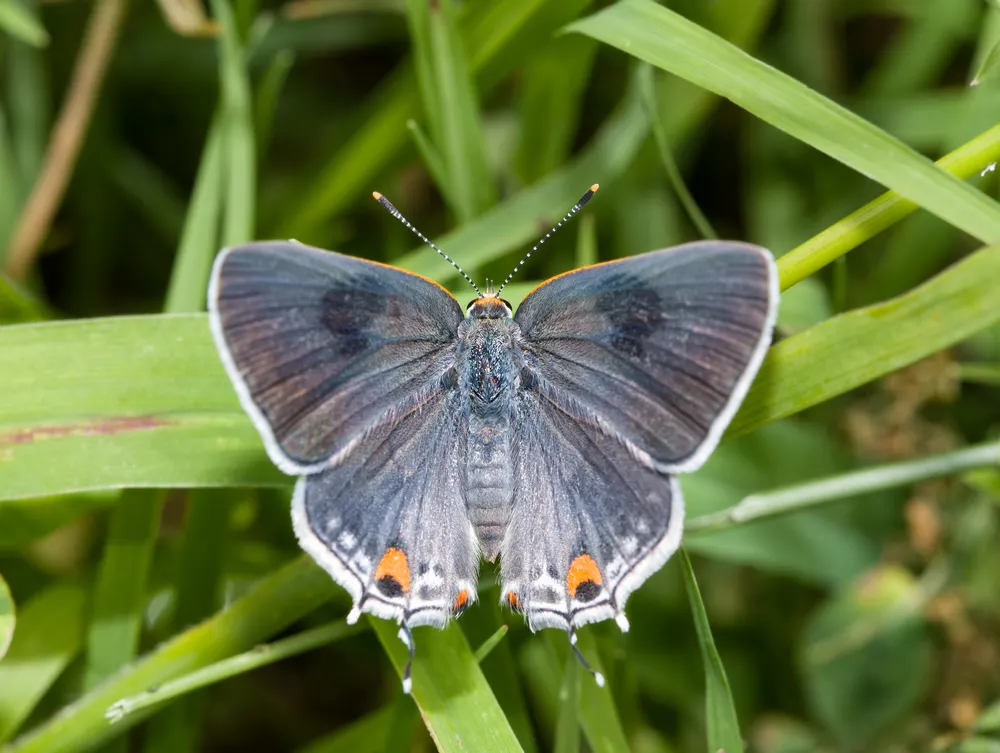 Strymon melinusGray Hairstreak (Strymon melinus)Small, slate-grey and almost impossible to avoid, the gray hairstreak is the most widespread hairstreak in North America and probably the least fussy
 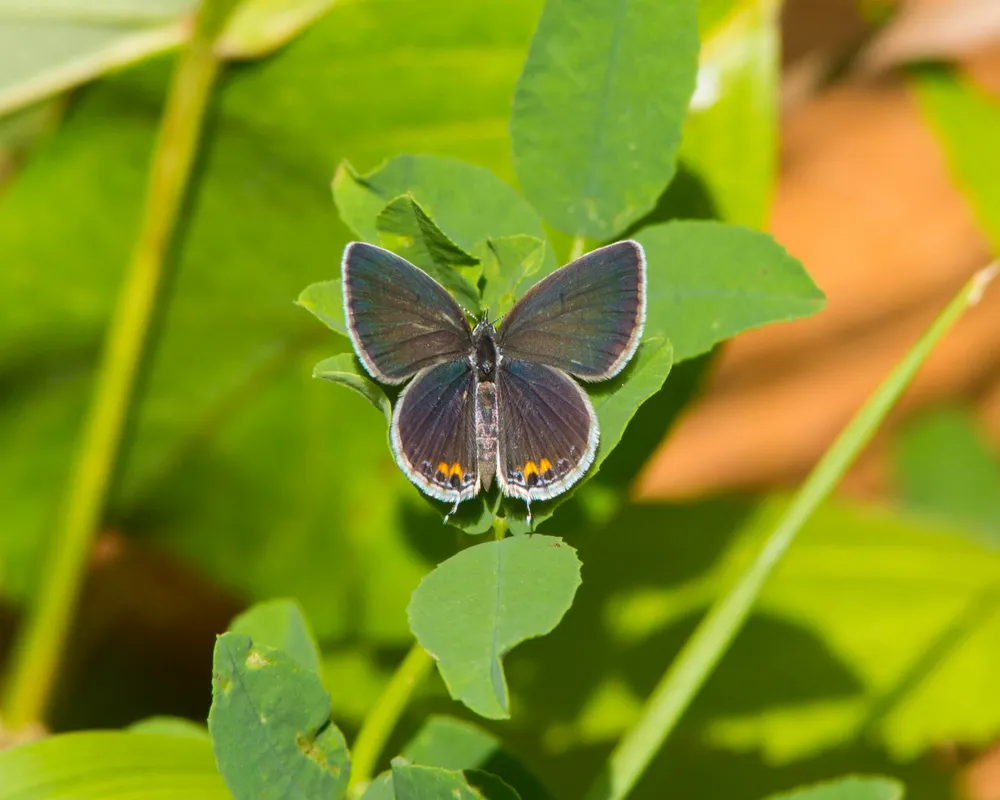 Cupido comyntasEastern Tailed Blue (Cupido comyntas)Barely an inch across and never far from a clover lawn, the eastern tailed blue is one of the most abundant butterflies in the eastern United States a
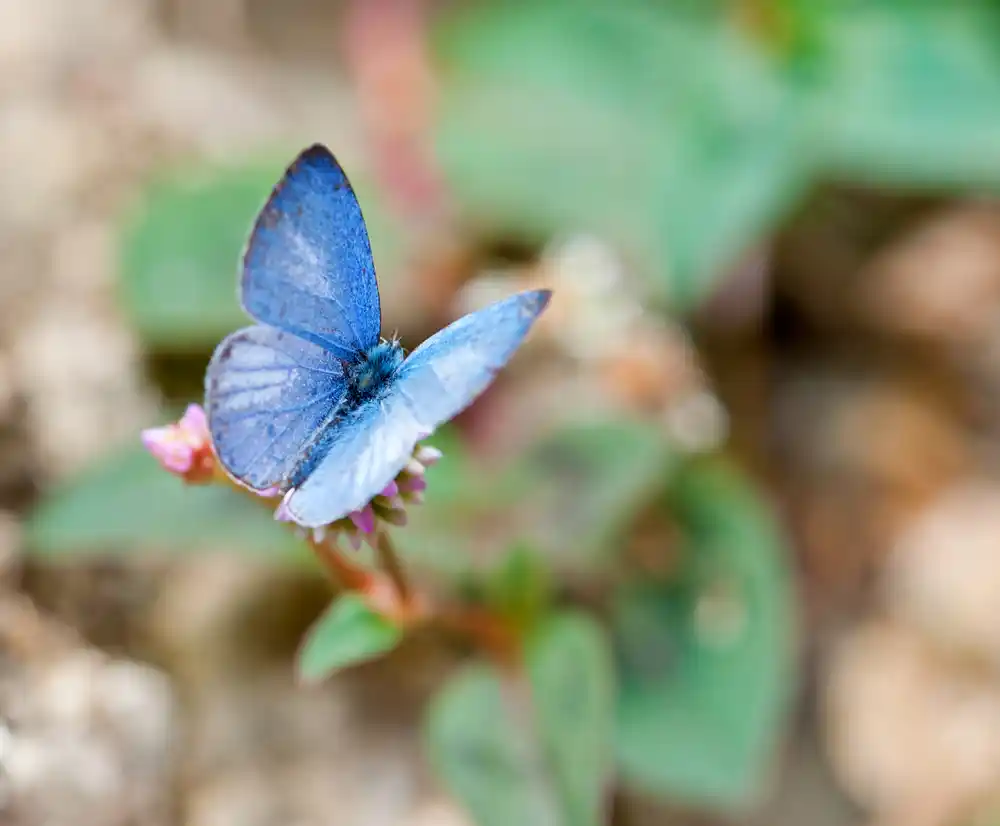 Celastrina ladonSpring Azure (Celastrina ladon)The spring azure is often the first butterfly of the year, a small violet-blue flake that appears along a woodland edge while the trees are still bare
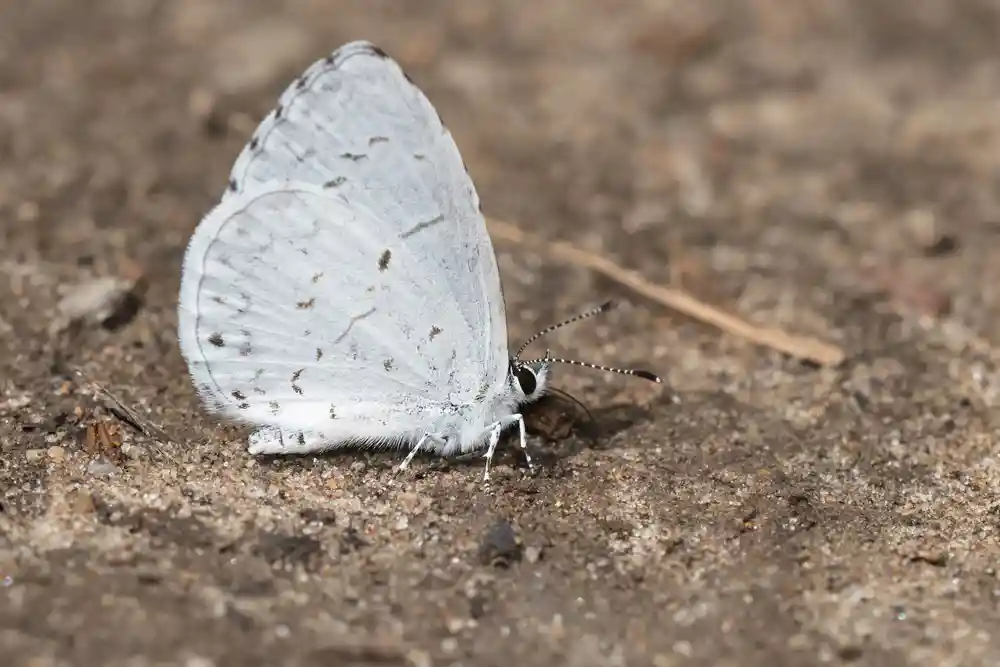 Celastrina neglectaSummer Azure (Celastrina neglecta)A pale, frosted blue butterfly barely an inch across, the summer azure is the one that flies when the spring azures have finished.
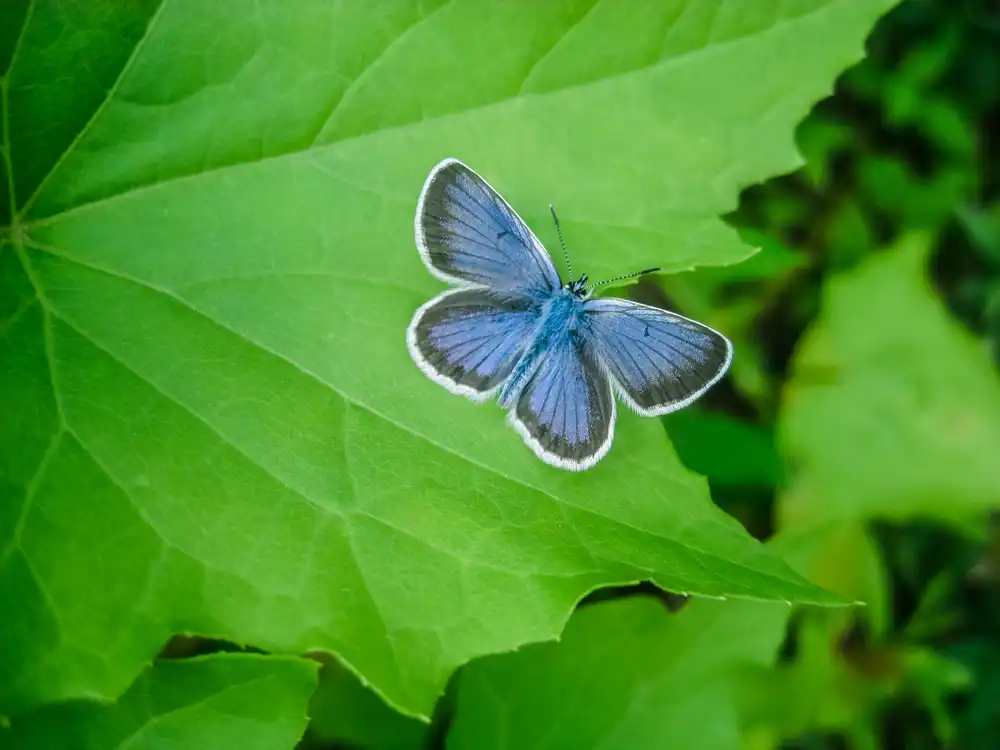 Glaucopsyche lygdamusSilvery Blue (Glaucopsyche lygdamus)One of the first blues on the wing each spring, the silvery blue flashes metallic silver-blue in flight and then settles to show a plain grey undersid
Show all 18 other gossamer-winged species names
- Harvester (Feniseca tarquinius)
- Bronze Copper (Hyllolycaena hyllus)
- Coral Hairstreak (Satyrium titus mopsus)
- Acadian Hairstreak (Satyrium acadicum)
- Edwards' Hairstreak (Satyrium edwardsii)
- Banded Hairstreak (Satyrium calanus falacer)
- Hickory Hairstreak (Satyrium caryaevorum)
- Striped Hairstreak (Satyrium liparops strigosum)
- Oak Hairstreak /'Northern' Southern Hairstreak (Satyrium favonius ontario)
- Brown Elfin (Callophrys augustus)
- Frosted Elfin (Callophrys irus)
- Henry's Elfin (Callophrys henrici)
- Eastern Pine Elfin (Callophrys niphon)
- White M Hairstreak (Parrhasius m-album)
- Early Hairstreak (Erora laeta)
- Marine Blue (Leptotes marina)
- Appalachian Azure (Celastrina neglectamajor)
- Duzky Azure (Celastrina nigra)
Whites and Sulphurs (Pieridae)
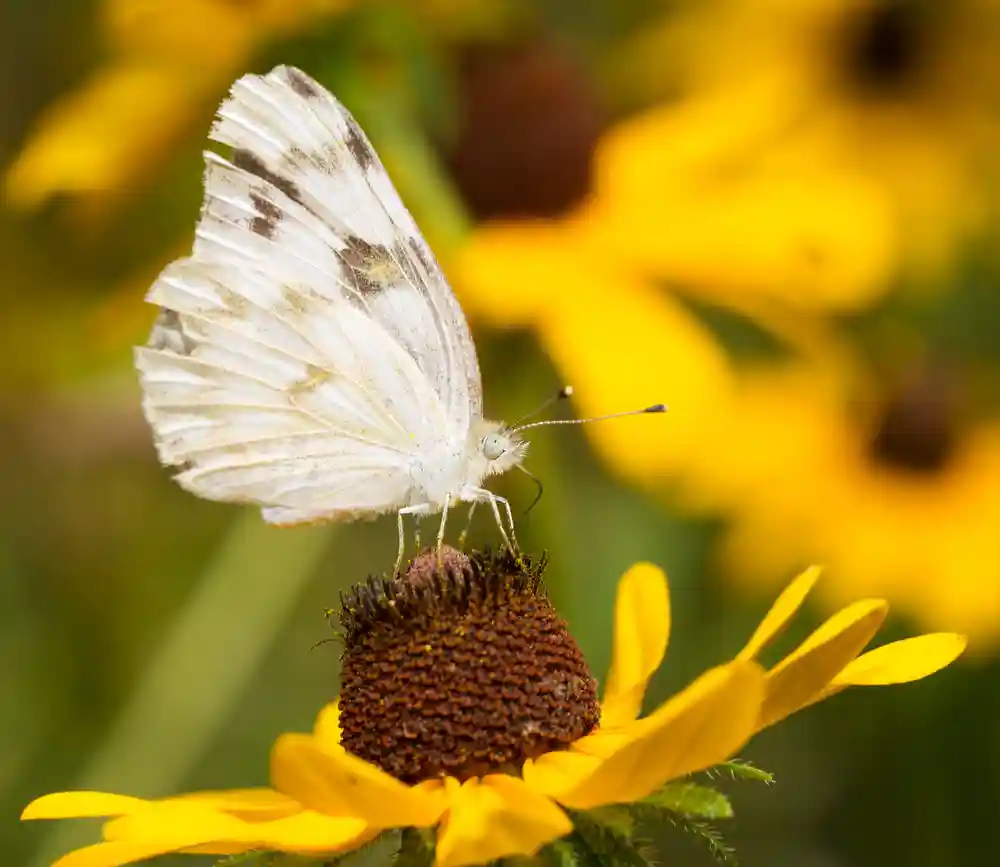 Pontia protodiceCheckered White (Pontia protodice)The checkered white is a medium-sized white butterfly of dry, open, disturbed ground across the United States and northern Mexico, recognised by the g
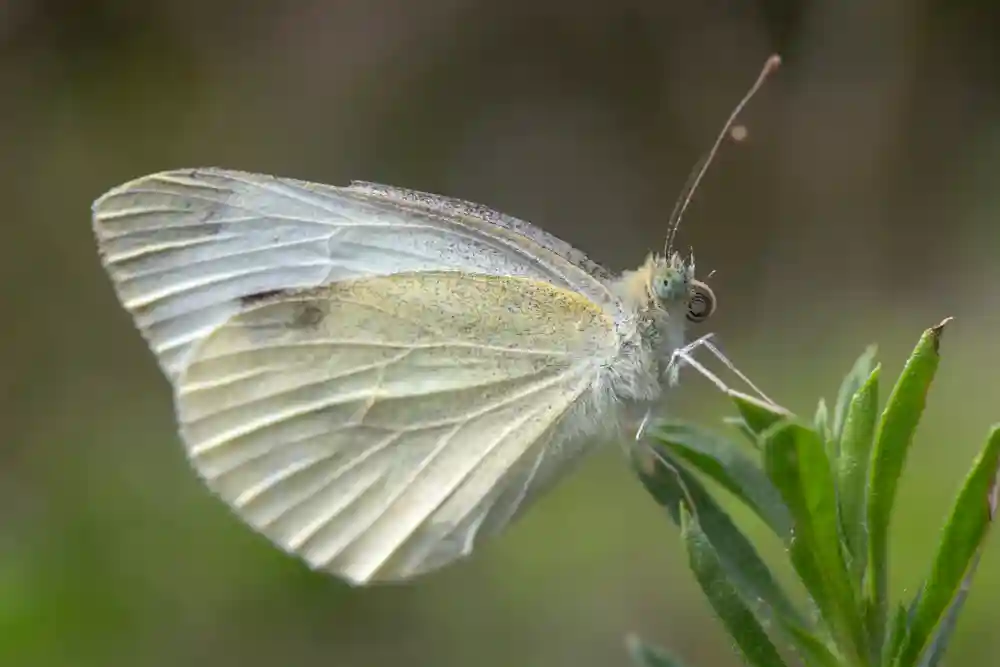 Pieris rapaeCabbage White (Pieris rapae)The cabbage white is probably the most-seen butterfly on the planet: a small, chalk-white insect with one or two black spots that drifts over allotmen
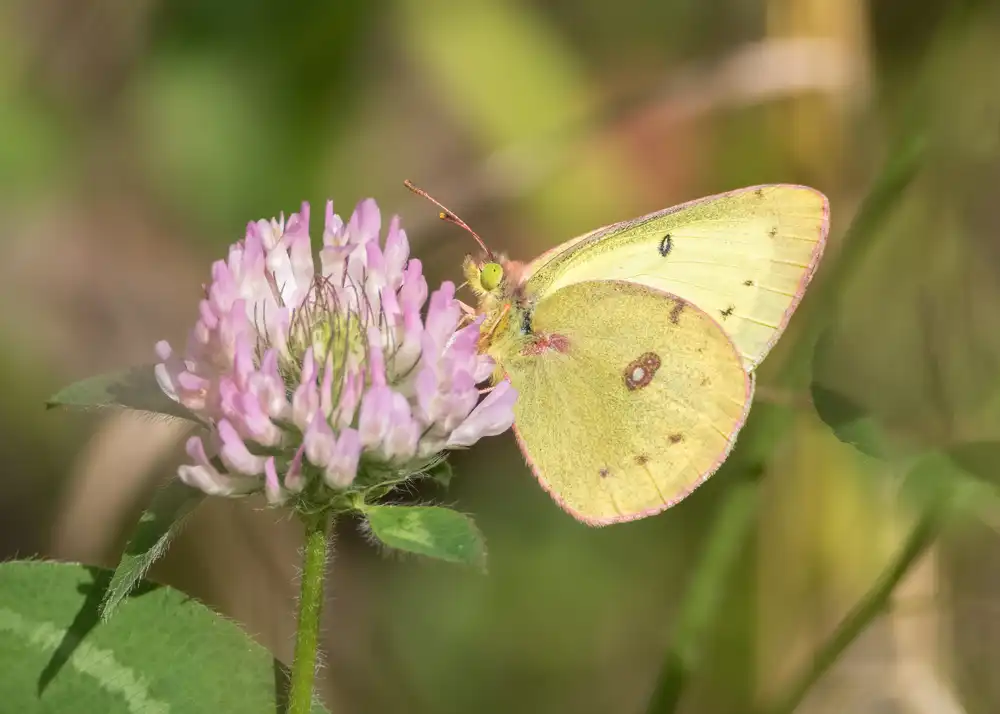 Colias philodiceClouded Sulphur (Colias philodice)The clouded sulphur is the plain yellow butterfly of North American roadsides, clover lawns and alfalfa fields, common from Alaska to the Gulf.
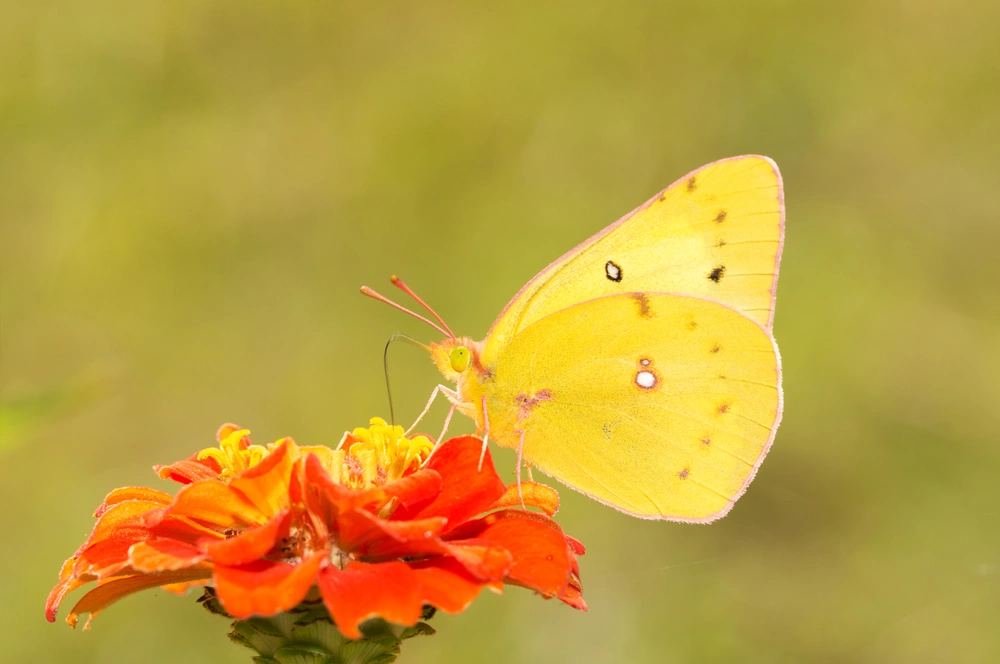 Colias eurythemeOrange Sulphur (Colias eurytheme)The orange sulphur is a medium-sized orange-and-black butterfly of open fields, roadsides and alfalfa farms across almost the whole of North America,
  Phoebis sennaeCloudless Sulphur (Phoebis sennae)The cloudless sulphur is a large, fast-flying lemon-yellow butterfly of the Americas, resident from Argentina north through the tropics to the souther
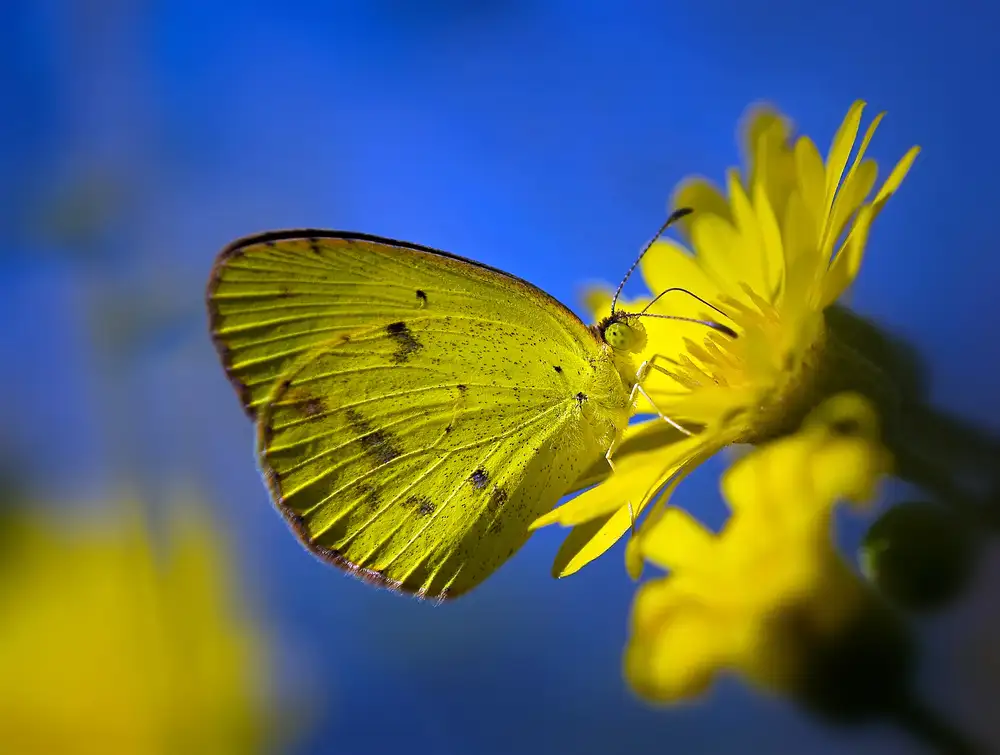 Eurema lisaLittle Yellow (Eurema lisa)A thumbnail-sized sulphur that flutters low over roadsides and fallow fields, the little yellow is one of the most numerous butterflies in eastern Nor
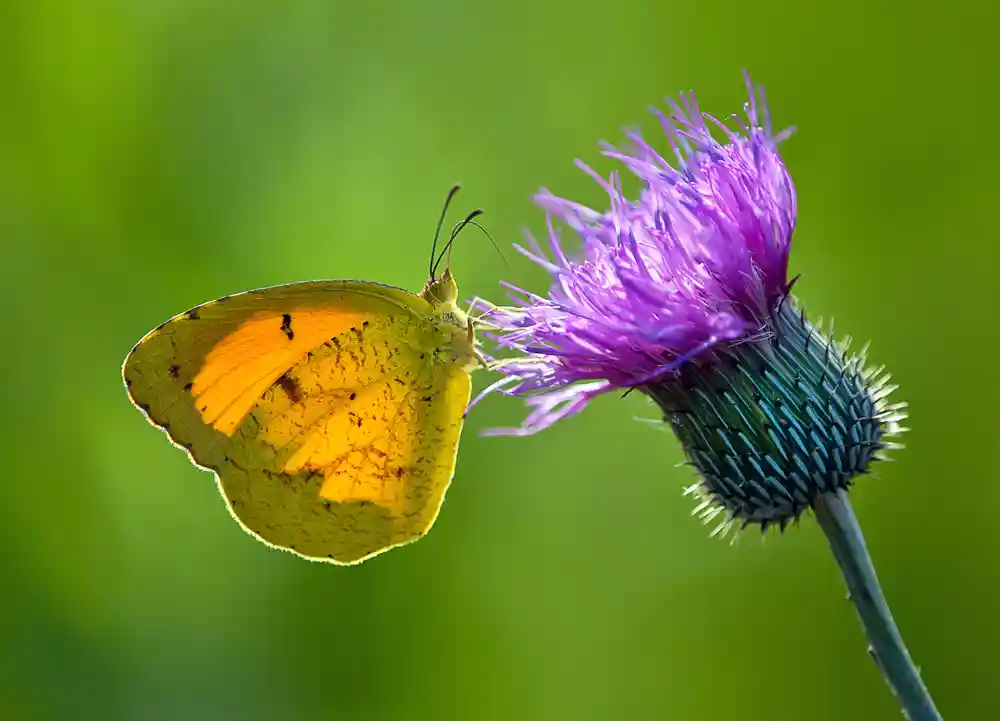 Eurema nicippeSleepy Orange (Eurema nicippe)The sleepy orange is a small, deep-orange sulphur of the southern United States, Mexico and Central America, easily known by the ragged black border t
Show all 9 other whites and sulphurs species names
- West Virginia White (Pieris virginiensis)
- Olympia Marble (Euchloe olympia)
- Falcate Orangetip (Anthocaris midea)
- Southern Dogface (Zerene cesonia)
- Orange-barred Sulphur (Phoebis philea)
- Large Orange Sulphur (Phoebis agarithe)
- Lyside Sulphur (Kricogonia lyside)
- Mexican Yellow (Eureuma mexicanum)
- Dainty Sulphur (Nathalis iole)
Metalmark (Riodinidae)
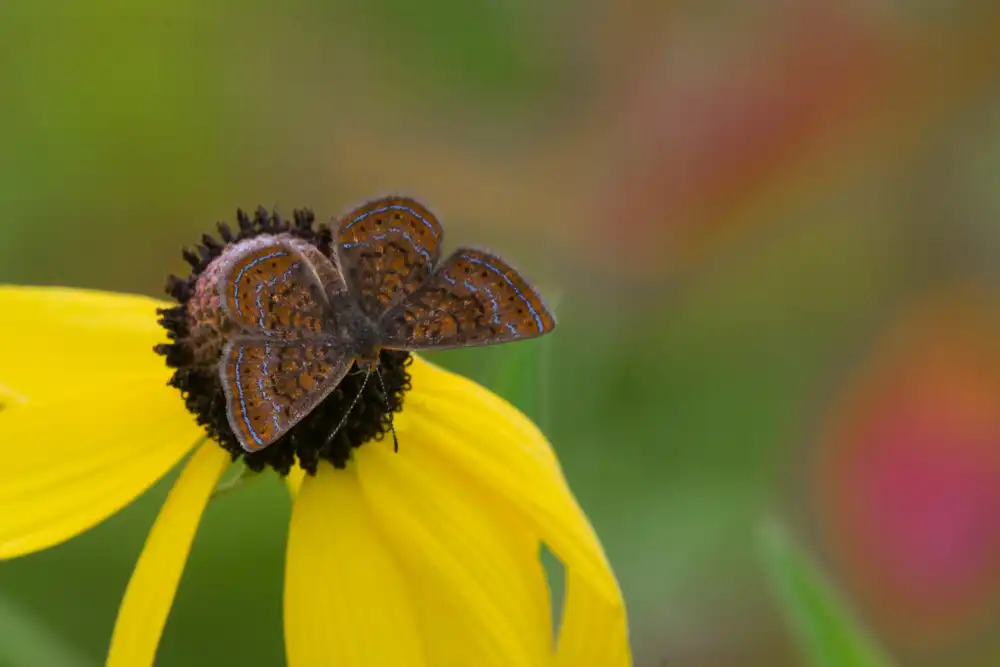
- Northern Metalmark (Calephelis borealis)
Swallowtail (Papilionidae)
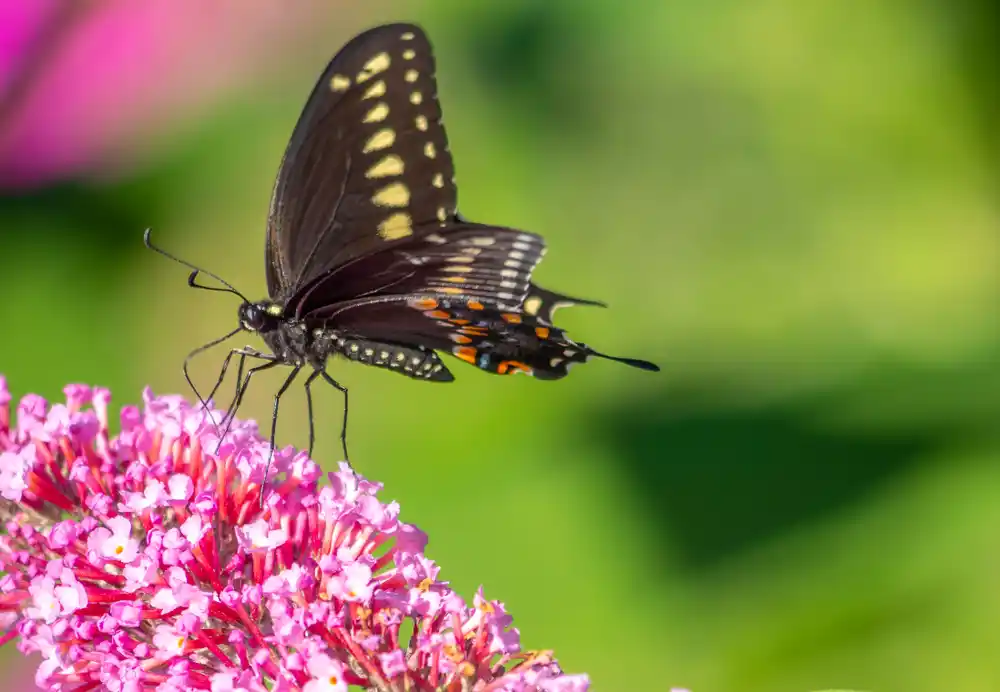 Papilio polyxenesBlack Swallowtail (Papilio polyxenes)The black swallowtail is a black, yellow-spotted butterfly of open country across most of North America, and its caterpillar is the familiar green-andPapilio glaucusEastern Tiger Swallowtail (Papilio glaucus)The eastern tiger swallowtail is a large yellow butterfly with four black tiger stripes on each forewing and a tail on each hindwing, and it is the co
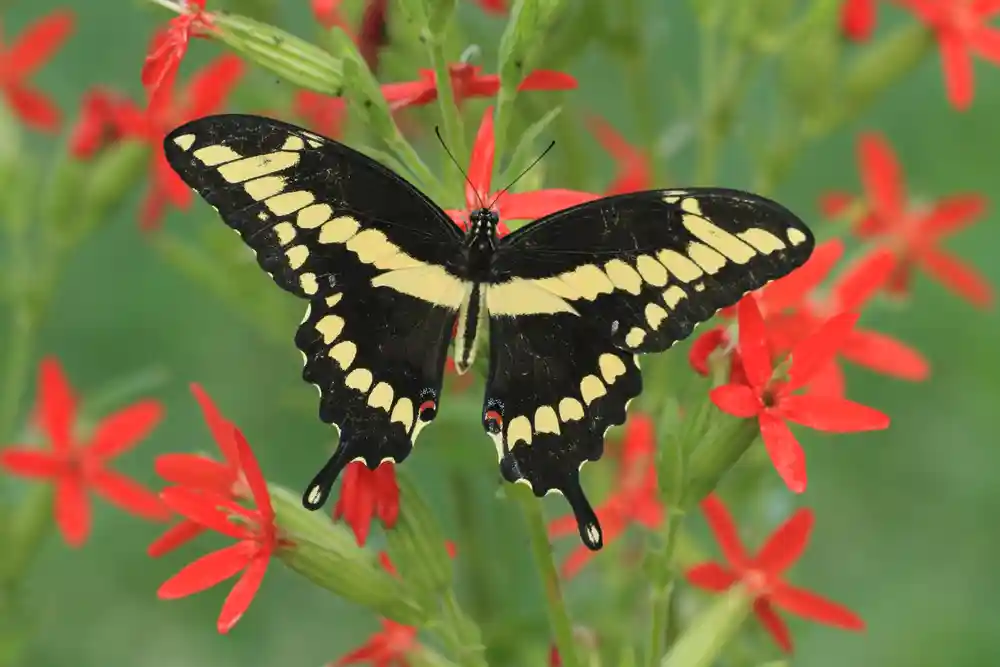 Papilio cresphontesGiant Swallowtail (Papilio cresphontes)The largest butterfly in the United States and Canada, the giant swallowtail sails over citrus groves and woodland edges on dark wings crossed by a ba
 Papilio troilusSpicebush Swallowtail (Papilio troilus)The spicebush swallowtail is a black swallowtail of eastern North American woodland edges and swamps, marked by a row of ivory spots along the forewin
 Papilio palamedesPalamedes Swallowtail (Papilio palamedes)The big dark swallowtail of southern swamp forests, the palamedes is tied almost entirely to one tree, the redbay.
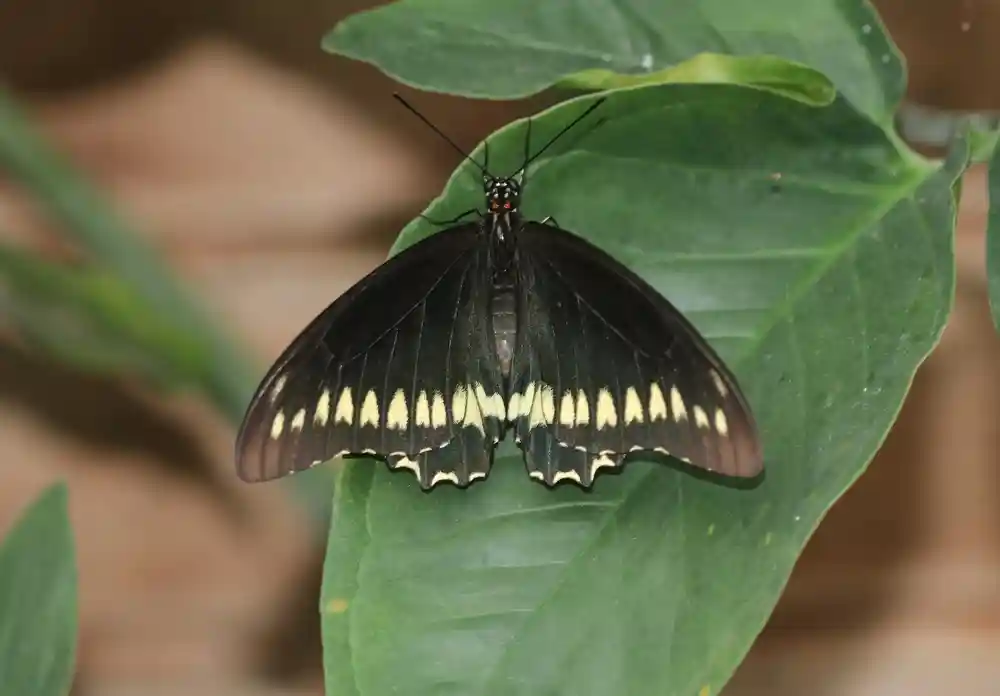 Battus polydamasPolydamas Swallowtail (Battus polydamas)The polydamas swallowtail is a large black butterfly with a yellow band across the outer wings and no tails at all, found from Florida and south Texas
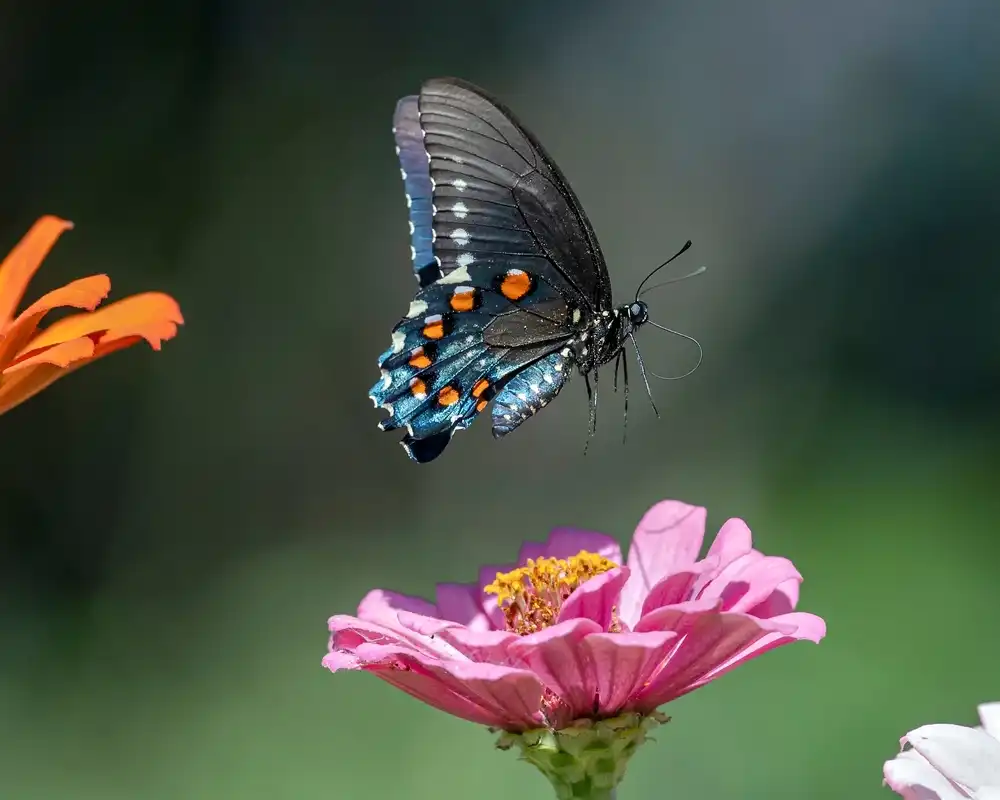 Battus philenorPipevine Swallowtail (Battus philenor)The pipevine swallowtail is a large black North American swallowtail with an iridescent blue to blue-green hindwing and a single curved row of seven o
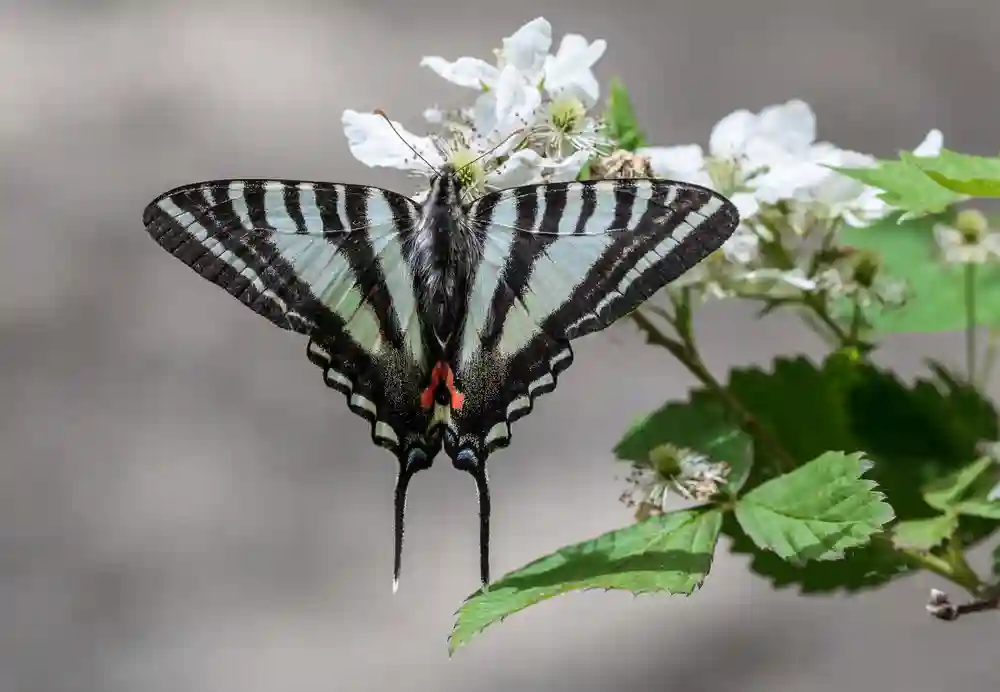 Protographium marcellusZebra Swallowtail (Protographium marcellus)The zebra swallowtail is a white-and-black striped butterfly of the eastern United States with the longest tails of any North American swallowtail, an
- Ozark Swallowtail (Papilio joanae)
Skipper (Hesperiidae)
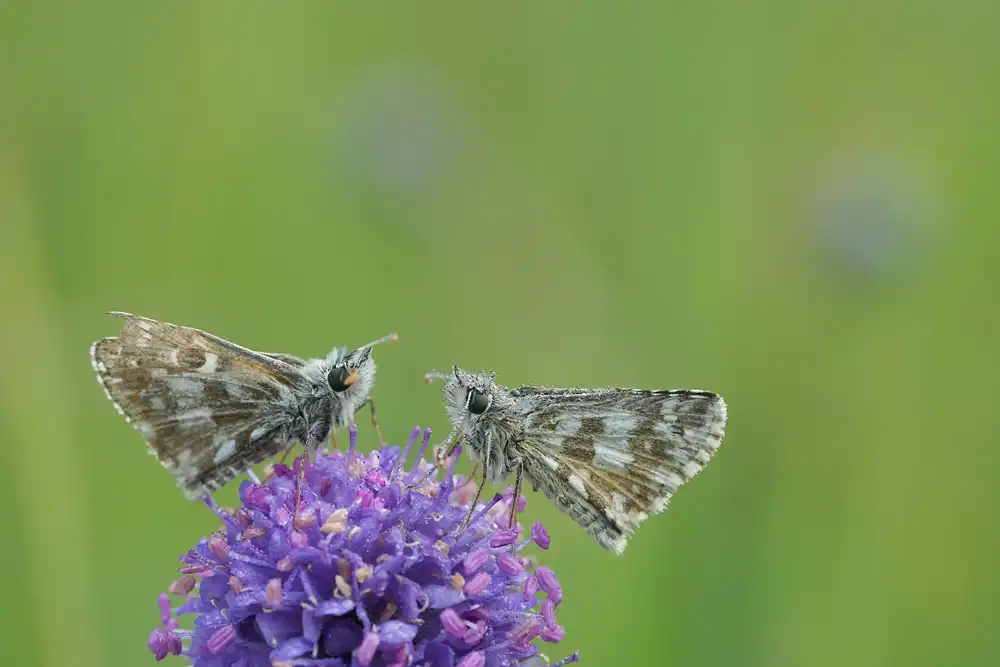 Pyrgus malvaeGrizzled Skipper (Pyrgus malvae)The grizzled skipper (Pyrgus malvae) is a very small black-and-white chequered butterfly of warm, sheltered grassland and woodland clearings across Eu
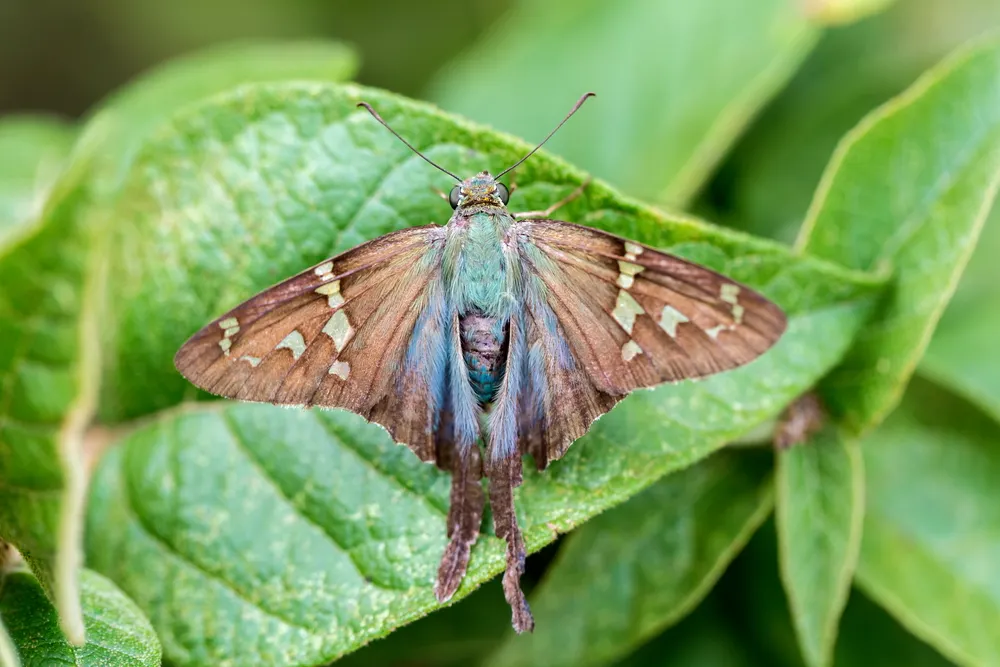 Urbanus proteusLong-tailed Skipper (Urbanus proteus)A stocky brown skipper with a shimmer of blue-green over its body and wing bases and two long tails trailing from the hindwings, the long-tailed skipp
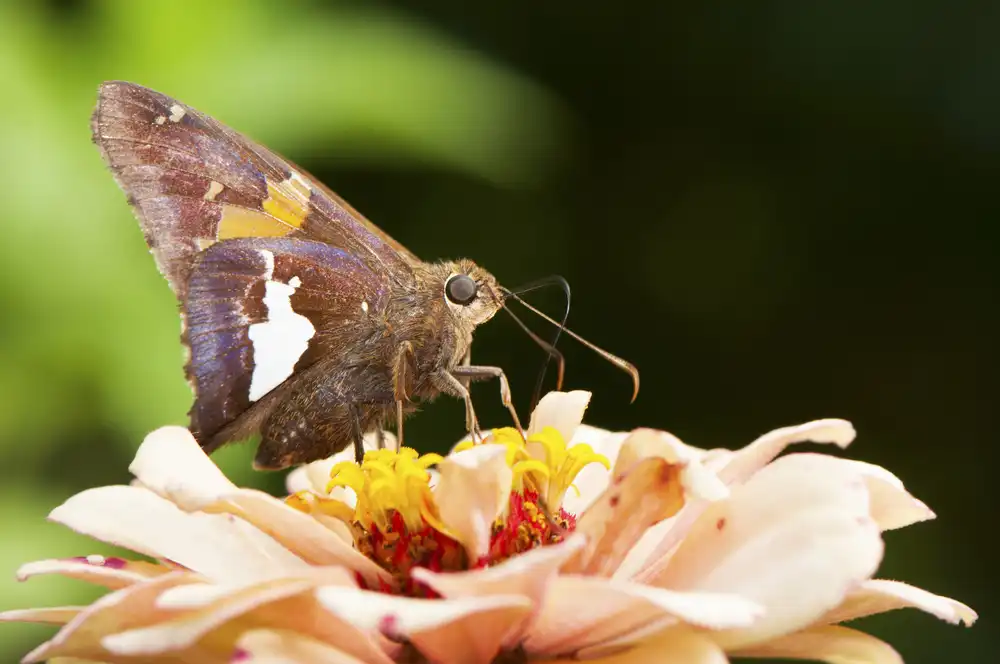 Epargyreus clarusSilver-spotted Skipper (Epargyreus clarus)The silver-spotted skipper is a large, chocolate-brown butterfly of gardens, field edges and woodland clearings across almost the whole of North Ameri
Show all 18 other skipper species names
- Yucca Giant-Skipper (Megathymus yuccae)
- Columbine Duskywing (Erynnis lucilius)
- Dreamy Duskywing (Erynnis icelus)
- Horace's Duskywing (Erynnis horatius)
- Funereal Duskywing (Erynnis funeralis)
- Mottled Duskywing (Erynnis martialis)
- Juvenal's Duskywing (Erynnis juvenalis)
- Sleepy Duskywing (Erynnis brizo)
- Wild Indigo Duskywing (Erynnis baptisiae)
- Zarucco Duskywing (Erynnis zarucco)
- Confusing Cloudywing (Thorybes confusis)
- Northern Cloudywing (Thorybes pylades)
- Southern Cloudywing (Thorybes bathyllus)
- Common Checkered-Skipper (Pyrgus communis)
- Common Sootywing (Pholisora catullus)
- Hayhurst's Scallopwing (Staphylus hayhurstii)
- Golden Banded-Skipper (Autochton cellus)
- Hoary Edge (Achalarus lyciades)
How to identify a butterfly in Kentucky
Most Kentucky butterflies can be placed in a family at a glance. Tails on the hindwings mean a swallowtail; small, fast and moth-like with hooked antennae means a skipper. A Monarch-coloured butterfly with a black line across the hindwing is the Viceroy; without it, a Monarch. Orange with silver spots underneath is a fritillary, and the biggest of them, with a blue-black female, is the Diana.
Black butterflies with blue hindwings are the hardest: the Pipevine Swallowtail has one row of orange spots below, the dark female tiger keeps a shadow of tiger stripes, the Spicebush has two rows of orange spots and a blue-green wash, and the Red-spotted Purple has no tails at all. For small brown or grey butterflies, look at the underside: hairstreaks show thin lines and a tail-and-eyespot lure, elfins are chocolate brown and fly only in spring, and duskywing skippers hold their wings flat. Our guide to the parts of a butterfly shows where each mark sits, and the United States hub links every state.
Frequently asked questions about Kentucky butterflies
What is the state butterfly of Kentucky?
The Viceroy, Limenitis archippus, has been the official state butterfly of Kentucky since 1990. It is an orange-and-black Monarch look-alike that breeds statewide on willows, and it is told from the Monarch by its smaller size and the thin black line that curves across each hindwing.
How many species of butterflies are found in Kentucky?
Around 140 to 150 butterfly species have been recorded in Kentucky, including the skippers. Roughly 100 of them are regular residents; the rest are rare strays from the Gulf coast and south-west or historical records. All six North American families occur, with brush-footed butterflies and gossamer-wings making up most of the list.
What are the most common butterflies in Kentucky?
The Eastern Tiger Swallowtail, Pearl Crescent, Silver-spotted Skipper, Cabbage White, Clouded and Orange Sulphurs, Eastern Tailed-Blue, Red-spotted Purple, Common Buckeye, Red Admiral and Monarch are the butterflies seen most often across Kentucky. In spring the Zebra Swallowtail and Spring Azure are abundant near woodland streams.
How do you tell a Viceroy from a Monarch in Kentucky?
Look for a black line running across the hindwing parallel to the edge: the Viceroy has it, the Monarch does not. The Viceroy is also smaller, with a wingspan of about 65 to 80 millimetres, and flies with several quick flaps followed by a flat-winged glide, while the Monarch is larger and sails more slowly.
When is the best time to see butterflies in Kentucky?
May and June offer the widest variety, when hairstreaks, fritillaries, swallowtails and azures are all flying, and late August through September brings the biggest numbers as sulphurs, Buckeyes and migrating Monarchs build up. Hibernating Mourning Cloaks and commas can appear on warm days from February onward.
When do Monarchs migrate through Kentucky?
Southbound Monarchs pass through Kentucky from about mid-September to mid-October, roosting in tree lines and feeding on goldenrod, ironweed and asters. Northbound butterflies arrive from Mexico and the Gulf states in late April and May and lay eggs on milkweed, producing the summer generations that breed across the state.
What is the largest butterfly in Kentucky?
The Giant Swallowtail is Kentucky's largest butterfly, with a wingspan that can reach about 150 millimetres. It breeds on prickly-ash and hop-tree and is commonest in the western and central counties. The Eastern Tiger Swallowtail and the Diana Fritillary, whose females can exceed 100 millimetres, are the next largest.
Are there rare or endangered butterflies in Kentucky?
Yes. The Regal Fritillary is considered extirpated from Kentucky, the Appalachian Grizzled Skipper is critically imperilled and known from only a few historical sites, and the Swamp Metalmark survives in a handful of fens. The Diana Fritillary, Frosted Elfin and Early Hairstreak are state species of greatest conservation need.
Which host plants attract butterflies in Kentucky gardens?
Milkweed for Monarchs, willow for the Viceroy, pawpaw for the Zebra Swallowtail, spicebush for the Spicebush Swallowtail, dill and parsley for the Black Swallowtail, violets for fritillaries, hackberry for emperors and asters for the Pearl Crescent cover most of the common species. Add coneflower, ironweed and goldenrod for nectar.
Where are the best places to see butterflies in Kentucky?
Bernheim Arboretum near Louisville, Red River Gorge in the Daniel Boone National Forest, Land Between the Lakes in the west, Mammoth Cave National Park and Raven Run Nature Sanctuary near Lexington are the best-known sites. Any sunny roadside with milkweed, thistle and ironweed in June or September will produce a good list.
Published January 7, 2020 · Last updated September 21, 2026